
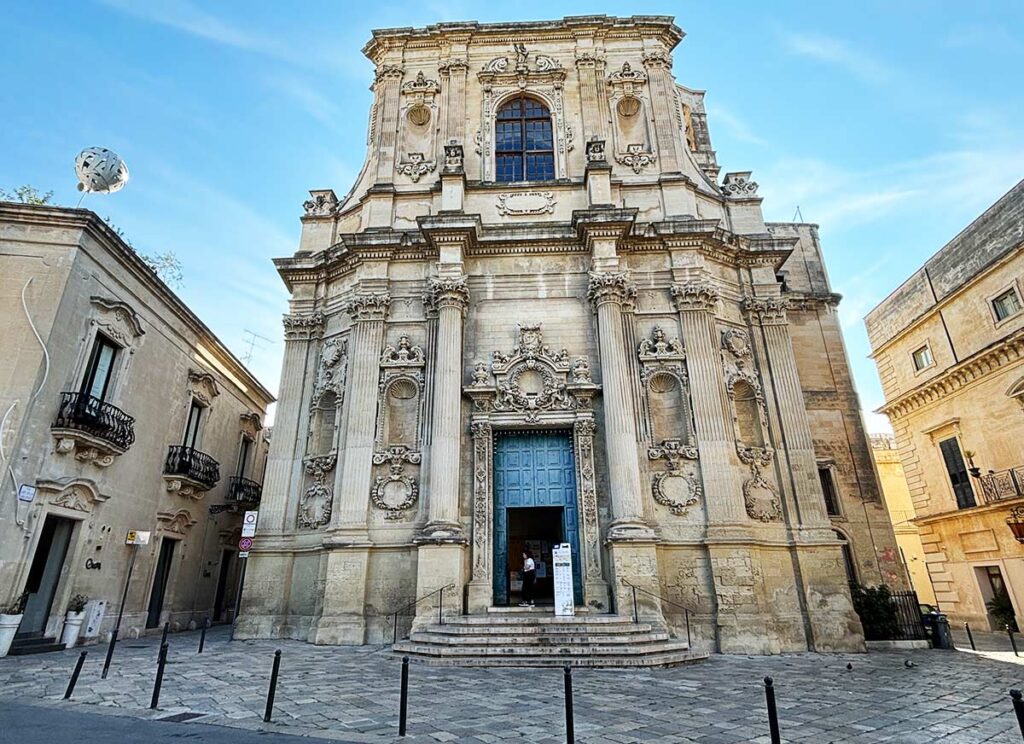
When I started planning my summer in Puglia I had vaguely heard of Lecce, but I didn’t know much about the city or what it had to offer. Still, I decided to schedule a full week in Lecce into my itinerary, hoping that even if there weren’t enough things to do in Lecce to keep me occupied for the full week that I would be able to fill some time with day trips or just relaxing with a glass of wine and a good book. This decision turned out to be on the smartest that I made, because by the end of my first full day in Lecce I knew I had fallen in love.
As my days in Lecce passed, my love for the city only grew. By the end of my week in Lecce I came to the conclusion that I had found my second-favorite city in Italy (Turin will always hold my heart!) and I had officially become president of the Lecce Fan Club.
Below, I’m highlighting fifteen of my favorite things to do in Lecce – these are just the ones I enjoyed (not everything made the cut) and the ones I’d recommend for other travelers visiting the city. After the list I’ve also got a rundown of the Leccese restaurants, hotels and shops that you’ll also want to check out. So, without further ado, let’s explore Lecce!

#1 – Get a Lecce Baroque Church Pass
I highly recommend that the first thing you do in Lecce is to stop by the LeccEcclesiae ticket office in Piazza Duomo to purchase a LeccEcclesiae pass. There’s no need to buy this ticket online before you arrive; just pick it up before you start sightseeing around Lecce.
There are two versions of the LeccEcclesiae pass. The first costs €11 and it gives you access to the four Baroque churches and one museum listed in this section. However, I recommend buying the more expensive ticket, as the €21 price will include the ascent of the bell tower (#2 on this list). Passes purchased in-person are valid for one entry per historical site during a fifteen-day period, so you can just take in one or two churches each day as you stroll around town.
The Duomo
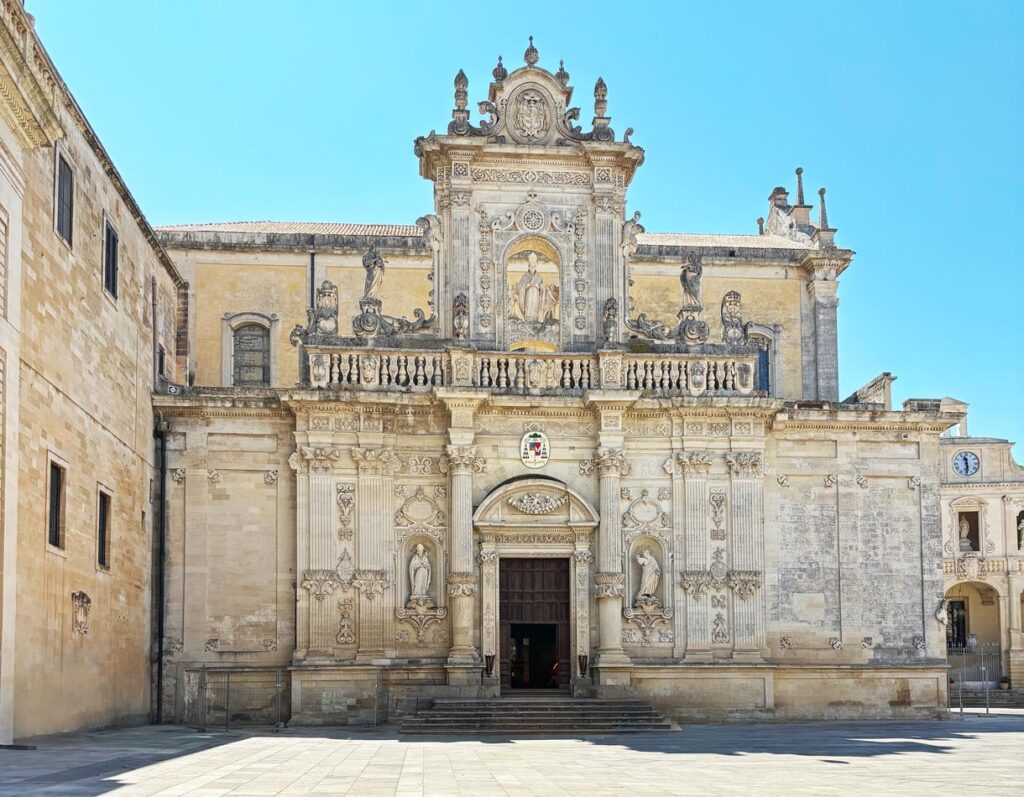
The Duomo is probably the most beautiful, and most important, church in Lecce. Located on Piazza del Duomo, this is the city’s main cathedral and the seat of the city’s archbishop.
Before you go inside the Duomo, walk around to the right side of the building (when facing the front door) to look at the unique, definitely-not-Baroque door sculpted from bronze and featuring two inlaid stone spheres representing the sun and moon. It’s not much from the outside, but later, when you’re inside the cathedral, you’ll see the light pass through the two spheres to create an eye-catching display of vivid color. This door was installed in 2000 to commemorate a 1994 visit from the Pope.
For me, the most beautiful thing about the Duomo of Lecce was the beautiful facade, carved in Leccese Baroque style from the city’s special Lecce Stone (a type of local limestone that is particularly ideal for carving). The most interesting thing, though, was the crypt, a stark underground space with 92 columns, plus various altars, chapels and frescoes (okay, and some human bones too). Photography is prohibited in the crypt so you’ll have to go see for yourself! 😉
Museum of Sacred Art (MuDAS) & the Ancient Seminary
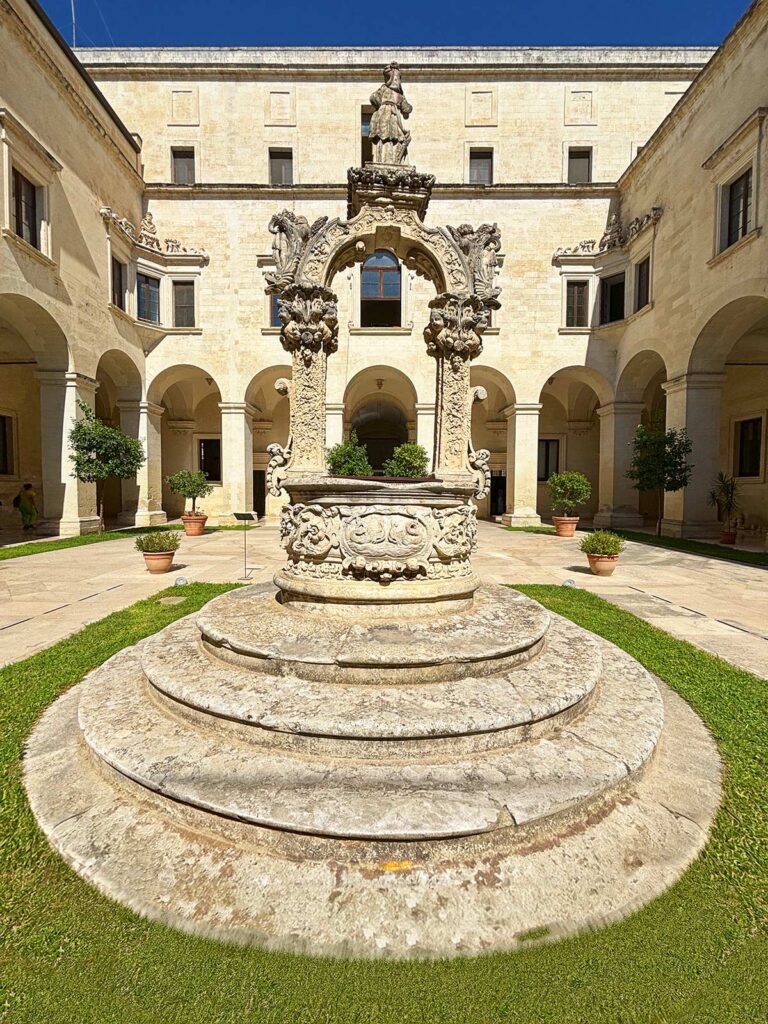
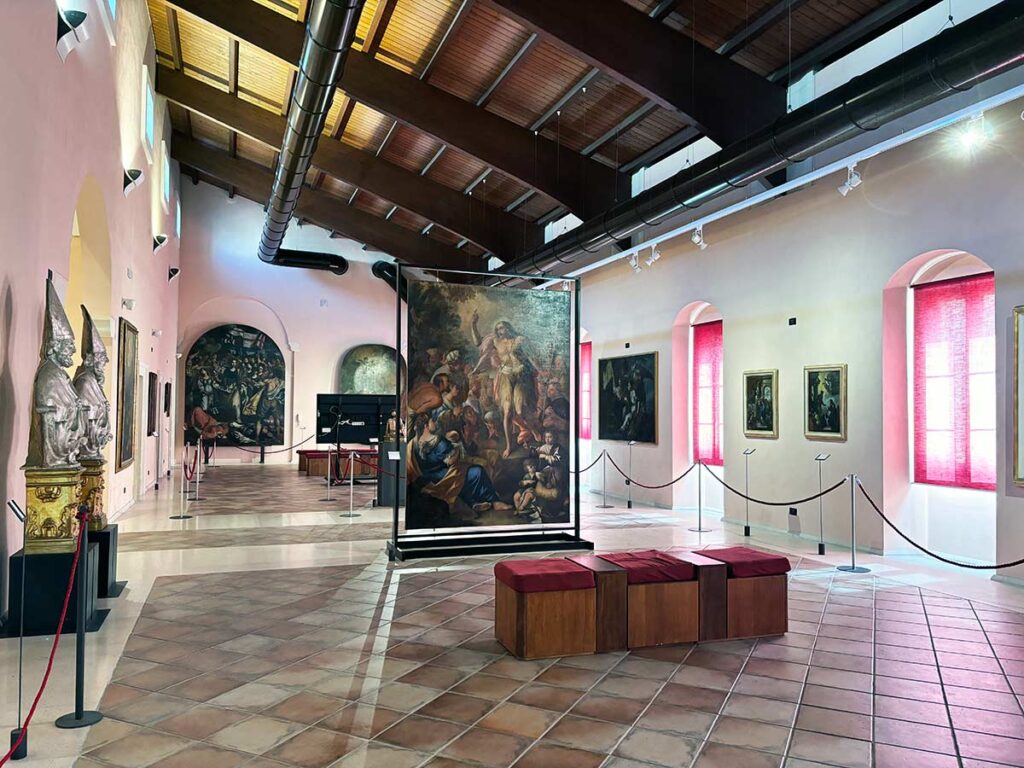
Inside the same building where you bought your LeccEcclesiae ticket you’ll find the Ancient Seminary and the Museum of Sacred Art. If you’re in Lecce in the summer, visit this air-conditioned museum during the afternoon to escape the heat.
Not much of the Ancient Seminary is open, but you can walk through a couple rooms, a small chapel and the pretty cloister. From there, you’ll go into the museum, which showcases a large collection of religious art dating from the middle ages to modern times. Depending on your interest level I would plan to spend to spend 30 to 60 minutes in the museum.
Chiesa di Santa Chiara
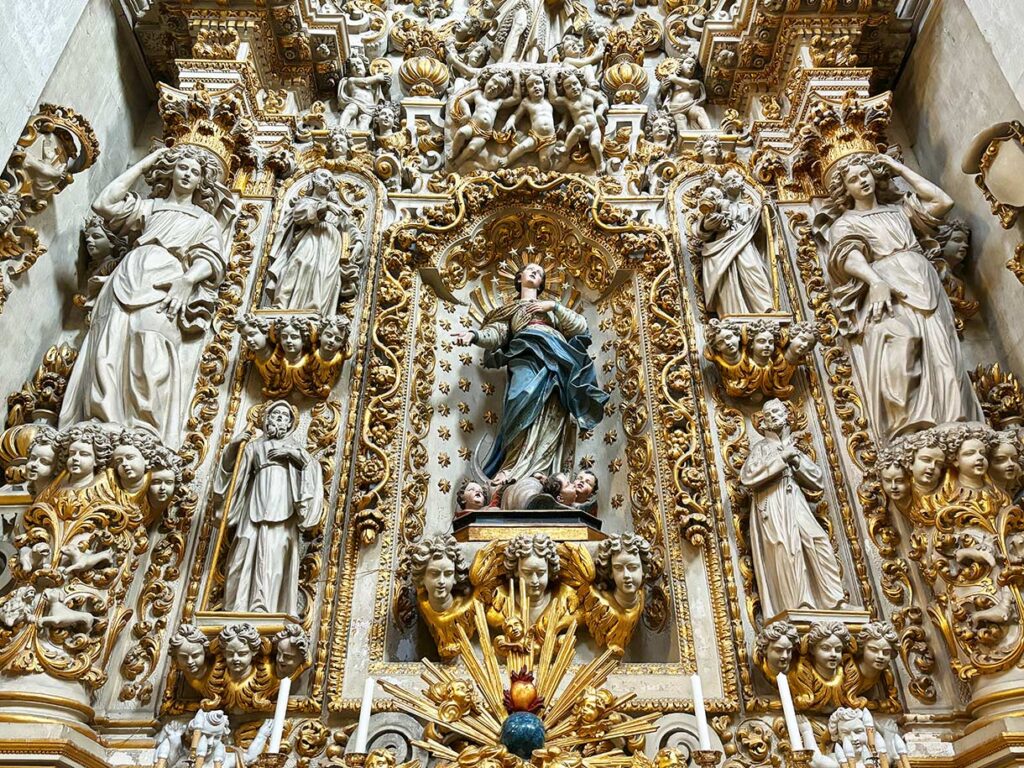
To be honest, I found the next few churches to be very similar. However, they are all so breathtaking that they really are all worth visiting (and they’re included in your pass anyways!).
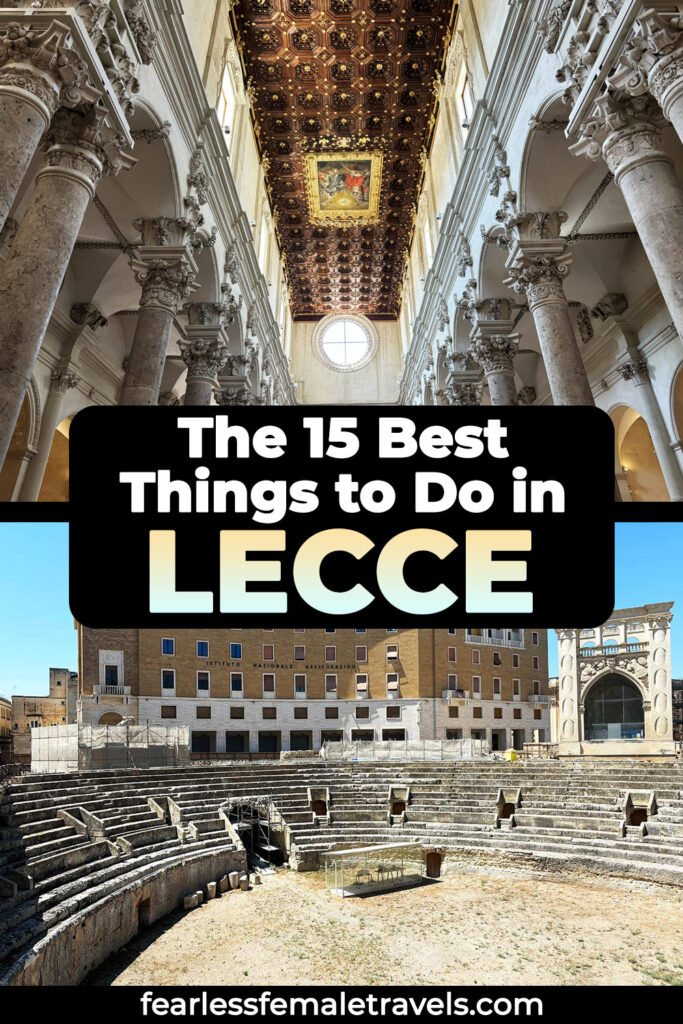
The Church of Santa Chiara dates back to the 1400s, but two hundred years later the interior was redone in mindblowing Baroque detail. The church has one main altar and then six side chapels with their own altars, each with as much intricate carving, painting and gilding as you can see in the photo above.
There’s also some trompe l’oeil in Santa Chiara, as what looks like a wooden ceiling is actually paper mâche (more on that below!).
Chiesa di San Matteo
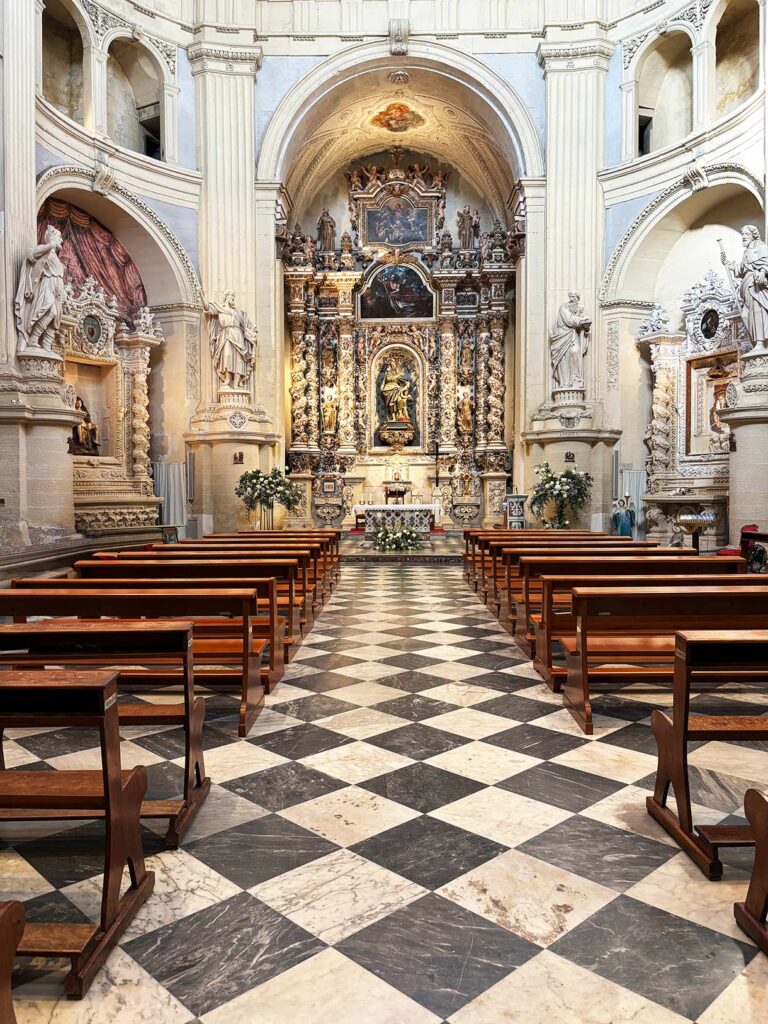
My visit to Chiesa San Matteo was quite rushed, as I had planned to visit before my pasta-making class (see below) but ended up arriving just as an Italian wedding was exiting the church and taking their wedding photos.
The main altar here is considered to be a particularly good example of Leccese Baroque (but again, as a casual viewer, every altar in the city seems pretty impressive!) due to both the sophisticated detailing in the carving and the richness of the various colors that are still visible today.
Basilica di Santa Croce

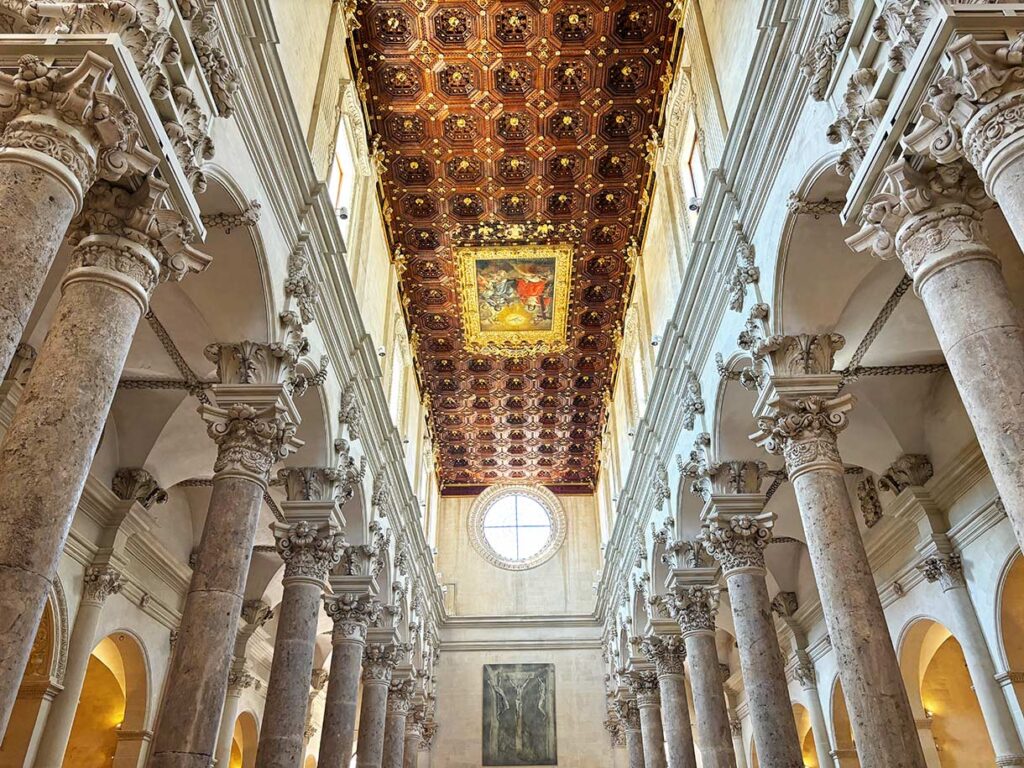
Probably the most famous church in Lecce (aside from the Duomo), Santa Croce is best known for its rose window, which is the largest in Puglia. When you’re looking at the window from outside, see if you can find the sculptor’s face (a secret self-portrait) hidden among the images from the natural world.
One altar of note (out of the seventeen inside the church) is the Altar of Sant’Oronzo, the city’s patron saint. Believe to have saved the city from a devastating earthquake in the 1700s, Oronzo now also lends his name to a nearby piazza, where a statue of the saint towers over the Roman Amphitheater.
Bonus Church: Santa Irene
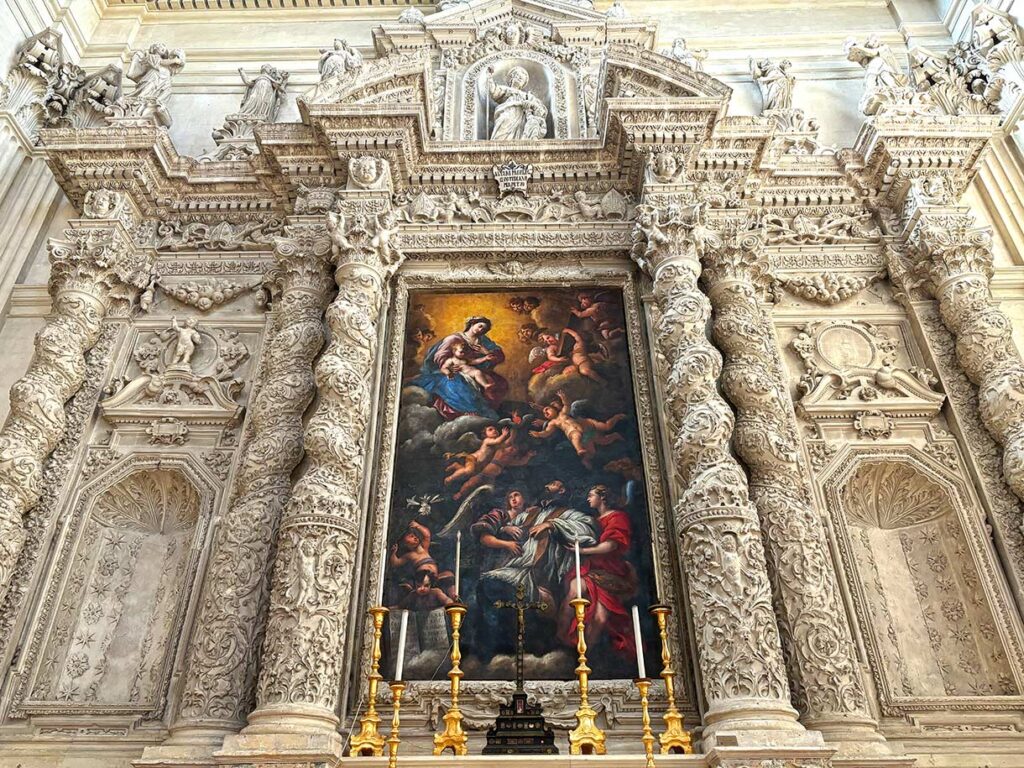
You don’t need a LeccEcclesiae pass to visit this church, as admission is free. However, I thought I’d add it to this section because it is similar to the churches noted above, and in fact it had the most striking interior (in my opinion). I was especially taken by the two Baroque chapels on either side of the altar, which were probably the largest and most detailed that I saw in the city.
#2 – Go Up the Lecce Bell Tower

If you’ve purchased the €21 LeccEcclesiae pass then you will also be able to take the elevator to the top of Lecce’s bell tower. From here, you have panoramic views of the rooftops of the historical center (including digital guides to help you understand which roof corresponds to which landmark). If it’s a clear day, make sure to look east as you can see right across the Adriatic Sea to the shores of both Albania and Greece.
If you didn’t buy the LeccEcclesiae pass then the bell tower ticket alone will cost €12. Although you can buy it online I personally wouldn’t recommend doing so, as you have to commit to a twenty-minute entry window. If you just show up and buy a ticket at the office on the opposite side of the square you can go up at your convenience. If you have the LeccEcclesiae you can just show up at the elevator – no need to reserve a time.
#3 – Take a Pasta-Making Class

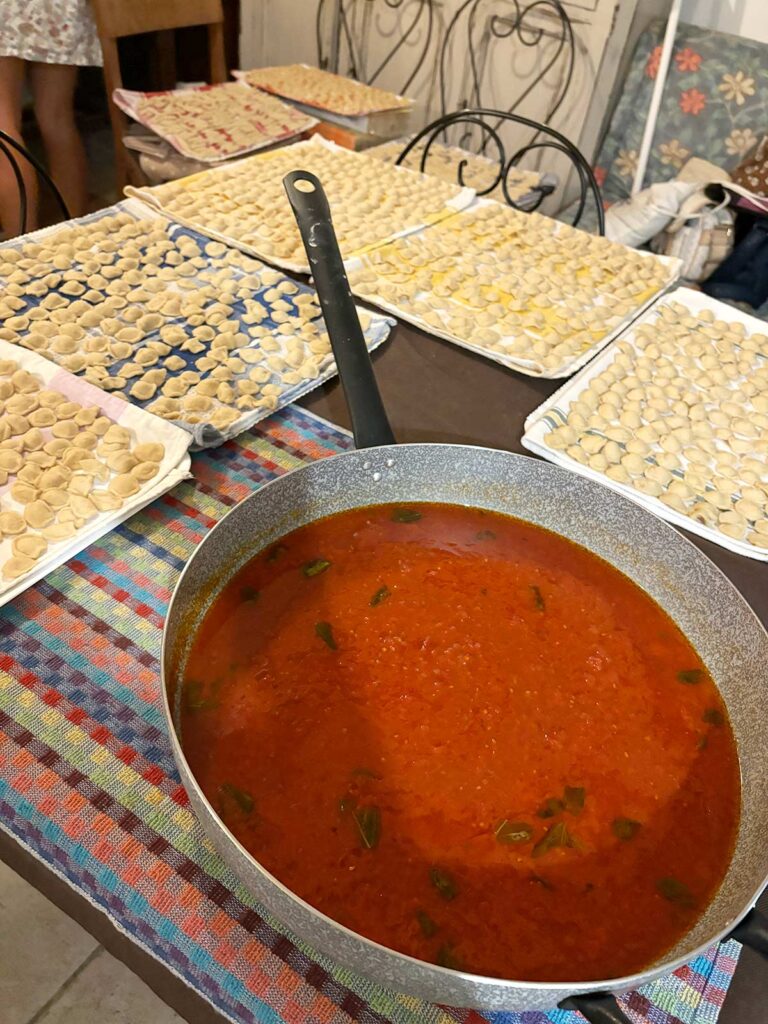
A highlight of my week in Lecce was the evening that I took a pasta-making class where we learned to make orecchiette and macaroni by hand. I had previously seen the women in the streets of Bari making orecchiette and this class gave me a new appreciation for their skills, because it is not easy work!
The class that I took was located in the courtyard of a 15th-century palazzo in the city center, and it was run by three women: two nonnas who only spoke Italian, and a younger woman who helped translate for them. The class was totally appropriate for all ages, and participants included a mix of families with children, friends, couples and solo travelers.
We started by tying back our hair (bring your own elastic) and washing our hands, and then we learned how to mix the flour and water to make pasta dough, how to knead it to the correct consistency, and then how to shape it into orecchiette (easier) and macaroni (harder), noodle-by-noodle.
It took us about an hour and a half to make enough pasta for dinner. Then, the instructors took it inside to boil and toss in their homemade tomato sauce before serving it to us with wine and cheese. This was followed by a typical local dessert (and more wine!).
I doubt I will ever make my own macaroni, but I could definitely see myself preparing homemade orecchiette when I’m back in Canada. If you want to give it a try, you can check the dates, times and availability here.
#4 – Visit the Roman Amphitheatre
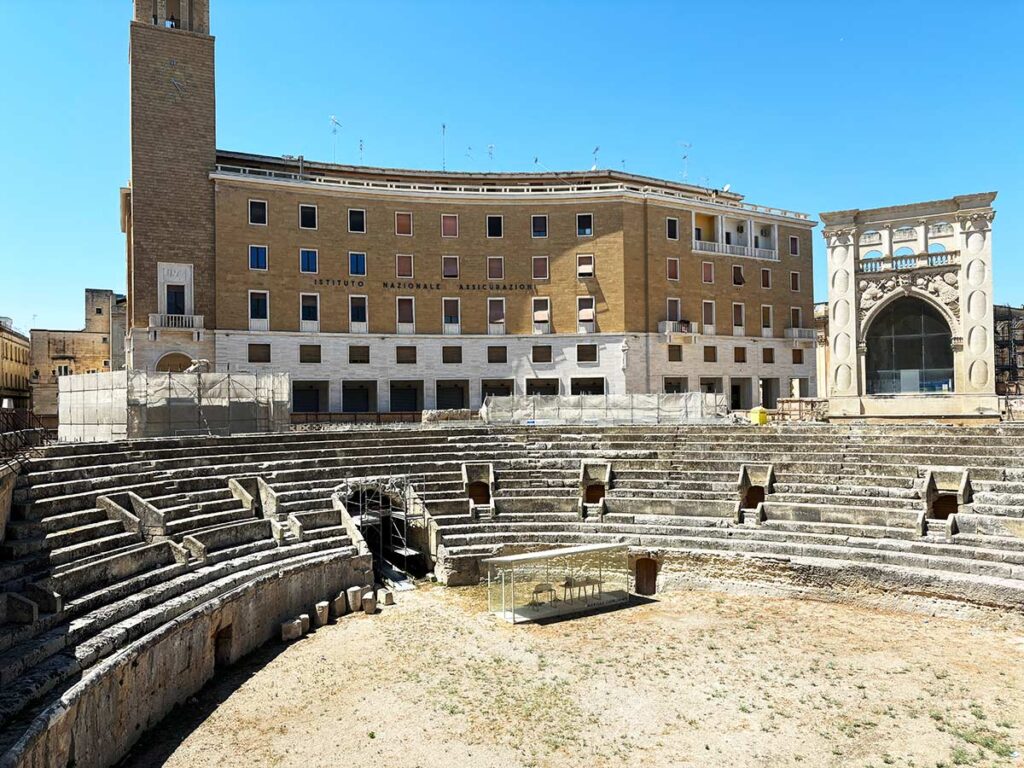
It’s hard to believe, but for most of recent history, nobody knew there was a gigantic Roman amphitheatre in Piazza Sant’Oronzo! It was only in the early 1900s that construction workers building a nearby bank discovered the ruins of this theatre, carved from the local limestone and with seating for about 15,000 people.
You don’t need a ticket to see the Roman Ampitheatre in Lecce, as it’s visible from street level throughout the piazza. However, if you want to take a walking tour of the site, stop by the tourist information office inside the ornate triumphal arch (shown in the photo above on the right) and they will tell you if any tours are running.
#5 – Try the Local Sweets
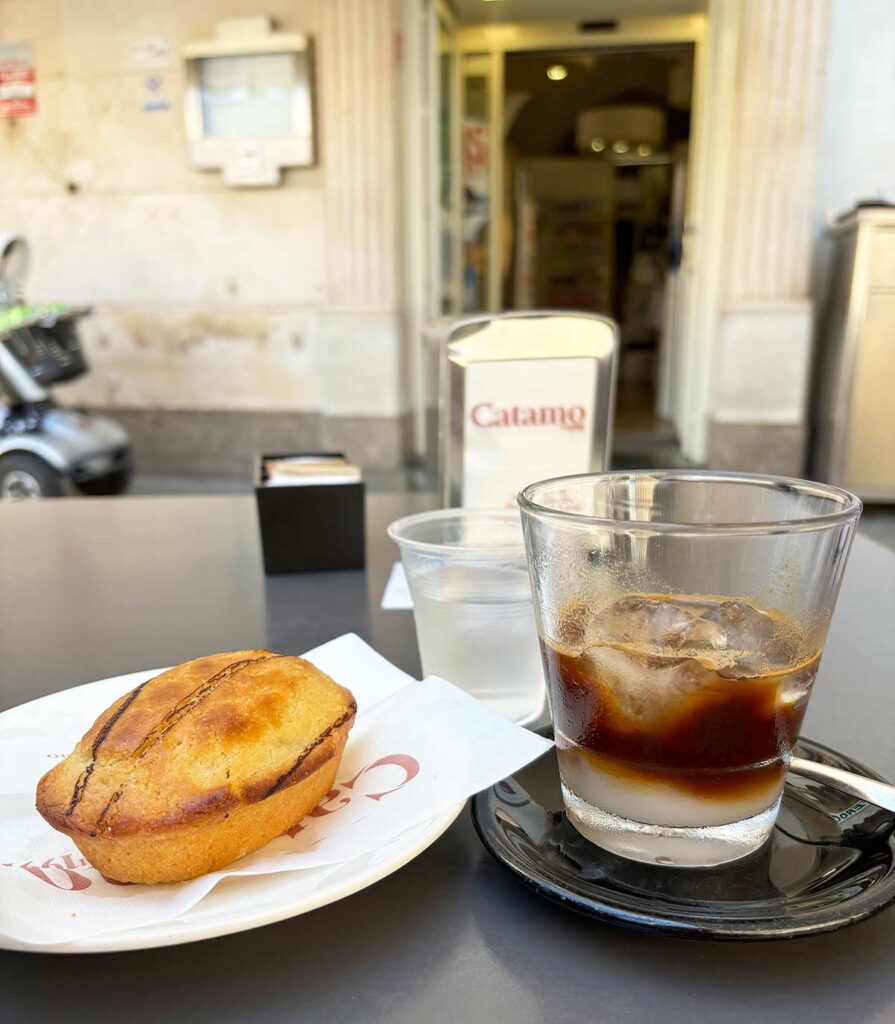
I love trying the local specialties when I’m traveling, and it’s always a bonus when those specialties happen to be delicious sweet treats! There are two dishes you have to try in Lecce: caffe leccese and pasticcioto.
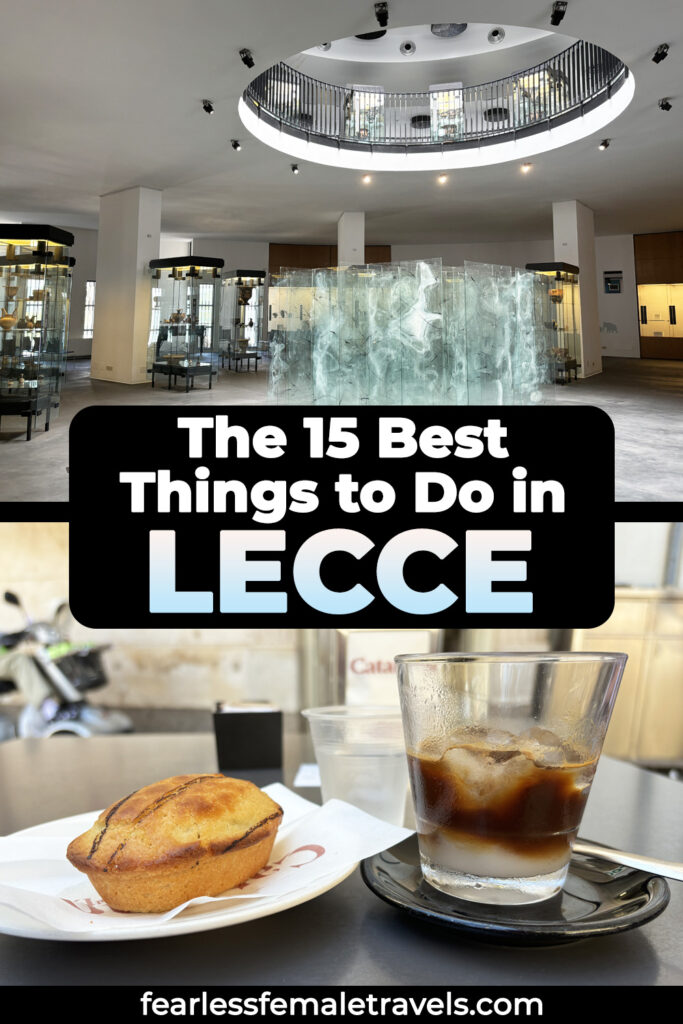
Caffe leccese is a drink that was born from the extreme heat, and abundant almond crop, in Southern Italy. A small glass is filled with ice, and then a few tablespoons of almond syrup are poured in. It is served with a shot of hot espresso, which you pour over the ice and mix in to make a refreshing sweet treat. You can see mine above, in the moment before I mixed the almond syrup and espresso together.
(I noticed that a few menus incorrectly translated almond syrup as “almond milk”, but every time I ordered the drink it was made with almond syrup.)
The other dish that Lecce is famous for is the pasticcioto. These are small cakes (similar to a muffin loaf if you’re from North America) that are stuffed with different sweet fillings. It’s common to find them filled with cream, pistacio cream, ricotta, Nutella or a combination of those (I personally love the ricotta-Nutella mix!). Sometimes fresh fruit or jam is added to the filling as well.
A caffe leccese and a pastiociotto make for a perfect light breakfast or afternoon snack. My favorite place to have a caffe leccese and a pasticcioto was definitely Alvino, located on Piazza Sant’Oronzo. I visited quite a few different cafes over my week in Lecce but by the last three days this was where I was going for breakfast every day. They have a large, well-shaded terrace on the piazza, a small air-conditioned coffee room in the back (look for it behind the coffee bar) and beautiful pastries.
#6 – Wander in the Historical Center
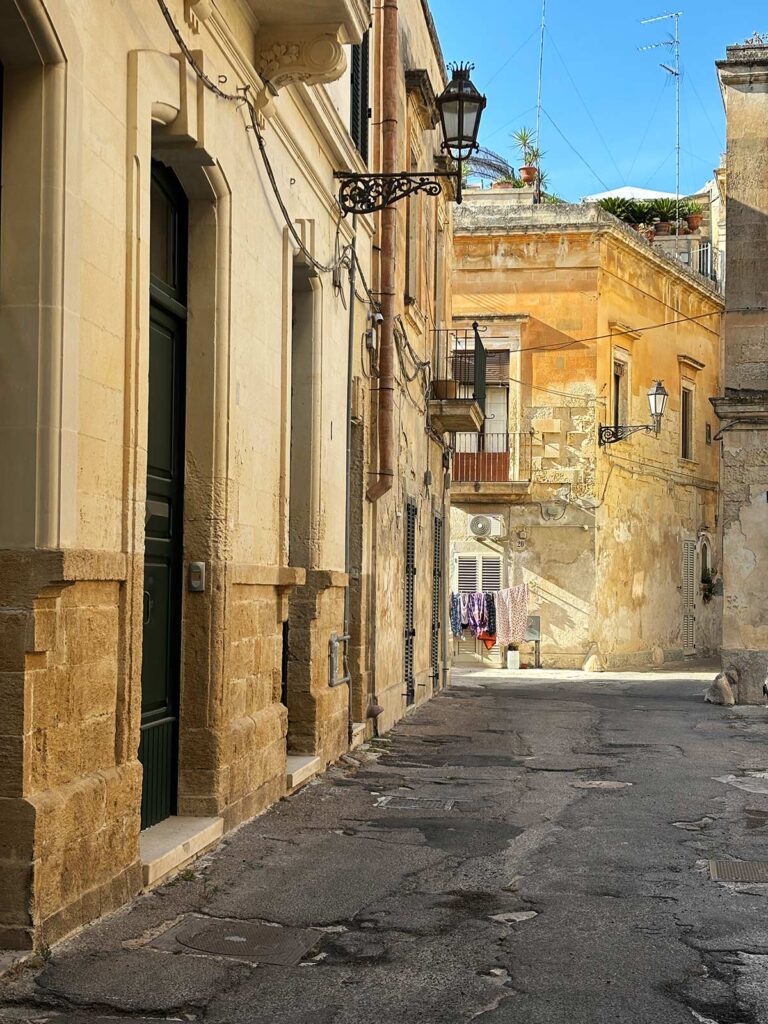
One of the most delightful things to do in Lecce is simply to walk around the historical center with no particular route or destination in mind. As you’re walking you’ll see historic churches (I believe there are more than 40 churches in Lecce, most of which you can enter freely), towering palazzos, facades adorned with Leccese Baroque details (look for symbols from the natural world like leaves, vines, animals and fruits), palm trees and vintage Italian cars. Always look up, as some of the best details and designs are found on the first or second floor of the buildings, above street level.
Almost all of Lecce’s historical center is a ZTL, or limited traffic zone, meaning that only vehicles registered to local residents can drive on them. This opens up almost the entire city center exclusively to pedestrians, and you’ll only rarely have to step aside for a car or scooter to pass. Unlike other Italian cities where the traffic can be chaotic, Lecce’s streets are peaceful and safe.
* Note: If you’re coming to Lecce by car, the ZTL can make it difficult to reach your accommodation by car. Below, I note a hotel just a street away from the restricted traffic zone with gated private parking for guests.
#7 – Visit the Faggiano Museum
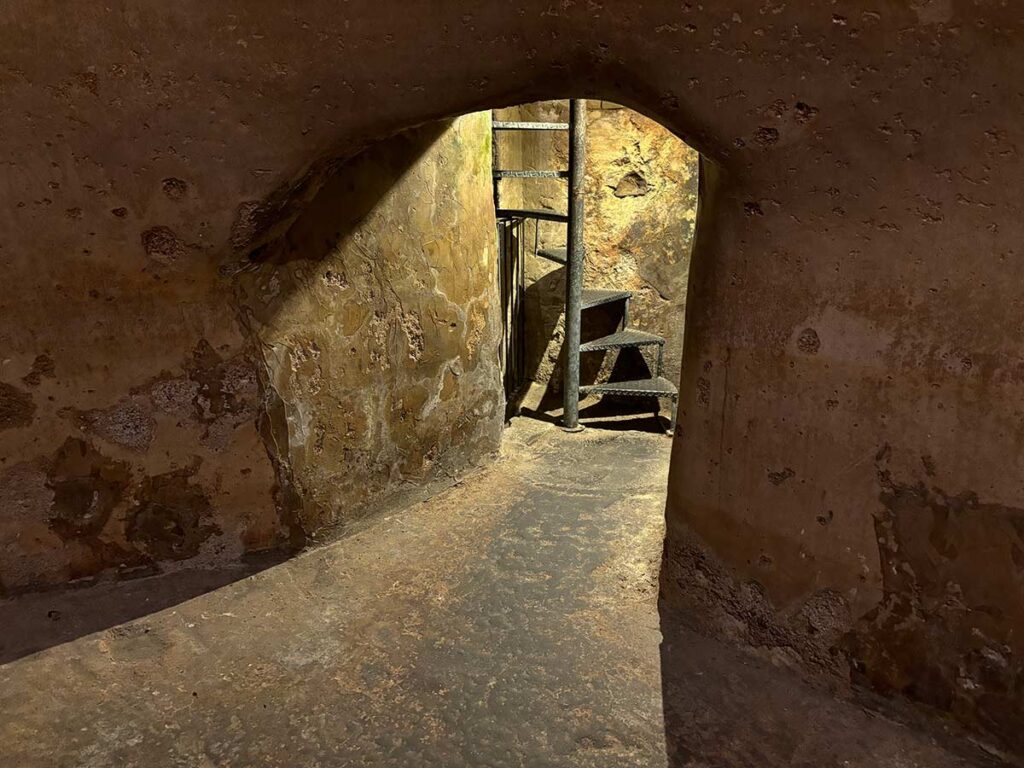
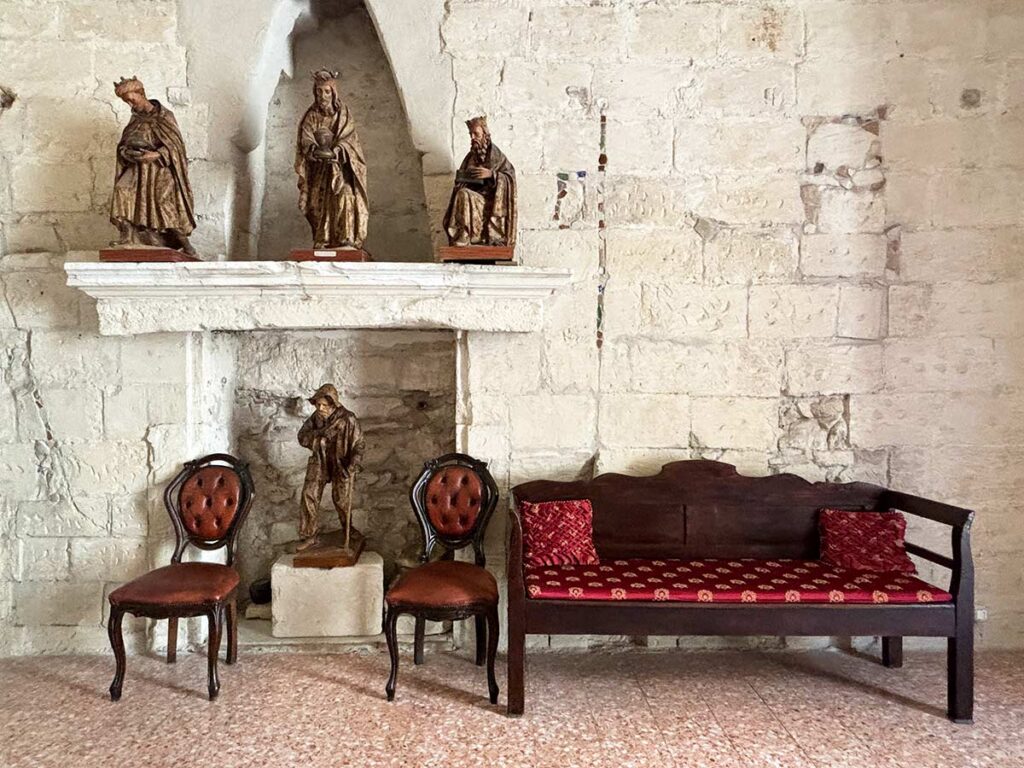
Imagine this: You want to open a typical Italian trattoria, so you buy a building in the historic center of Lecce. As you start renovating it you find the toilet won’t flush properly, so you dig beneath it a bit to see what’s going on. Within minutes, your shovel reveals over 2500 years of history, including hidden subterranean chambers and ancient artifacts that predate the birth of Christ.
That’s what happened to Luciano Faggiano, the man who sits inside the doorstep of what is now the Faggiano Museum. Further excavations of his property, supervised by archeologists, found artifacts dating back to the Messapians, who lived in Puglia in the seventh century BCE, along with Ancient Byzatine and Roman relics and pieces from the Middle Ages and Renaissance. Instead of opening a trattoria, he turned the building into a private archeological museum.
Today, one of the best things to do in Lecce is to spend an hour exploring this museum. Your ticket will include a guide (available in a surprising number of languages!) with room-by-room, artifact-by-artifact explanations of what you’re seeing from the underground chambers to the rooftop tower.
#8 – See Paper Mâche Artists at Work
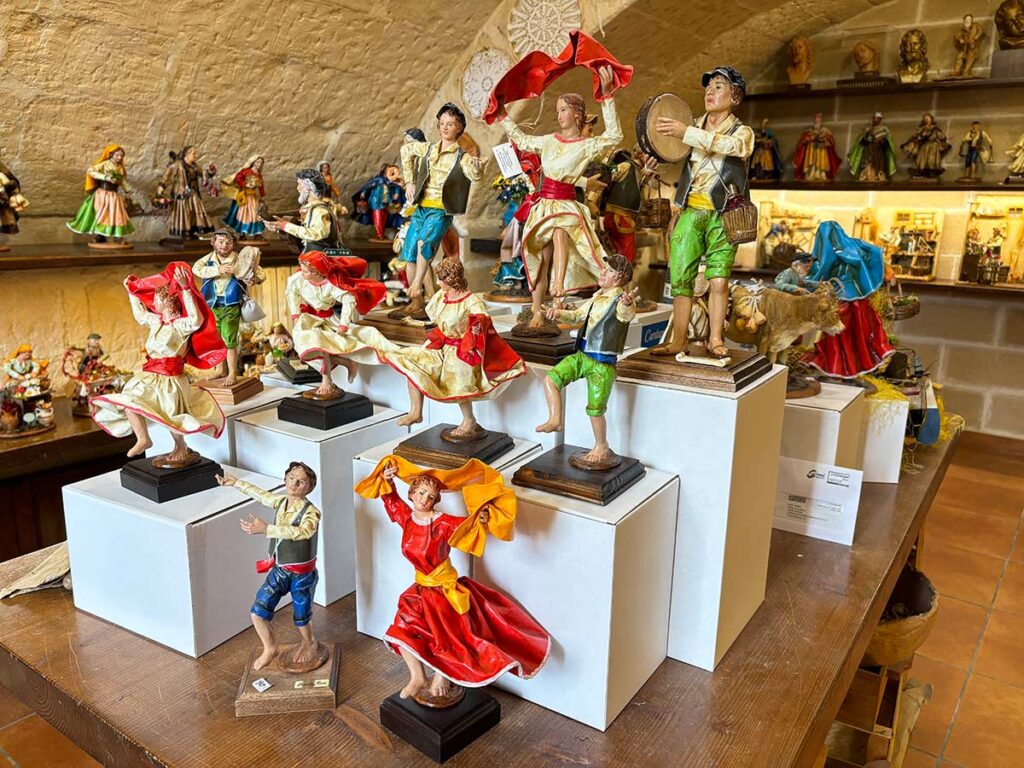
Most children will experiment with paper mâche when they’re in elementary school (let me know in the comments what you crafted from strips of wet paper, flour and water!). In Lecce, however, talented artisans have turned paper mâche into a true art form that is now one of the city’s defining industries.
Historically, paper mâche in Lecce was a religious art form, and in the Museum of Sacred Art you’ll find a number of statues of saints and other religious figures made from these materials. However, in recent years, subjects have expanded to include joyful scenes of pastoral living, still life and more. Paper mâche artists often work from their own eponymous studios (like the one shown above, Cartapesta Riso) where they sell their pieces directly to the public.
#9 – Take a Baroque Walking Tour
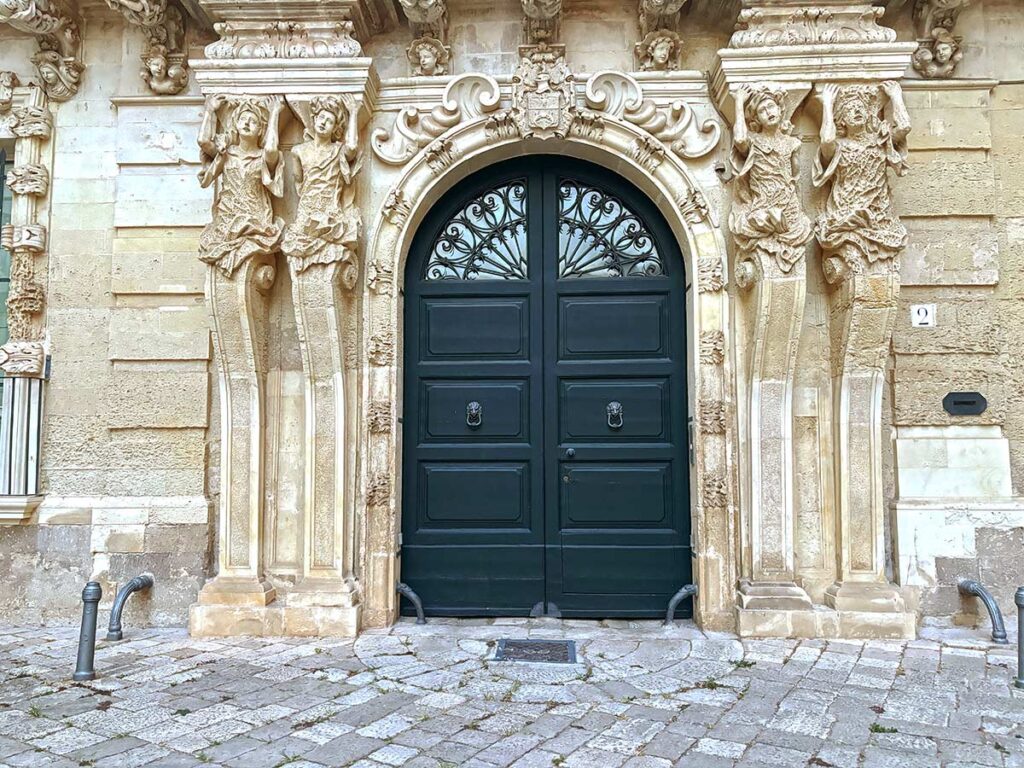
I took an incredible walking tour of Lecce on my first full day in the city, and it really helped me to understand what I saw over the next week. To book my tour I just showed up at the Info Lecce office at Piazza del Duomo (it’s on your right as you enter the piazza, beside the cafe) and asked what tours they had scheduled for the next day. They had an English tour at 11:15 am the following morning, so that’s the one I did.
I got really lucky with my guided tour, as it was a small group of really curious travelers and our guide was exceptional. She took us to so many interesting places that I wouldn’t have thought I could enter, and her explanations of Leccese Baroque architecture had me feeling like an Art History major every time I later visited one of the town’s churches.
If you aren’t flexible with your schedule then you could look into a walking tour like this one, which is run in cooperation with the Jewish Museum of Lecce. It includes a walking tour of the city’s main Baroque buildings, admission to the Santa Croce Church (which is also included in the LeccEcclesiae ticket I’ve recommended above) and admission to the underground Jewish Museum.
#10 – Step Back in the Time at the Museo Castromediano
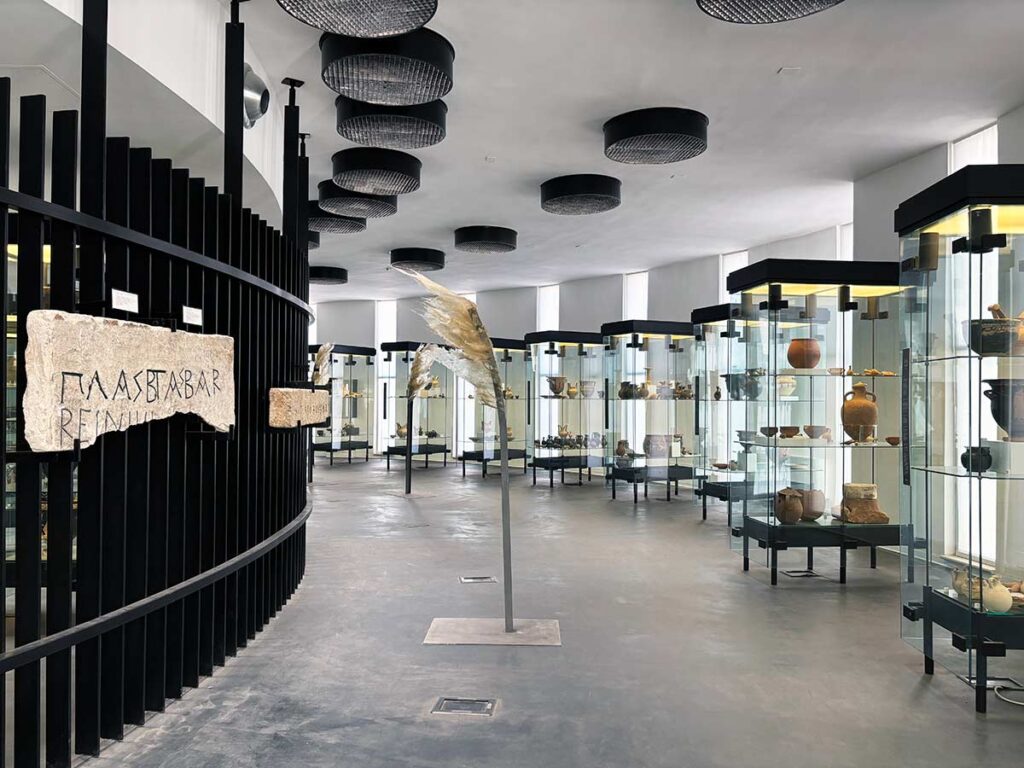
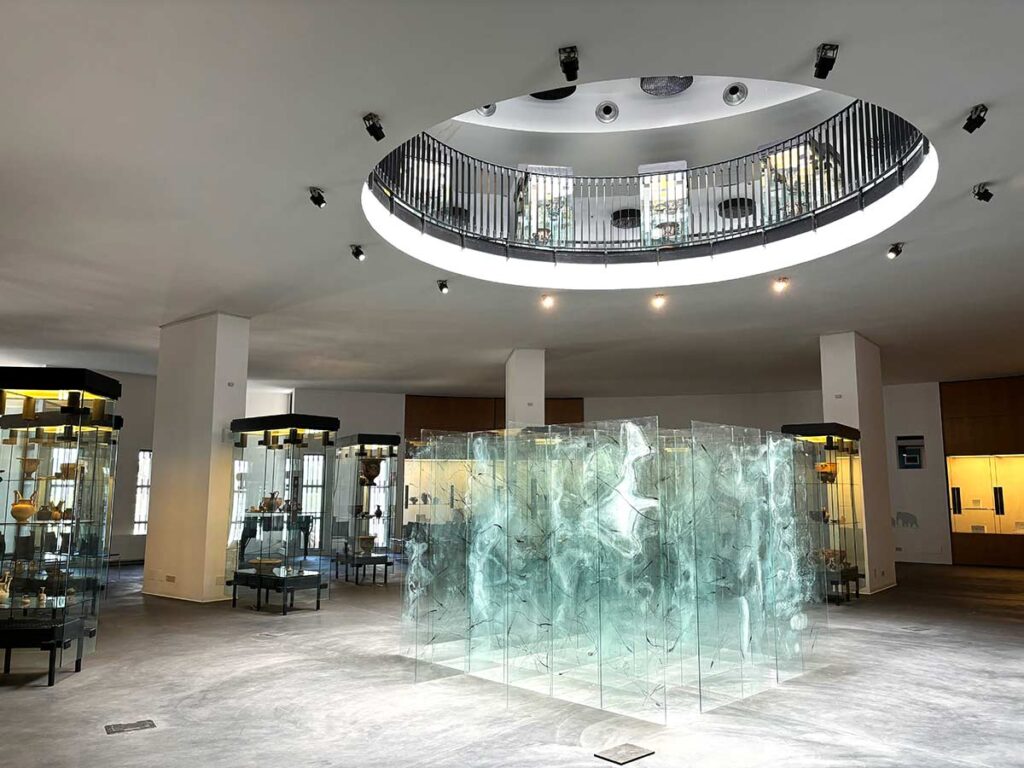
I had this list finished when I happened to stumble across the Museo Castromediano, and then I had to go back and change it from “The 14 Best Things to Do in Lecce” to “The 15 Best Things to Do in Lecce”, because this free museum turned into a highlight of my visit. I spent more than an hour in the museum and only saw one other visitor, which really surprised me. To me, this is the perfect place to spend an hour or two escaping from the afternoon heat in Lecce!
This museum tells the story of Lecce through five lenses: The Land, The Sea, The Living, the Dead and the Sacred. Each section of the museum is well-signed in both Italian and English, which makes it very easy to understand all of the different archeological finds that are on display.
A lot of attention has gone into the design and layout of the museum interior, and at the time of my visit it was particularly special because the historical artifacts were placed in striking juxtaposition with nine works by renowned contemporary sculptor Costas Varotsos. His works will be on display until January 2025, but the curation here was so strong that I’m confident whatever exhibit comes in next will be equally evocative.
The Museo Castromediano is also home to a small art gallery, or pinacoteca. It’s a bit hard to find and you’ll have to ascend two flights of stairs (there is an elevator), but you’ll be rewarded with – again – an exceptionally well-signed collection of art from the Salento region, covering the period from the 1600s to the 1900s.
#11 – Castle of Carlo V
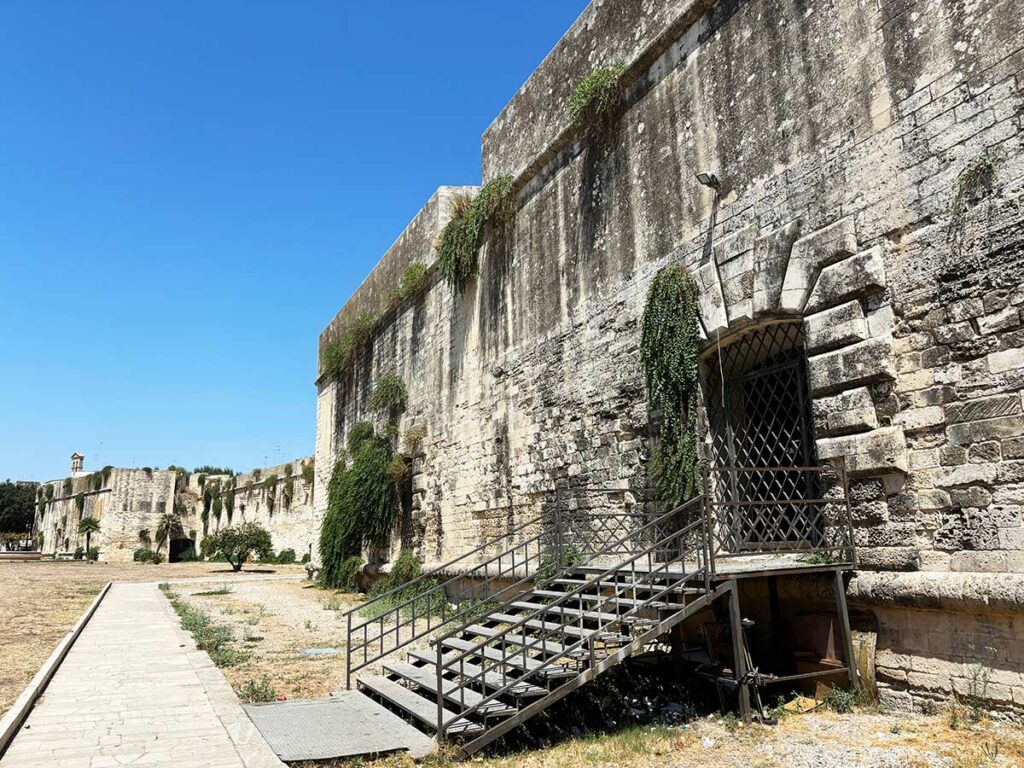
The Castello di Carlo V (Castle of Carlo the Fifth) is an imposing figure on the south side of the city center, beside the public gardens. The castle is named after the region’s former ruler who was a Holy Roman Emperor, King of Spain and Archduke of Austria in the 1500s.
I recommend that you walk around the exterior of the castle to get a sense of the size of the building, and that you enter the courtyard by the ticket office (it’s free to enter the courtyard and there’s a water fountain!) just to see a bit more of the architecture.
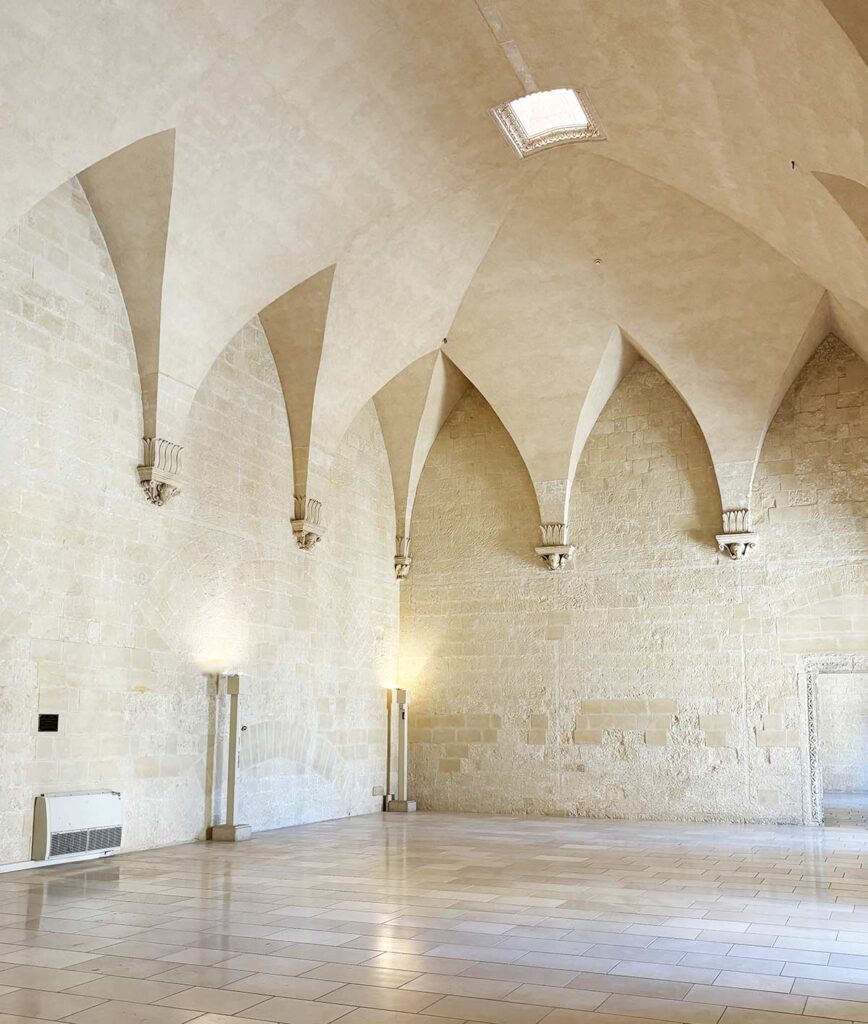
The only way to see the interior of the castle is to pay €8 for a guided tour. I took the tour and found it underwhelming, as we only visited a few cavernous, empty rooms inside the building. If you really want to see a lot of rooms like the one shown above then go for it, but I think your €8 would be better spent on #13 on this list. 😉
#12 – Walk Through the City Gates
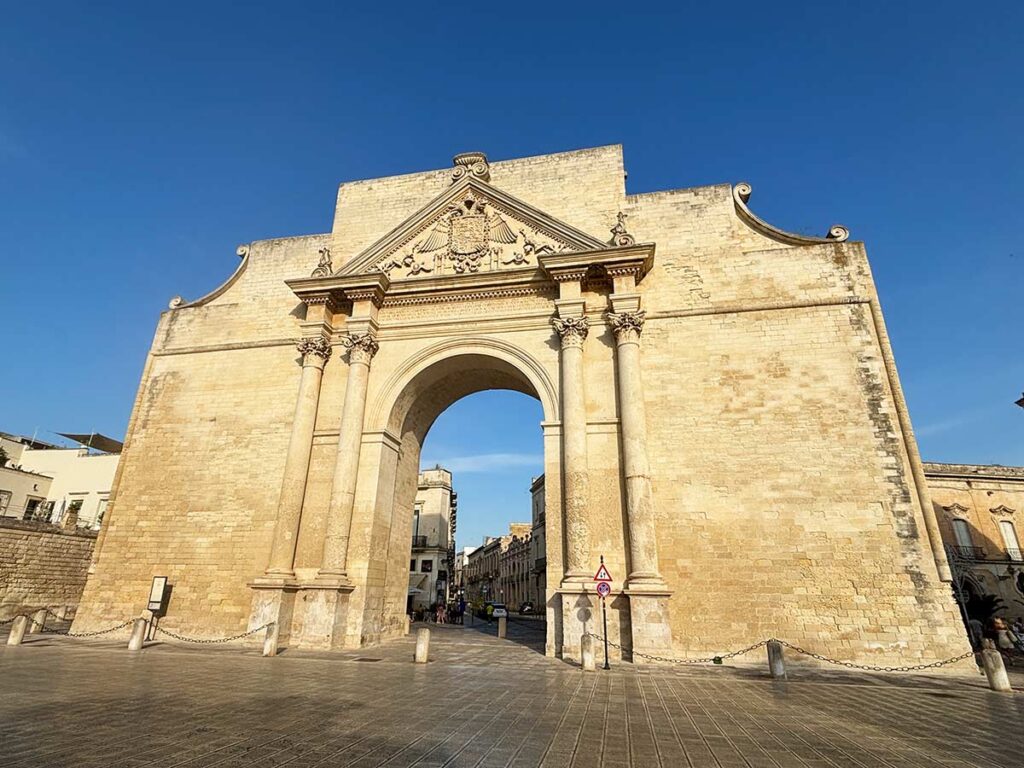
Carlo V didn’t just build Lecce’s castle. He also built a series of four gates to protect the city from possible invasions by the Turks. Today, three of these gates remain standing: Porta Napoli (shown above), Porta San Biagio and Porta Rudiae. I thought the gates were most beautiful when they became illuminated each evening, so grab a gelato or a granita and wander over to the nearest gate as night falls.
#13 – Pause for an Aperitivo

I love how we’ve all just collectively decided that going for an aperitivo is an actual activity that deserves to be scheduled into our travel days! This Italian ritual, of having a cocktail and a light snack a few hours before dinner, is one that I can definitely get behind. Lecce is the perfect place to indulge in this tradition as it has countless cafes and bars with tables spilling out into the Baroque piazzas throughout the historic center.
Instead of recommending specific bars and restaurants, here are three parts of the city center where there are numerous aperitivo spots for you to scope out:
- Piazzetta Santa Chiara – This pretty little square is brimming with trees, and the streets that line it are packed with cocktail bars and cafes that cater to the early-evening crowd.
- Piazza Castromediano Sigismondo – There are a couple cute restaurants here that have evening aperitivos in the shadow of the Chiesa del Buon Consiglio.
- The Other Side of Porta Napoli – If you walk from the historic center under Porta Napoli and head about one block down the street you’ll find a number of bars that are more popular with locals than tourists, nearly all of which have an aperitivo special.
- Via Marco Basso & Via Guglielmo Paladini – There are a handful of cocktail bars around this intersection; some serve the classics while others are into more innovative mixology
#14 – Explore Contemporary Art at the Fondazione Biscozzi Rimbaud
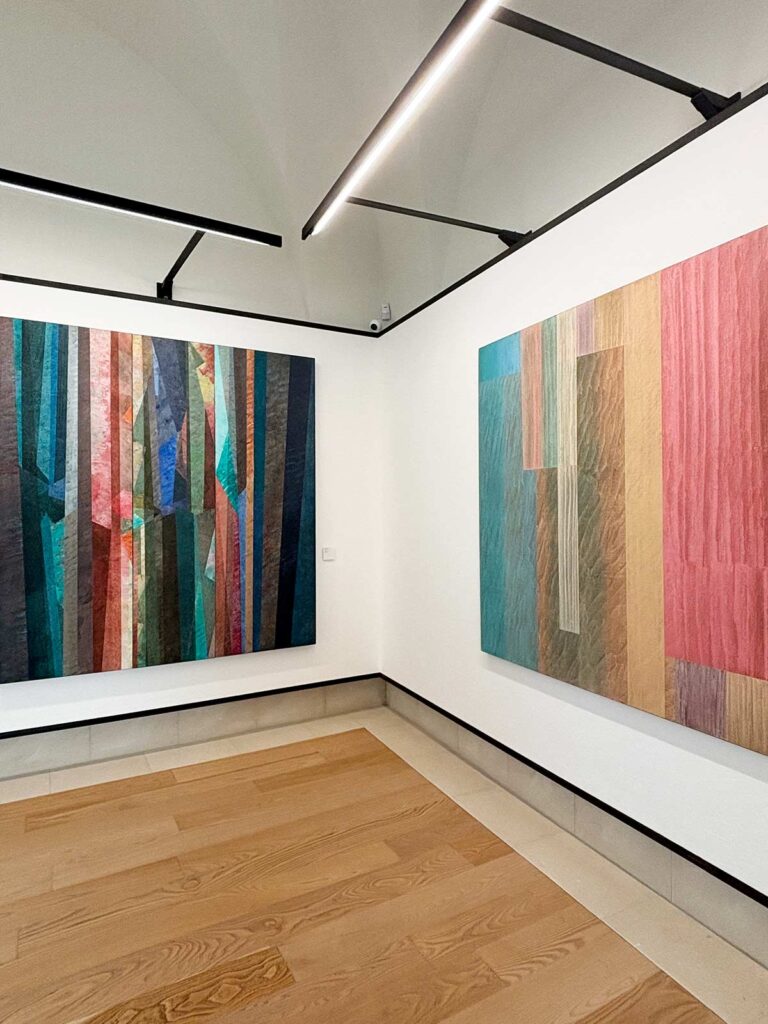
I had been in Italy for five weeks by the time I arrived in Lecce, and in that time I saw more medieval and Renaissance art than I could shake a paintbrush at. That’s why the Fondazione Biscozzi Rimbaud was a welcome change of artistic scenery!
This private art gallery charts Puglia’s contemporary art movement from the early 20th century to today. Each room in the small gallery is well-signed to explain the historical and artistic context in which the art on display was created, so you can really understand what caused the prevailing style to change with each decade. I also enjoyed seeing the interior of the building, as it shows how the region’s historical palazzos can be modernized.
You’ll won’t need more than an hour to see the collection here. The Fondazione Biscozzi Rimbaud was open daily from 5:00 pm to 9:00 pm at the time of my visit, making it a great pre- or post-aperitivo activity in Lecce.
#15 – Peek at the Roman Theatre
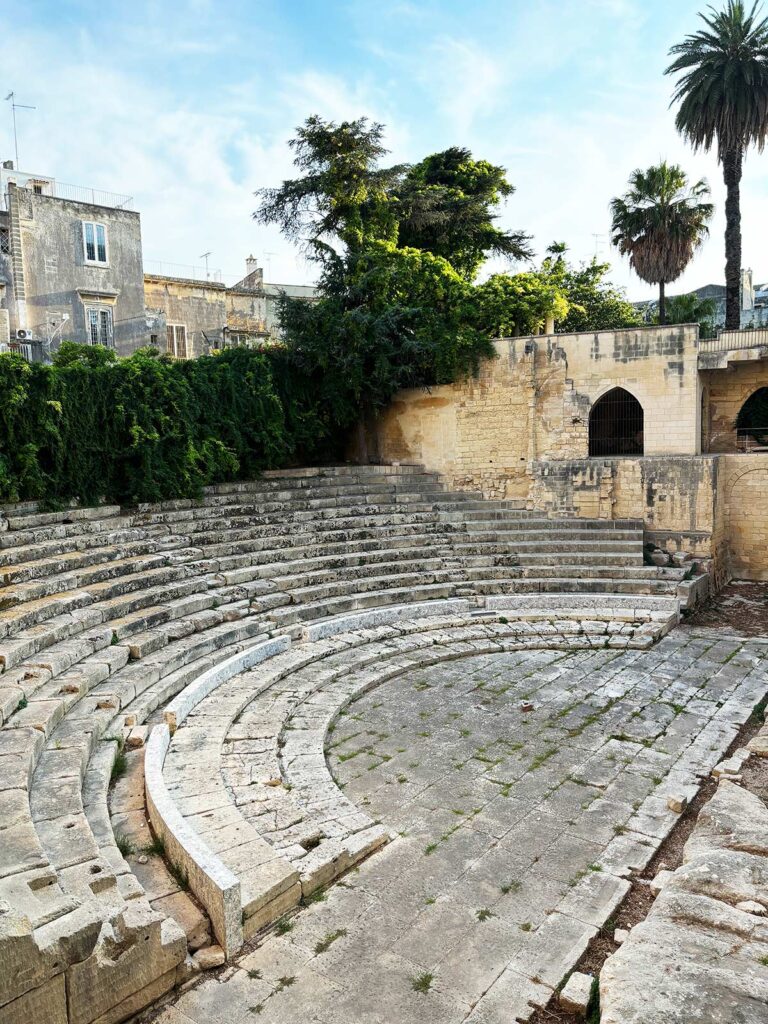
This isn’t a repeat! In addition to the large Roman ampitheatre found in Piazza Sant’Oronzo, Lecce is also home to a smaller Roman theatre. Dating back to the reign of Augustus, the Roman theatre would have held about 5,000 spectators who gathered here to watch performances of Roman comedies and tragedies.
At the time of my visit they were doing restoration work on the theatre and most of the viewpoints were closed. However – and I’m not joking here – there was a balcony inside the free public toilets on Via Arte della Cartapesta (“Street of Paper Mâche Art”) that had an excellent view of the site. Hopefully by the time you visit Lecce you won’t need to go in a toilet to see it!
⭐ Extra Lecce Travel Tips ⭐
Thinking of planning a trip to Puglia? I’ve got a few extra tips on restaurants, hotels and shopping that you’ll want to bookmark.
🍝 My Favorite Restaurants in Lecce
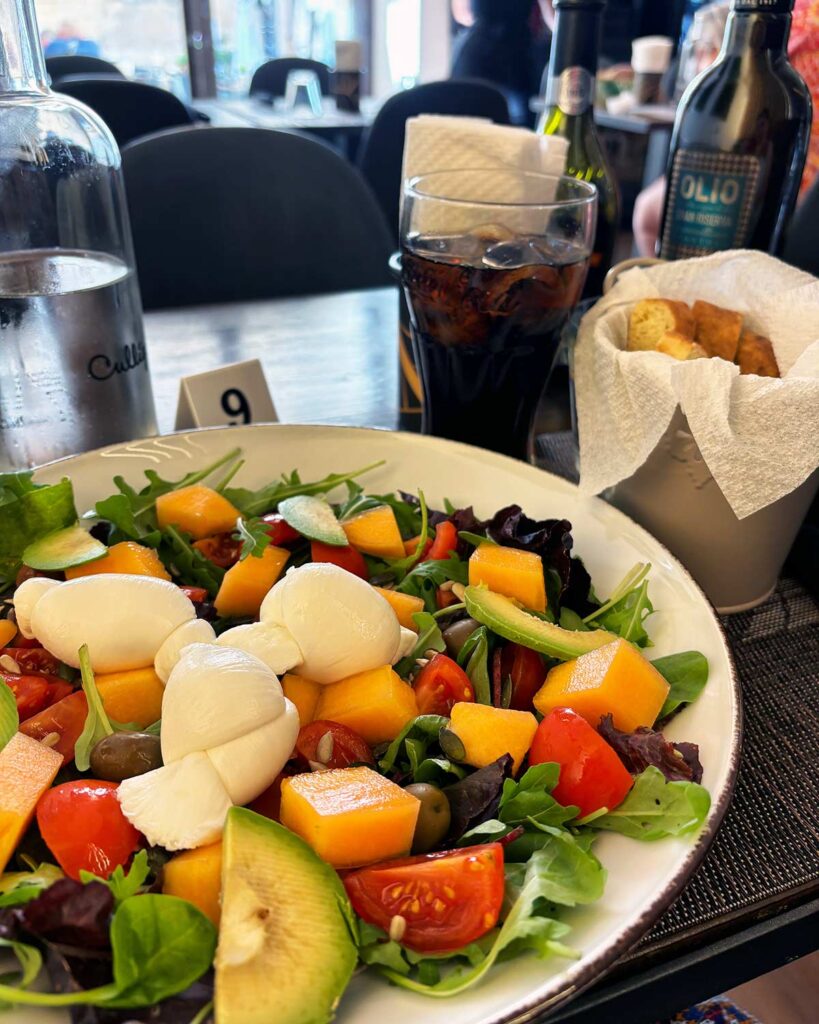
As I was staying in an apartment in Lecce I did a lot of cooking at home, using groceries I picked up at the central Dok Supermarket (recommended by the owner of the house I’d rented). That being said, here are a few restaurants that I either enjoyed or would have wanted to try if I’d been in Lecce longer:
- TAULA – The interior room has the A/C pumping and they do some great salads, like the one shown in the photo above. They also have heartier dishes like pucce (local sandwiches) and pasta.
- La Tipografia – Recommended by other travelers that I met, they have creative first and second courses (including multiple vegetarian options)
- Mezza Quinto – If street food is more your thing, this takeaway stall does vegetables plates with burrata, eggplant parmesan and a variety of meatballs. You have to be a Roman gladiator to fight for one of their few tables though!
- Al Ventuno – If you’re craving a pancake breakfast, this is the place to come. They also do light lunches like salads and sandwiches.
- Baldo Gelato – I have an ice cream or granita a day, and this gelateria came out on the top of my list for their creamy, toasted almond granita.
💤 Notable Hotels in Lecce
I stayed in Le Volte de San Leonardo, a beautiful one-bedroom apartment in the historic center (three minutes from both the Duomo and Porto Napoli) with a private garden terrace. The owner, Chiara, is a lovely host, and I know that I’m in good company having rented here as I noticed the signature of a very famous Canadian artist in the guestbook! I’d highly recommend Le Volte de San Leonardo for any stays of more than a few days where you’d want to do a bit of cooking for yourself or have time to read and relax in the garden.
I didn’t personally stay in any of these other properties, but having spent a week in the city and read their reviews carefully I can confirm that they’re in locations I would be happy to stay at, and they’ve got rave reviews from other travelers:
- Dimora San Giuseppe – This hotel has a beautiful design, a stunning rooftop terrace, and a location right beside one of my favorite piazzas for an evening aperitivo
- Palazzo Maresgallo Suites & Spa – Splurge on a stay in a sixteenth-century palace that is home to a “secret garden”, panoramic rooftop and underground spa.
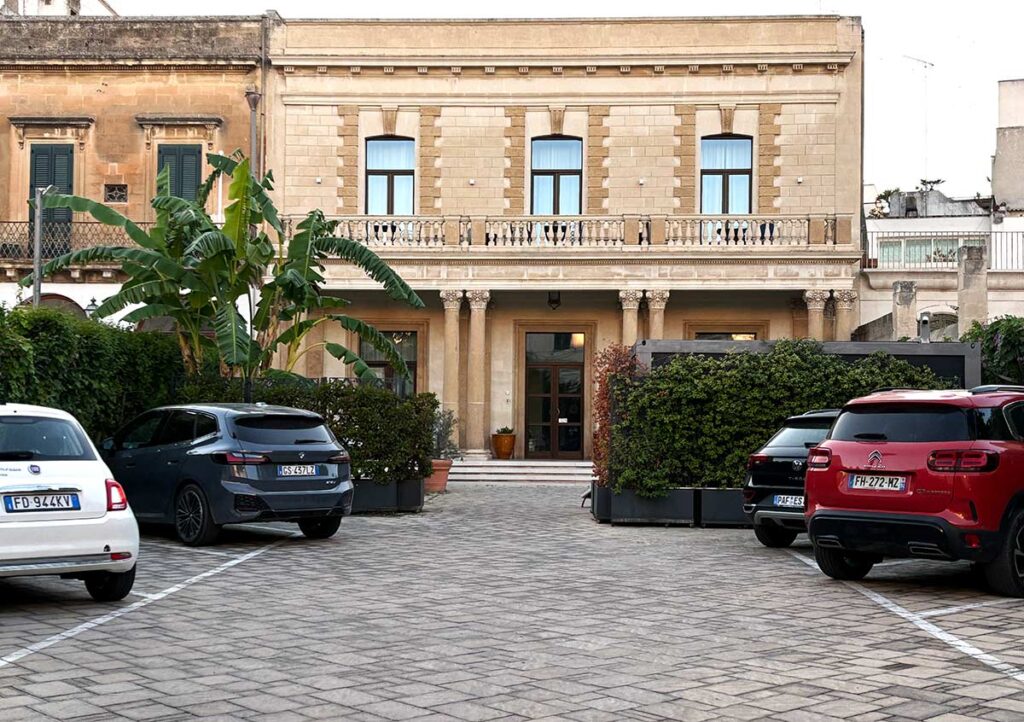
- Dimora Charleston – I don’t think you’re going to find a hotel with free private parking (shown above) in a better location than this, and as a bonus they also have an outdoor pool!
- Palazzo Rollo – This historic hotel right in the center has an Instagram-famous courtyard that will take your breath away, especially if you stay during autumn when the leaves change to a flaming hue.
🛍️ Shopping in Lecce
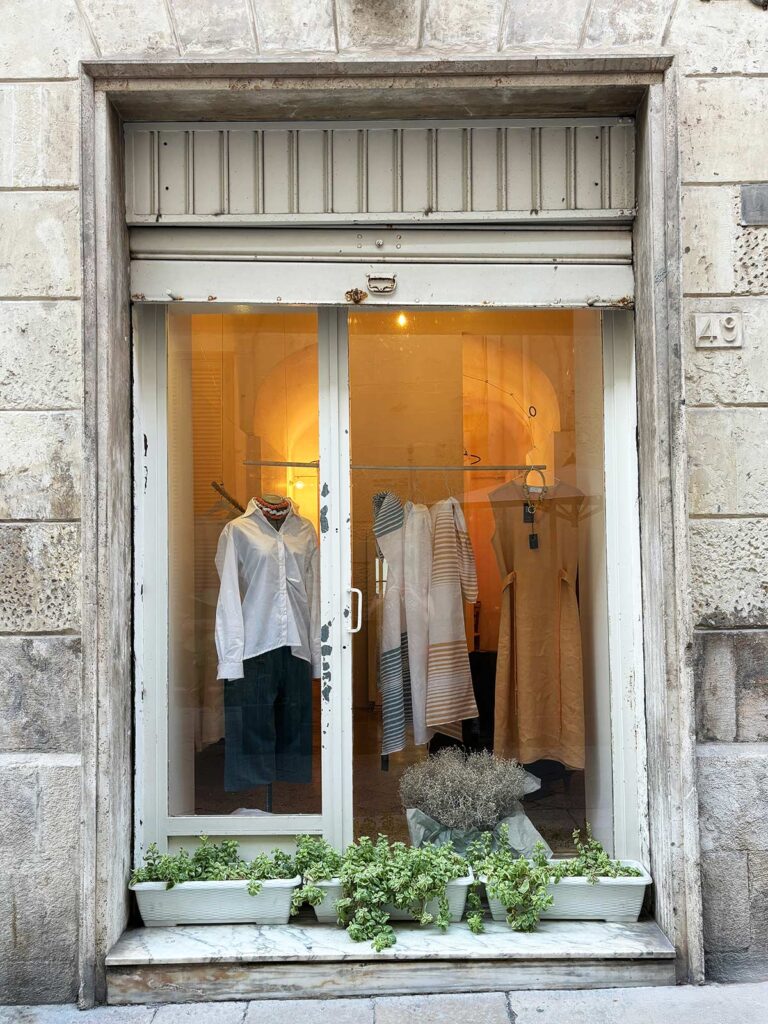
If you enjoy shopping at independent boutiques, you will love shopping in Lecce! The historic center is full of small shops selling truly high-quality items, including handmade clothing in natural fibers, ceramics and stone work, and gourmet food items. My bag was too full for much shopping, but I struggled to leave these shops empty-handed:
- IJOdesign – There’s an actual loom in this shop where they hand-weave natural textiles like cotton and linen to create beautiful, simple clothing
- Silente – Another shop making beautiful clothes in natural fibers (but more in my budget!)
- Atika Sartoria – The atelier of local designer Antonio Franco doubles as a vintage clothing shop with Dolce and Gabbana and Dior among the items available during my visit
- TONDADESIGN – A curated collection of housewares, jewelry and accessories just steps from the Duomo
- Nel Salento l’Arte di Creare – Again, chic house decor, kitchen essentials, jewelry and accessories near the Porta Napoli
- Profumeria San Salvatore – Likely the best niche perfume shop you’ll find in Salento (if I’m wrong then let me know in the comments!) and the perfect place to shop for a souvenir that will evoke memories of Italian citrus trees and the fresh sea breeze
Is Lecce Worth Visiting?
Lecce was a highlight of my summer in Puglia and I highly recommend it to other travelers. If you’re on a tight schedule then it’s perfect for two days of efficient sightseeing, but it’s also the ideal place to slow down for a week or two and immerse yourself in La Dolce Vita.
Another one of my favorite stops in Puglia was Monopoli, where there are seven beautiful beaches within easy walking distance of the historic center.
Planning a trip to Puglia? Pin this post for later!
 |
 |