

I recently visited Roses, Spain on a day trip from Figueres. I didn’t really know anything about Roses before I departed, but by the end of the day I was completely wowed by this small town on the Mediterranean Coast. It had the perfect summer day trip trifecta of interesting historical sights, clean beaches and convenient public transportation.
In this Roses travel guide I’ll walk you through planning your day trip to Roses, what you can see in the city when you arrive, and how to have an enjoyable visit to this under-the-radar city in Catalonia. Hopefully I can convince you to spend an extra day (or two!) in the region so that you can also check out Roses!

All About Roses, Spain
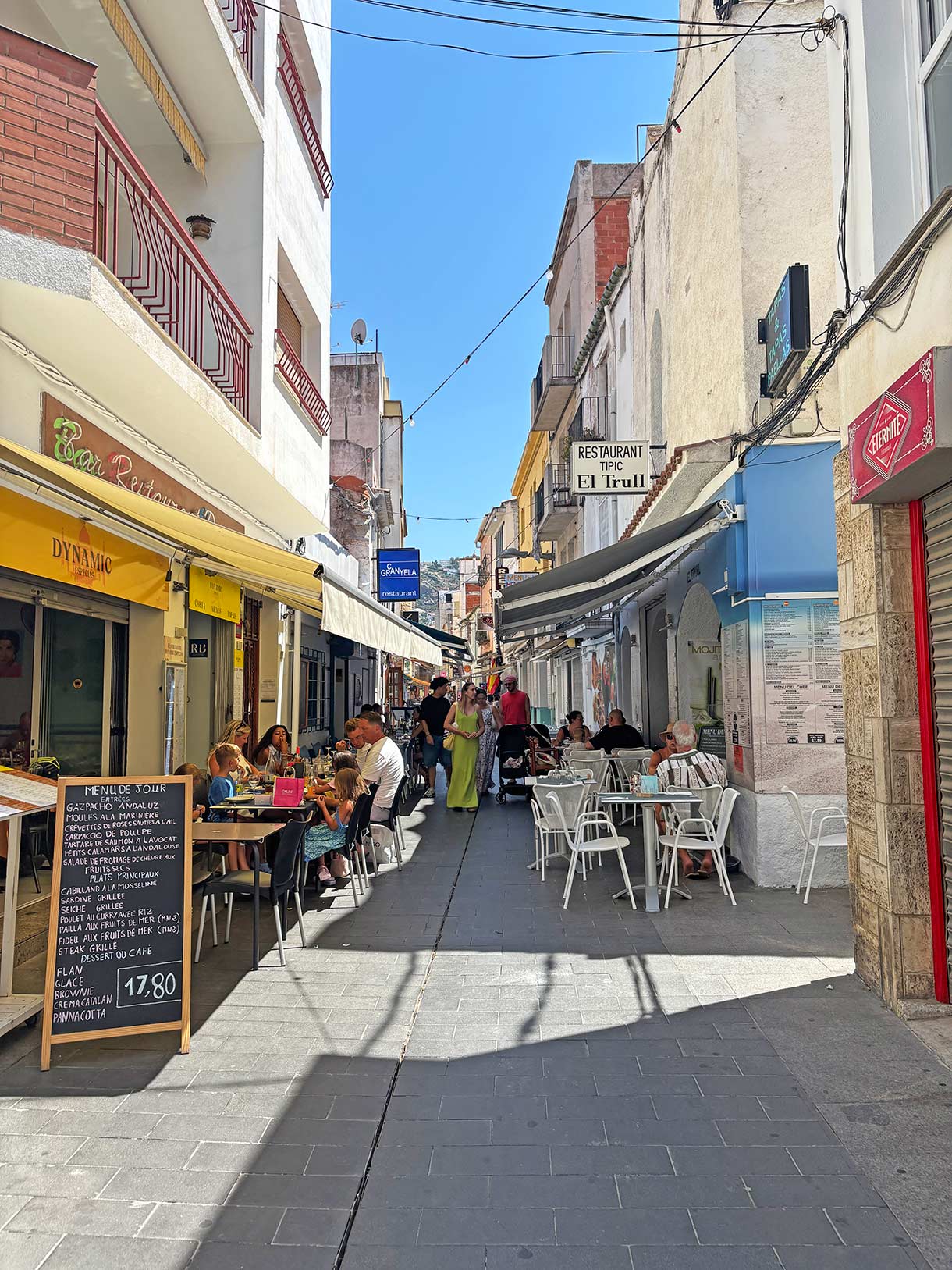
Roses, Spain is a small city on the Spanish Mediterranean coast, about fifteen kilometers south of the French border. From the bus station in central Figueres (opposite the train station) there are regular buses to Roses and the journey takes about forty-five minutes. Buses are operated by Moventis and can be booked online in advance, or you can tap your credit card to pay as you board.
If you have a car, you can make the drive from Figueres to Roses in less than half an hour. By car, it’s also possible to combine Roses and Cadaques (home to the Salvador Dali House Museum, one of the three Dali museums in the region) in a single day trip. Note that the road passes through the Serra de Rodes mountains, meaning you need to be comfortable driving on narrow mountain roads with steep turns and sharp drops. Unfortunately, the infrequent bus connections between Cadaques and Roses make combining them as a day trip nearly impossible by public transportation.
Roses is located on the Gulf of Roses, where the calm waters have attracted both residents and passing traders for centuries. The town holds Greek and Roman ruins, which you’ll visit on the day trip, but the majority of the town today is modern, having been developed to accommodate the post-WW2 boom in recreational tourism to Spanish beach towns.
The center of Roses is mostly flat and walkable, and the attractions I’ll cover in this guide are within easy walking distance of one another. It’s a relatively small city, though it’s year-round population of about 20,000 people swells to six times that during the summer.
Utopia Coffee House in Roses

I started my day in Roses with breakfast at Utopia Coffee House, which was a fifteen-minute walk from the bus stop where I’d arrived. I know there were breakfast options closer to town but on my long trips I am always happy to sit in a brunch restaurant with a good cappuccino and enjoy something interesting for breakfast.
The coffee shop was quite busy but I was lucky that a table freed up shortly after I arrived. I ordered a toasted bagel with goat cheese, honey and walnuts, and a cappuccino. It was exactly what I wanted to start my day, and I should mention that I’ve been home from Roses for almost a month and I still remember how friendly the staff were, going out of their way to chat with all of the visitors (which is not common in Spain!).
The Roses Market

If a city has a food market I will find it and go inside! The Mercat de Roses was midway between the city center and Utopia Coffee House, so I stopped inside for a peek. Open daily from about 8:30 to 1:30, the market has a heavy emphasis on fish and seafood, but you can also find other things like fruits, vegetables, baked goods and cheeses. For the average day tripper it’s not super-interesting, but if you were staying in Roses for a few days you might want to stock up on groceries here.
Roses City Center
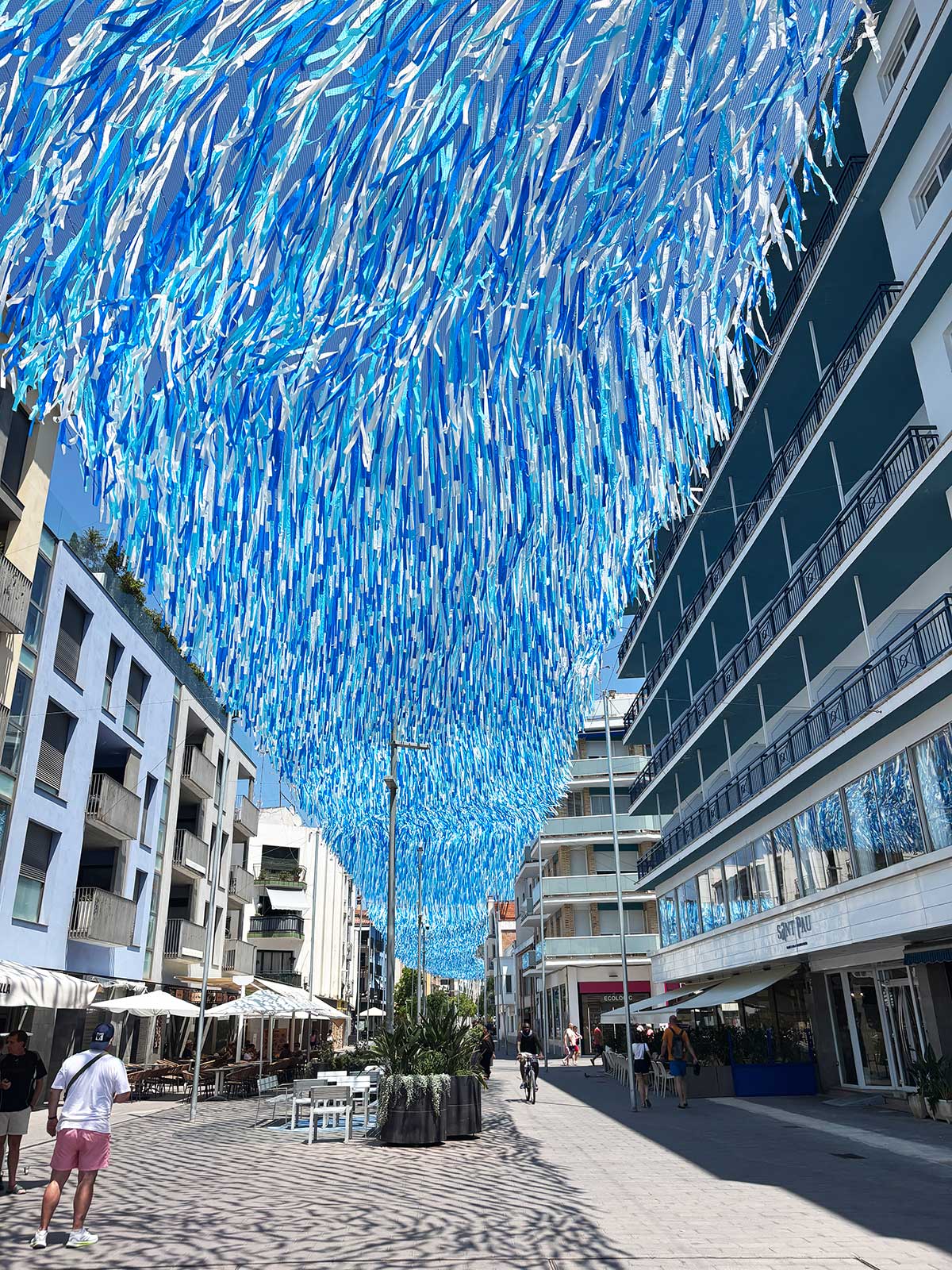
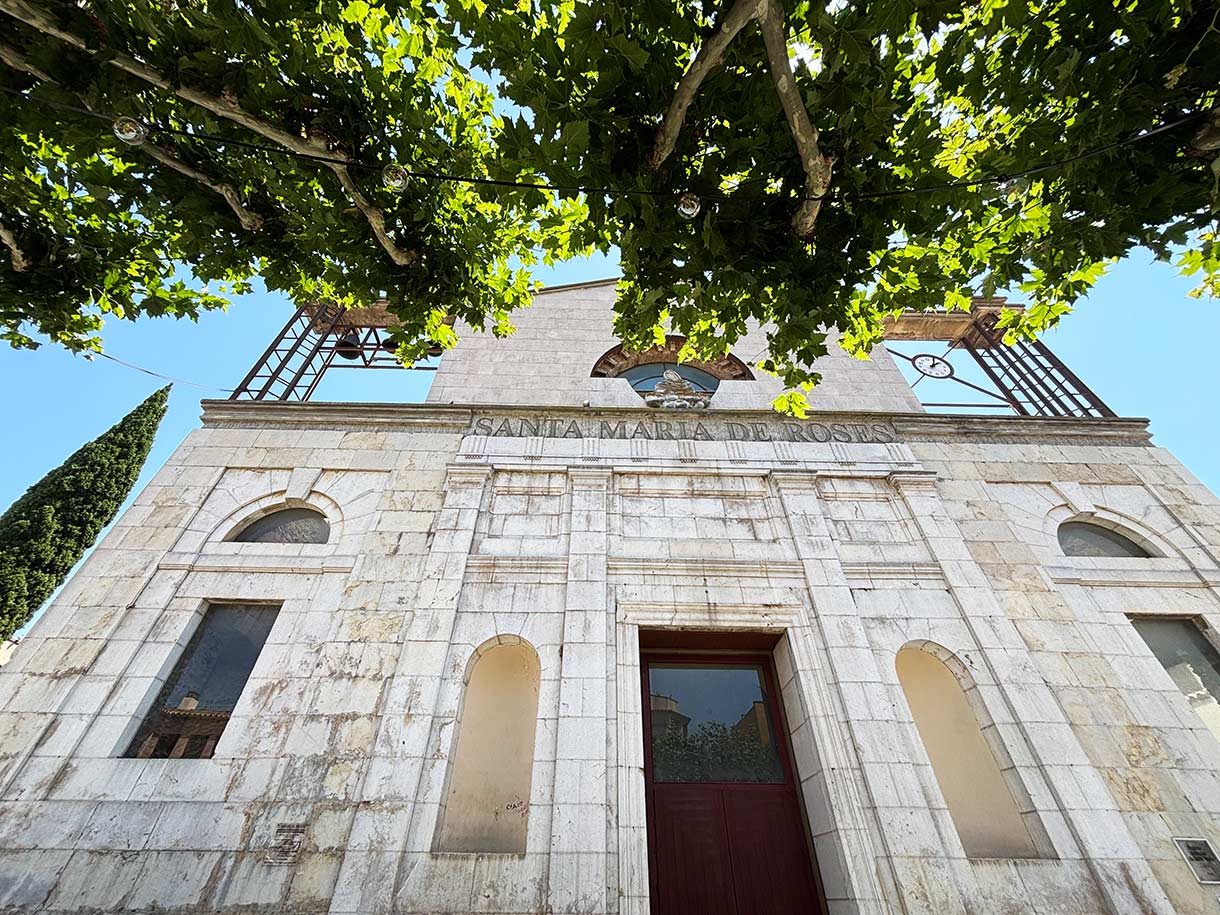
Most of the city center of Roses feels quite new, although there are some historic streets and plazas that have a more traditional feeling. As you’re walking in the center, you may want to stop at:
- Church of Santa Maria – This church was built in the late 1700s and then refurbished in the mid-1800s. It was built to replace the ruined church that you can now see in the citadel (details below).
- Carrer de la Riera Ginjolers – At the time of my day trip to Roses, this street (running perpendicular to the beach) was adorned with colorful blue ribbons reminiscent of the Mediterranean. There are some highly-rated hotels around here, including RNET Sant Pau – Roses, Hotel Maritim and Roses Beach Apartment.
- Casa Mallol – There are a number of beautiful historic mansions in the center of Roses, and Casa Mallol is the most noteworthy. It was designed by Joan Mares i Mares, who was inspired by Gaudi’s work in Barcelona when he designed several Modernist homes here in Roses.
- Placa de la Pau – This small plaza is dedicated to remembering the Spanish Civil War. Beneath the square there is a historic bomb shelter, while at ground level you can see numerous commemorative plaques and sculptures.
While I was exploring the center of Rosees I also grabbed a slice of focaccia from one of the local bakeries for lunch. There are lots of places to eat along the waterfront or in the plazas off Carrer de la Riera Ginjolers, with seafood and fish being a major focus of the local cuisine.
The Beach in Roses, Spain
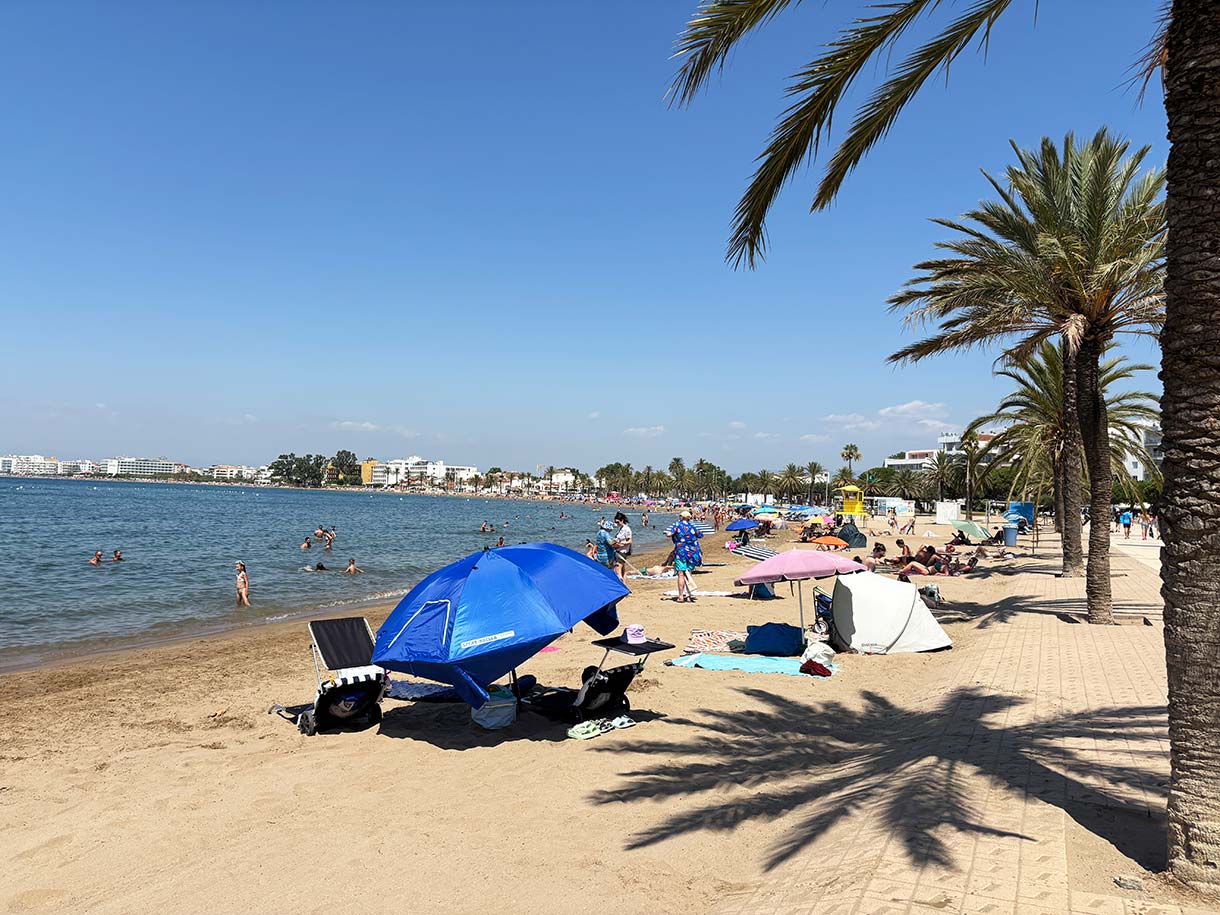
Roses runs along a two-kilometer beach that stretches along the shores of the Bay of Roses. The water here is typically calm, and if you’ve packed a snorkel you’re likely to see some fish swimming near the beach (especially around the stone piers where the boats come in). There are some public toilets near the beach, but not public showers (that I could find, at least).
Most people visiting the beach in Roses pack their own beach chairs and sun umbrellas. The staff at tourist information told me that that there are some beach clubs at either end of the beach where you can rent a sun chair, but I didn’t have time to check them out.
The Roses Citadel (Ciutadella de Roses)
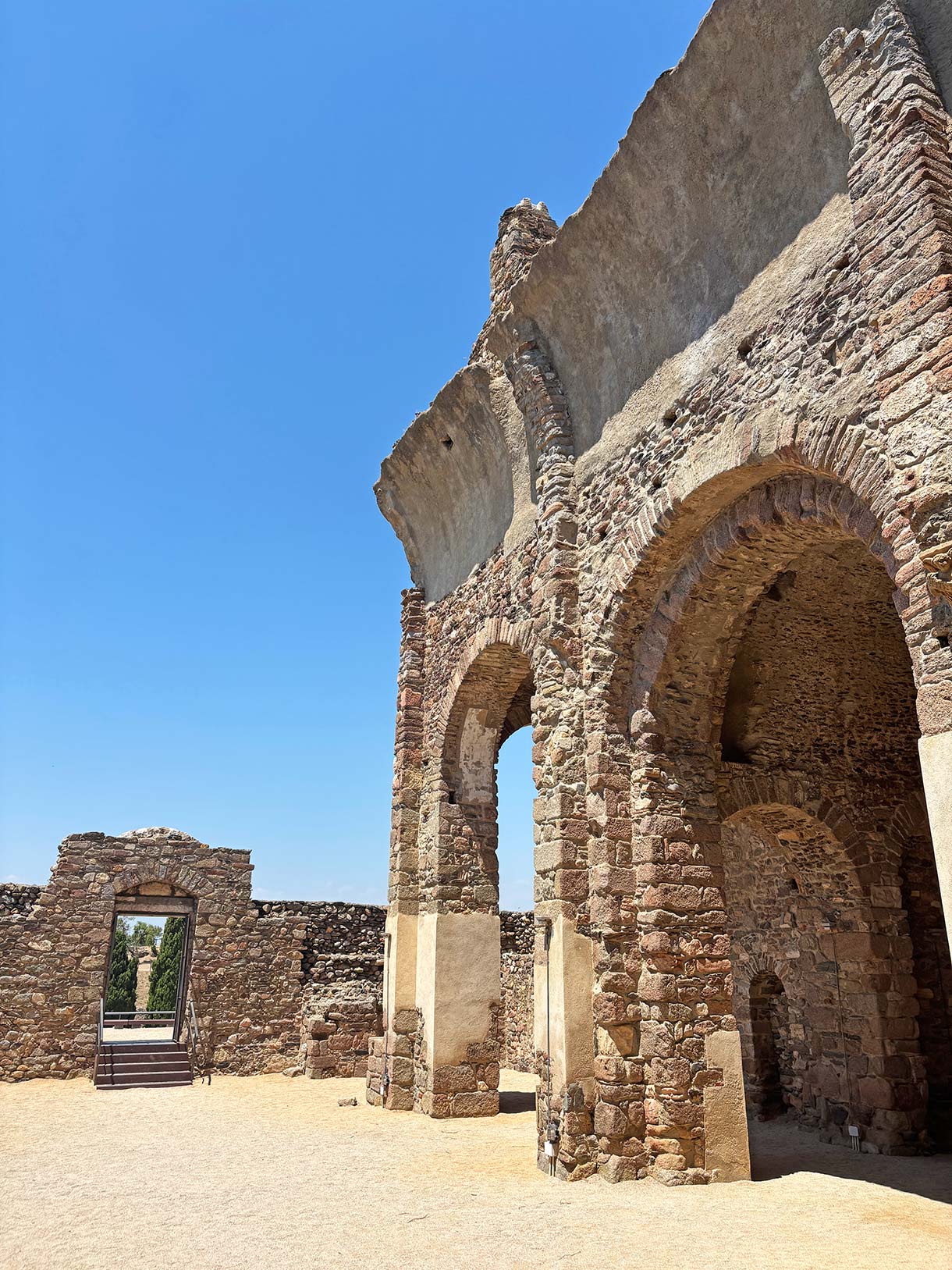
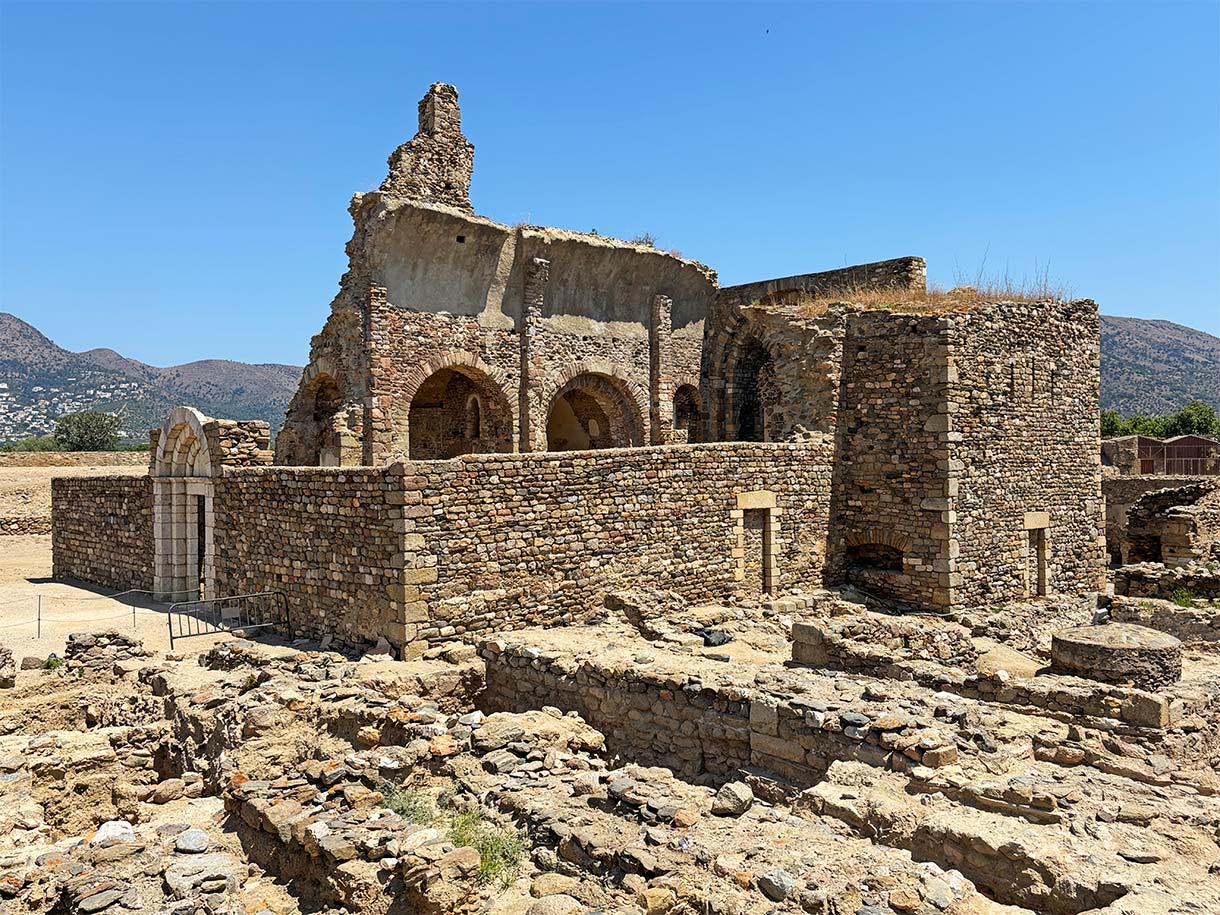
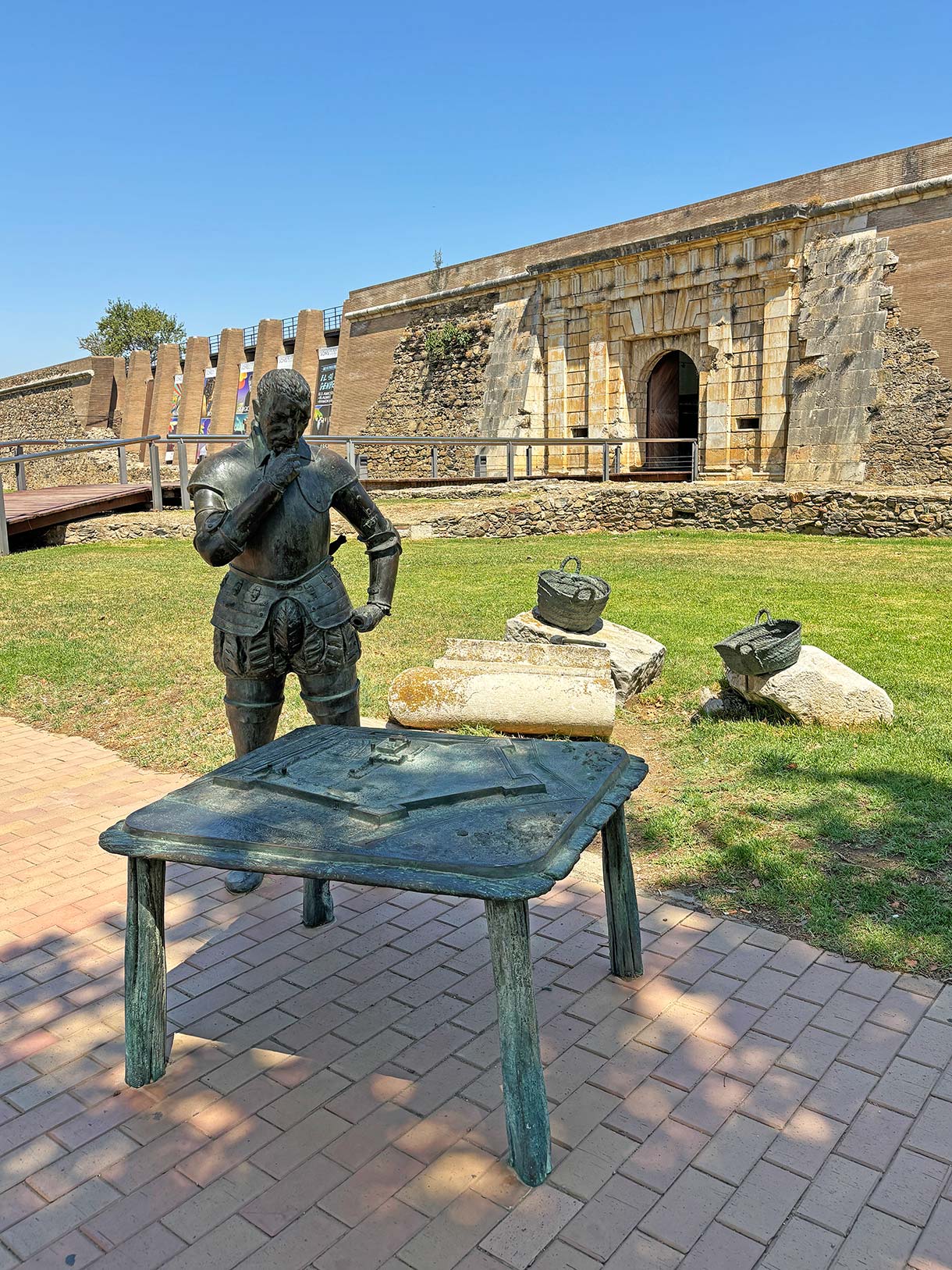
The most significant tourist attraction in Roses is the Ciutadella. At this archeological site just beside the city center (and just steps away from the bus stop to Figueres) you can explore ruins from Ancient Greece, Ancient Rome and the Middle Ages, while archeologists actively work right in front of you.
After paying the very reasonable €4 admission fee, your visit will begin in the citadel’s museum. This air-conditioned building has a small cinema with a multi-lingual film explaining the history of the region and the archeological site, as well as several rooms of artifacts that have been excavated here and in the surrounding countryside. There are also clean bathrooms in the museum (for example, where you might want to pop into your bathing suit before heading out on a boat trip!).
From the museum, you then head outdoors to the expansive citadel grounds. At the time of my visit there was not an English map available (only French and Spanish) so I followed the French map through the different sections of the citadel, passing through the Ancient Greek quarter, the Ancient Roman quarter, the ruined medieval monastery, the medieval village and finally the sixteenth-century fortress. It’s fascinating to be able to see so many different time periods in one place!
I spent about forty-five minutes in the museum plus another hour outdoors. I was in Roses during a record-breaking heatwave, and if it hadn’t been 38° Celsius outside I would have spent at least another thirty minutes in the outdoor areas (which unfortunately lacked shade).
Boat Trips from Roses
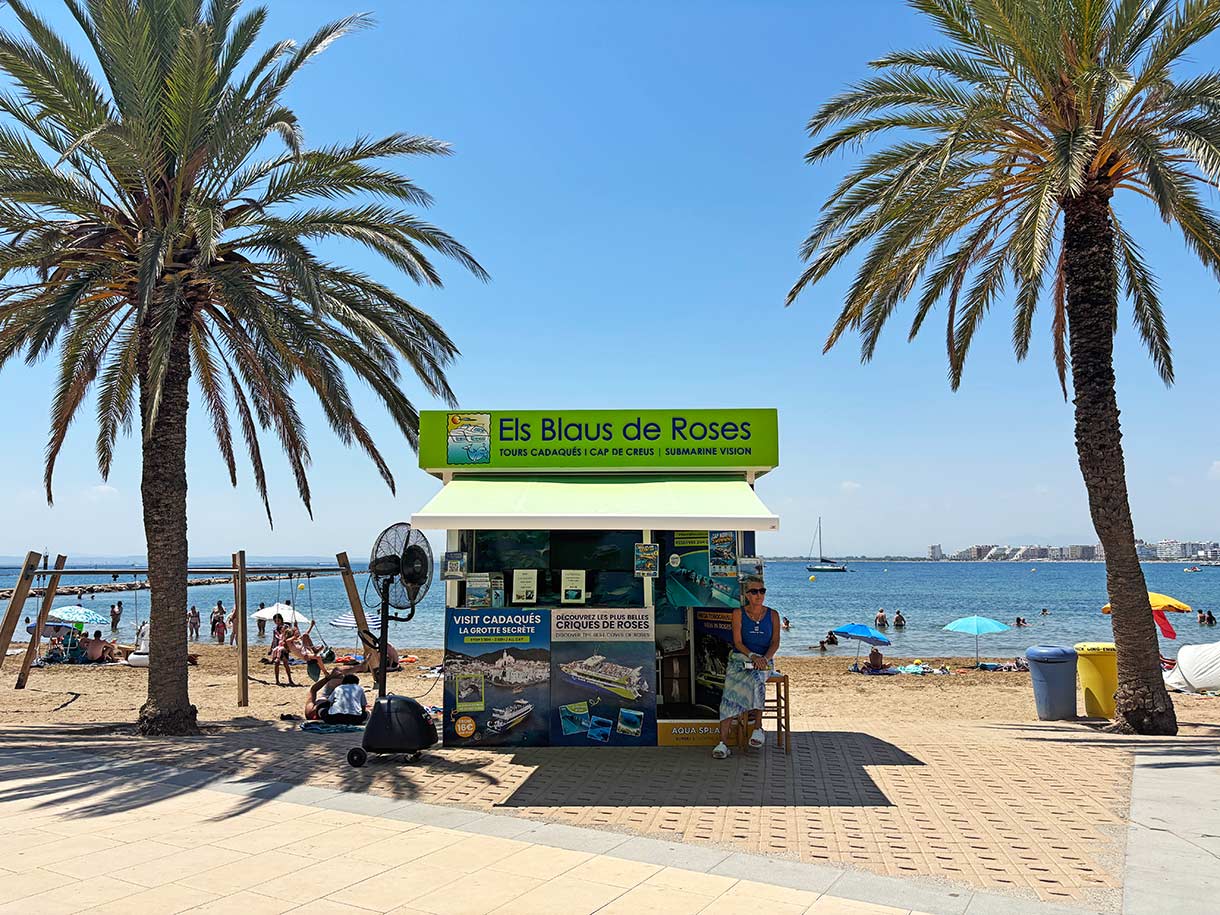
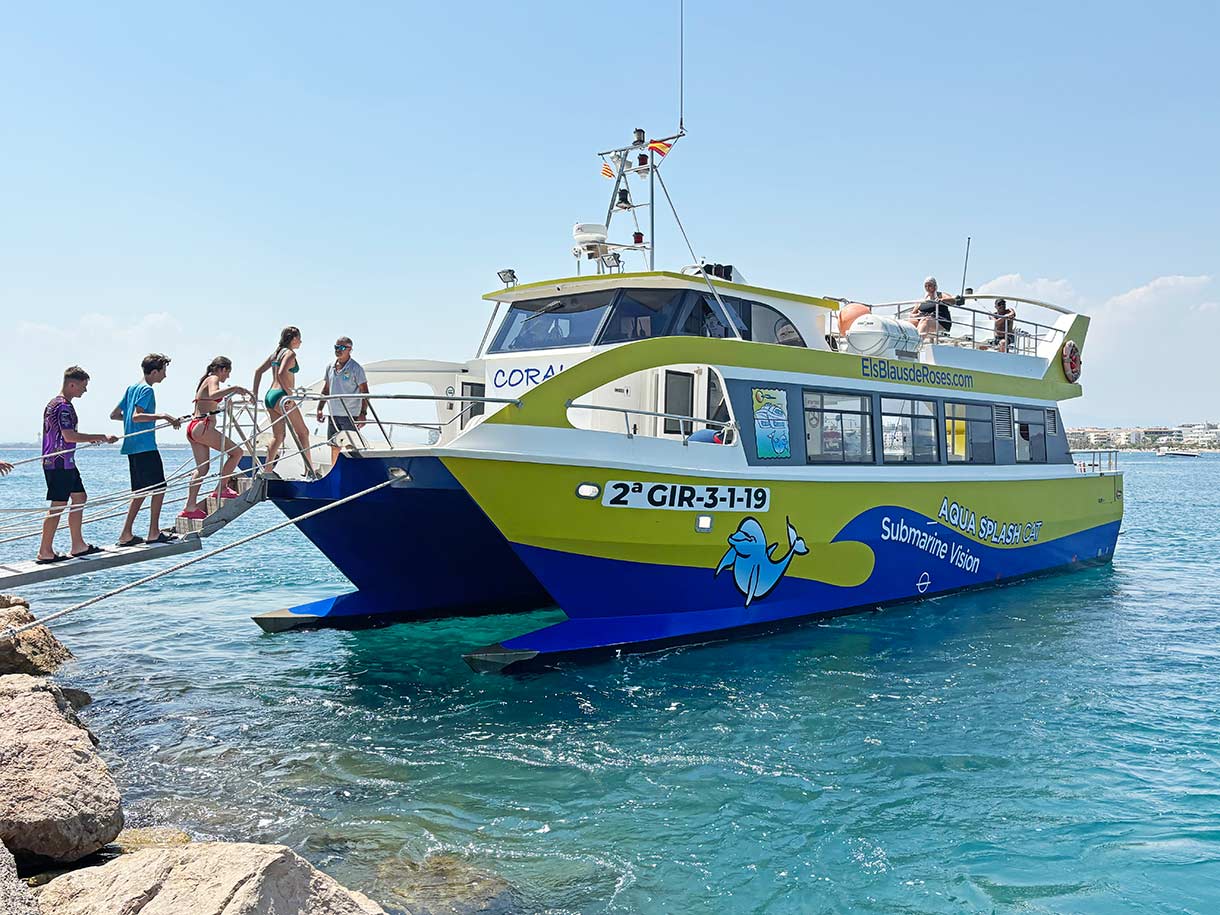
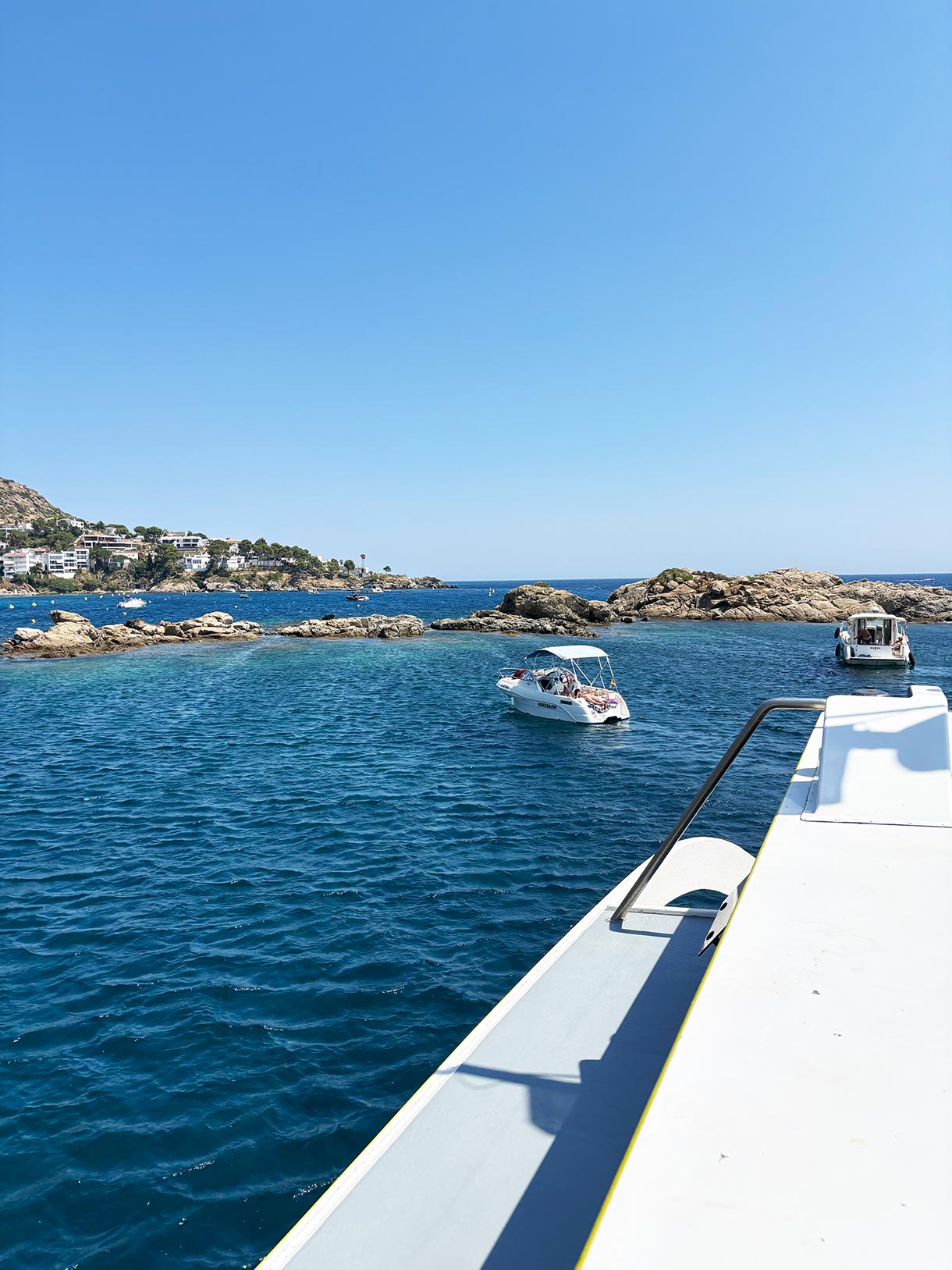
Along the beachfront in Roses you’ll find several kiosks from local boat operators selling tickets for different boat tours in Roses. I can’t resist a boat trip, so when I walked past the kiosks in the morning I booked a ticket for one of the boat tours later that afternoon.
Our tour sailed along the coast of the Bay of Roses, past Castell de la Trinitat (only open in the evening at the time of my visit) in the direction of Cadaques. We then stopped in one of the protected bays for about forty-five minutes of swimming and snorkeling. Life jackets were available, but I’d recommend only jumping in if you’re a confident swimmer as there was a fair bit of current along the coast.
The boat that I took also had a glass-bottom viewing area, where you could descend down a narrow stairway (careful – it was slippery, the handrail stopped halfway down and several people completely wiped out) to watch the fish below, but I thought the view of the fish was better from the surface with your mask and snorkel.
If you want to guarantee a spot on board one of the boat tours from Roses, especially in the high season, I suggest booking in advance. You can find all of the tours currently running on either Get Your Guide or Viator. (Check the starting point of the Viator tours carefully as some leave from beaches along the coast, not right in Roses!).
Is Roses Worth Visiting?
Yes, Roses is definitely worth visiting! Although there are lots of things to do in Figueres, if you have more than two days in the city it’s worth visiting the nearby coast. Roses is one of the easiest destinations to reach by public transportation from Figueres, and even with just one day you can get in a good mix of sightseeing and beach time.
Planning a trip to Catalonia? Check out these guides before you go!
⭐ The Best Neighborhoods to Stay in Barcelona
🚅 How to Take a Day Trip from Barcelona to Tarragona’s Roman Ruins
🏰 The Best Things to Do in Perpignan, France
🏖️ The 15 Best Things to Do in Collioure, France
💕 The Best Hotels in Collioure, France
🫛 10 Markets in Barcelona Worth Visiting
Planning a trip to Spain? Pin this post for later!
 |
 |