
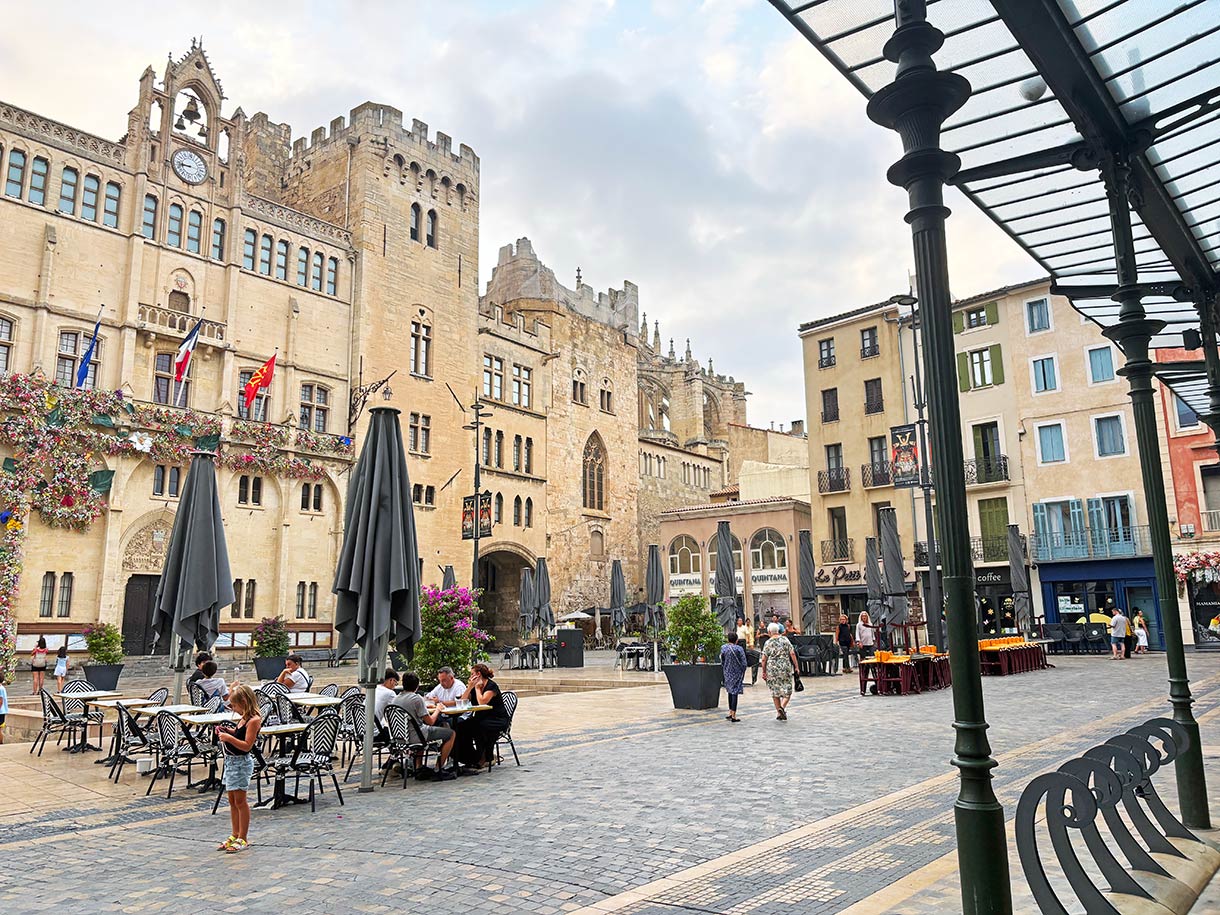
I recently spent one week in Narbonne, France. This pretty little city in Occitanie was the first Roman settlement outside of Italy, making it the perfect destination in France for history lovers. It also has a vibrant culinary scene and a picturesque, walkable city center, which visitors looking to travel slowly in France will surely appreciate.
With one week in Narbonne I was able to see all of the city’s highlights (twice!), take some day trips outside of the city, and also just slow down to enjoy la douceur de vivre over a coffee and a pastry with a view of the canals. In this Narbonne travel guide I will show you all of the best things to do in Narbonne, sharing my unfiltered thoughts on each attraction and my tips for having the most enjoyable visit.

The Archbishop’s Palace
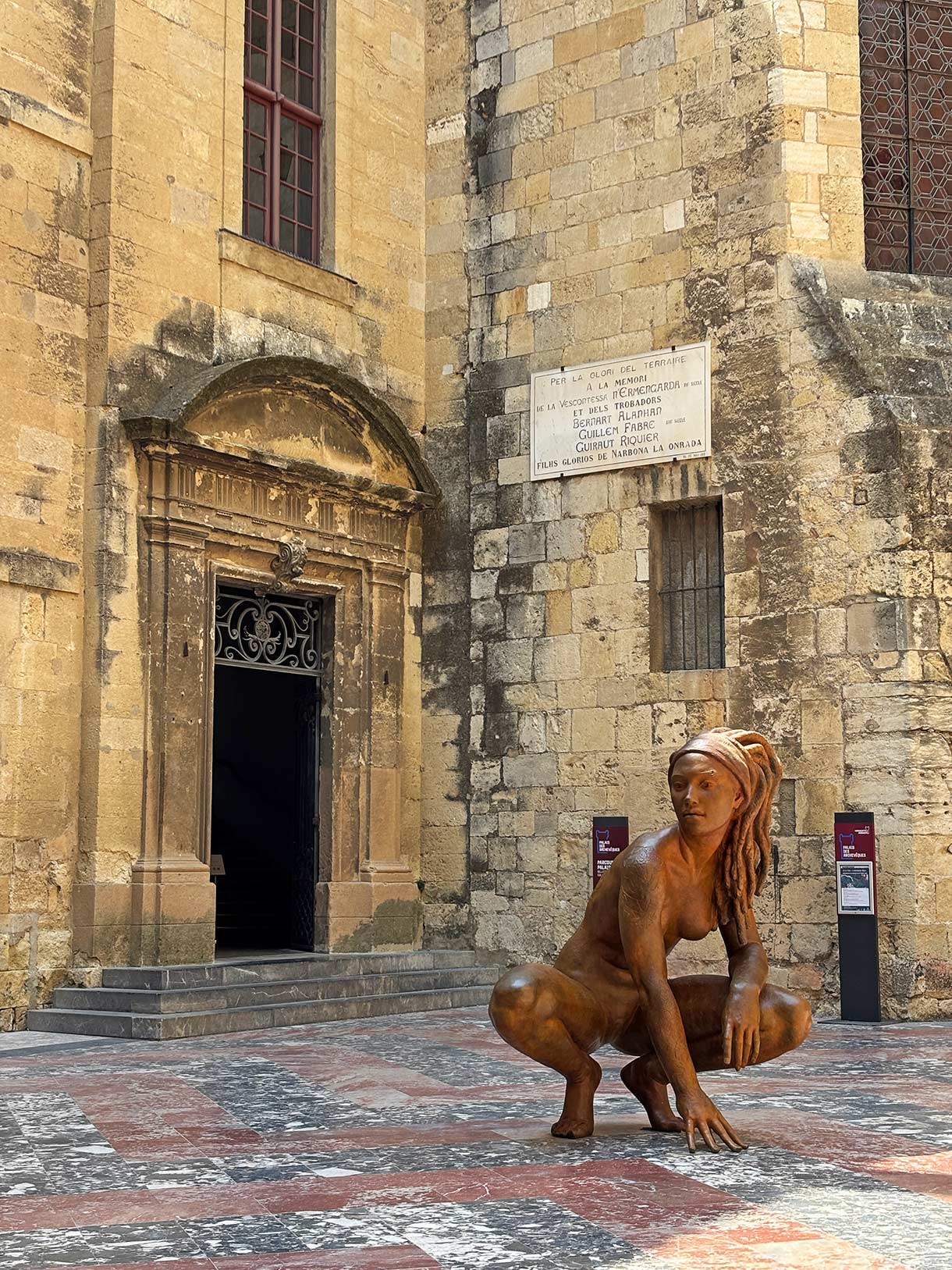
My first stop in Narbonne was the Archbishop’s Palace, which is located right on the main square (Place d’Hotel de Ville) in the historic center (shown in the top photo). At the ticket booth I picked up a €23 “Pass Musées Narbonne”, which included access to everything in the palace and several other attractions around town (which I’ll note below).
The palace itself dates back to the 1200s, but the interior underwent significant renovations after World War II so that it could become a museum. Today, the courtyard features a striking piece of contemporary art, and some of the rooms on the ground floor house temporary exhibits that are free to explore.
The DonJon Tower
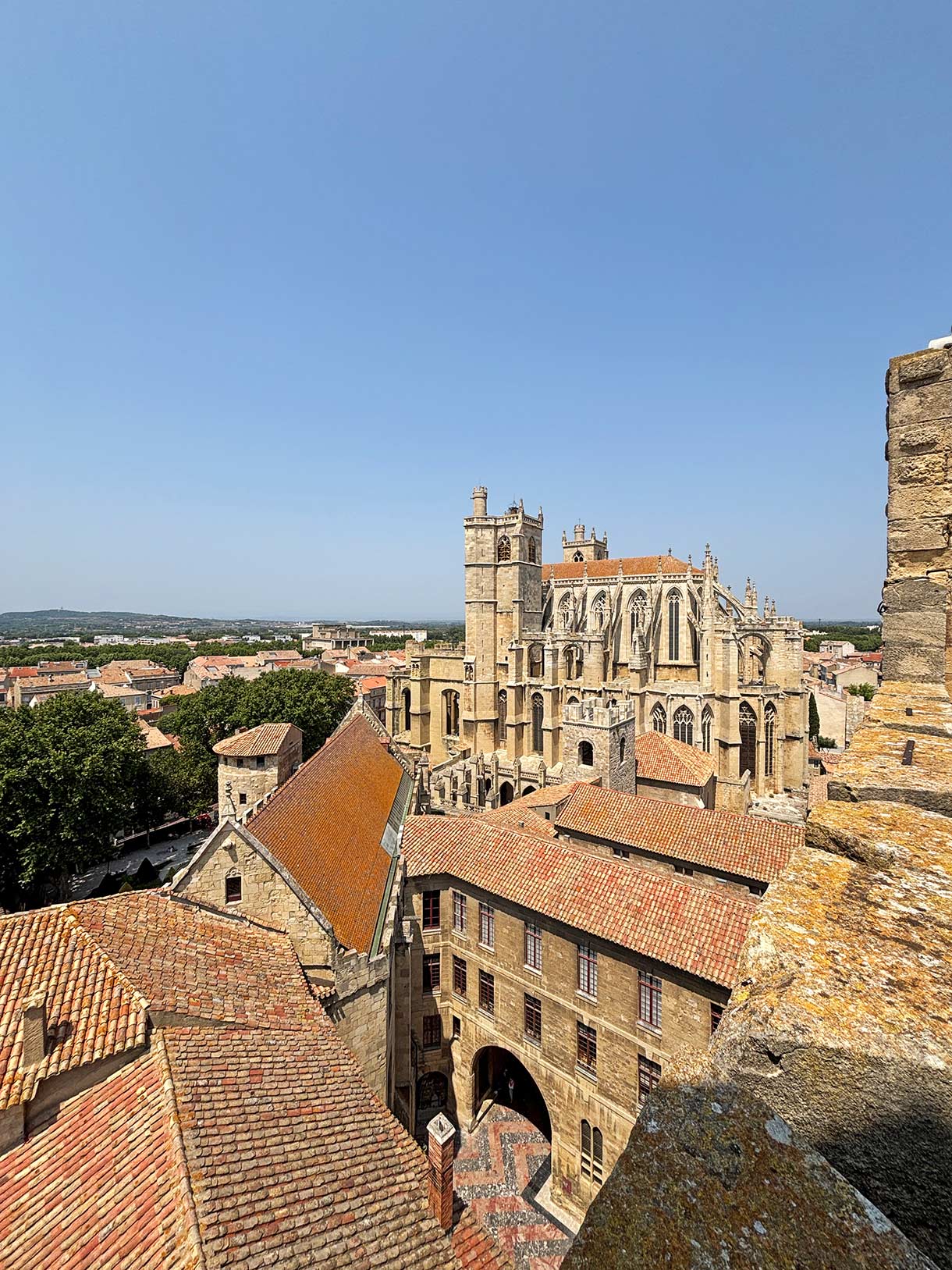
After I bought my ticket to the Archbishop’s Palace I headed straight for the “donjon”, not being familiar with that word. I quickly learned that a donjon is the primary inner tower in a medieval fortress or tower, and up the 42-meter tower’s stairwell I went.
At the top of the donjon I was greeted with views of the historic center of Narbonne, including the palace, the adjacent cathedral, the historic center and the canal that runs through the city. The view was worth the ascent, even on a hot summer day.
The Art and History Museum of Narbonne
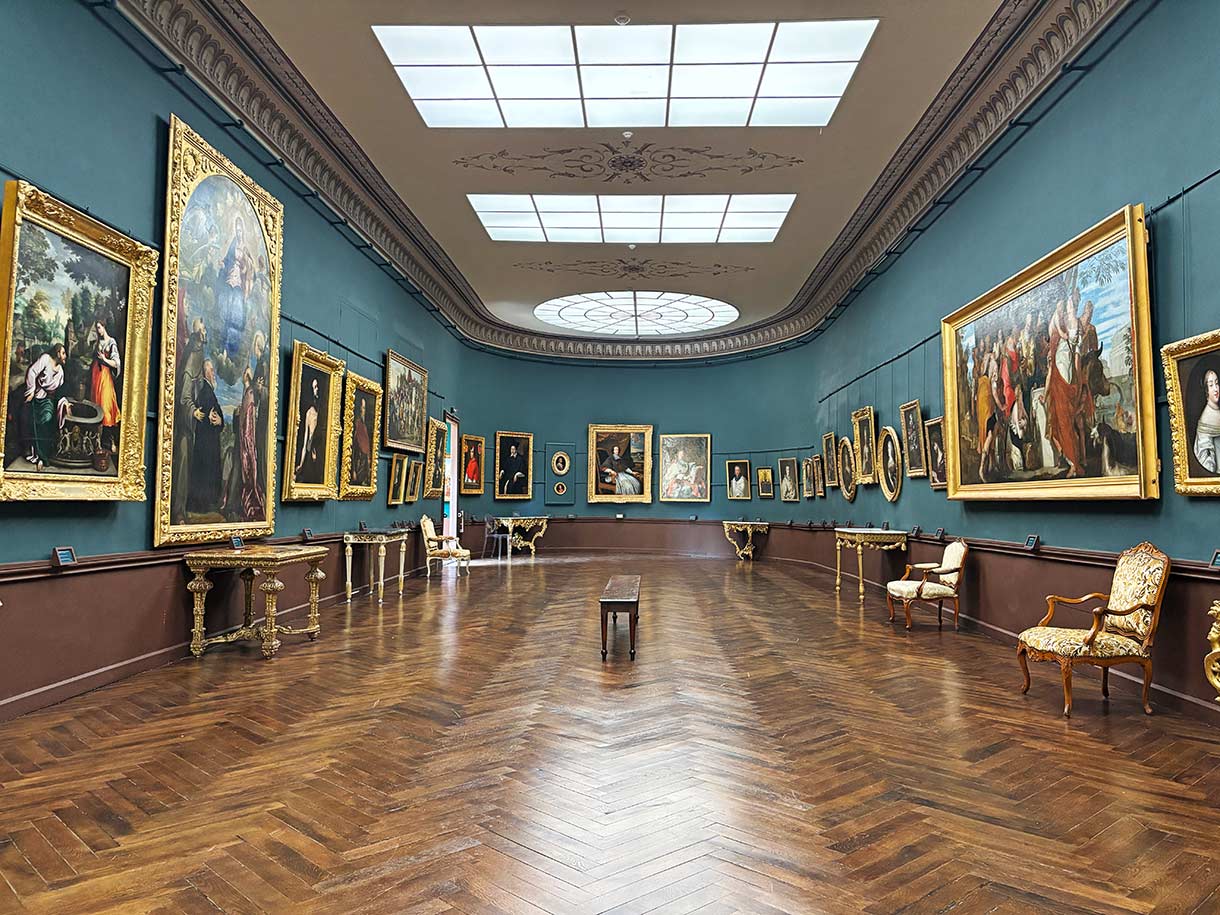
My next stop inside the Archbishop’s Palace was the Museum of Art and History of Narbonne, featuring many galleries of fine and decorative arts. There are many paintings, ceramics and pieces of furniture on display in the newer portion of the building. I spent about an hour inside, checking out the exhibits, before heading back downstairs via the monumental staircase and out to the adjacent cathedral.
Saint Just & Saint Pasteur Cathedral
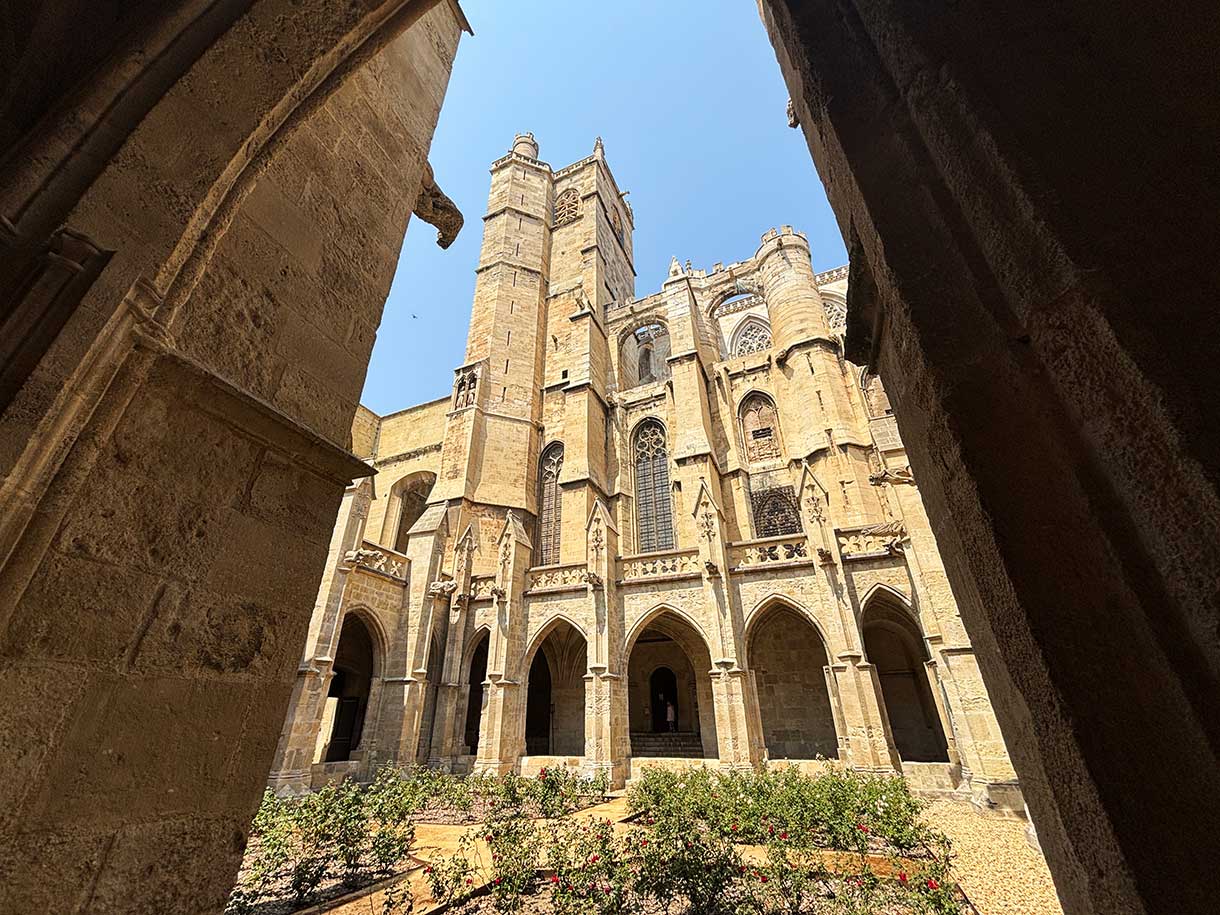
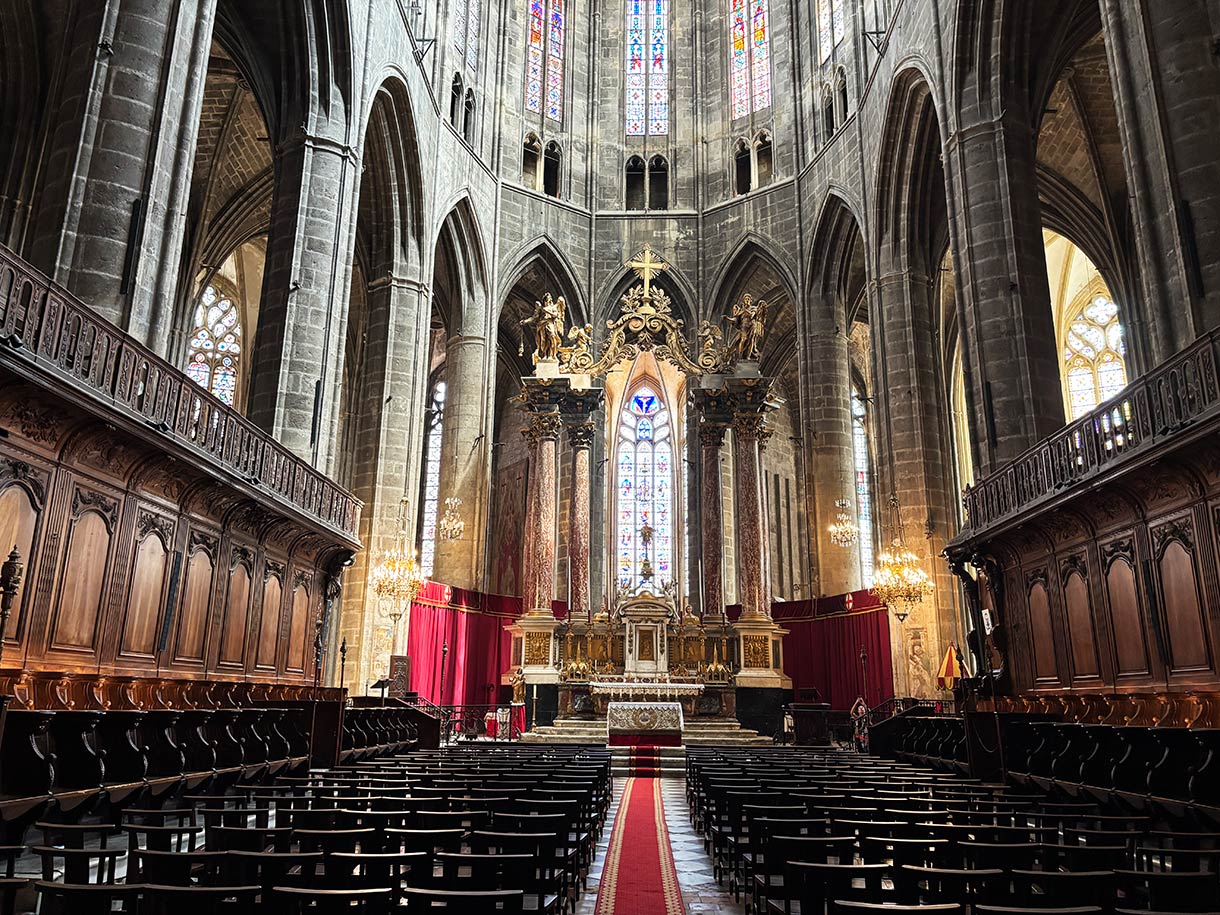
Visiting the Cathedral of Saints Justus and Pastor is one of the most popular things to do in Narbonne. The cathedral can be accessed via the interior courtyard of the Archibishop’s Palace, or from the street on Rue Armand Gauthier when the palace is closed.
Construction on Narbonne’s cathedral began in the 1200s, but has never officially finished. Inside you will find colorful stained-glass windows, a historic virgin statue that used to stand on Pont de la Liberté (the bridge near the city’s covered market) and a peaceful Gothic cloister.
Les Halles de Narbonne
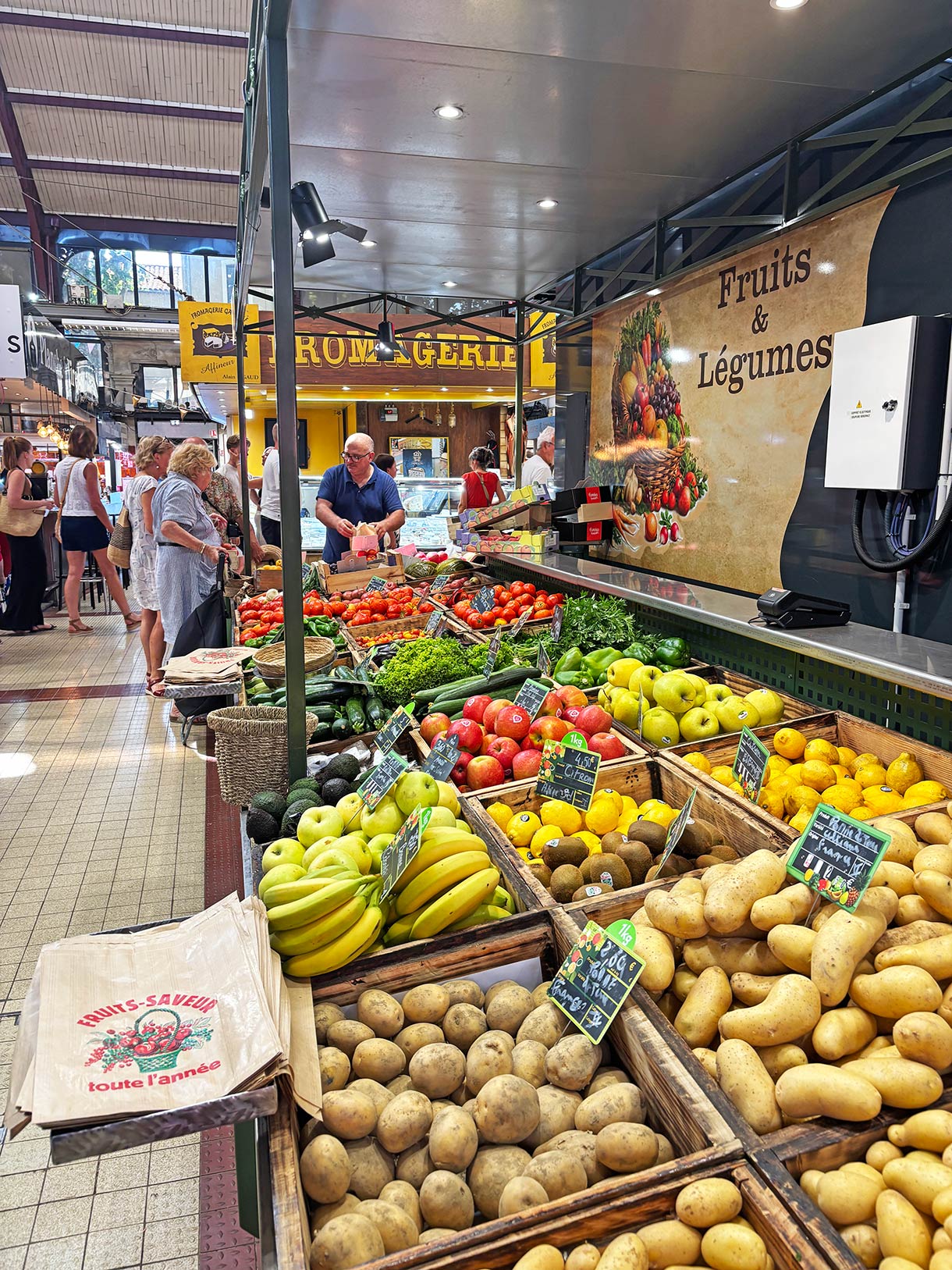
At the end of Pont de la Liberté you’ll find Les Halles de Narbonne, the city’s energetic food market. Open daily from 7:00 am until 1:00 or 2:00 pm, this is the best place to shop for fresh ingredients in Narbonne. You’ll find fruits, vegetables, bread, cheese, meat and prepared meals to take home, along with market stalls serving up light meals for breakfast and lunch.
A few blocks away there is a small restaurant called Compose It, which is open from Monday to Saturday for lunch. The owner is also the chef, and he heads to the market each morning to shop for the freshest seasonal ingredients that get turned into the plat du jour. This was the best meal I had in Narbonne (which says a lot, as I also ate at the city’s famous “grand” buffet!).
Roman Horreum
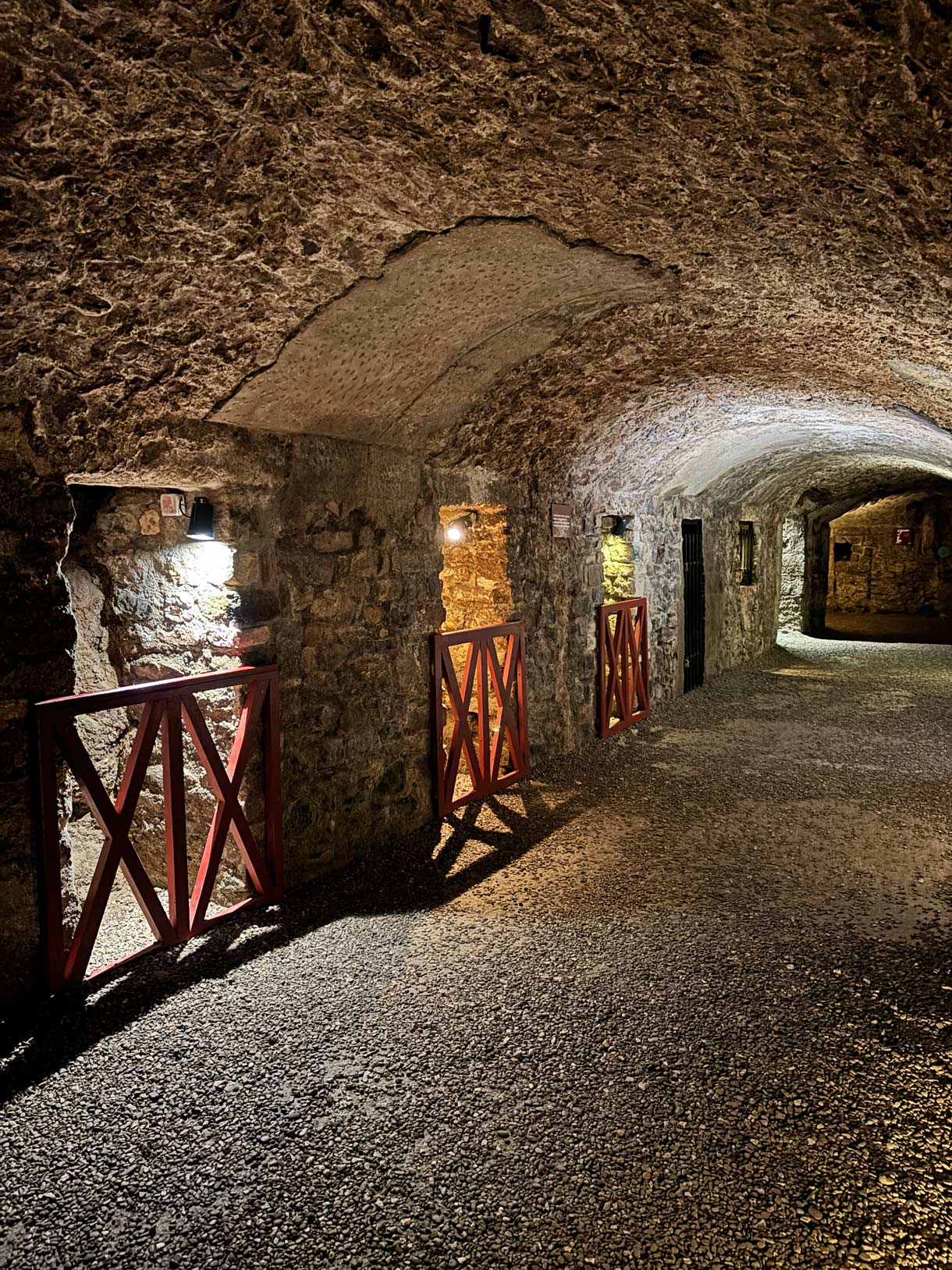
My Pass Musées Narbonne gave me access to the Roman Horreum, an ancient network of underground tunnels that once served as the town’s granary. Archeologists believe that above the tunnels there used to be a building, such as a market or small trading post, and the traders would store their goods here, underground.
Today, most of the tunnels are empty, but a few dimly-lit crevices display information and artifacts that have been discovered on the site. I spent about forty-five minutes in the underground tunnels on a rainy afternoon in Narbonne, and I noticed that families with children were staying longer (more like an hour to an hour and a half).
Canal de la Robine
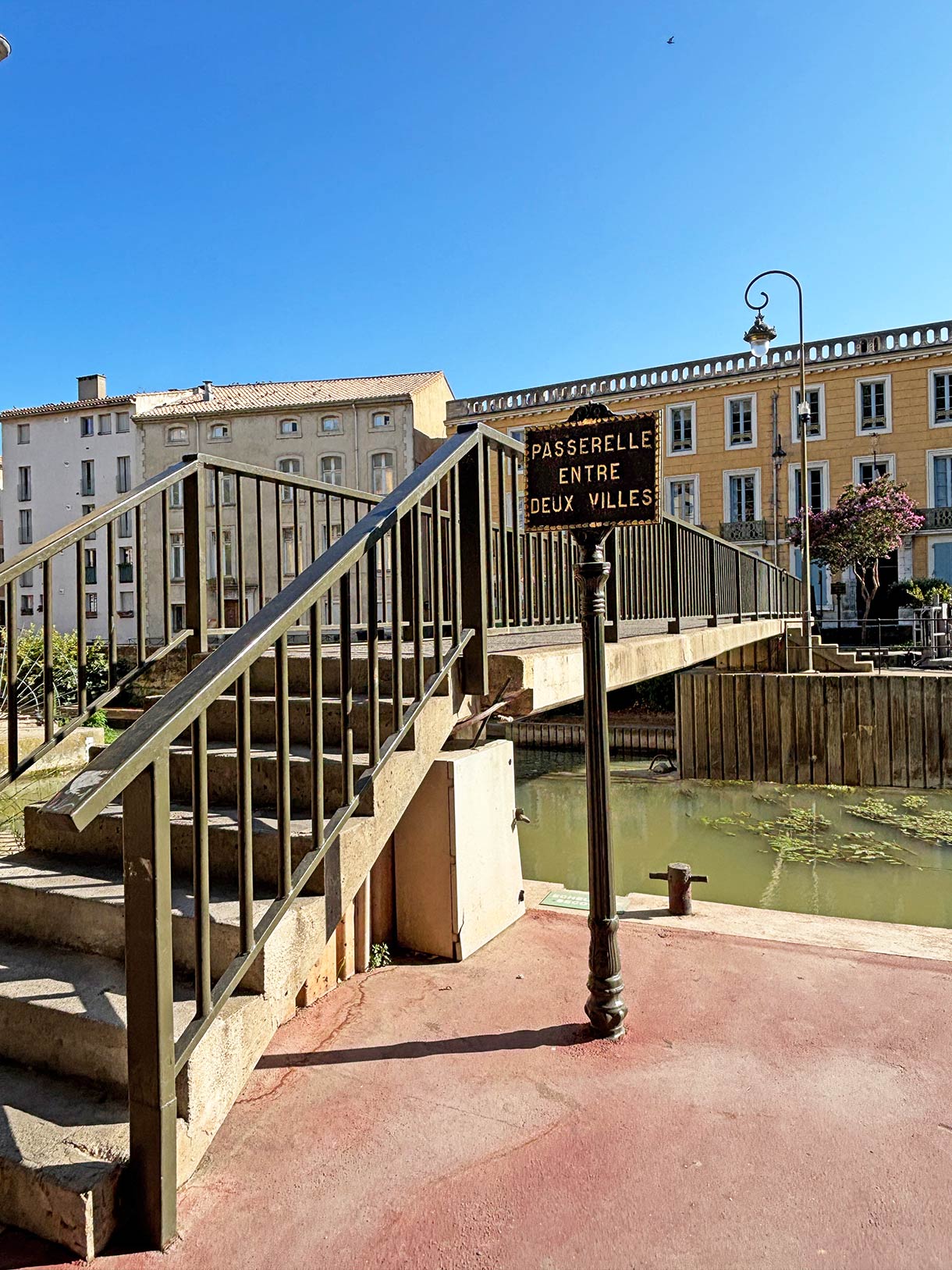
Narbonne is intersected by the Canal de la Robine, which is part of the UNESCO World Heritage Site encompassing the entire Canal du Midi and its manmade tributaries. There are six locks within this 32-kilometer canal, and a local company called Gabare Le Solal offers one-hour sailings through the locks on board a historic wooden boat.
Narbo Via Museum
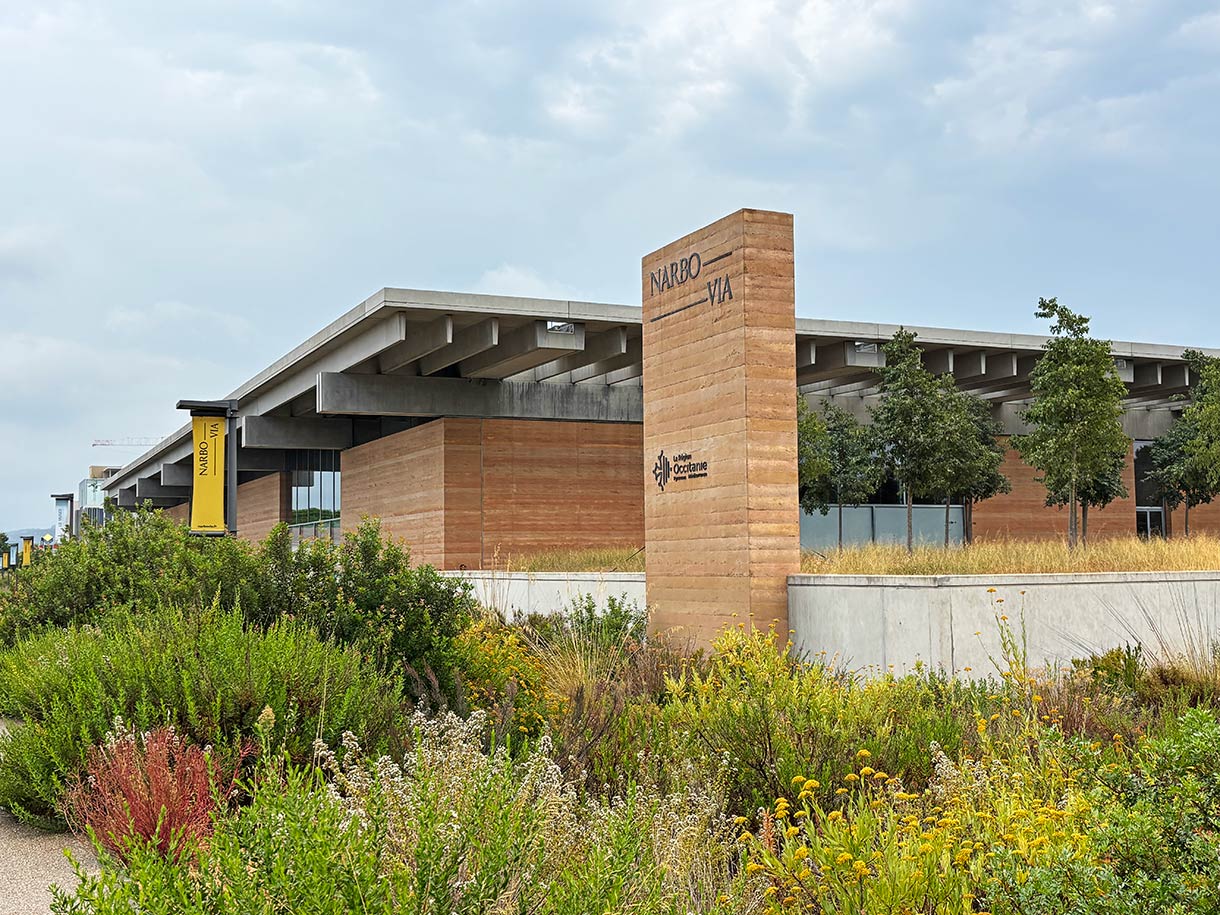
My Narbonne Museum Pass included entrance to the Narbo Via Museum, the city’s new archeology museum. Previously, the museum’s collections were held inside the Archbishop’s Palace, but this new gallery space gives them the natural light, and the space, that they deserve.
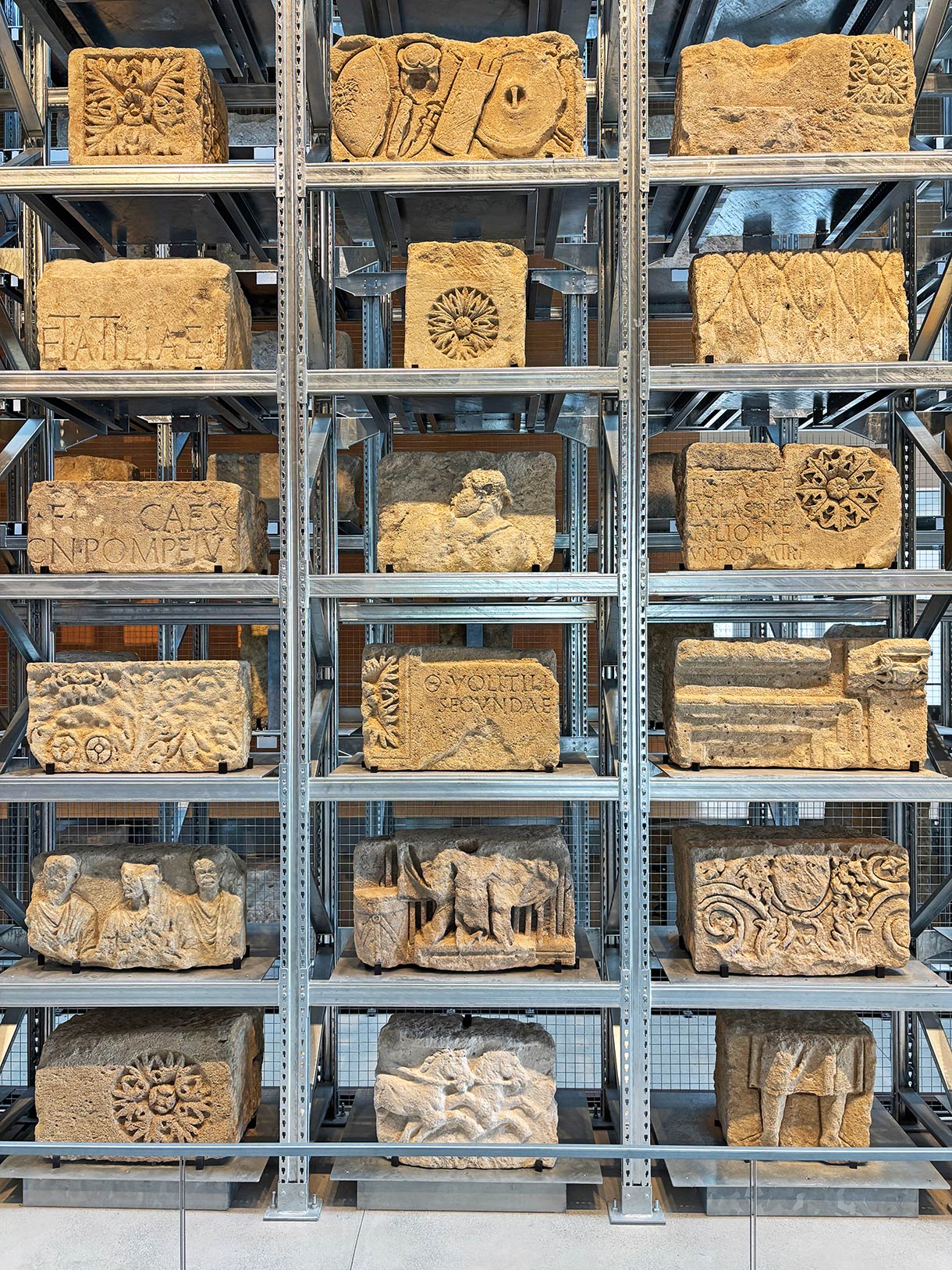
The main draw of the Narbo Via Museum in Narbonne is the mechanical lapidarium. Here, more than 700 massive stone carvings (many weighing more than 400 kilograms, or almost 900 pounds) are displayed on shelves. To display the entire collection, a series of automated lifts constantly rotates the stones, moving them from the back storage shelves to the front display shelves throughout the day.
The rest of the collection contains nearly one thousand more Roman artifacts, displayed to tell the story of Narbo Martius, the first Roman colony outside Italy. You will also find temporary exhibits (at the time of my visit, there was one exhibit about the local lagoon, and a second that integrated works of a contemporary Franco-Chinese artists throughout the galleries). The on-site cafe is popular with local workers at lunch time.
Note: The Museum Pass also included access to Narbonne’s Amphoralis, an archeological site and ancient pottery museum about twenty kilometers north of the city in a town called Sallèles-d’Aude. Since I didn’t have a car, I was not able to visit the Amphoralis.
Clos de la Lombarde
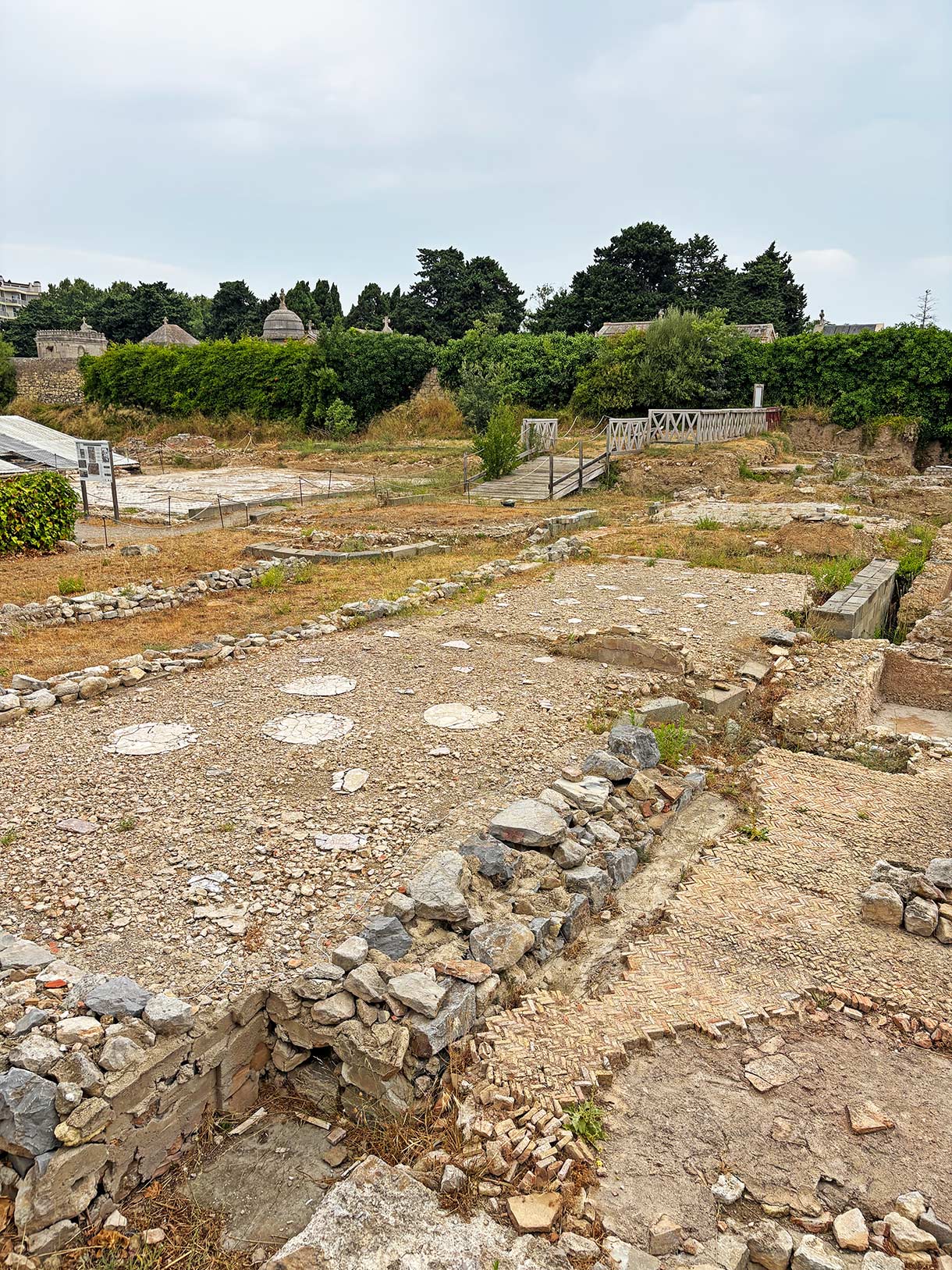
Tucked away behind some old apartment buildings on the outskirts of Narbonne’s historic center you will find the Clos de la Lombarde, an archeological site in Narbonne. Here, additional ruins from the Narbo Martius settlement were unearthed in the 1970s, and today you can see the ruins of several houses, a thermal bath and a Paleochristian basilica.
It’s free to enter the roadway that runs alongside the ruins (which is where I took the photo above from), but to enter the archeological grounds you will need to sign up for a guided tour. There is usually one morning tour and one afternoon tour each day, delivered in French, but you’ll want to check the official website to confirm what’s on at the time you’ll be in Narbonne.
Cours Mirabeau & The Narbonne Weekly Market
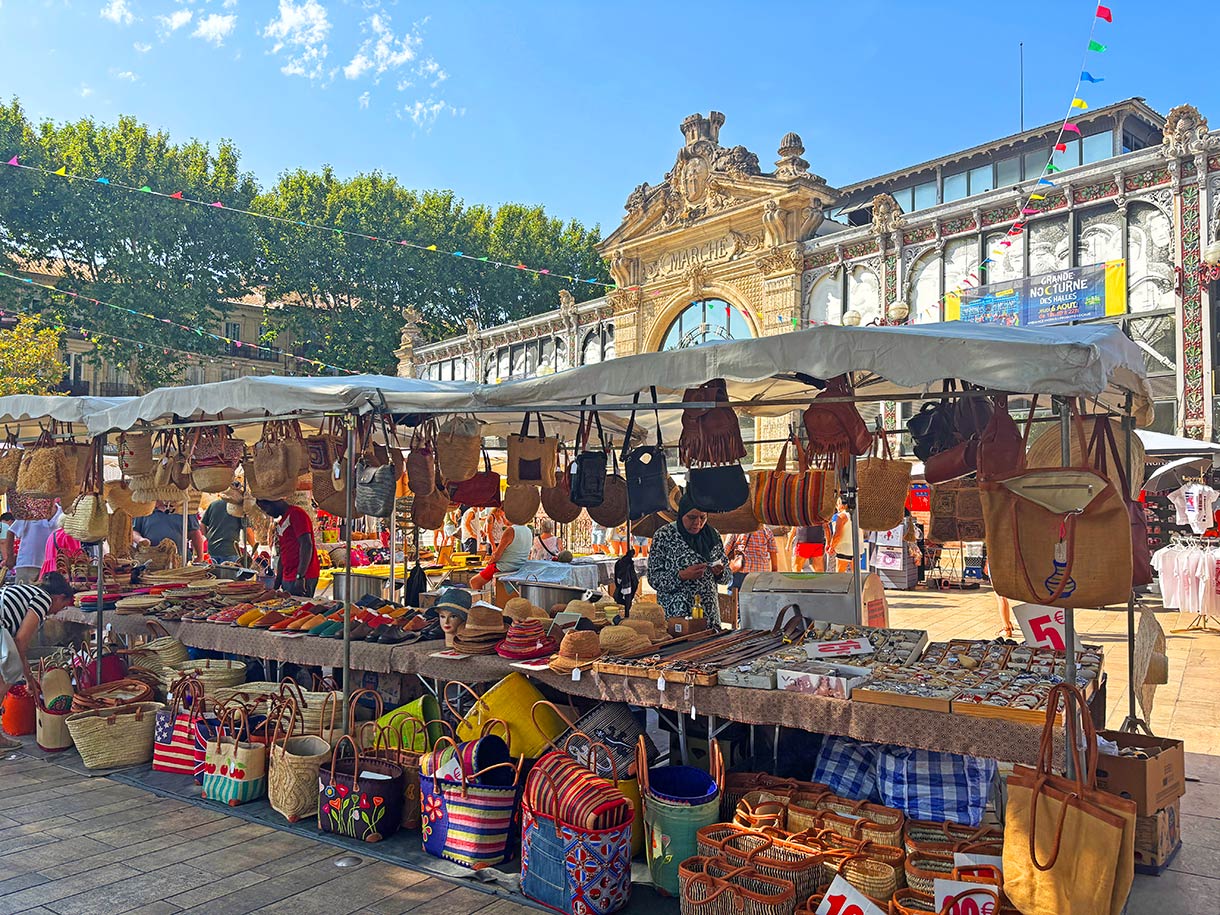
In addition to the Les Halles covered market, Narbonne hosts two weekly markets on Thursday and Sunday mornings. Market vendors will set up along Cours Mirabeau, on the banks of the Canal de la Robine, and you’ll find countless stalls selling clothing, accessories, housewares, handicrafts, flowers, plants and food. The market can get very crowded, and I recommend keeping your wallet and phone inside a secure bag.
Pont des Marchands
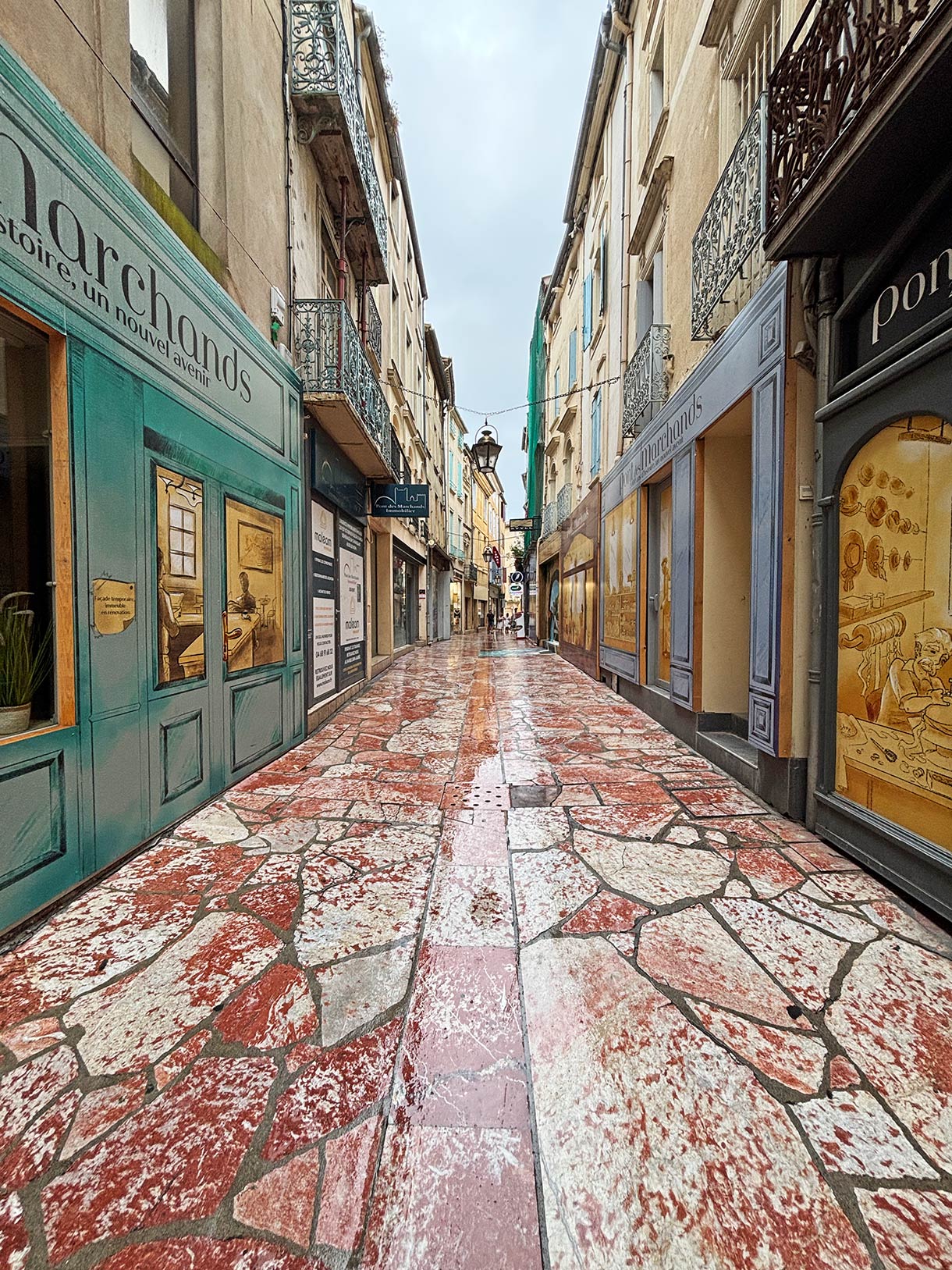
I crossed over Pont des Marcands in Narbonne several times before I realized I had crossed a bridge! There are only a few bridges like this left in France, which features a pedestrian pathway down the middle and then occupied residential homes and shops along both sides.
The foundations of the bridge are nearly two thousand years old, as it once connected Narbo Martius (on the Left Bank) to a medieval settlement on the Right Bank. At the time of my visit to Narbonne the facades of the buildings were undergoing some restoration work, but they had been painted with pretty trompe l’oeil to hide the construction.
Via Domitia
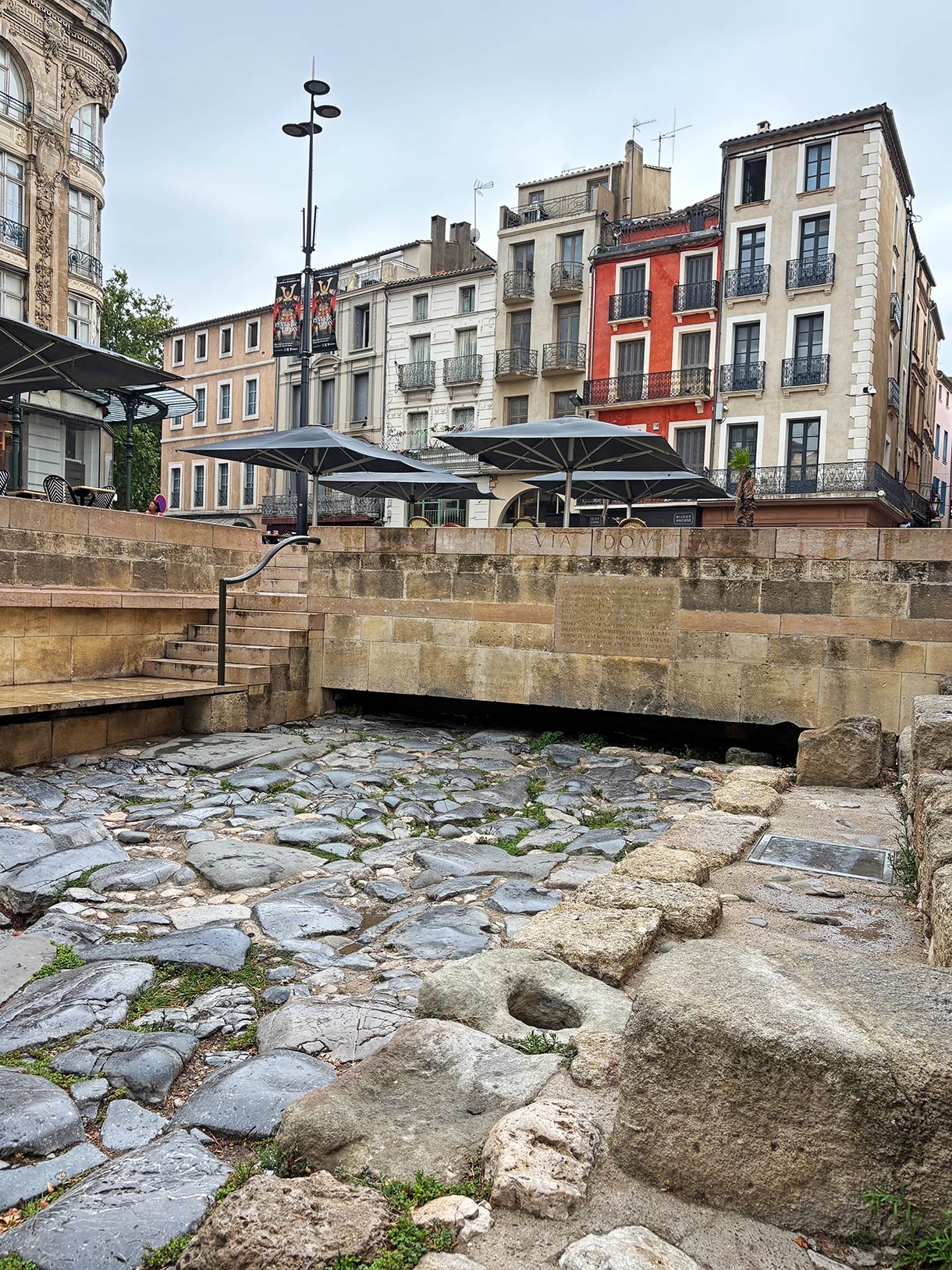
Speaking of Narbo Martius, you can still see the remains of the Ancient Roman road that once ran through the historic center of Narbonne. In the square in front of the Archbishop’s Palace you can descend a few stairs to place your feet directly upon Via Domitia, the stone path that once connected Spain and Italy, crossing France en route.
Les Grands Buffets de Narbonne
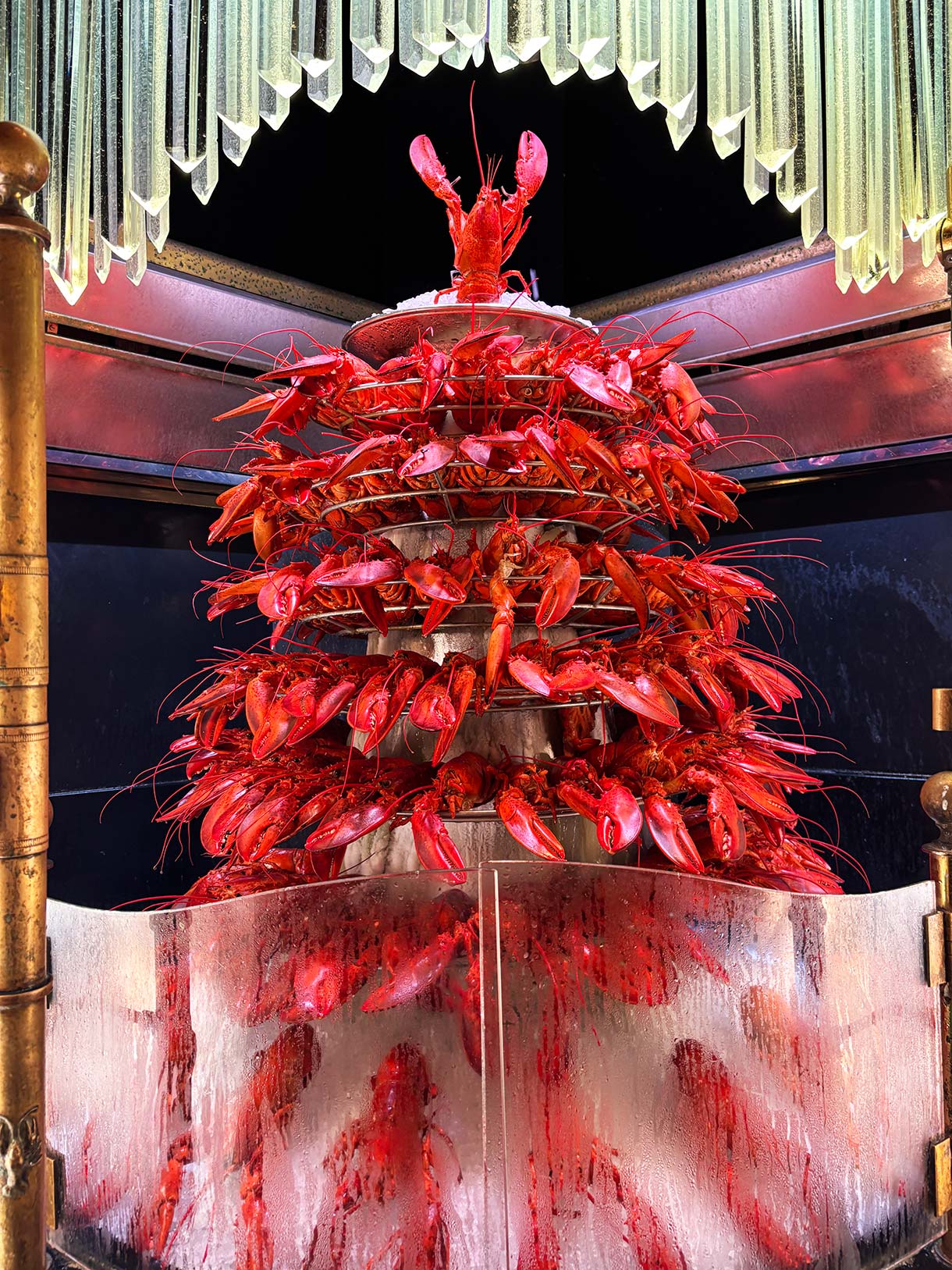
Many travelers only visit Narbonne to come to the city’s most famous restaurant: Les Grands Buffets. This all-you-can-eat buffet (a rarity in France) is world-famous for its Guinness world record-holding cheese assortment, lobster tower and flaming Crepes Suzette service. If you’re thinking of dining here, note that you have to book months in advance and you’ll probably want to read both of these guides:
- Les Grands Buffets de Narbonne: My Honest Review (Read this first)
- How to Reserve a Table at Les Grands Buffets de Narbonne (Read this if you decide you want to visit)
You can reach Les Grands Buffets using the Citadines #2 electric shuttle from the city center, which is free. It runs from about 6:00 am until 9:30 pm, so if you’ll need an alternate arrangement to get back after dinner.
Place des 4 Fontaines
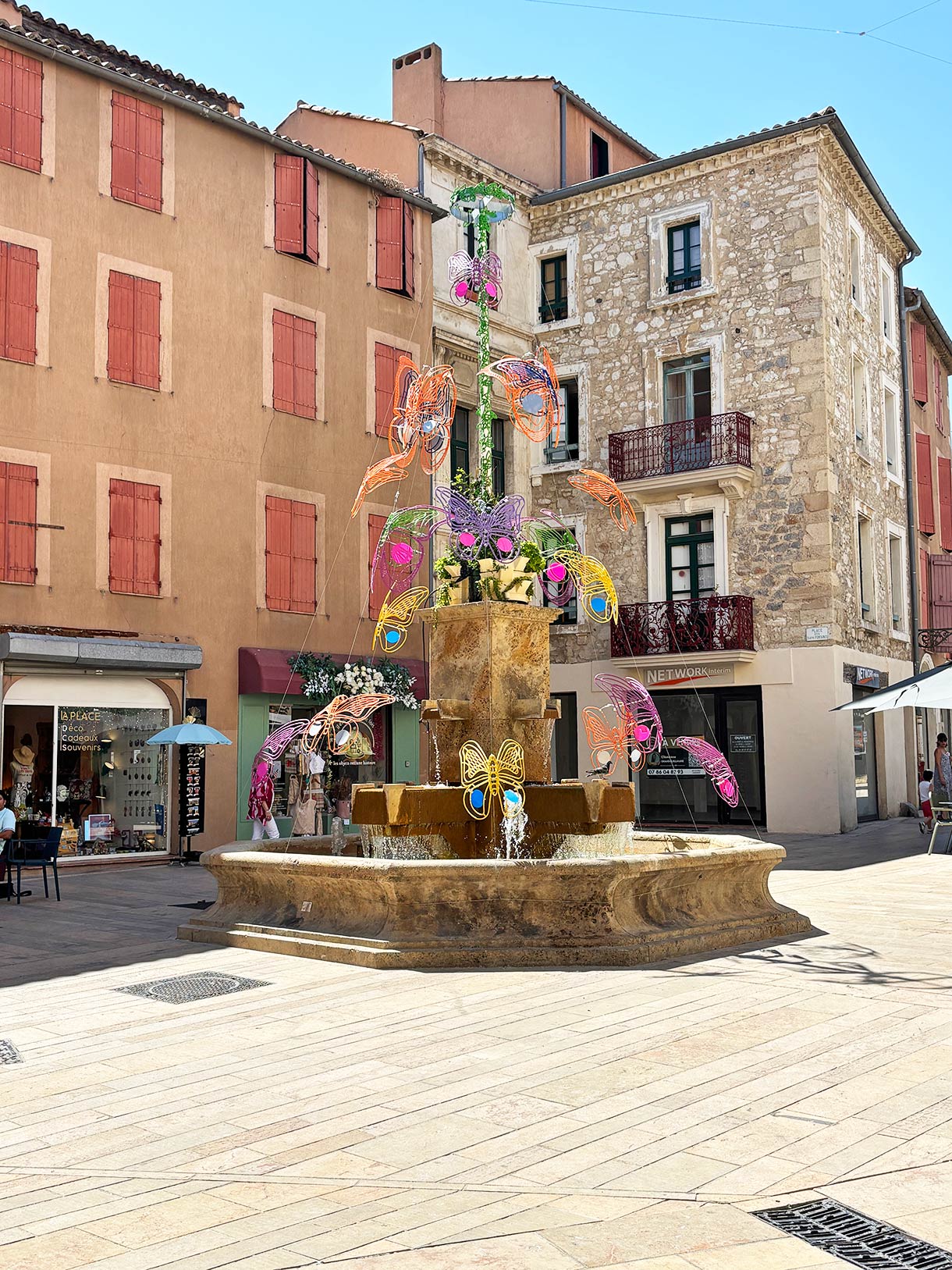
The next two items on my list of the best things to do in Narbonne are just places I recommend you stop and enjoy as you’re strolling around the city.
First, the oddly-named Place des Quatre Fountains does not hold quatre (“four”) fountains, but rather one tall fountain decorated with colorful, whimsical works of art. There’s a nice coffee shop and brunch restaurant on the square here, and while I was sipping my iced latte I noticed many kids enjoying splashing their hands in the cool fountain water.
Trompe l’oeil Murals in Narbonne
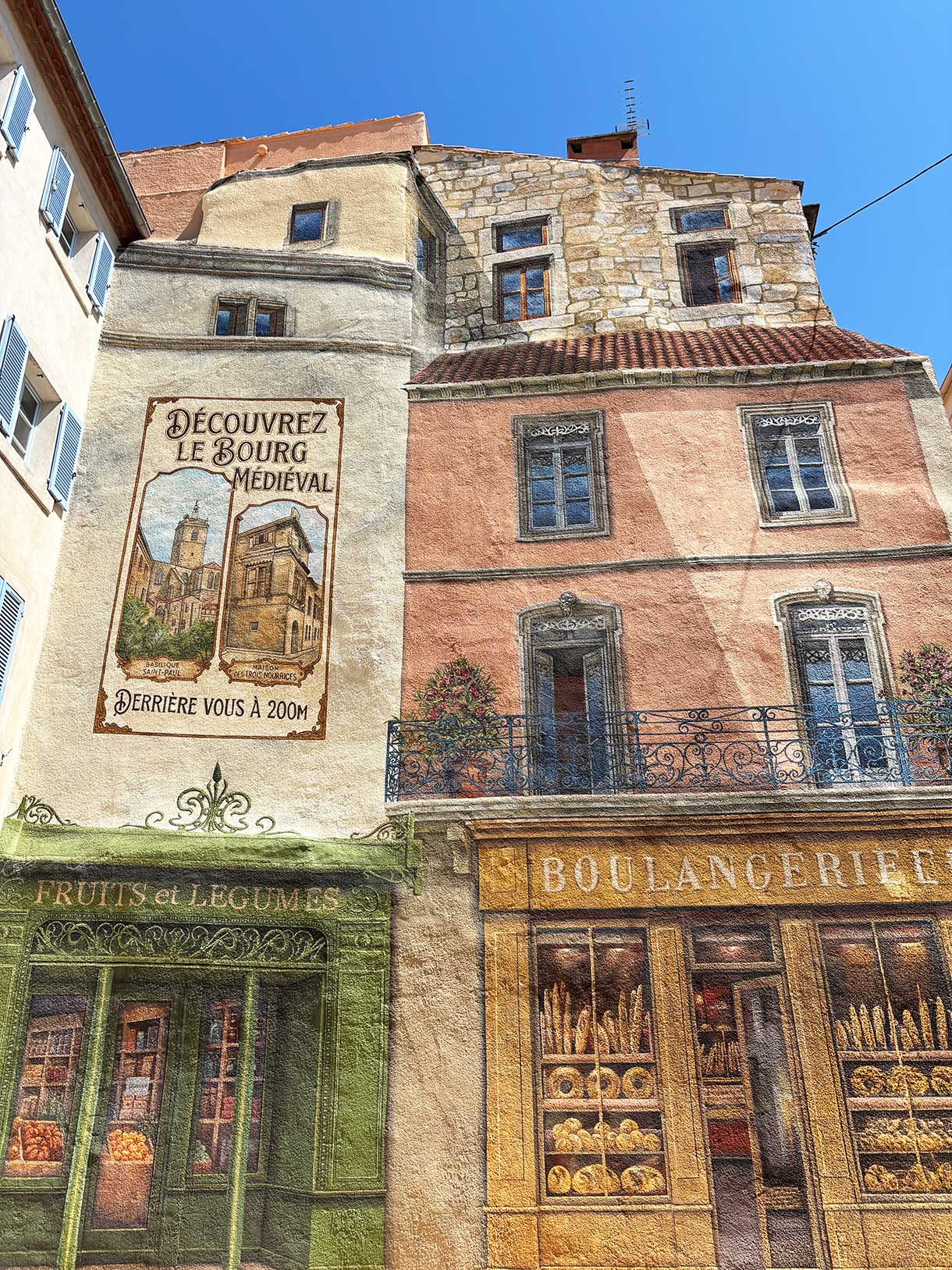
A block from the Place des Quatre Fountains there’s a striking mural painted on Rue de la Monnaie. The artist has used trompe l’oeil effects to create faux facades of a produce shop and a bakery, along with a sign inviting people to explore the nearby Bourg neighborhood. You’ll feel like you’ve stepped back in time to the 1900s, even if you actually just crossed the street.
The Birthplace of Charles Trenet
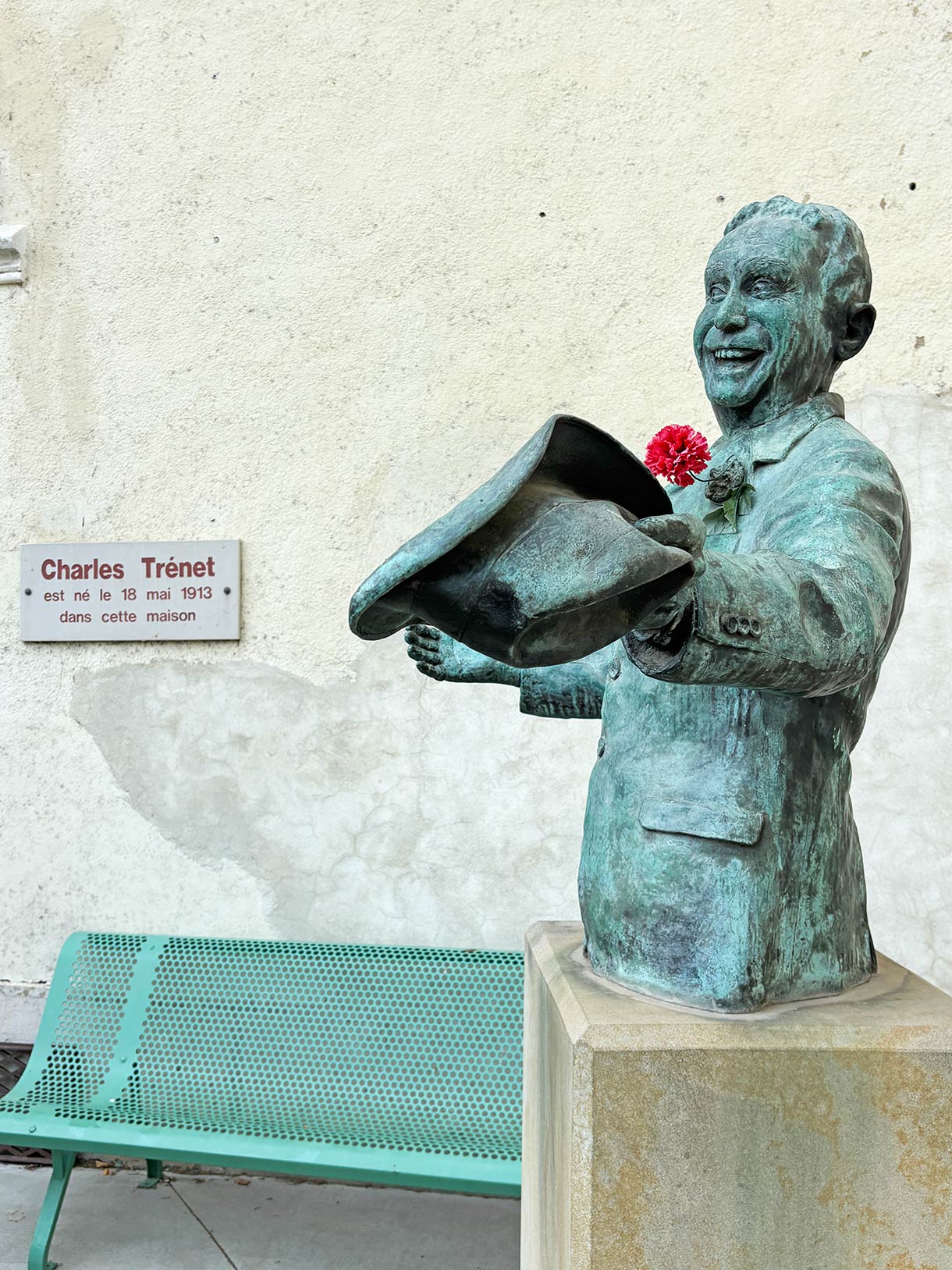
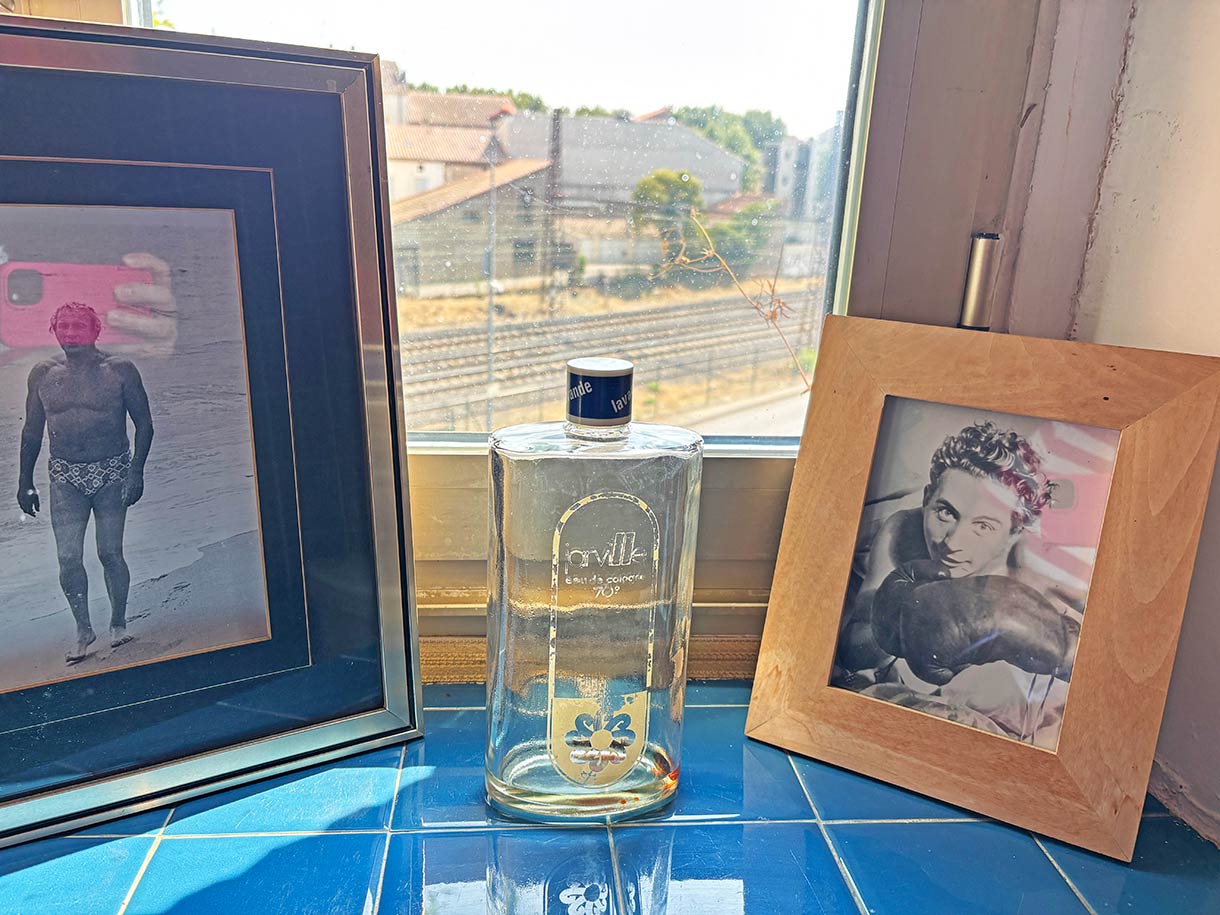
The last place in Narbonne that I visited with my Museum Pass was the birthplace of French crooner Charles Trenet, which is now a museum. I’d never heard of Charles Trenet when I visited, and even after hearing his music piped through the house I didn’t hear a single song that I recognized.
If you happen to be familiar with the music of Charles Trenet, you’ll probably enjoy seeing the well-preserved home where he grew up. Otherwise, visit the museum to get an authentic look at houses in France in the 1950s, or skip it if you’re short on time.
Tip: Google Maps may recommend that you reach Charles Trenet’s house by crossing a pedestrian bridge over the train tracks, but by Summer 2026 this bridge appeared to be permanently closed. I did submit an update request to Google Maps, but I don’t think they ever adjusted the route. You need to cross the tracks at Quai de l’Escoute to get here.
Abbaye de Frontfroide
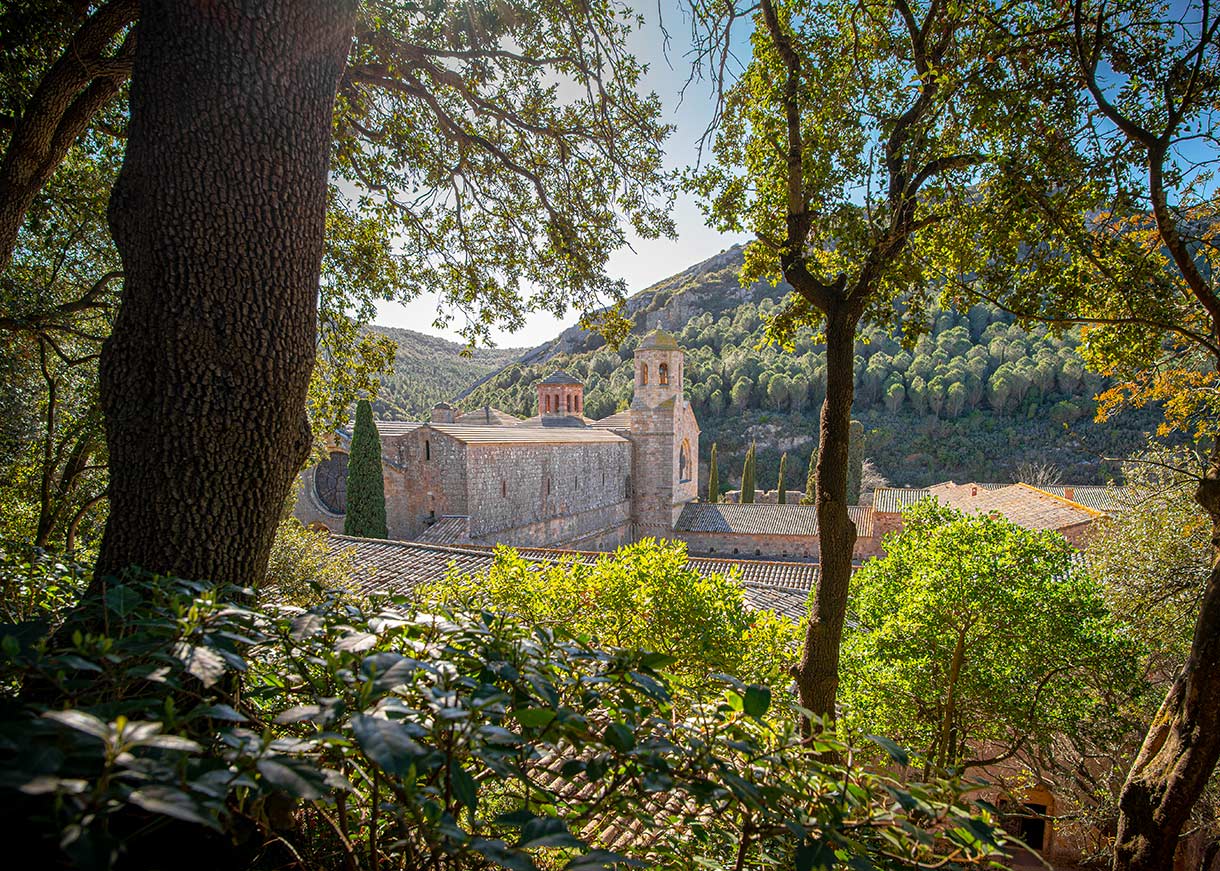
Unfortunately I didn’t make it to the Abbey of Frontfroide, which is one of the most popular things to do in Narbonne. At the time of my visit in Summer 2026 it wasn’t possible to access the abbey by bus because the outbound and return timetables did not align.
If you are visiting Narbonne with a car, I’ve been told that it’s definitely worth visiting this abbey, which is located in the forested hills about twenty kilometers southwest of Narbonne. This is a Cisterian monastery with a well-regarded winery (protected under AOC Corbières designation), a gourmet restaurant and picturesque grounds. Adult admission is €14, and they also offer combined tickets with nearby attractions including the Narbo Via Museum or the fortress at Salses.
Day Trips from Narbonne
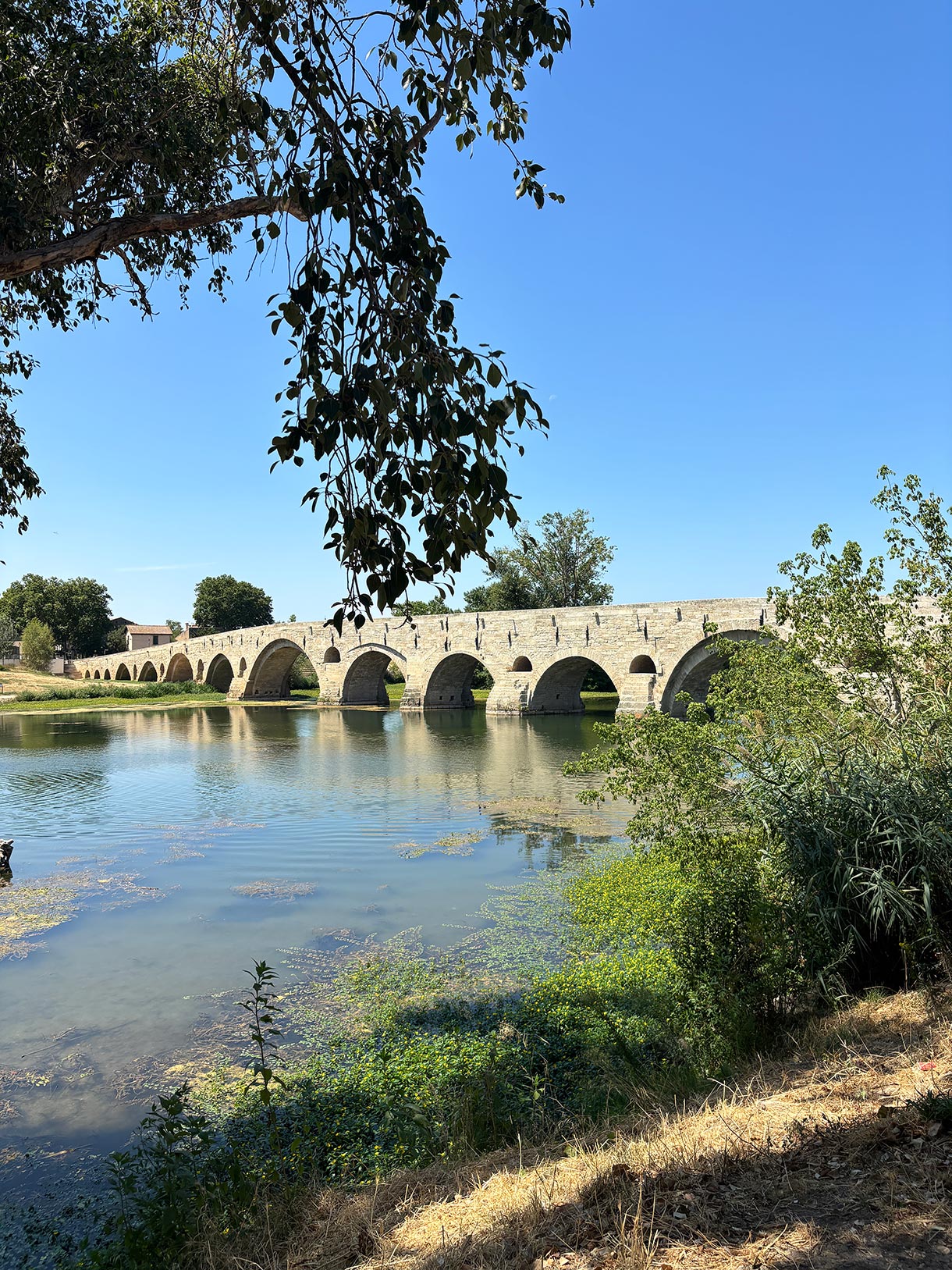
Narbonne is well-connected by train and bus to several nearby destinations that are perfect for day trips. Here are a few options that I would recommend you consider adding to your Narbonne itinerary, if you have time:
- Béziers – Shown above, Béziers is only fifteen minutes by train from Narbonne. You’ll find a complete day trip guide at the link, including the walking route that will whisk you up the hill from the river to the historic center via a secret (free!) elevator.
- Gruissan – An easy bus ride from central Narbonne, Gruissan has a lively Saturday market and unique pink salt flats that can be explored on a guided tour.
- Perpignan – Perpignan is the capital of French Catalonia, and the city is a lively mix of French and Catalan culture. You can get there by train from Narbonne in just thirty-five minutes.
- Carcassonne – A half-hour train ride from Narbonne will have you in Carcassonne, the castle city that inspired the famous board game. Although it’s worth staying overnight, if you’re pressed for time you can see the highlights in one day.
- Sète – I can’t believe this waterfront city just down the coast from Narbonne isn’t more famous. Its historic center is built along a series of beautiful canals, and it’s easy to combine sightseeing with some beach time on the Mediterranean shores.
- Figueres – You can take a high-speed train from Narbonne to Figueres in less than one hour. Tickets are a little bit pricey but if you’re a big Salvador Dali lover then visiting his hometown is definitely worth it.
Before you head to France, read these related travel guides!
🌹 How to Blend a Custom Perfume in Paris
🏰 The Best Loire Valley Castle Day Trip from Paris
💎 How to Stay in a Luxury Prison Cell in the South of France
⛵ The Best Things to Do in Collioure, France
🛍️ 18 Beautiful Covered Passages in Paris, France
🍷 The Best Wine and Cheese Tastings in Paris
🦉 How to Spend One Day in Dijon, France
Planning a trip to Narbonne? Pin this post for later!
 |
 |