
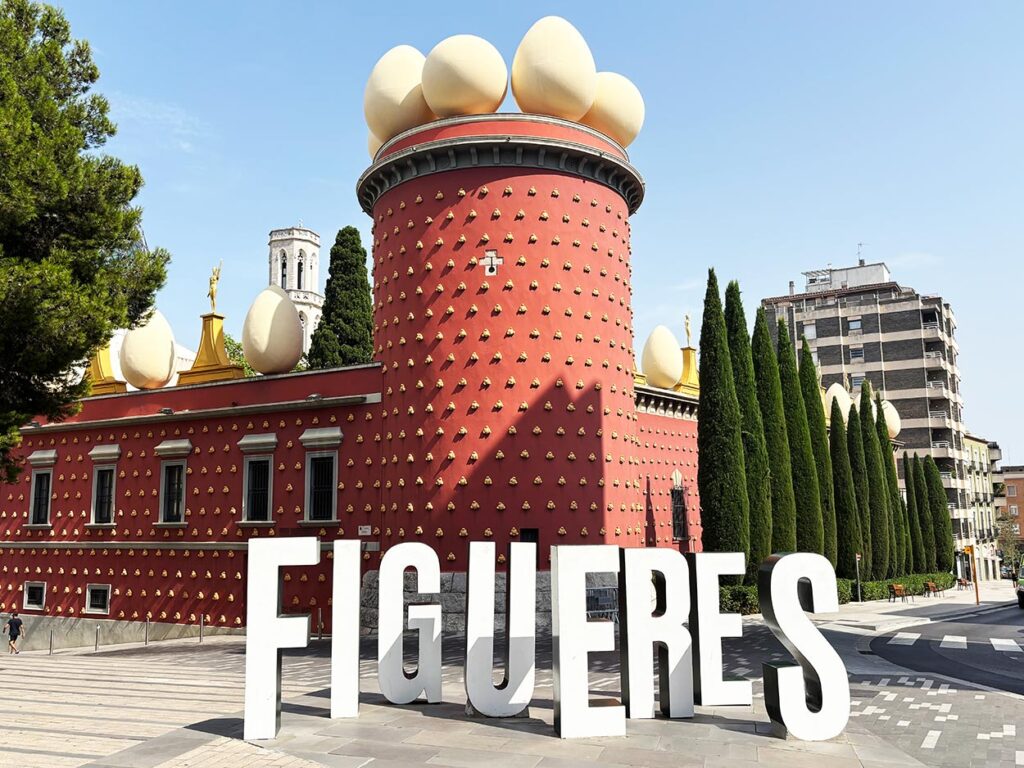
Figueres is one of those cities in Spain that I’d always wanted to visit, but hadn’t managed to find the time until my most recent trip. Figueres had everything I usually look for in a short-stay destination in Europe: a walkable city center, delicious cuisine, interesting museums, and opportunities for diverse day trips. I ended up staying in this town in Catalonia for four days, and in that time I discovered all of the best things to do in Figueres.
If you’re looking for a relaxing vacation with good food, interesting things to do and access to the beach, in a town with rich artistic history, then Figueres is the ideal destination to add to your Spain itinerary. Keep reading to learn about all the best things to do in Figueres, listed in the order that I would prioritize them whether you have one day or one week.
⏰ If you’re pressed for time, this full-day tour from Barcelona has great reviews and includes stops in both Girona and Figueres.

The Salvador Dali Theatre Museum
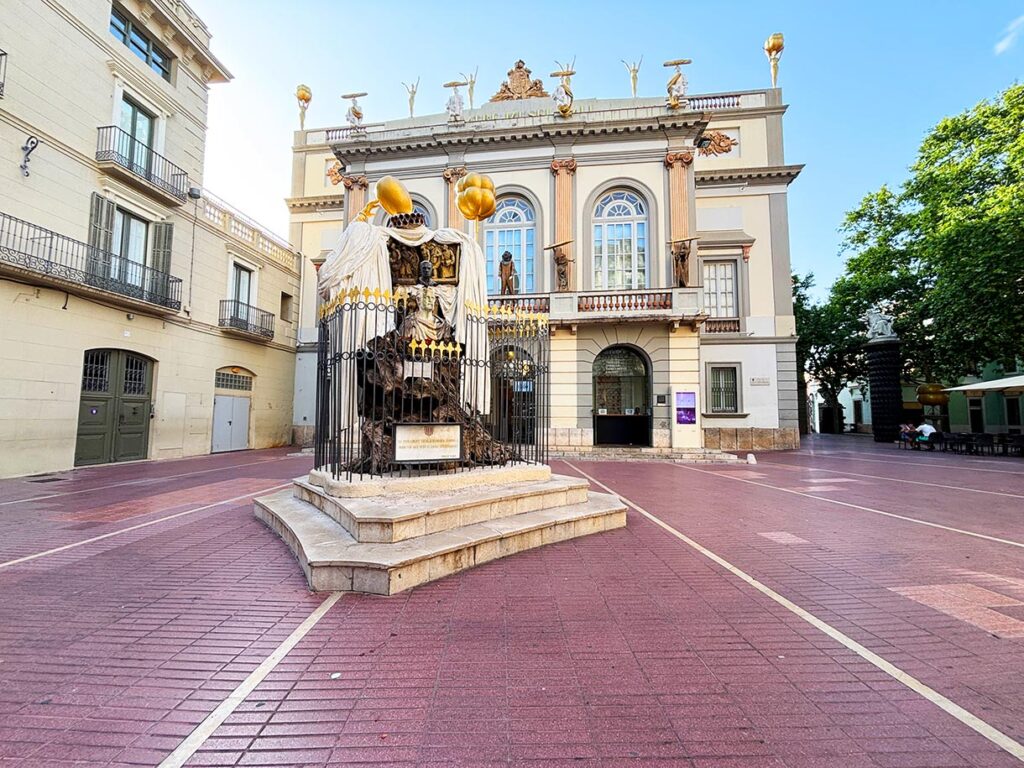
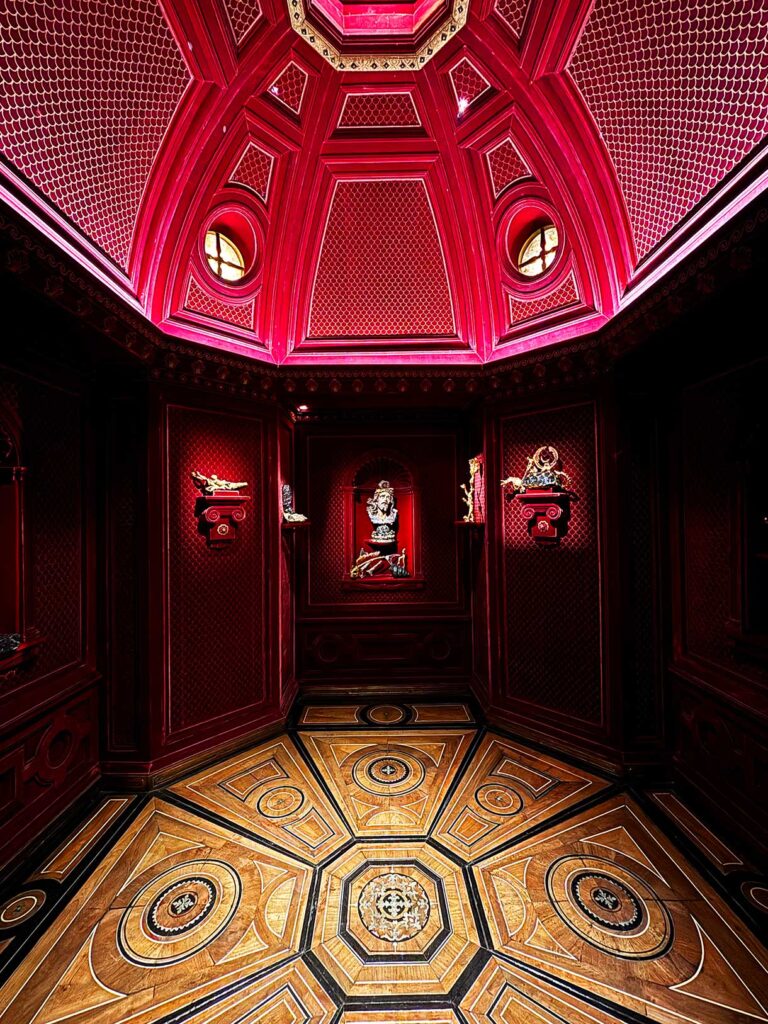
Salvador Dali was born in Figueres, and he had a strong bond with the city. Before his death, he worked with the mayor of Figueres to design the Salvador Dali Theatre Museum, which would serve as a public monument to his work and the last place he would live.
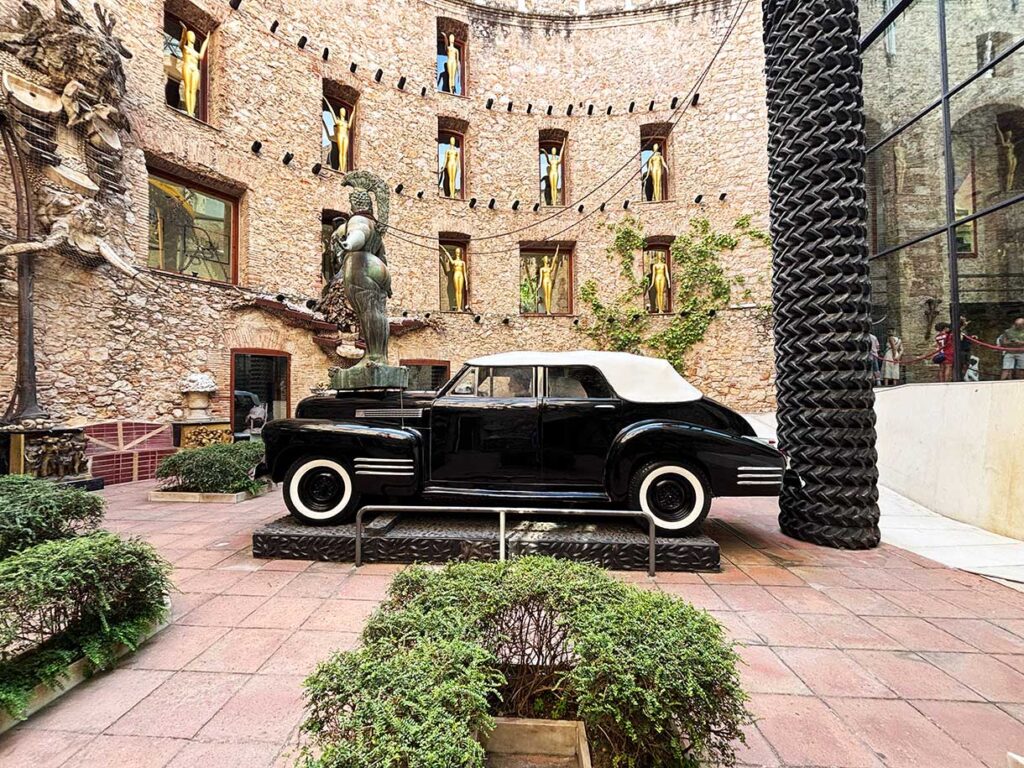
The experience of visiting the Salvador Dali Theater Museum is quite unique. You enter the building in a grand courtyard featuring a black car (put a one-euro coin in the black box to see what happens!) topped with a bronze sculpture of a woman and dozens of gold figurines. From there, you enter the main building, where you weave your way through a maze of rooms featuring various Dali works, from the largest of the large to the smallest of the small. There is no audio guide and there is no signage aside from the room numbers (to see everything, try to follow them in numerical order) so you’re really left to imagine for yourself what Dali was thinking as he created each work.
After exiting through the gift shop you can then enter the separate Dali Jewels exhibition, which is included in your ticket. Here, breathtaking pieces of jewelry designed by Dali are on display, including the famous ruby-and-pearl Ruby Lips and the platinum-and-diamond Eye of Time.
You should purchase your tickets to the Salvador Dali Theatre Museum online from the official website. My recommendation is to book at least a week in advance, as the most popular entry times (early in the morning and right after lunch) usually sell out. A casual visitor would probably spend about an hour and a half in the museum, whereas passionate Dali fans might need closer to three hours. Make sure to keep your museum ticket as it will grant you discounted or free admission to several other sites around town.
Salvador Dali’s Birthplace
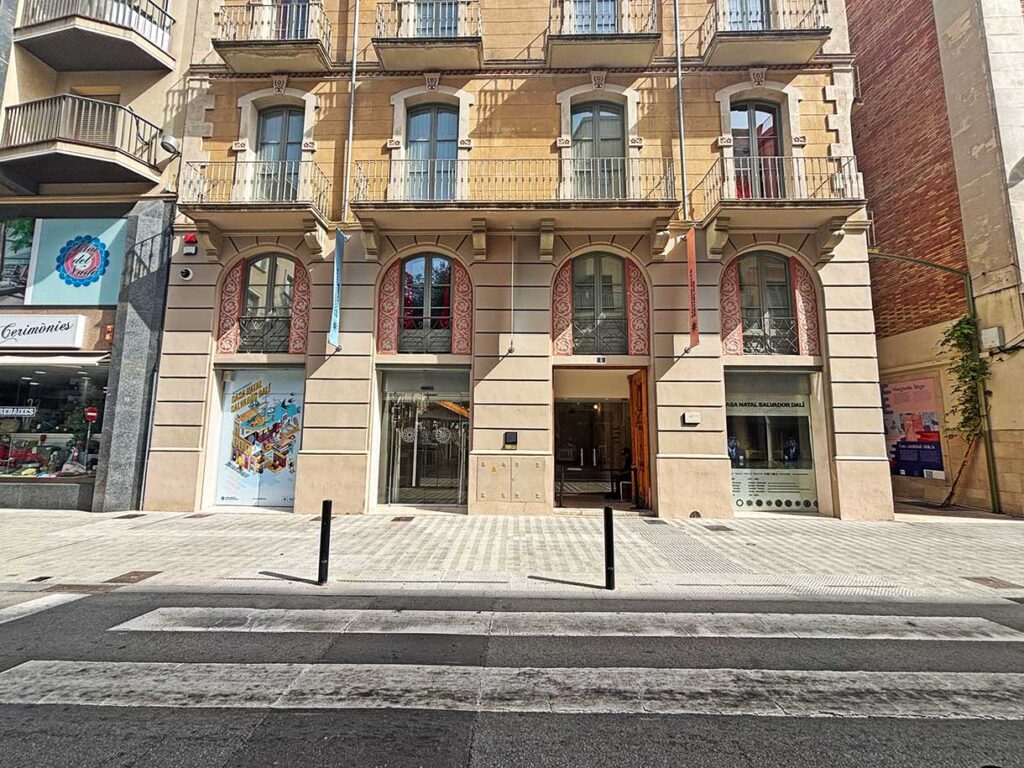
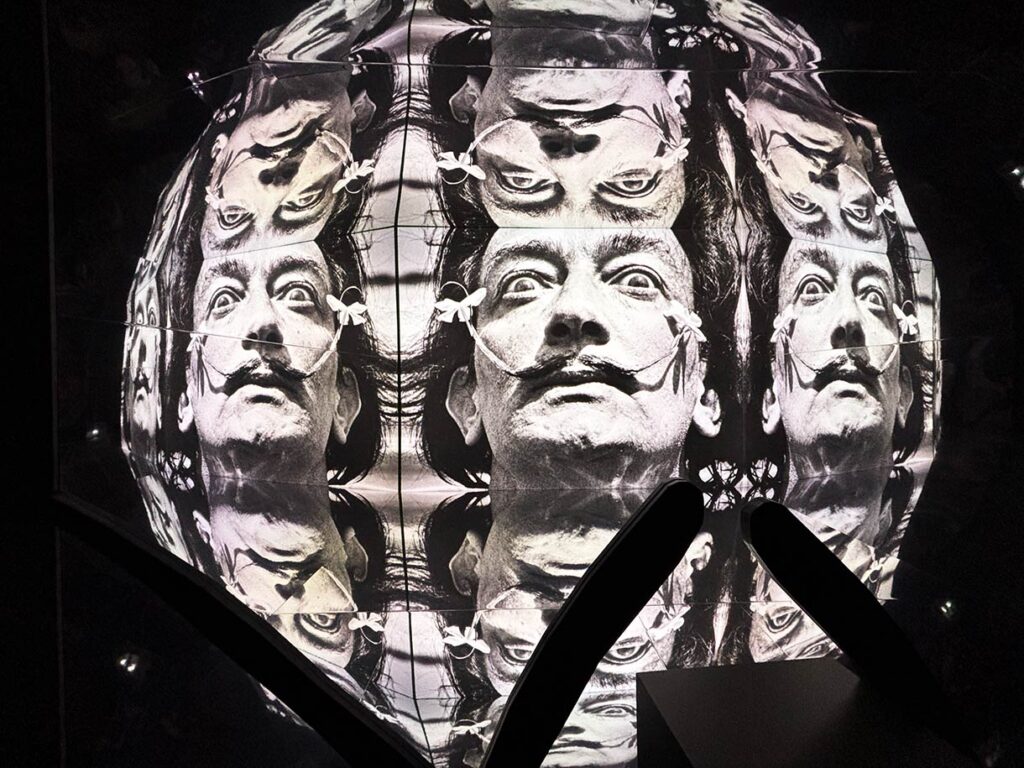
The experience of visiting the Birthplace of Salvador Dali (Casa Natal Salvador Dali) could not be more different than visiting the Dali Theatre Museum. In the latter, you’re left to explore on your own, whereas in this museum every moment of your experience is carefully curated.
The Birthplace of Salvador Dali museum uses multimedia to take you on a journey through Salvador Dali’s life, inside the home where he grew up. In chronological order you follow his journey from being the infant son of a hardworking notary to becoming a world-famous artists with a love for both showmanship and profit.
The story is primarily told through audio soundtracks (available in many languages via an included audio guide) and video storytelling. You’ll spend anywhere from two to ten minutes in each room, learning more about Dali’s story, before continuing on to the next space. Although the visit is very prescribed, I thought it was done well and effectively combined both education and entertainment.
You will receive a €6 discount on admission here if you show your ticket from the Dali Theatre Museum. Generally you don’t need to book in advance, although you can purchase a regular or reduced ticket on the website if you want. The visit takes about 75 minutes and while you can leave early by talking to a security guard, you can’t move through the rooms at a faster or slower pace as everything is on a timed schedule.
Castell de Sant Ferran
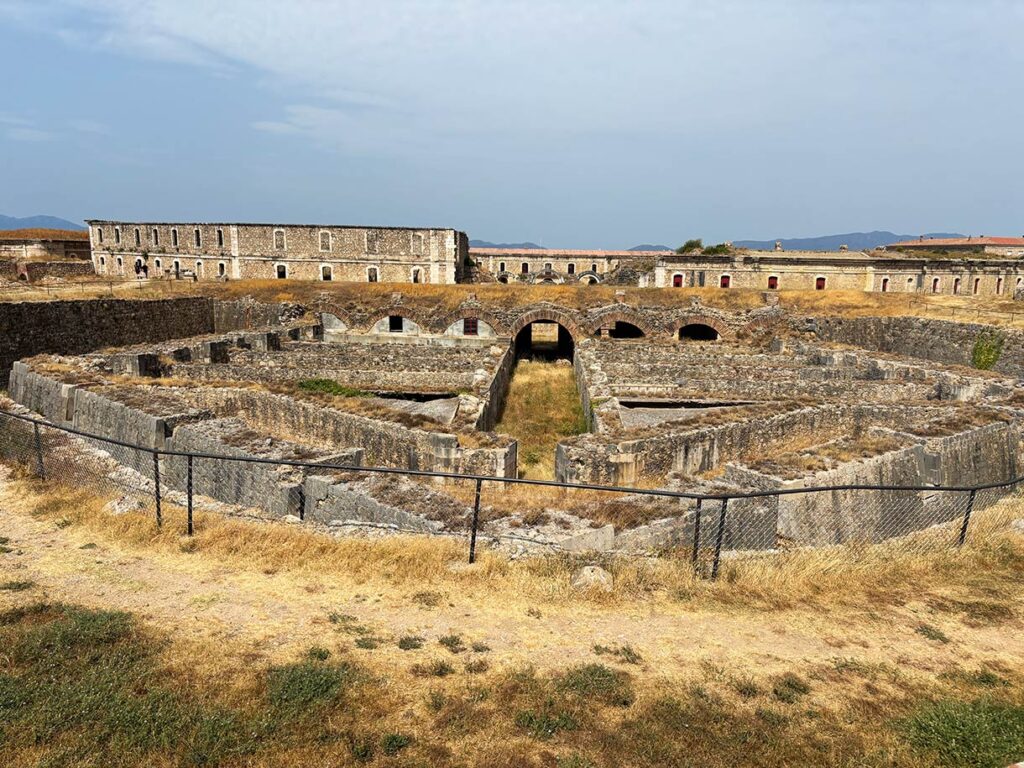
Castell de Sant Ferran is the largest man-made monument in Catalonia and the largest double-walled castle in Europe. However, what it lacks is history, as this is actually a relatively modern construction, built in the mid-1700s to serve as a military barracks, not a royal palace. To give you some context as to the size of the castle, after thirty minutes of visiting I thought I’d seen a large part of it… but I actually hadn’t even entered yet! 😂
I spent about one hour walking the marked route through the castle, which took me past barracks, the former church, the bastions and the stables. The scale of the complex is massive and it would certainly be of interest to military buffs, but for someone who was mostly interested in Dali, an abandoned military barracks isn’t necessarily a top attraction.
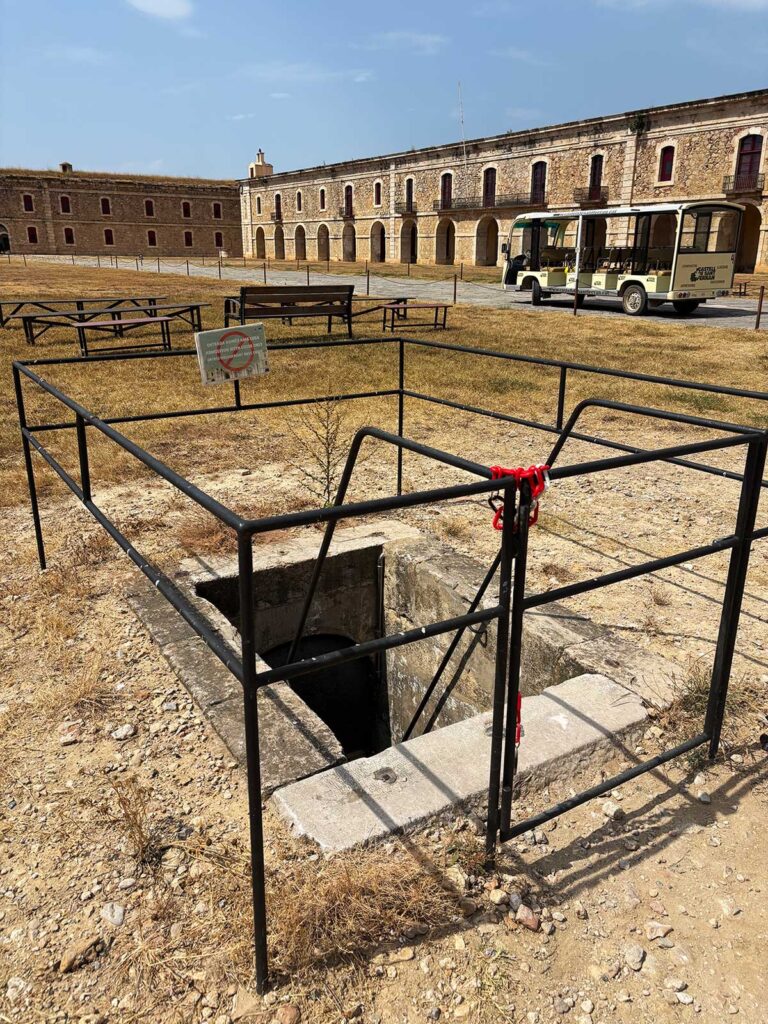
I also opted to take the optional underground cistern tour by boat, which cost an additional €2. We were driven from the entrance to a hole in the ground (shown above) and given helmets with head lamps. Then, we descended into the underground cisterns, which can hold nearly 10,000,000,000 liters of water. We boarded very small inflatable boats in which we had to squeeze together on the wet floor and sailed through the low, narrow passages of the cisterns for about fifteen minutes. It was very interesting (and refreshingly cool!) but only appropriate for visitors who are comfortable in confined, dark spaces, sitting nearly atop a stranger on a wet boat bottom.
It was 37° when I was in Figueres and I simply didn’t have the energy to walk up the hill to the castle. It’s only about two kilometers from the city center but I was just too hot, so I took a taxi for €10 and then walked back to town when I was done (as the return walk is downhill). I think this was really smart as most of the other people I saw arriving at the castle on foot looked overheated and exhausted, and they still had the massive castle grounds to explore!
The Toy Museum of Catalonia
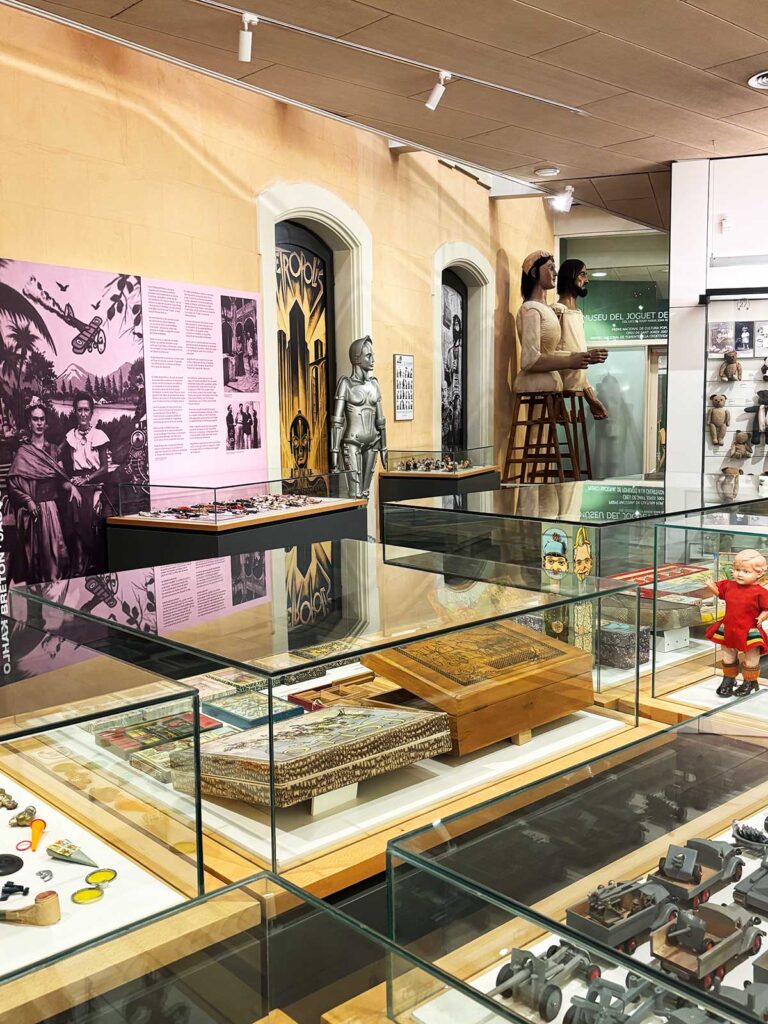
The Toy Museum of Catalonia features two floors of exhibits showcasing toys from around the world over the past two hundred years. From model trails to creepy dolls, from Bauhaus blocks to Barbies, this museum has them all. There is definitely a focus on toys from Catalonia and Spain, though you can also see toys from as far away as Taiwan.
Although most of the exhibits in the Toy Museum of Catalonia are behind glass, the museum has carefully planned an interactive guide for children. For example, there is one room where you walk across a glass walkway set atop thousands of dice, and kids are challenged with finding the one yellow die showing one dot, the two pink dice showing three dots, etc.
Market Days in Figueres
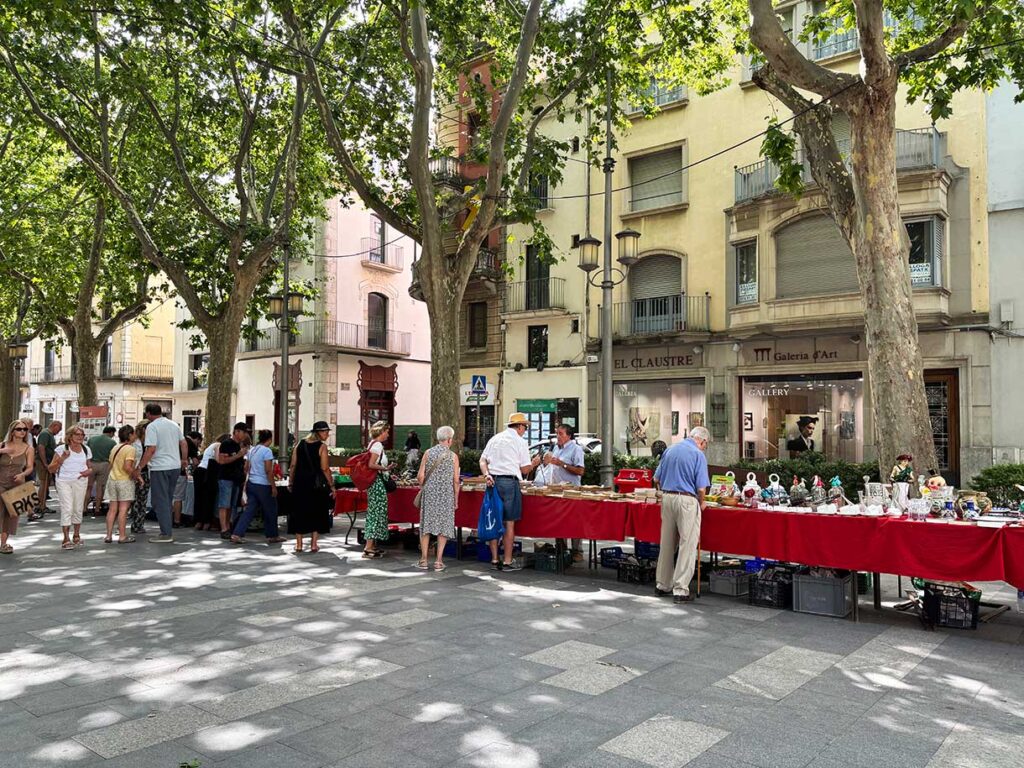

Market days in Figueres are on Tuesdays, Thursdays and Saturdays. I visited the Saturday markets, which are clustered around Plaça del Gra and Placa Catalunya. The focus here is on fresh, local produce, dairy products, meats, cheeses and flowers. On Thursday, there’s an additional market set up a few blocks away on Passeig Nou, with a focus on clothing.
As with any European markets, visiting early in the morning gives you the best selection of vendors and products, as sellers will pack up and leave if they sell out.
Walking the Historical Center
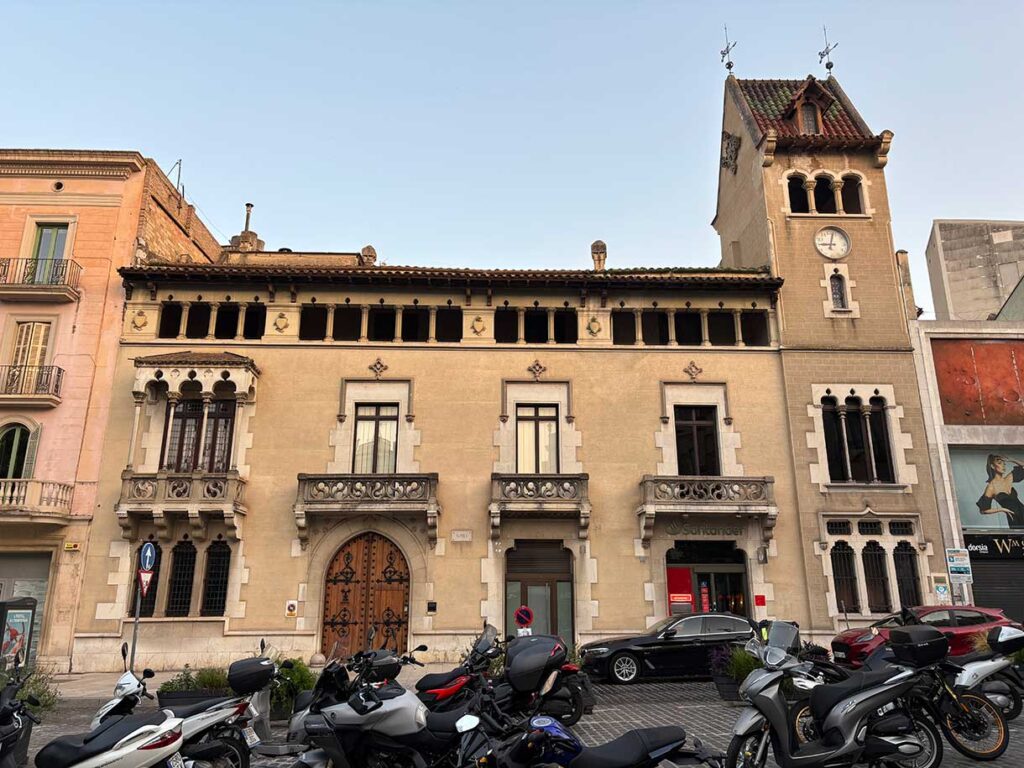
The historical center of Figueres is flat and compact, making it perfect for strolling. The city is home to some pretty Modernist buildings, most of which have small signs on the facade explaining their architectural and historical significance (however, you’ll need Google Translate to read the signs if you don’t speak Catalan).
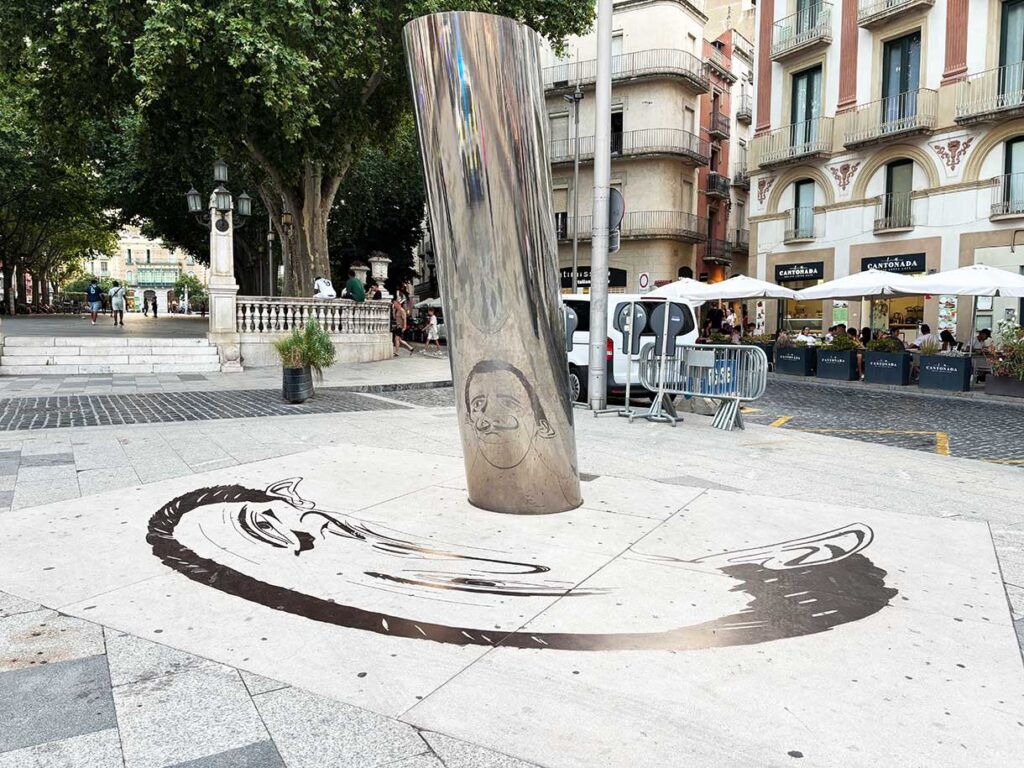
There are also several works of contemporary art placed throughout the center. Some reference Salvador Dali, like the mirrored optical illusion shown above. Others play on historical topics, like the 2011 Saint George and the Dragon sculpture in front of the market squares.
There are many squares throughout the center where you can sit on a shady bench to relax, or grab a seat on a restaurant terrace for a drink or meal. On summer evenings some squares host live music performances where members of the public come to listen, chat and dance.
Saint Peter’s Church
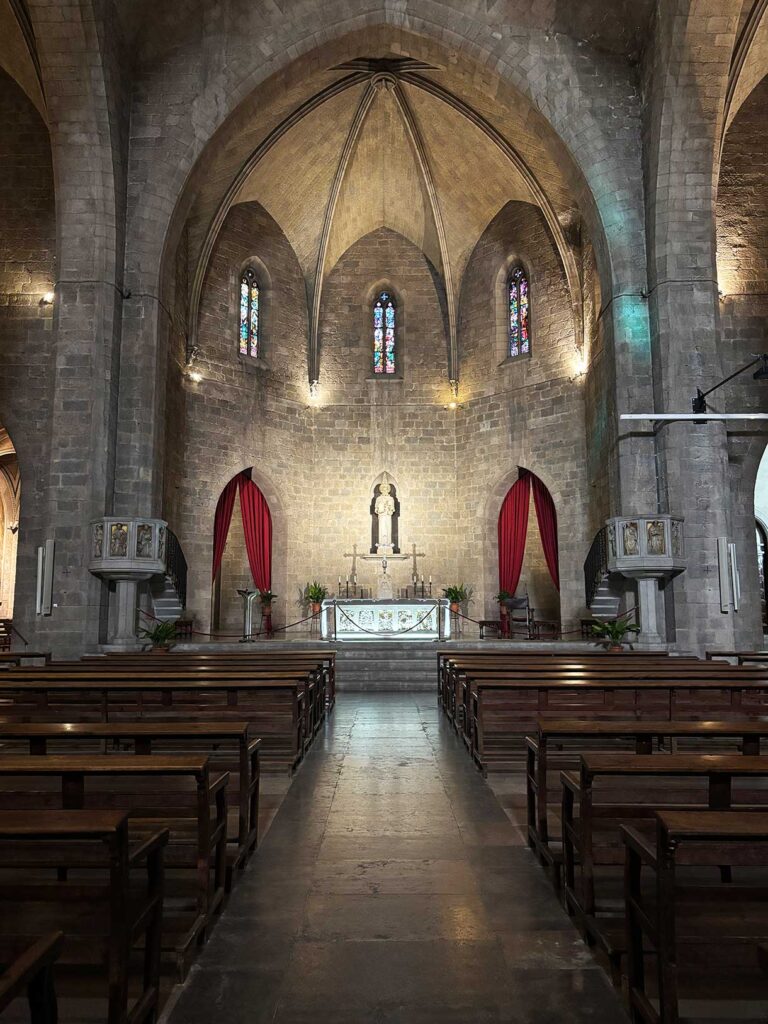
The Church of Saint Peter in Figueres is located right in front of the Salvador Dali Theater Museum. It’s free to enter the church, which is where Salvador Dali was baptized and took his first communion. The earliest foundations of this building date back to the 11th century, but it underwent significant additions and renovations to both the interior and exterior in the late Middle Ages.
Emporda Museum
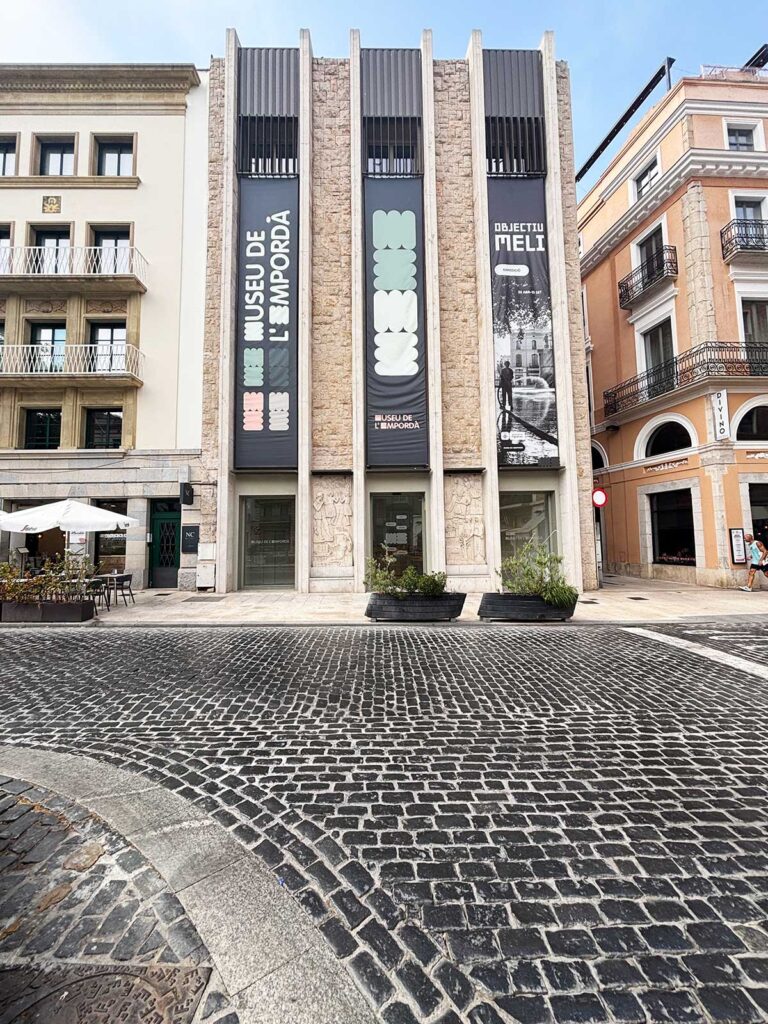
Admission to the Emporda Museum is free when you show your ticket from the Salvador Dali Theatre Museum. The museum combines both classical and contemporary art exhibits, in partnership with the Prado Museum in Madrid.
At the time of my visit in Summer 2026 there was a temporary exhibit featuring the works of local photographer Melitó Casals (Meli), who had worked in partnership with Dali and other Spanish creators. The permanent collections were organized around different themes like time and place; I assume they rotate works in and out and/or change the organization every now and then.
I spent about 45 minutes in the museum and would imagine that most people would need between half an hour and a full hour to see the exhibits.
Technology Museum of Emporda
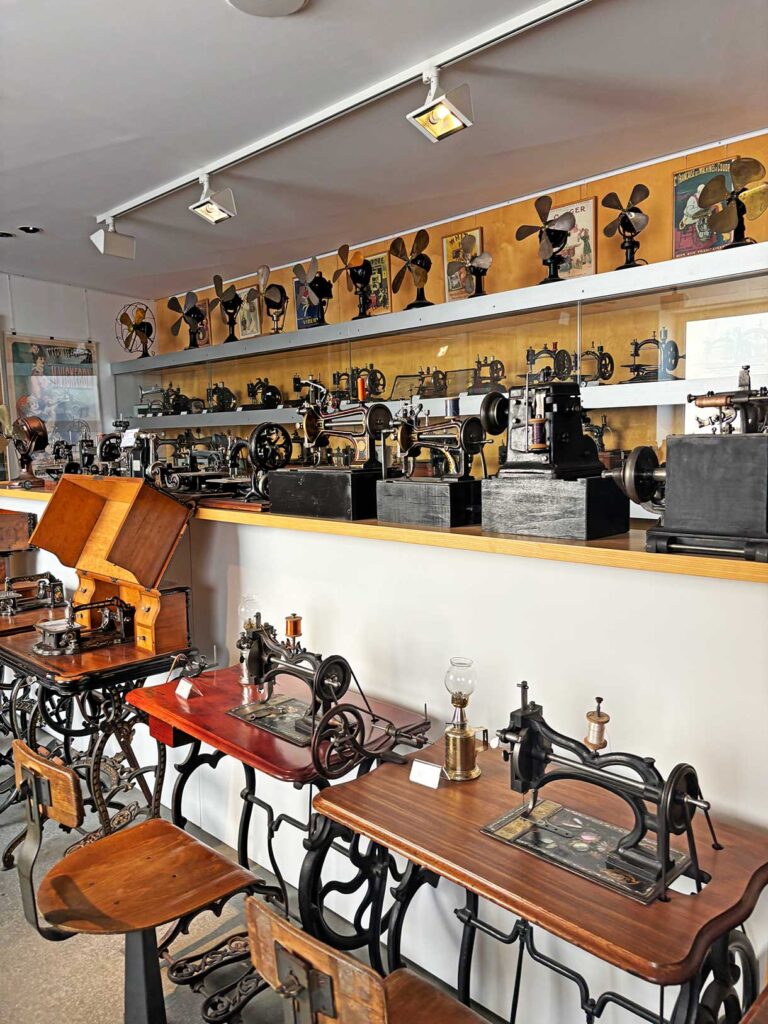
You know those travel experiences that are so weird you’ll never forget them? That’s how I would describe my visit to the Technology Museum of Emporda. At the time of my visit in July 2026 I was the only guest in the museum, so I didn’t see anyone else whose visit I could compare to my own and I don’t know if my experience is normal or not.
Basically, after paying the €4 admission fee I was taken to the top floor by one of the staff members, who then ushered me around the 3,000+ historical mechanical objects, ranging from typewriters to sewing machines to clocks to cash registers, and individually explained each one to me in Spanish even though I don’t speak Spanish and made that very clear. Occasionally I heard a word or two that I understood, but I felt like I was on a hidden camera show as the staff member explained yet another Italian typewriter from the 1800s to me.
The person giving me the tour seemed inconvenienced when I wanted to stop and take a photo or look at one of the objects that wasn’t being actively explained to me. I have no idea if any visitors are ever able to walk around the museum freely, or if every visit includes a personal chaperone and explanation in Spanish or Catalan. I ended up in the museum for about 90 minutes, unable to extricate myself from the unexpected tour, but if I’d been on my own I probably would have been in and out in about half that time.
Because this museum is private, there is no discount for holders of tickets from the Salvador Dali Theatre Museum. Hours are very limited but the museum is generally open on Thursday, Friday and Saturday from 4:00 pm to 7:00 pm. Looking at their website I see they may be closed for the entirety of August 2026.
Day Trips from Figueres
I stayed in Figueres for several days because I planned to use it as a home base for day trips around the region. Since I wasn’t traveling by car, I was focused on easy day trips by train and bus.
Day Trip to Girona

On this trip I didn’t take a day trip to Girona, as I’d already been there on a day trip from Barcelona. To get from Figueres to Girona you can take the R11 commuter train, and then follow my Girona travel guide to see the best of the city in one day.
With one day in Girona you can walk along the historic city walls, explore filming locations from Game of Thrones, and sample the local cuisine (ranging from Michelin-starred restaurants to secret local pastry shops).
Day Trip to Roses
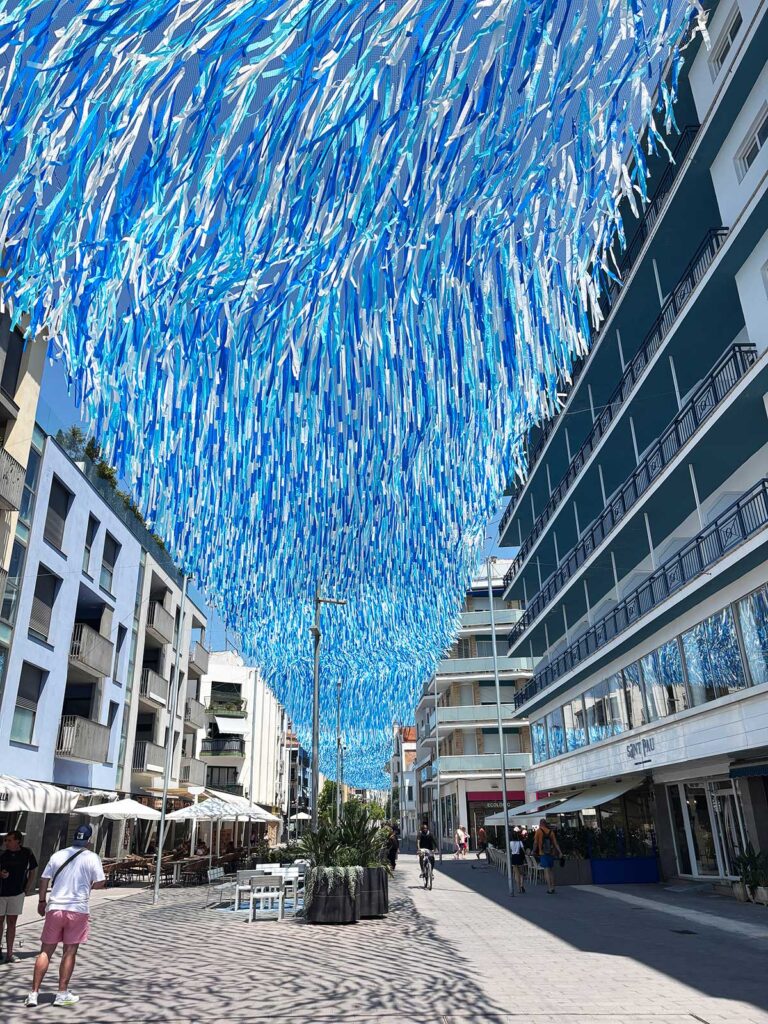
On weekdays, buses depart from Figueres for the seaside town of Roses approximately every hour, and the trip takes one hour. Roses is a popular vacation destination thanks to its two-kilometer stretch of beach right in the city center, which is perfect for sunbathing, swimming and boating. Full details of what to see and do during your Roses day trip are at the link.
Day Trip to L’Escala and Sant Marti d’Empuries
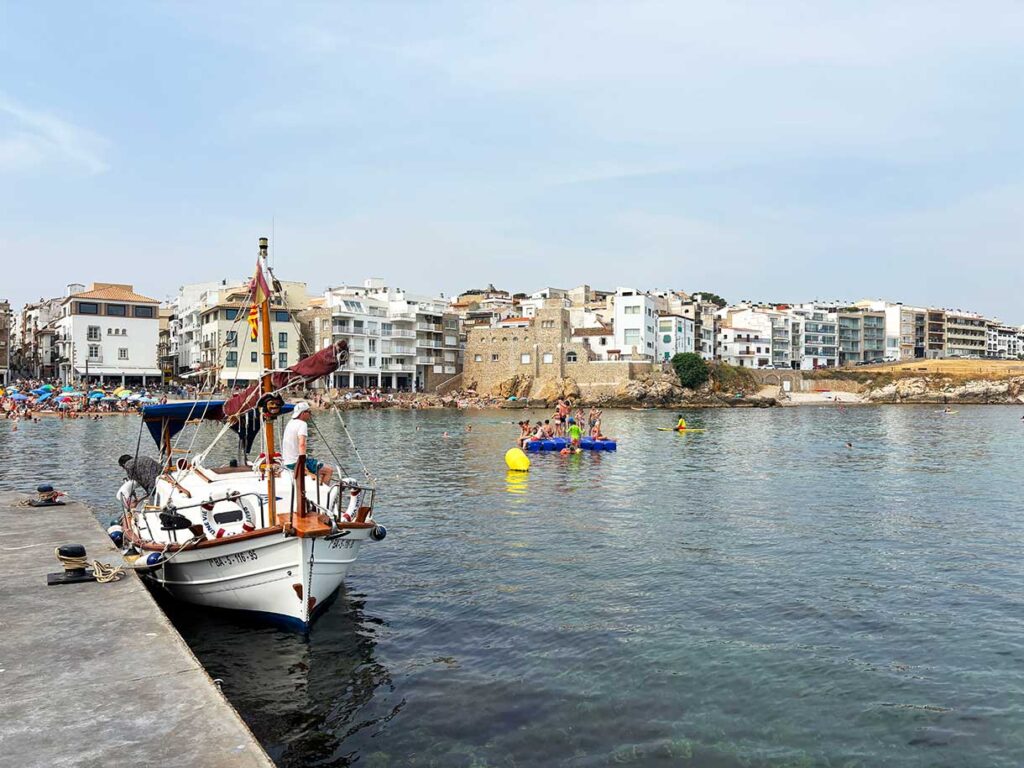
The tourist information office in Figueres suggested that I spend a day visiting L’Escala and Sant Marti d’Empuries, two seaside towns connected by a coastal walking trail. In the middle of that trail you can find the Ruins of Empuries, said to be the only archeological site on the Iberian peninsula where you can the ruins of both an Ancient Greek and Ancient Roman settlement. Of course, I’m also working on a guide explaining exactly how to take this day trip from Figueres by bus, and hope to publish it very soon so check back shortly!
Day Trip to Cadaques
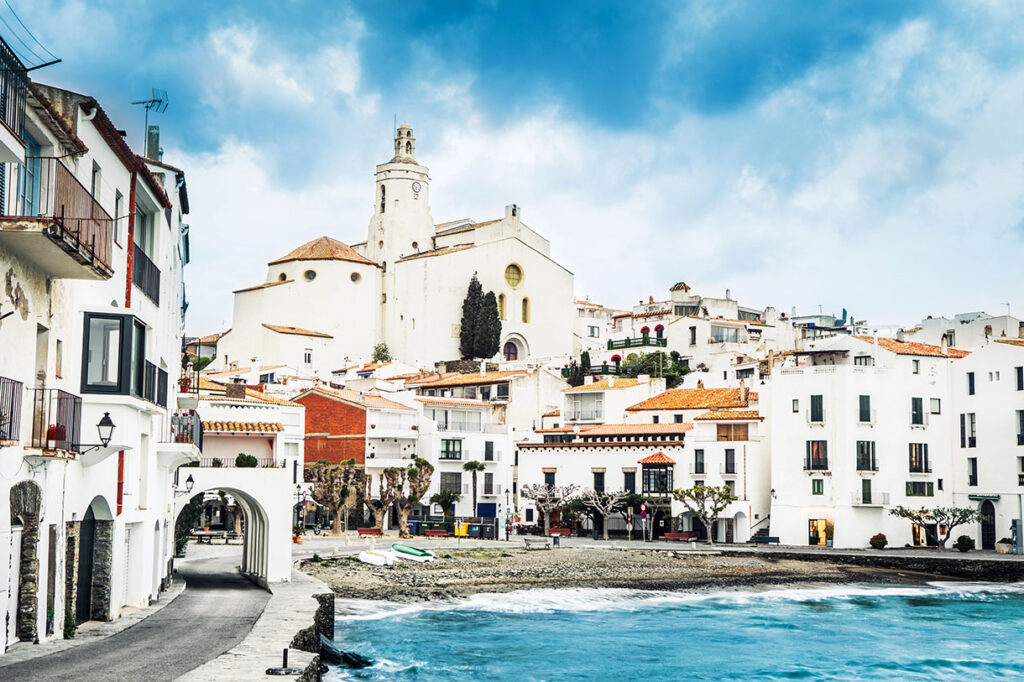
I had hoped to get to Cadaques during my visit to Figueres, but it wasn’t feasible with the local public transportation system. There was one bus to Cadaques at 8:15 in the morning, and then I had two options to return: around lunch or right before dinner. I was a bit worried about getting caught in the hot sun, or missing the last bus, so I skipped Cadaques this time. However, if you’re traveling by car it would definitely be worth looking into (and some people combine it with a trip to Roses, as the two are only thirty minutes apart).
Planning a trip to Spain? Check out these guides before you go!
⭐ The Best Neighborhoods to Stay in Barcelona
🚅 How to Take a Day Trip from Barcelona to Tarragona’s Roman Ruins
🏰 The Best Things to Do in Perpignan, France
🏖️ The 15 Best Things to Do in Collioure, France
🫛 10 Markets in Barcelona Worth Visiting
Planning a trip to Catalonia? Pin this post for later!
 |
 |