
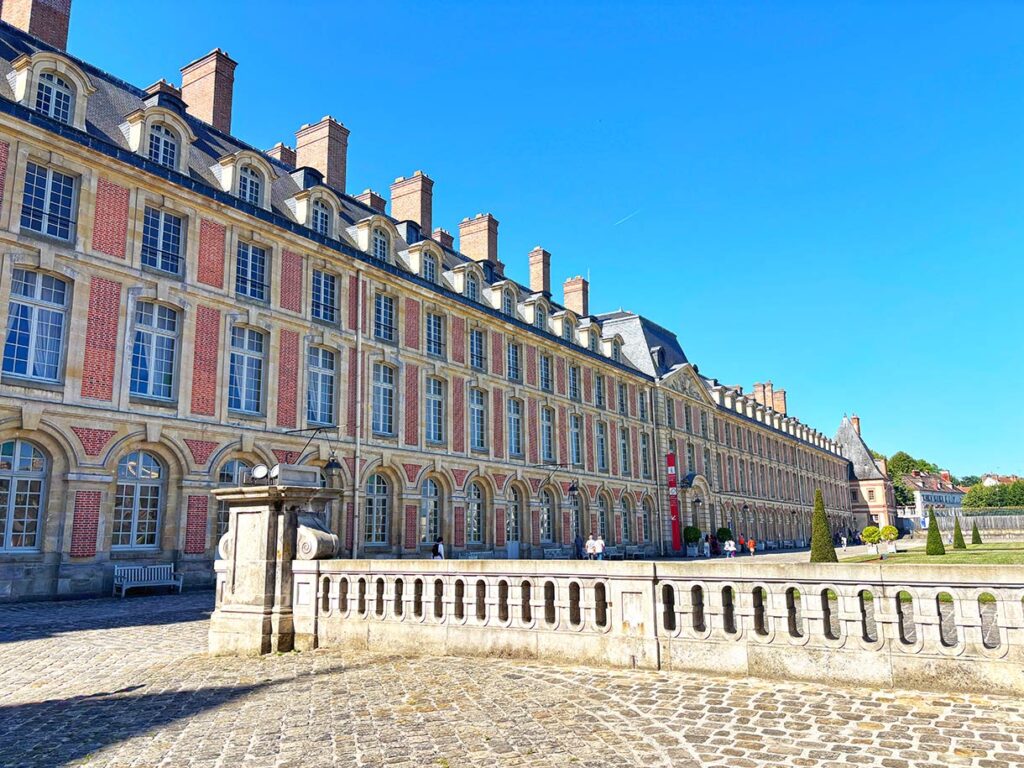
If you’re looking for a beautiful chateau near Paris to visit on a day trip, but can’t stomach the thought of the crowds at Versailles, consider visiting Fontainebleau. Chateau de Fontainebleau is a historic royal palace that is easy to reach by train from Paris, and so under-the-radar that you may well find yourself completely alone in Napoleon’s throne room.
More than thirty different kings and emperors called Fontainebleau home, and each left their mark on this 1500-room palace. In this guide I’ll talk about the logistics of visiting the Chateau de Fontainebleau, what you can see inside and outside the castle, and what you might want to see in the surrounding town.

How to Get to the Chateau de Fontainebleau
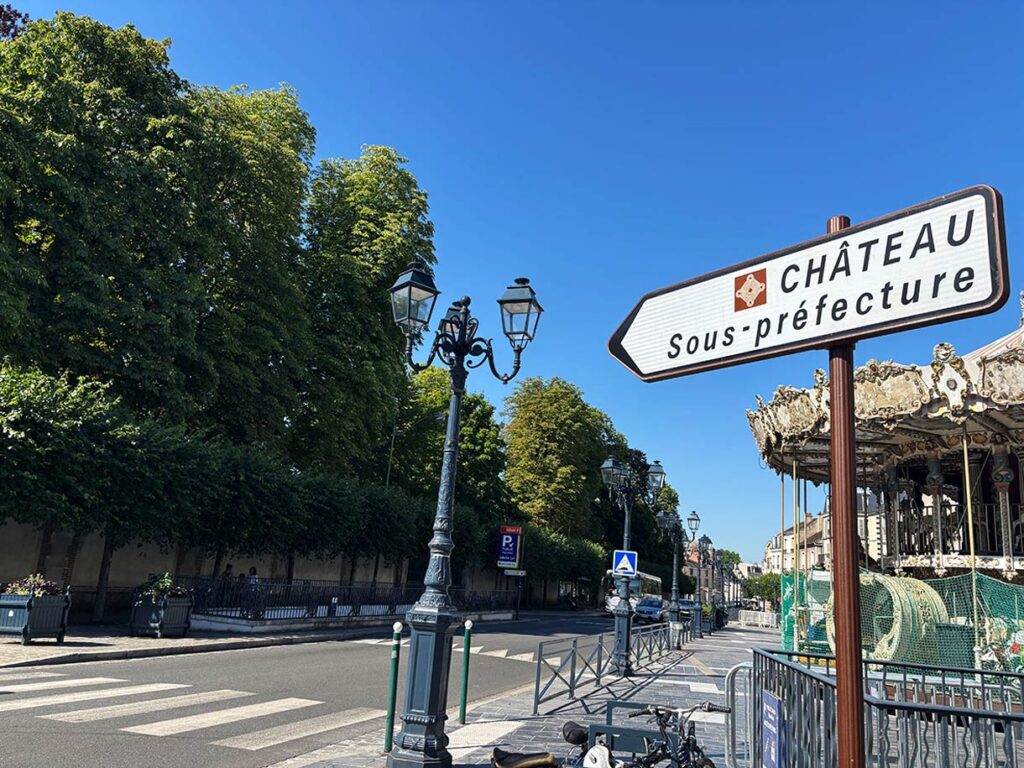
It takes about the same amount of time to drive from Paris as it does to take public transportation, so I recommend choosing the eco-friendly option and coming to Fontainebleau by train. Complete instructions (including photos of each step) are in my guide to taking the train from Paris to Fontainebleau.
All About the Chateau de Fontainebleau
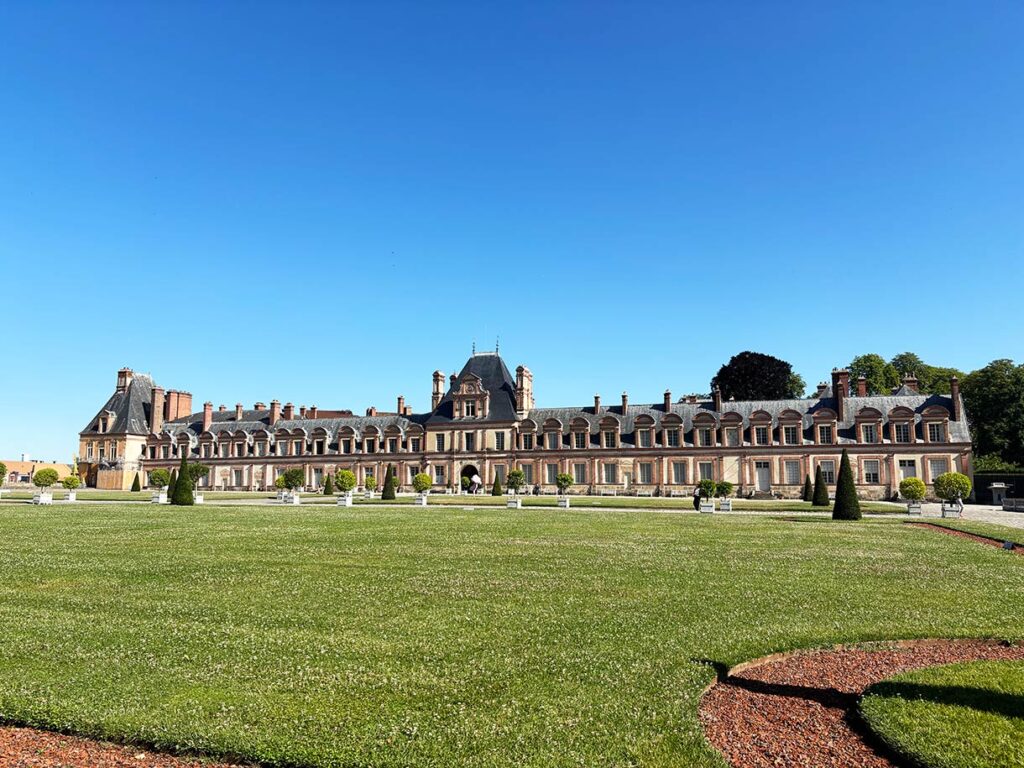
The Chateau de Fontainebleau is a UNESCO World Heritage Site located about 70 kilometers (45 miles) from the center of Paris, France. The property consists of an opulent castle containing more than 1500 rooms, surrounded by 130 hectares of parks and gardens.
The chateau dates back to the 12th century, but most of what you’ll see today is a result of renovations during the French Renaissance. For generations, French royalty called this palace home, and even Louis XVI and Marie Antoinette played a part in decorating the interior. Because of this, Fontainebleau is just as magnificent as Versailles… with a fraction of the crowds.
After the French Revolution, Fontainebleau became an imperial palace. Today, it is home to the last remaining Napoleonic throne room in France, and it was from this chateau that Napoleon Bonaparte eventually abdicated in 1814.
Visiting the Chateau
Fontainebleau Hours & Prices
Fontainebleau is open daily from Wednesday to Monday, and is closed on Tuesdays. Summer hours (April to September) are from 9:30 am to 6:00 pm, while in the cooler months the chateau and gardens close at 5:00 pm.
I didn’t pay to visit Fontainebleau as it was included in my Paris Museum Pass. If you’re planning to buy tickets, the prices are:
- €14 for regular admission
- €12 for discounted tickets
- Free for those under 18 (valid ID required)
There are guided tours available for an additional €7, but currently they are only offered in French. A multilingual video guide is available on tablets that can be rented for €4.
Inside the Castle
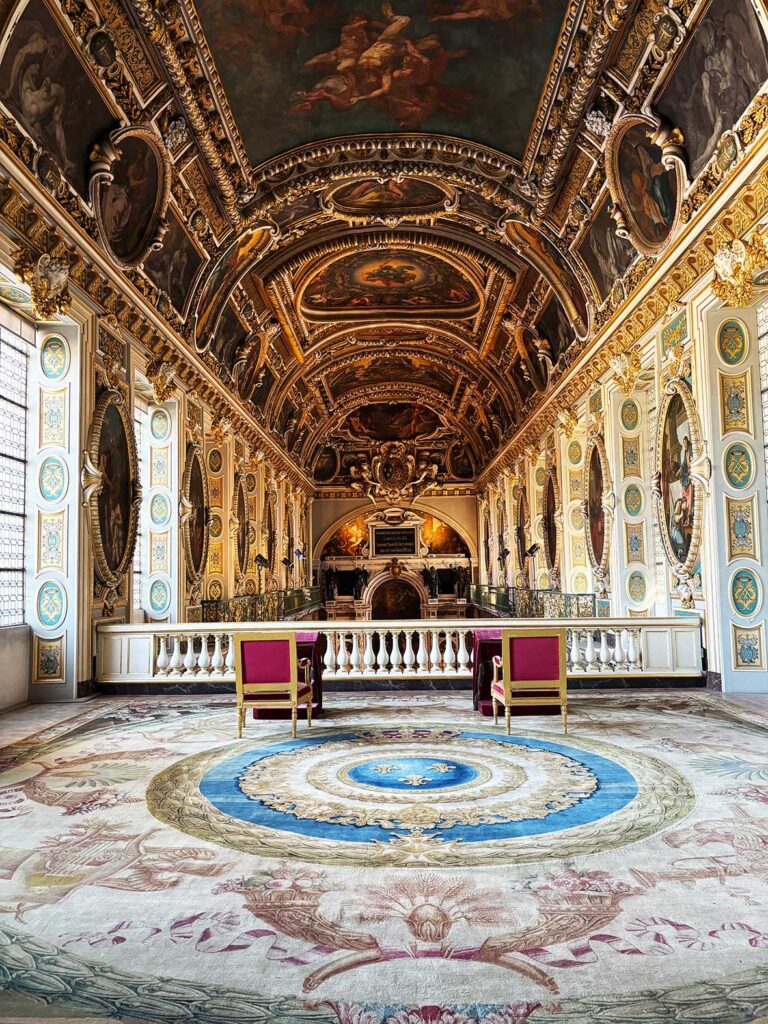
The first thing you’re going to notice about visiting Fontainebleau is that this chateau is not crowded. I visited in early July and was often the only person in each room I visited, including the grand hallways and opulent royal ballrooms.
I don’t recall seeing any large tour groups, and the number of other visitors that I encountered was so small that we often chatted with one another – I even ran into some people from my hometown in Canada!
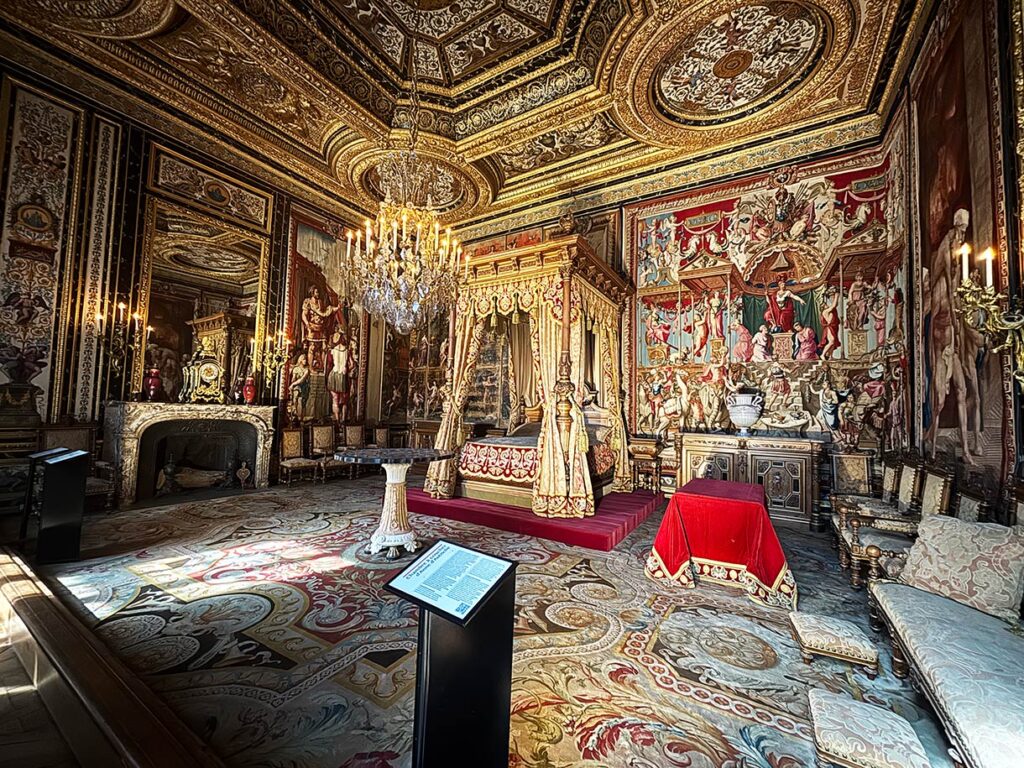
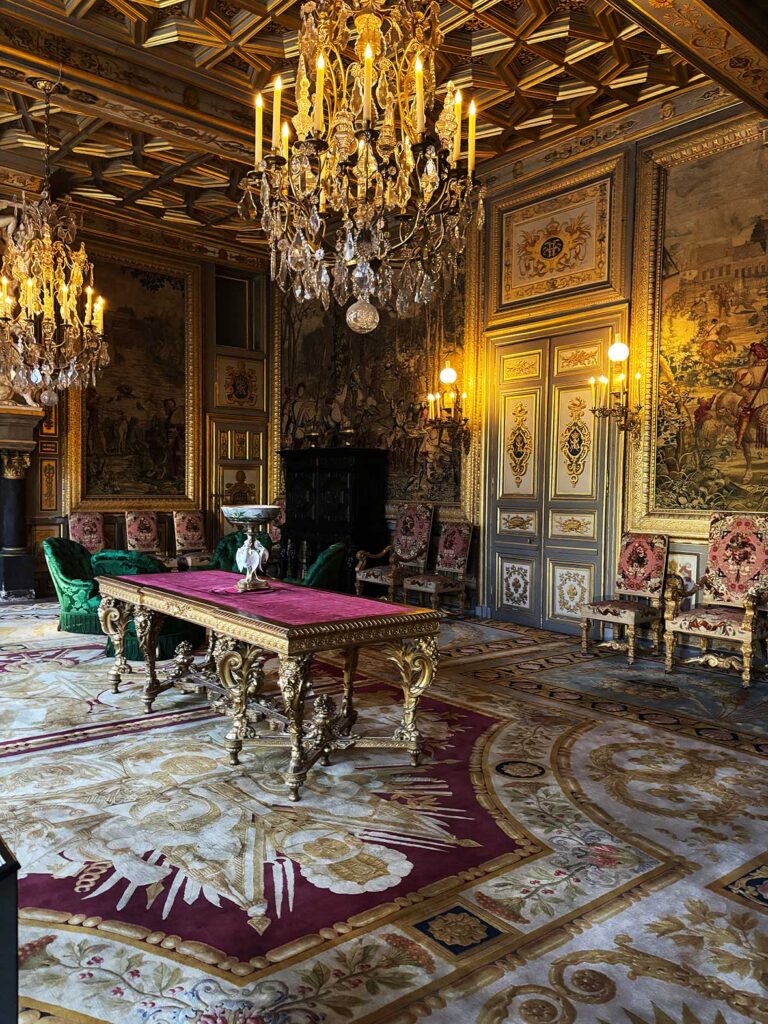
The interior of the castle is divided into three sections:
- The Napoleon Museum – This wing contains portraits, furniture and works of art owned by Napoleon and his family, displayed in well-decorated palace rooms
- The Pope’s Apartment – Designed for King Henry II, this apartment (basically a wing of the chateau) hosted many royal guests, including Pope Pius VII who stayed here twice and gave the wing its name
- The Grands Apartments – The largest section of the palace contains beautifully restored and decorated royal apartments, all modified over the years by the many royal families who made this castle home
I should add that looking back at my photos, unless you’re an art historian there isn’t a clear differentiation between each of the three sections. Each one is sumptuously decorated, full of works of decorative art and well-signed in both English and French.
For the casual visitor you’ll want to spend about two hours inside the chateau, whereas a real Napoleon buff might want to add an extra hour. You could also add on a guided tour (again, only in French at publication time) to see additional areas of the chateau that aren’t usually open to the public. Time in the gardens (see below) would be in addition to those two or three hours.
The Abdication Room
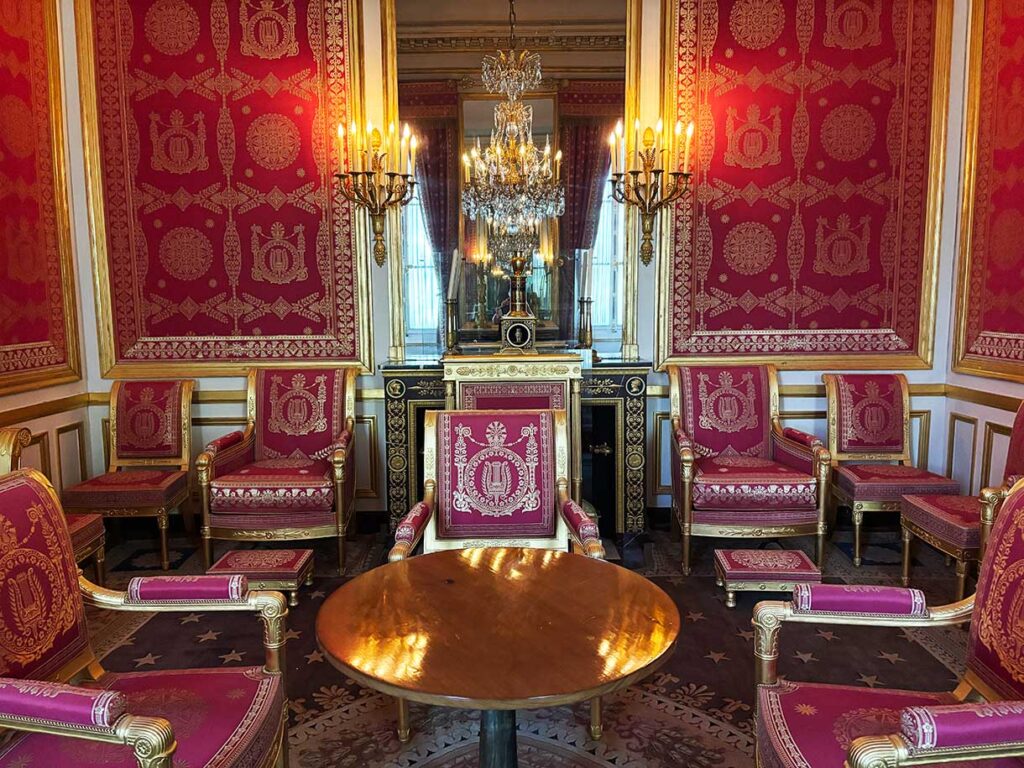
This is the most famous room in Chateau de Fontainebleau, so I wanted to make sure to highlight it for you!
This room, one of Napoleon’s many private rooms, is now known as the Abdication Room. In 1814 he placed his abdication papers on the round table you can see above, and signed them to signal the end of his rule of France. From here he departed for exile on the island of Elba… but he couldn’t stay away for long…
The Gardens of Fontainebleau
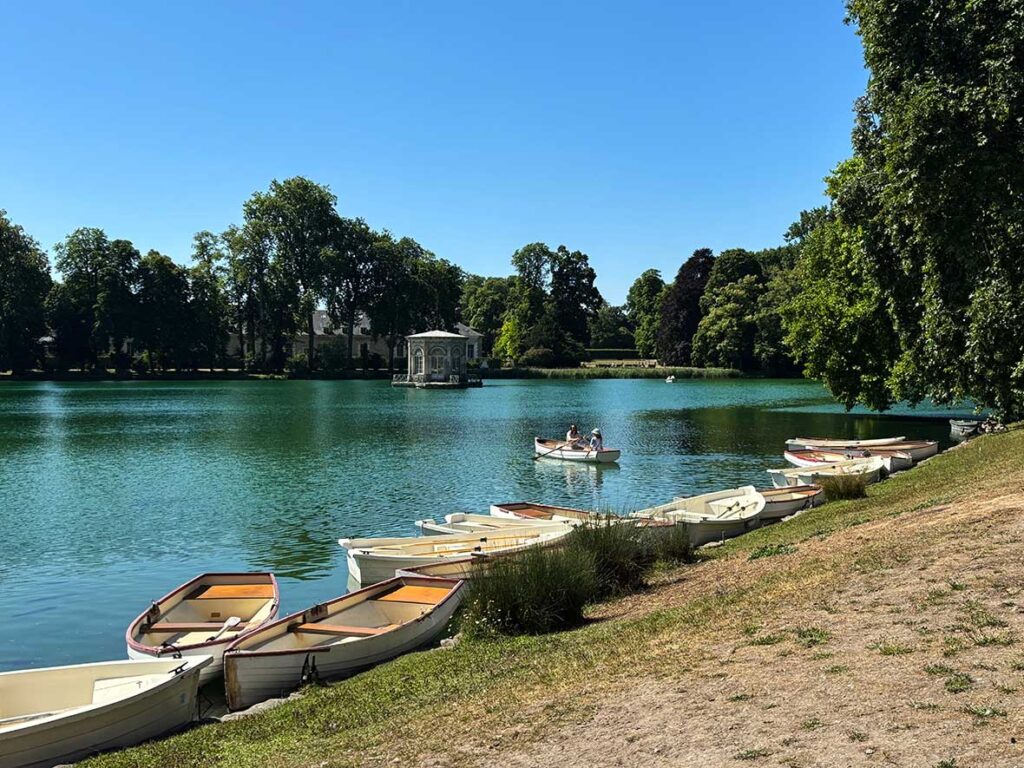
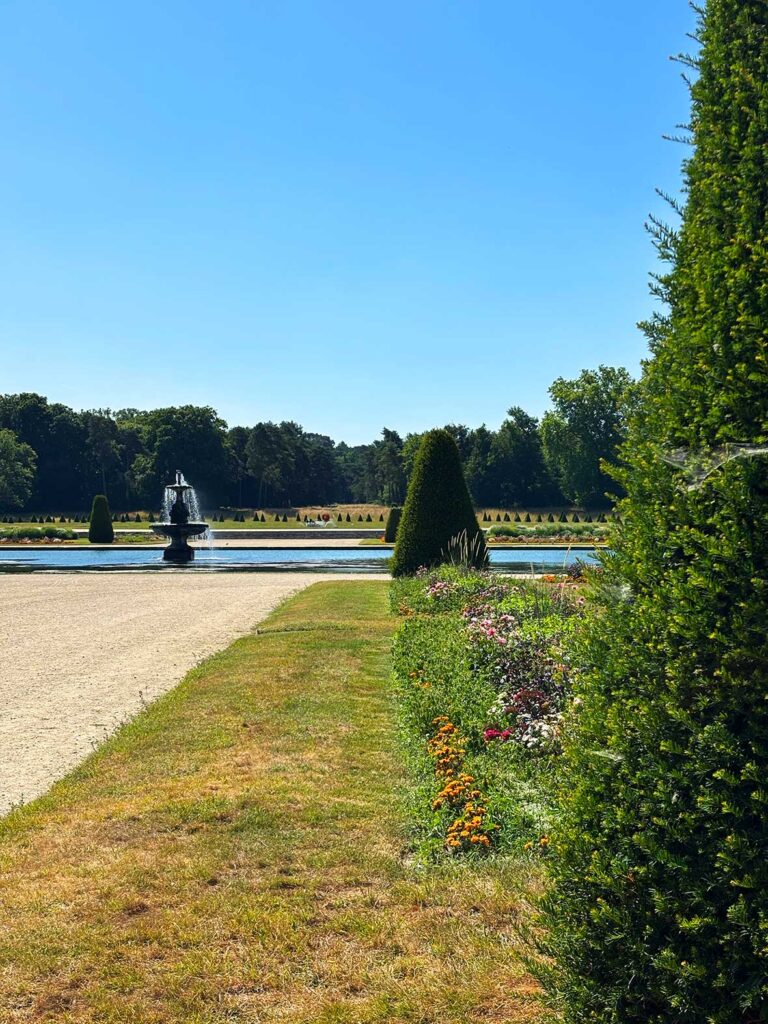
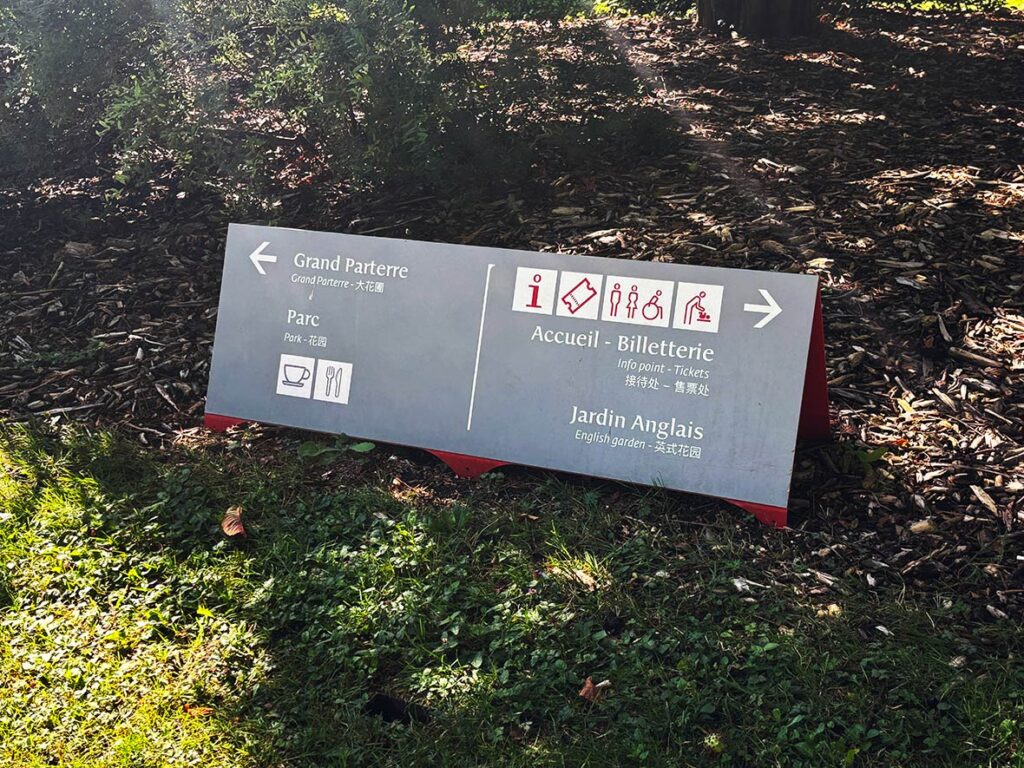
It is free to enter the parks and gardens of Chateau de Fontainebleau – no ticket or payment is required. There are multiple access points, including the White Gate (500 meters southwest of the train station) and the Diane Gardens Gate (near the historic town center). The outdoor spaces are divided into three main sections:
- The Carp Pond & Gardens – Shown in the first photo, this park area has walking trails around a large pond, with rowboats for rent. At the far end of the garden here you’ll find the Belle-Eau Fountain, from which Fontainebleau gets its name.
- The Grand Panterre – Shown in the second photo, this is a more manicured garden with ornamental trees, flowers and a fountain.
- The Park – A vast green space and narrow canal stretch more than one kilometer in the direction of the train station. If the weather is agreeable you can walk through the park instead of taking the bus to and from the train station.
At the time of my visit in 2025 rowboat rentals were priced per-person at a very reasonable €3 per half-hour or €5 per hour. You could also buy beer and wine to drink on board. 🥂
I noticed a sign for horse-drawn carriage tours of the gardens, priced at €8 for a twenty-minute trip (longer tours available upon request) but I didn’t actually see any horses or carriages during my visit, and generally speaking this blog doesn’t support animal labor.
Lunch at the Chateau de Fontainebleau
There is a self-serve buffet restaurant in the chateau called Monument Cafe – they operate locations in a few different castles and other historical sites. It’s not an all-you-can-eat buffet, so review their website to see if their format is a good fit for you.
That being said, there are lots of different cafes and restaurants in the town of Fontainebleau, so I’d recommend eating in town before or after you visit the chateau. I had lunch at a very cute little restaurant called Paul & Paulette, where the staff were keen to talk about the origins and seasonality in the ingredients on their daily menu (and there’s always a vegetarian option).
Visiting The Town of Fontainebleau
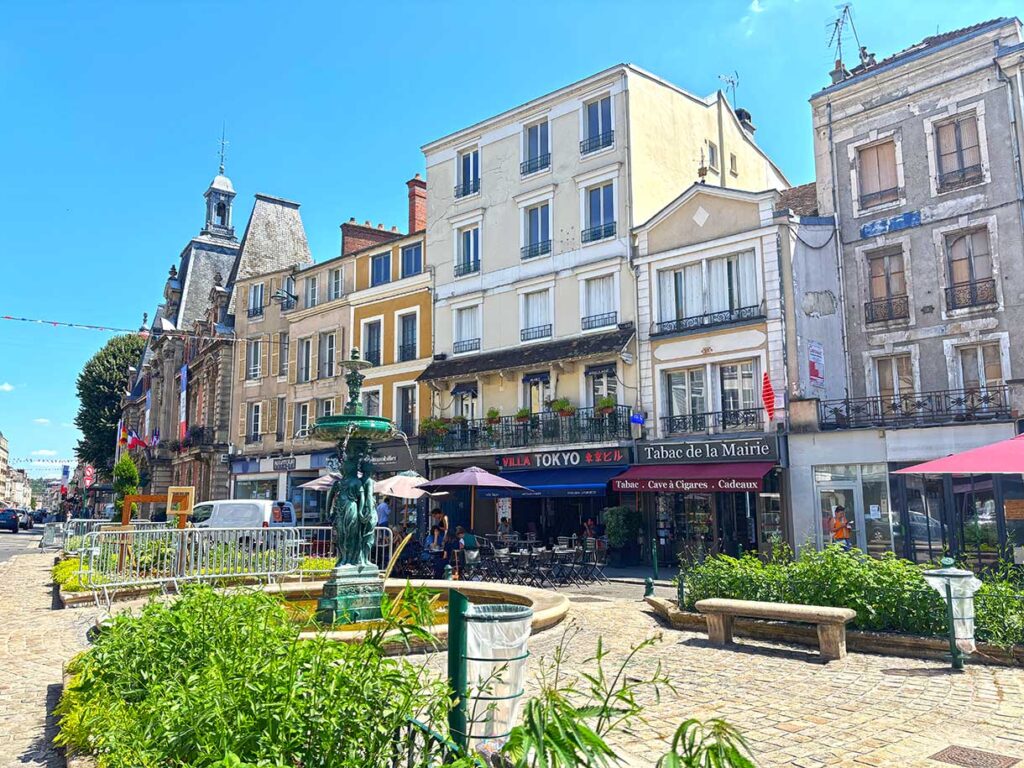
Fontainebleau is something of a suburb of Paris, with about 15,000 people living in the town itself. Of course, the main draw here is the chateau, while the secondary draw is the hiking trails in the forest that surround the town. Otherwise, you can wander through the historic center of the town in about half an hour.
If you’re looking to stay overnight in Fontainebleau, I thought that both Aigle Noir Fontainebleau and Hotel & Spa Napoleon Fontainebleau looked lovely, and had perfect locations right across from the palace. For something on the more affordable side, there was a well-located Ibis hotel about two blocks away.
The main reason to stay in the town of Fontainebleau would be if you’re road-tripping south of Paris, such as towards Burgundy, Lyon or Vichy, and don’t want to drive in the chaotic city center. (A few years ago I was in Paris for work and my driver missed the turn-off for our hotel – that one wrong turn added 45 minutes to the trip because traffic was so bad!)
Tours from Paris to Fontainebleau
Personally, I visited Fontainebleau independently, without a tour. However, if you’d prefer to have organized transportation and/or a tour guide for your trip to Fontainebleau, these are some of the highest-rated tours that I could find:
- Day Trip to Fontainebleau and Vaux le Vicomte Chateaux from Paris – With this organized bus tour you’ll visit Vaux-le-Vicomte in the morning (including a stop for lunch) and then head to Fontainebleau in the afternoon.
- Chateau de Fontainebleau & Vaux-Le-Vicomte Tour from Paris – This tour is similar to the one above, but you will have a more intimate experience as a small group traveling by van.
- Fontainebleau Forest and Chateau Half Day Hot-Air Balloon Ride – Starting in Fontainebleau (not Paris), you’ll have a three-hour hot air balloon experience (including a one-hour flight over the forest, castle and/or surrounding villages, depending on the wind direction) ending with a champagne toast.
I’ve written many Paris travel guides, so don’t go until you’ve also read these!
🏰 The Best Loire Valley Day Trip from Paris
🌃 Things to Do in Paris at Night
🖼️ How to Get the Most Value from a Paris Museum Pass
🍷 My Favorite Wine and Cheese Tastings in Paris
🌹 How to Make a Custom Perfume in Paris
Planning a trip to Paris? Pin this post for later!
 |
 |