
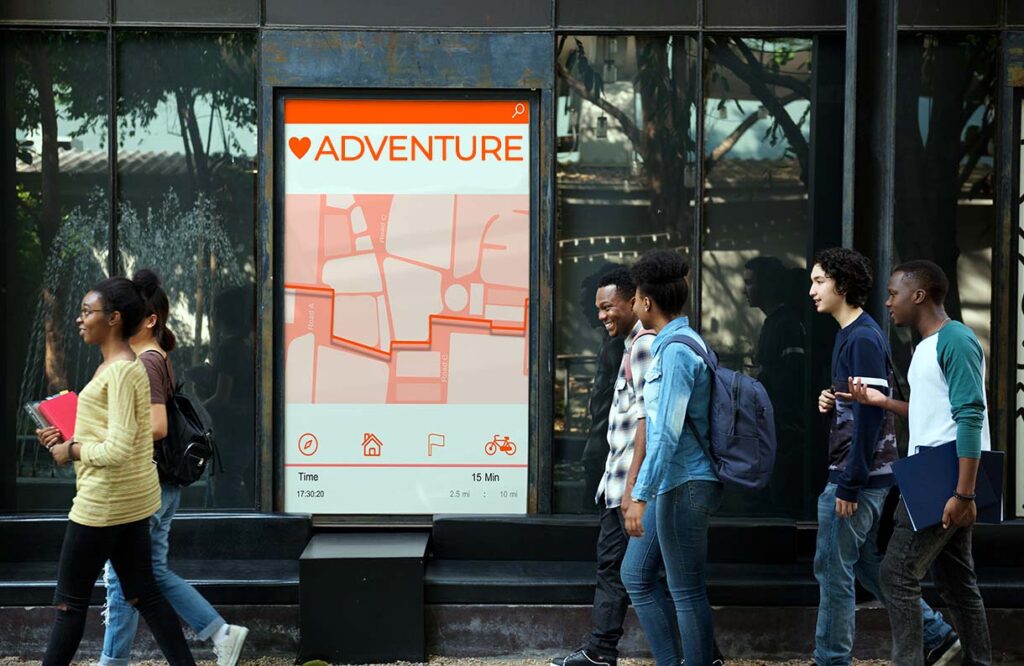
Are you a high school student who is lucky enough to be taking a school trip to Europe? Is this your first big international trip, or your first overseas school trip? If so, you are probably wondering what to pack for a school trip to Europe.
Something you may not know about me is that aside from blogging, I work in international education. That means I haven’t just packed for my own (many!) international trips to Europe, but I’ve also helped students prepare for school trips to Europe. I’ve even planned and led some of these trips! So while you may be freaking out about your upcoming school trip to Europe, you don’t have to worry because I know exactly what you need to bring!
Parents, this applies to you as well! Allowing your student to join an overseas school trip is a big deal, from the financial costs involved to the classes they’ll miss to worrying about what they’re up to overseas. I can’t quell all your worries, but I can help you through one of the biggest challenges: packing!

Things to Consider When You Pack for a High School Trip to Europe
A high school trip to Europe tends to be extremely fast-paced, and there’s no time for lingering, languishing or delaying the group. It’s important that you keep everything that you packed hyper-organized.
- These are my favorite packing cubes. They’re affordable, they’re breathable, and they come in different sizes.
- These packing cubes are similar and come in lots of different colors.
- This set of packing cubes is nice and simple (and again, they have that breathable mesh).
You can put your pants and t-shirts in one packing cube, socks and underwear in another, and coats and sweaters in a third. That will help you find exactly what you’re looking for when you’re getting ready each morning.
⭐ If you have a close friend going on your school trip to Europe with you, you could also use the fourth cube in each set to put one or two of your outfits in their suitcase, and vice versa. Then, if one of your suitcases gets lost by the airline on the way to Europe, you’ll still have a few days’ worth of outfits. I always do this when I’m traveling with friends and family, just in case. ⭐
You’re not going to have time to do laundry on your school trip to Europe, so you need to have enough clothes to get you through the trip. I also recommend that you have somewhere to put your dirty laundry once it reaches the point where you can’t wear it again (please!).
I personally have this set of airtight compression bags, and I bring two or three empty bags on every trip. I stick my dirty laundry into one of these bags and squeeze the air out, so they don’t take up much room in my luggage (and I have more space for souvenirs!).
A lot of the products that I’m going to recommend in this article are sold in sets of two, three, four or more, so consider splitting the cost with your friends who are going on the trip!

Backpack vs. Suitcase for a High School Trip to Europe
A typical high school trip to Europe isn’t a “backpacking” trip per se, so you don’t necessarily need a backpack. In fact, I prefer to use a suitcase for my short trips to Europe, and I recommend that most high school students choose a suitcase as well.
For this article I will assume that you’re allowed to check one piece of luggage (our students always can!). If that’s true at your school as well, I suggest that you use a medium-sized rolling suitcase as your main piece of luggage for your school trip to Europe. That link takes you to the newest model of the actual bag I take with me on every trip to Europe, but you can shop around for cheaper options on Amazon (Costco is also great for luggage!).
- This set of two luggage tags comes in lots of different prints.
- This set of three leather-look tags comes in twelve colorways.
Don’t bring a second suitcase as your carry-on luggage, because once you arrive in Europe you won’t be able to to manage two bags (trust me on this!). Instead, most students can just use their regular school backpack as their carry-on luggage. At the end of this article I’ll talk about what essential items you want to keep with you in your carry-on, so keep reading!
- My own backpack is made by Deuter, and it’s the earlier model of this pack. I used it for a one-year around-the-world trip and really liked it.
- Osprey is another popular line of travel backpacks. This pack for men and this pack for women are a good size for a school trip.
Any of the three travel backpacks I’ve linked above would be good long-term investments for future gap years, semesters abroad, Eurotrips or just regular vacations.

What Clothes to Pack for a High School Europe Trip
Of course, the clothes that you pack for a school trip to Europe are going to depend on where you’re going and the time of year that you’re traveling. We typically take students to Europe in the early autumn or late spring, and we recommend that our students pack:
🎒 Daypacks, Purses & Bags
- If you want to carry a purse, this Travelon bag is a good option. It has several features to deter pickpockets (check the link) and has enough room for your phone, sunscreen, a wallet and a water bottle.
- If you want to use your regular school backpack, that’s fine too! I recommend buying some locking mini-carabiners and using them to keep the zippers closed. When you’re in busy public places, including the bus or metro, swing your backpack around to the front to keep pickpockets away.
- If you don’t want to carry a purse but a daypack seems like too much, lots of travelers like to use a sling bag like this. It’s easy to swing it around to the front of your body when you’re in a crowd.
Try to keep your bag lightweight and organized. If you don’t need something, leave it in your luggage or in the hotel room. At some attractions you may have to let security search your bag before you enter, and you might have to run it through an x-ray machine, so the less stuff you have the faster the line will move for everyone.
👕 Tops & Bottoms
- Most students can wear the same pair of pants for two or three days. For a ten-day trip, consider packing three pairs of pants (jeans, leggings, chinos, etc.) plus the pair you wear on the plane.
- One t-shirt or tank top per day.
- Two sweaters or hoodies.
- One waterproof jacket that fits over your hoodie or sweater.
- One button-down shirt or one simple dress in case your school goes to any concerts, performances or special events in the evening.
- I don’t usually recommend skirts or dresses for daily wear on school trips to Europe because you’re often going up and down narrow, old, spiral stairs (like the ones at the Arc de Triomph in Paris or the Sagrada Familia in Barcelona) where long skirts are a major tripping hazard and short skirts don’t provide coverage from the people below you.
🩲 Underwear
- One pair of underwear per day, plus one extra
- One pair of socks per day, plus one extra
- Bras as needed
👟 Shoes
- Most students pack one pair of trainers (aka running shoes or sneakers) and wear them every day.
- You might also want to bring one pair of comfortable walking sandals (in warmer weather) or boots (in cooler weather)
- One pair of cheap flip-flops to wear around the hotel
- Wear your shoes for at least a week before you pack them, so they’re already broken in!
🕶️ Accessories
- One pair of pajamas (remember you’ll probably be sharing a bed with a classmate, so choose something you’ll both be comfortable with)
- One pair of sunglasses
- Optional: A ball cap or sunhat (only pack a hat if you like wearing them at home too)
- Optional but highly recommended: A cheap watch! It’s so important that you don’t hold up your group, and sometimes you don’t want to pull out your phone to check the time if you’re in a busy area. A watch helps you keep an eye on the time.
❄️ Seasonal Packing Tips
- In cooler weather you may also need a winter coat, insulated boots, gloves, a scarf and a warm hat.
- In warmer weather, you may want to replace some of your pants with shorts.
- Ask your teacher chaperone if you should bring a swimsuit.

The Essential Toiletries & Personal Care Items You Need to Pack for a High School Trip to Europe
- Prescription medications. If you take prescription medications, your parents need to ensure they’re legal in the countries that you’ll be visiting. You should carry the prescription and the medication with you in your carry-on bag (never check prescription medications) and make sure your teacher knows about them as well.
- First-aid kit. You don’t need a big, fancy first-aid kit. Just bring a zip-lock bag with some bandages, moleskin, sanitizing wipes and antibacterial ointment.
- Glasses, contact lenses and contact lens solution.
- Shampoo and conditioner. Those little travel-sized bottles should be enough for a 10-day trip.
- Hair care products. You probably won’t have enough time for everyone in the room to use the blow-dryer (if there is one!) so only bring the products you would use if you were air-drying your hair.
- Hair elastics, scrunchies, pins and clips.
- Body wash and face wash. I recommend a bottle of body wash so you don’t have to pack a wet and slimy bar of soap.
- Deodorant. Europeans use less deodorant than North Americans, and they prefer aerosol sprays over rolls and sticks. Bring your own!
- A toothbrush and toothpaste. If you don’t already have a travel toothbrush holder, grab one before your trip.
- Nail clippers and a nail file.
- Lip balm. Pack a tube of lip balm (I recommend one with SPF)
- Sunscreen. Make sure it’s at least SPF 30+.
- Pads and tampons. If you’re expecting your period, bring enough pads and tampons for your entire cycle, plus a few extras. If you’re not expecting your period, it might be good to bring some as well, in case the international travel, stress and excitement cause your cycle to become irregular. There are pads and tampons for sale in Europe, but they may not be the brands you’re familiar with (for example, most European tampons don’t have applicators – you use your finger to insert them).
- Makeup. Again, pack light. With four students in one room, crammed around a single mirror, there won’t be much time to put on makeup in the morning. Plus, Europeans tend to prefer a more natural look anyways.
- Perfume and cologne. Skip it or bring one small bottle.
- Earplugs. Pack a few pairs of earplugs in case you realize, too late, that your roomies snore (or fart!) in their sleep
I recommend packing all of your toiletries in a waterproof toiletry case (or a big zip-lock bag if you want to save money) and then wrapping it in another plastic bag inside your luggage. A friend of mine had her self-tanning lotion leak on the airplane and it stained all of her clothes brown! Double-wrapping your liquids reduces the chances of any serious spill damage.
Most airlines have restrictions on aerosol products, so it’s easier to bring non-aerosol versions when you’re traveling. This would include things like body spray, hairspray or sunscreen.

What Electronics Should You Pack for a High School Trip to Europe?
I hope you were paying attention in Science class! The most important thing to remember about bringing electronics to Europe is that they use a different voltage than the USA and Canada. This means that unless your electronic device is dual-voltage, it will get fried the second you plug it in to a European outlet (ask me how I learned that…).
- A universal adapter. This lets you plug in multiple dual-voltage electronics at the same time. Everyone staying in the room can charge their phones at the same time, which definitely helps keep the peace!
- A portable power bank. Charge this in your hotel room overnight and then throw it in your daypack. It will keep your phone and camera charged through thousands of selfies.
My recommendation for students on a school trip to Europe is to not pack any electronics that aren’t dual-voltage. The big ones here are hair dryers, curling irons and straightening irons. An adapter only adapts the shape of the plug, not the voltage, so you still run the risk of frying your device (best-case scenario) or blowing the power in your hotel (worst-case scenario) if you try to use these in Europe.
Most other modern electronics are dual-voltage and safe to bring to Europe (confirm with the manufacturer if you’re not sure!). But I recommend leaving your expensive laptop, Chromebook and gaming system at home. It’s too easy to lose electronics along the way, and you’ll enjoy the trip more if you spend your time talking to your classmates and taking in the European scenery.
I suggest limiting your electronics to your cell phone, AirPods or other headphones, and possibly a camera. Keep them in a very safe place, as they’re all prime targets for pickpockets.
I always recommend that my students turn off data roaming on their cell phones, and just use WhatsApp or iMessage to communicate with their families when we’re in hotels or other places with WiFi. However, if you really want to use data on your school trip to Europe, your current cell phone provider might have a reasonable roaming plan (US travelers can expect to spend about $10 a day, Canadian travelers should anticipate that it may be closer to $20).

A Few Extra Items You Might Want to Bring on Your School’s Europe Trip
- A reusable water bottle – Make sure it fits in the bag you’ll carry around with you.
- An inflatable travel pillow – You’re going to be exhausted (trust me!) and an inflatable pillow will help you nap on planes, trains and inter-city buses. I use and recommend this one, which inflates with a pump rather than your mouth.
- A lightweight cotton towel – You would only need to pack your own towel if some of your accommodation is at hostels where linens are not included. If this is part of your itinerary (ask your teacher) then I recommend a cotton towel like this one (not a microfiber towel – they get smelly fast!).
- A couple extra plastic bags. In case anything does get wet or smelly, you can wrap it up away from your clean clothes.
- A notebook and pen to write down your favorite memories. This just hits different than using the Notes app on your phone.
- AirTags – I only travel with an AirTag in my checked luggage (confirm that your airline allows this). If your suitcase doesn’t arrive in Europe with you, this will help your parents back home work with the airline and tour company to get them to you ASAP.

What to Pack in Your Carry-on Luggage on Your High School Trip to Europe
So now that you’ve figured out what you need to pack for your high school trip to Europe, it’s time to figure out what to put in your checked luggage (the stuff that goes under the plane) versus what to put in your carry-on luggage (the stuff you bring on board with you). Earlier, I recommended that you bring your normal school backpack as your carry-on bag on the flight, so here’s what you should put inside:
- Prescription medications (and the prescription). You can’t risk the airline losing your bag with these inside!
- One complete change of clothes. Again, if your bag gets lost or delayed, you’ll have clean clothes to wear until it arrives. Put them in a small packing cube or plastic bag.
- Essential toiletries. A toothbrush and lip balm, plus a mini toothpaste, deodorant, body wash, face wash and shampoo, in case your luggage is delayed. Make sure each liquid or cream item is under 100 ml total, and that all your liquids fit in a clear one-liter bag.
- All of your electronics, including spare batteries, chargers and adapters.
- Your passport, wallet, bank cards and money. Don’t let these out of your sight!
- Inflatable travel pillow.
- Snacks. I like to bring granola bars, protein bars and/or trail mix on the plane.
- Sharp objects, like nail scissors, clippers, scissors and tweezers.
- Liquids over 100 ml (each) and/or that don’t fit in a one-liter clear bag
Airlines have other restrictions about what you can and can’t take on board, so make sure to follow the rules of the airline that you’ll be flying on.

How Much Money Should You Bring on a School Trip to Europe?
The amount of money that you need to bring on a school trip to Europe will depend on what is included in your tour package and the destinations that you’ll be visiting.
Most school tours that are run through tour operators include transportation, accommodation, entry tickets, breakfasts and dinners. This means that in Europe, students only need to pay for daily lunches, snacks, souvenirs and incidentals.
When I take students to Europe I recommend that they bring about €40 per day to cover these costs. Students who know they have a big appetite, or prefer eating expensive dishes, should anticipate spending a bit more. The same goes for students who can’t resist bringing home lots of souvenirs for their friends.
It’s important that your family discusses spending expectations before the trip, and that you have a plan in case your student loses their wallet or makes a major poor spending decision (no, the tour bus won’t drive the whole group back to the souvenir shop so you can return that €100 crystal model of the Eiffel Tower!). We hear from a lot of tour guides that students often buy overpriced souvenir t-shirts and run out of money a day or two before the trip ends – what is your family’s plan if that happens?
We encourage our students to bring their spending money in cash, as there isn’t always time to stop at an ATM and we often encounter problems where a student’s home bank unexpectedly blocks them from making transactions abroad. If you choose to carry a backup credit card or debit card, make sure to let your bank know you’ll be traveling overseas.

In Conclusion…
Packing for a high school trip to Europe can seem complicated, but it’s actually pretty simple if you just follow my recommendations above!
Don’t feel like you have to go out and buy a whole bunch of new stuff for your trip. Wear and use what you already own, or what your family members can lend to you. If you have to buy a package of something for your trip, see if you can split the cost with your friends who are going too.
Be prepared for the “what if” situations, but plan and pack to minimize the chance of those “what ifs” becoming a reality.
And most importantly… listen to to your teacher and guide and follow their instructions!
I’m kidding… the most important thing is to have fun!
(But please actually listen to your teacher and guide too!)

If you have any questions about packing for a school trip to Europe, let me know in the comments and I’ll reply ASAP!
I’m not sure where your school trip will be taking you, but I have some great guides to Barcelona and Paris that will definitely get you excited for everything you’re going to see and do! Let me know below where your school trip will be going!
Pin this post so that you don’t forget everything you need to bring!
 |
 |