
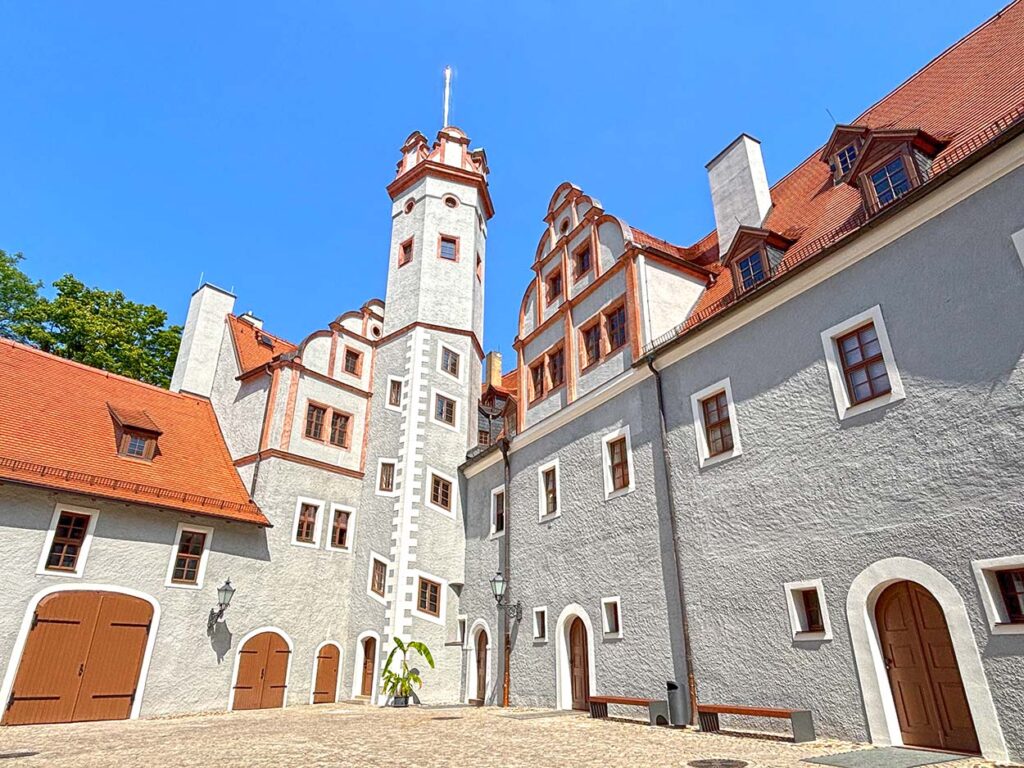
Glauchau is a small town in southwest Saxony, Germany. Historically, the city was important to the region’s textile industry, but today it’s probably best known for Schloss Glauchau, the large castle in the heart of the town center. Now open to the public, Glauchau Castle holds several floors of interesting exhibits about the city, its history and the surroundings.
If you’re considering visiting Glauchau, this guide will help you plan your transportation, visit the castle, and possibly see some of the other sights in town. Please read all the way to the end as I do have an important safety notice about visiting Glauchau, especially as a foreigner or solo female traveler.

How to Get to Glauchau
I can only recommend visiting Glauchau by car. It is located about twenty-five kilometers west of Chemnitz and ten kilometers north of Zwickau. There is parking right in front of the castle on Schloßplatz and the surrounding streets. Arriving by car means you can also visit some of the sights on the edge of town.
Glauchau does have a train station with regular connections to Chemnitz, Dresden, Zwickau and Hof. The only problem is that the train station is about two kilometers downhill from the castle, and bus service is quite limited. If the weather is agreeable the walk isn’t terrible, but if it’s very hot, cold, rainy or snowy then the uphill trudge can be unpleasant. I visited by train from Chemnitz and wouldn’t recommend it.
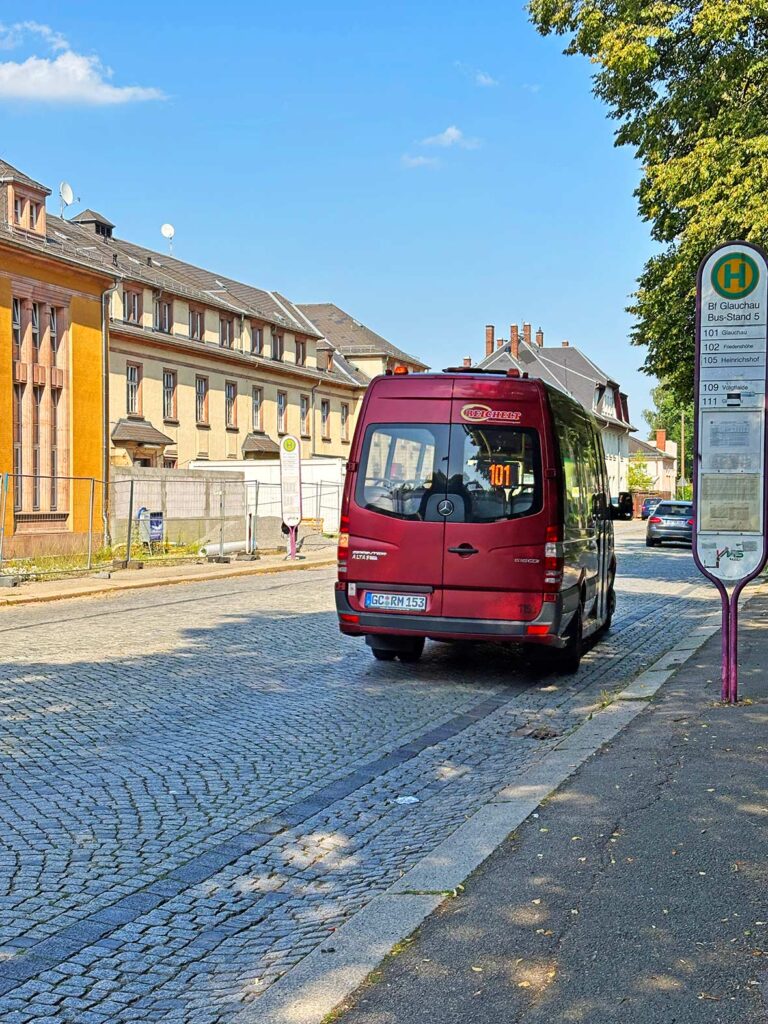
In theory, bus #101, 105 and 107 from the side of the street opposite the station (in the direction shown above) will take you up the hill to the town center and the castle. If the driver tells you it doesn’t go to the castle, try asking if it goes to the marktplatz… the two are very close. If the driver still tells you no, ask a local person for confirmation.
Schloss Glauchau Castle
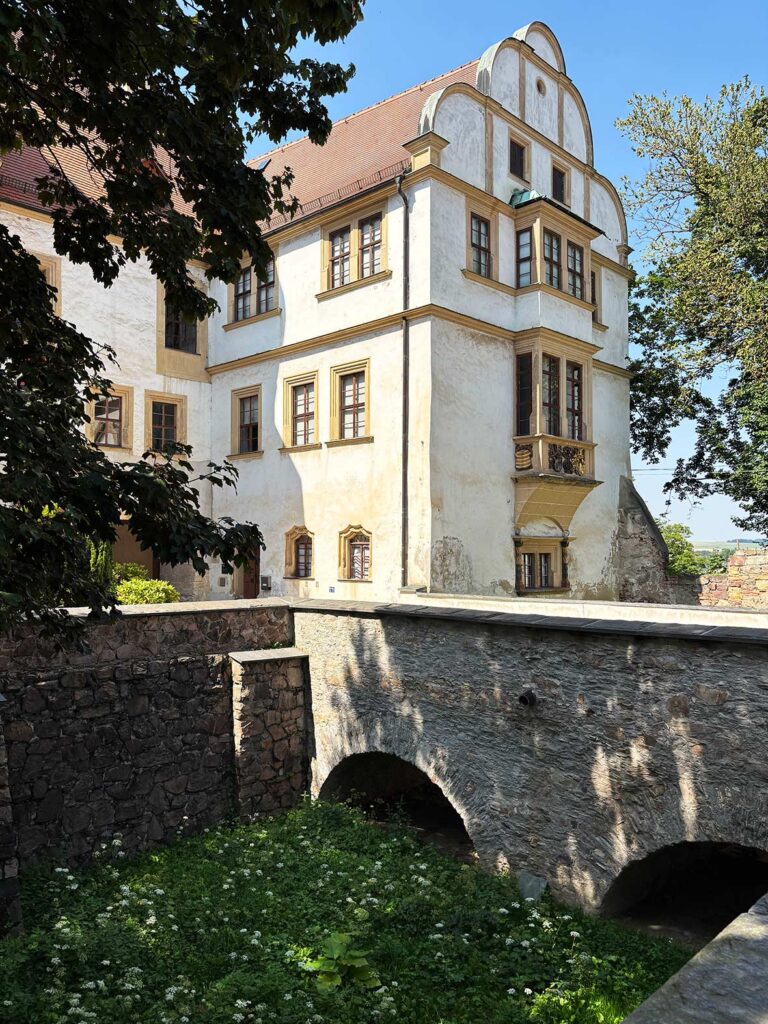
The main reason a tourist would visit Glauchau is to come to the city’s castle, Schloss Glauchau. The #1 thing I want to say about my visit to Glauchau is that the staff at this castle were so nice. They did everything possible to make sure I had an enjoyable visit and got the most out of my time in the castle, despite me not speaking German and them speaking little English. They should make the staff of the Dresden Castle museums to spend a month here shadowing the Schloss Glauchau staff.
As an aside, Hotel Meteora is right across the street from the castle. If you have to stay in Glauchau overnight, I’d try to stay here, or at the nearby Hotel Meyer, as it feels like the safest part of town.
Note: “Schloss Glauchau” translates to “Glauchau Castle”. I will sometimes use the term Schloss Glauchau Castle to help both English and German speakers find this travel guide. You can just call it “Schloss Glauchau” or “Glauchau Castle” though!
The Castle Exterior
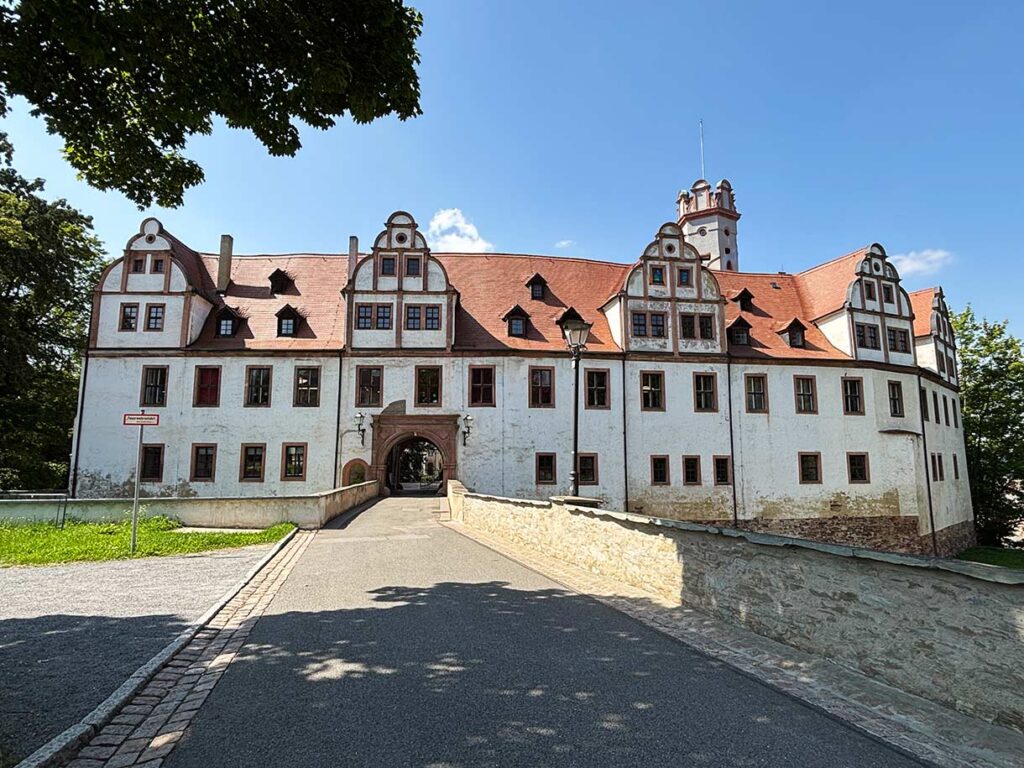
Today’s castle in Glauchau is an amalgamation of two separate castles, combined over the years to form one castle complex. It consists of the Walderglauchau Castle and the Hinterglauhau Castle, also known as the front and back castles.
The oldest parts of the castle complex date back to the 1100s, but most of the buildings you can visit today are from the 1400s and 1500s.
To enter the castle you pass over a stone bridge and through a courtyard. The buildings around the courtyard have been converted to a cultural center, music school and public library. Keep walking past them to find the entrance to the castle museum. It’s open Wednesday to Sunday from 11:00 am to 5:00 pm, and I recommend planning to spend an hour or two inside the castle.
During my visit there was only one other couple in the museum. We crossed paths a few times in the stately apartment exhibits, but I didn’t see anyone else during the rest of my castle visit.
Stately Apartment Exhibits
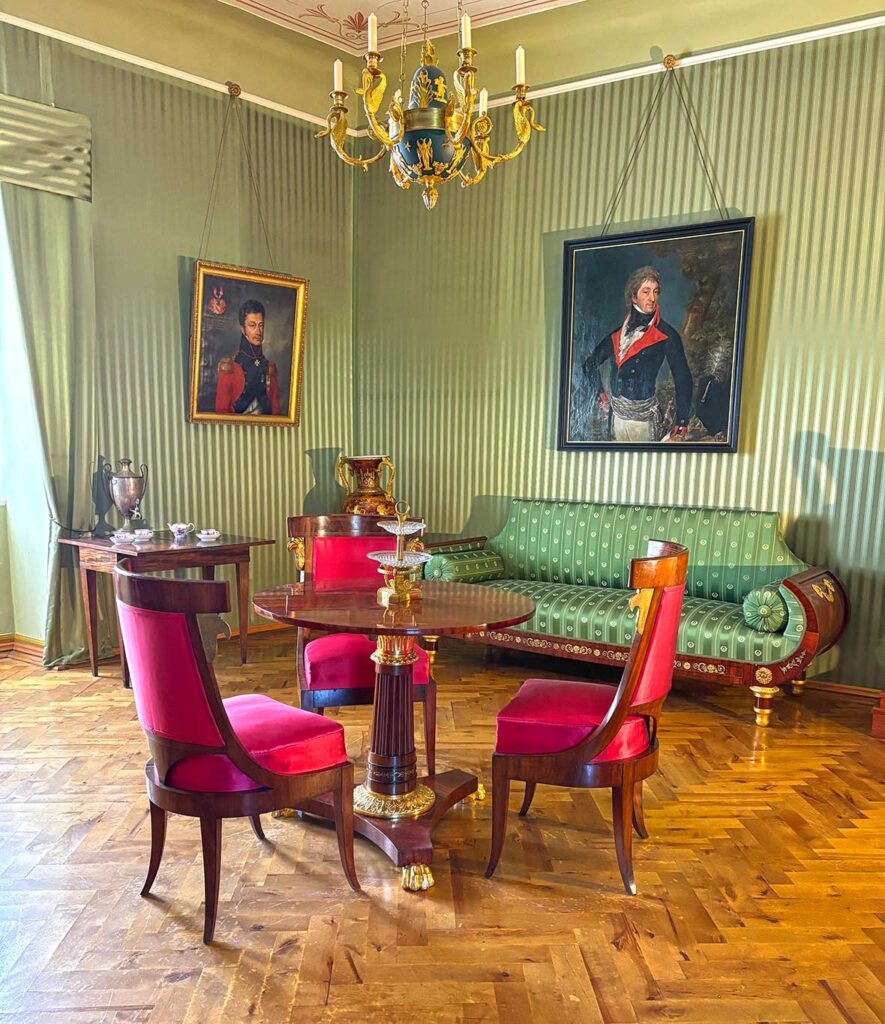
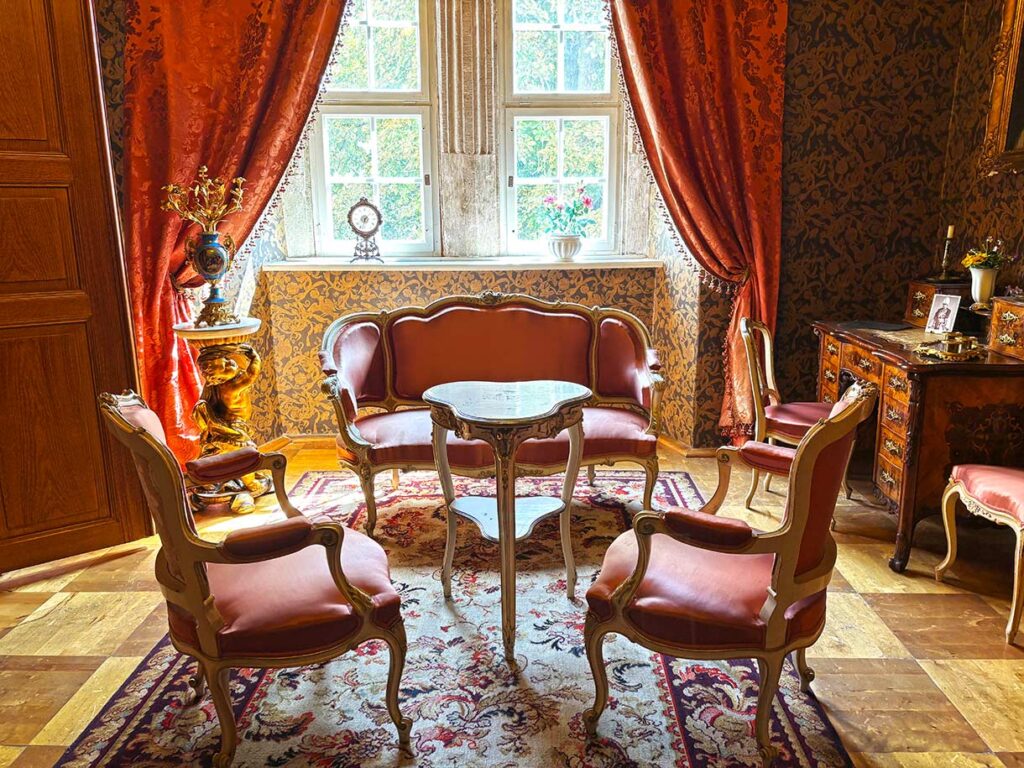
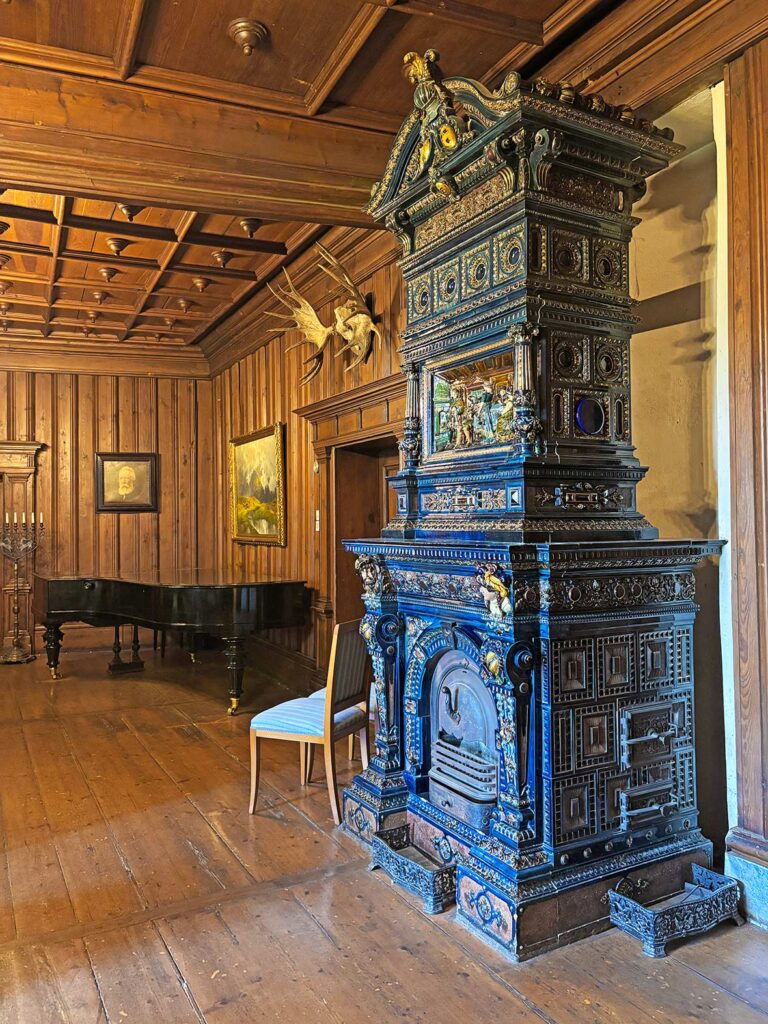
The first part of Schloss Glauchau Castle that you’ll want to visit are the stately apartment rooms. Located on the ground floor, these rooms showcase the lifestyles of the region’s rich and famous during the 1800s. Each room is decorated with paintings, ornate furnishings, tapestries, Meissen ceramics and other decorative arts.
The third photo above is actually from the upstairs galleries, but I thought it fit in best in this section since clearly it came from a stately apartment! One of the most interesting pieces in the museum is the blue Neo-Renaissance stove that was moved to the castle from a nearby villa. It depicts a local aristocrat burning promissory notes issued by Emperor Charles V.
Other Collections
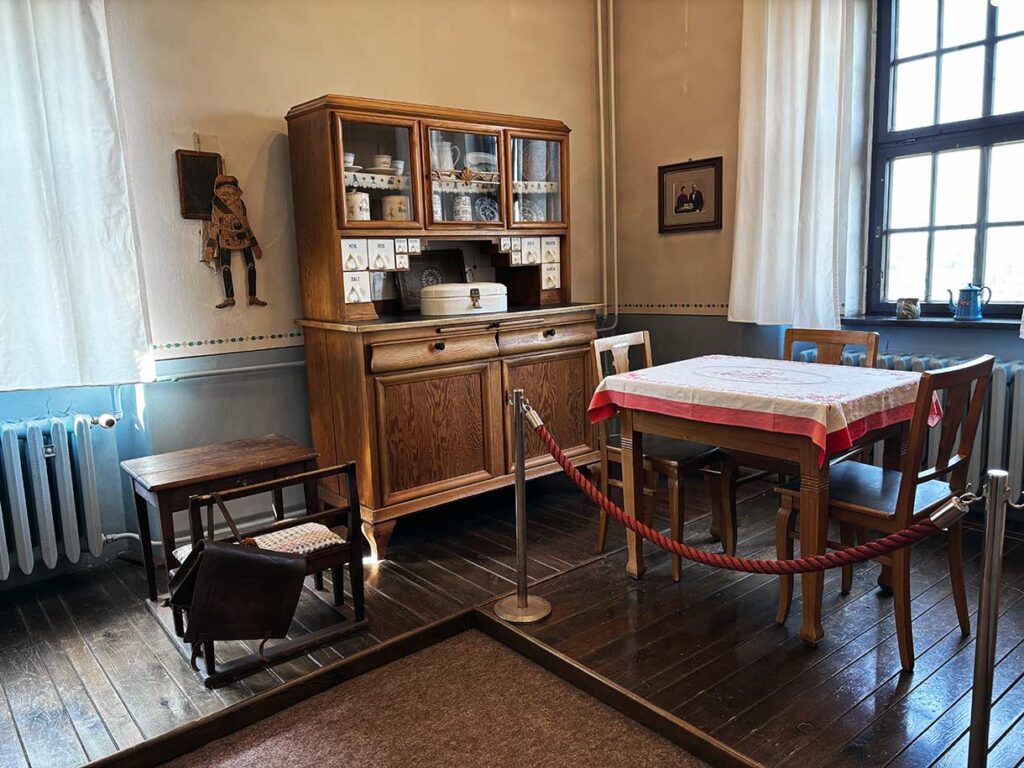
After you tour the statement apartments, you’ll go up the stairs to the other wings of the Schloss Glauchau Castle, which are something of an ethnographic museum telling the story of the work and lifestyles of regular people in Glauchau and the surrounding Zwickau region.
In the rooms upstairs you’ll find many looms that show the development of the local textile industry, a large painting collection, recreated rooms from the homes of typical local citizens and a rotating gallery of temporary exhibitions.
Of note, the castle brochure indicates that there are “underground passageways” and shows a family clad in hard hats scrambling through a small stone passageway. This part of the museum definitely was not open (at least to me) on the day I visited. However, I was invited to visit the chapel in the courtyard, which the ticket office staff had to unlock for me.
Other Things to Do in Glauchau
I’m going to list the rest of the things to do in Glauchau in the order that I stumbled across them as I walked up the hill from the train station to the castle. None are worth a stop on their own unless you happen to be passing by.
The Ominous Park Across from the Train Station
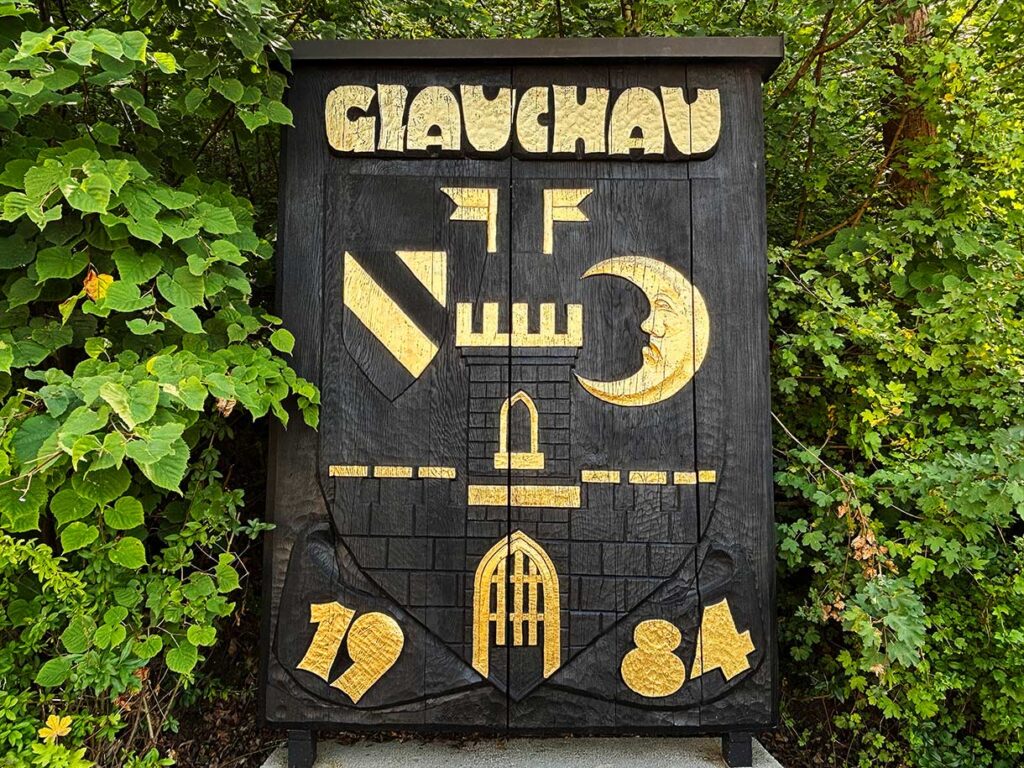
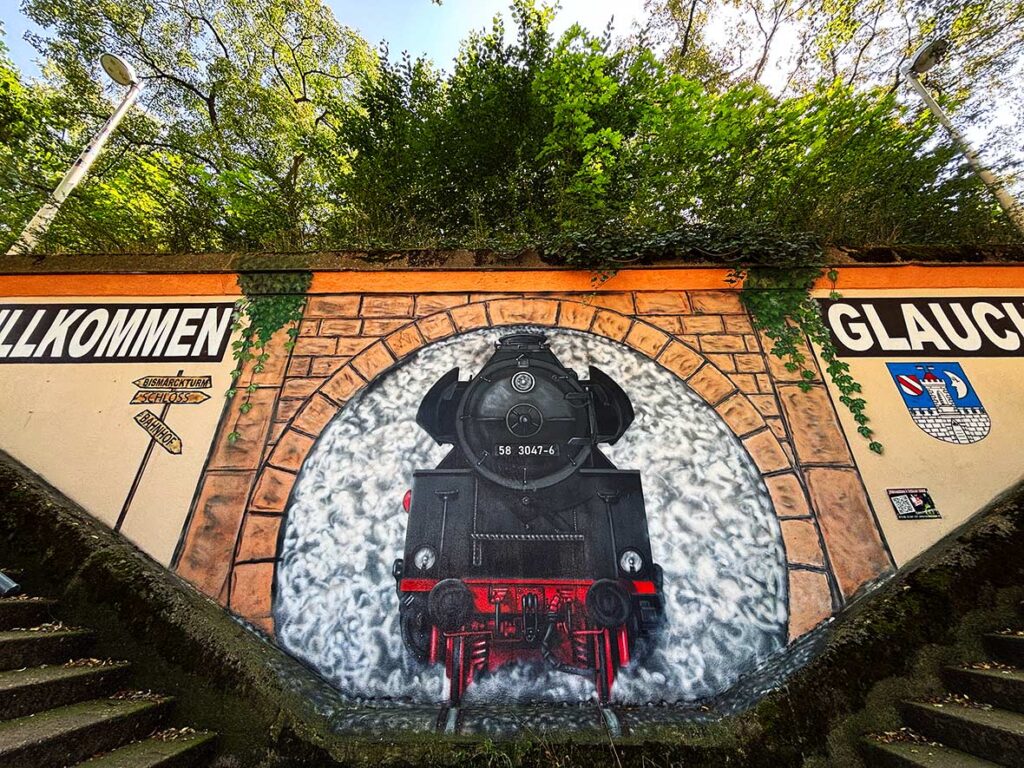
You can’t tell me the first two signs you see as you exit the train station and wait for the bus up to the castle aren’t creepy. They mark the entrance to an unnamed park on the hillside across from the train station. One sign reads “Glauchau 1984” and looks like it was made by a coven of witches, while the other welcomes you to the town with the image of a locomotive about to run you over. Willkommen, I guess?
A Red Horse Statue
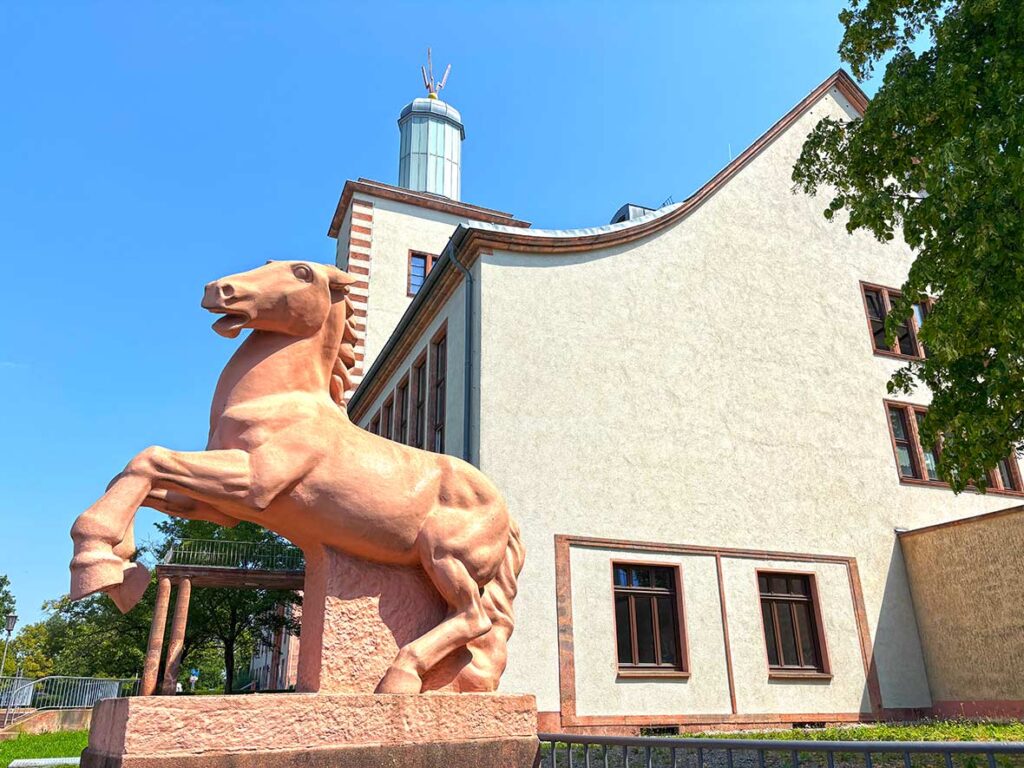
In front of the Office for Rural Development and Surveying on Gerhart-Hauptmann-Weg there is a magnificent statue of a majestic red horse. Truly, you will be amazed by the artist’s unique vision and mastery.
Also, randomly, there was an entire dead goat or sheep leg on the street in front of this statue. 😬
Schillerpark
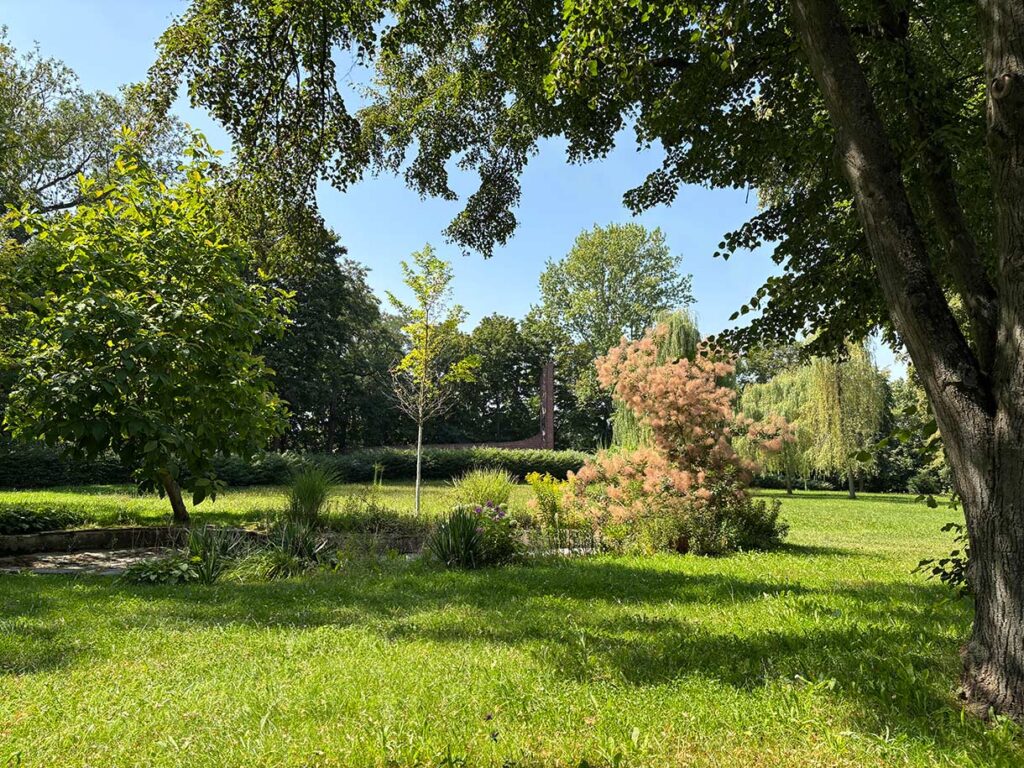
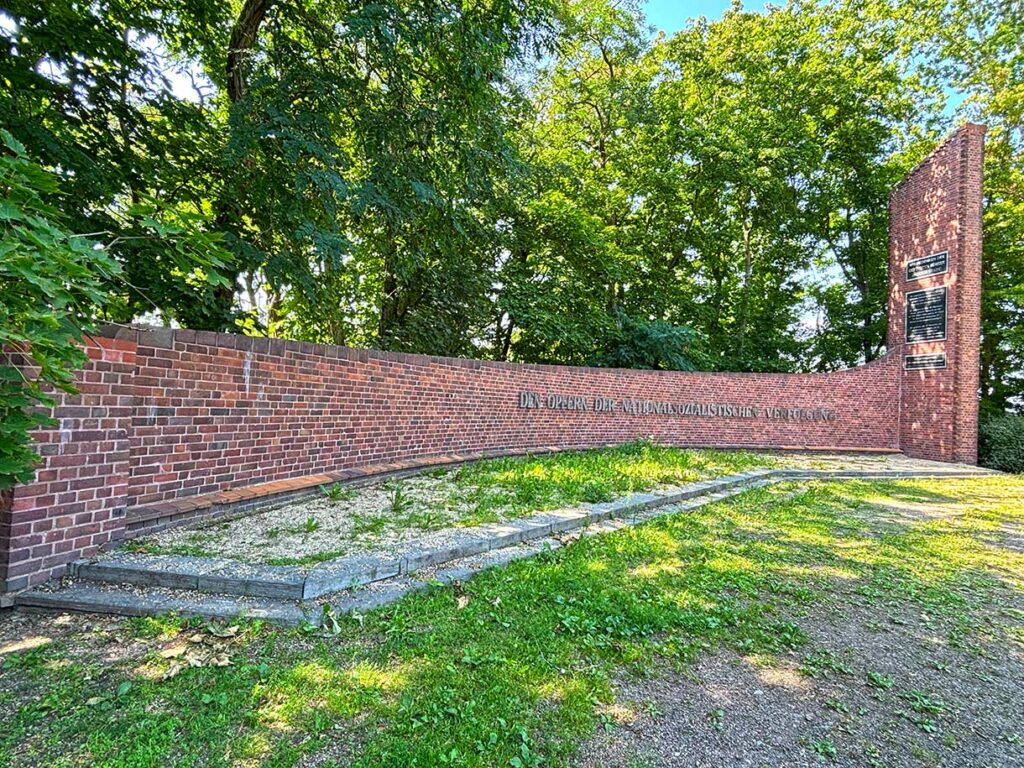
Here at Schillerpark you’ll find a historic high school building (which does have a legitimately pretty facade), a small sculpture and a larger monument to the people who died at the hands of the Nazis during World War 2. I didn’t stick around long as there was man well into his daily beer allowance staring at me.
Market Square
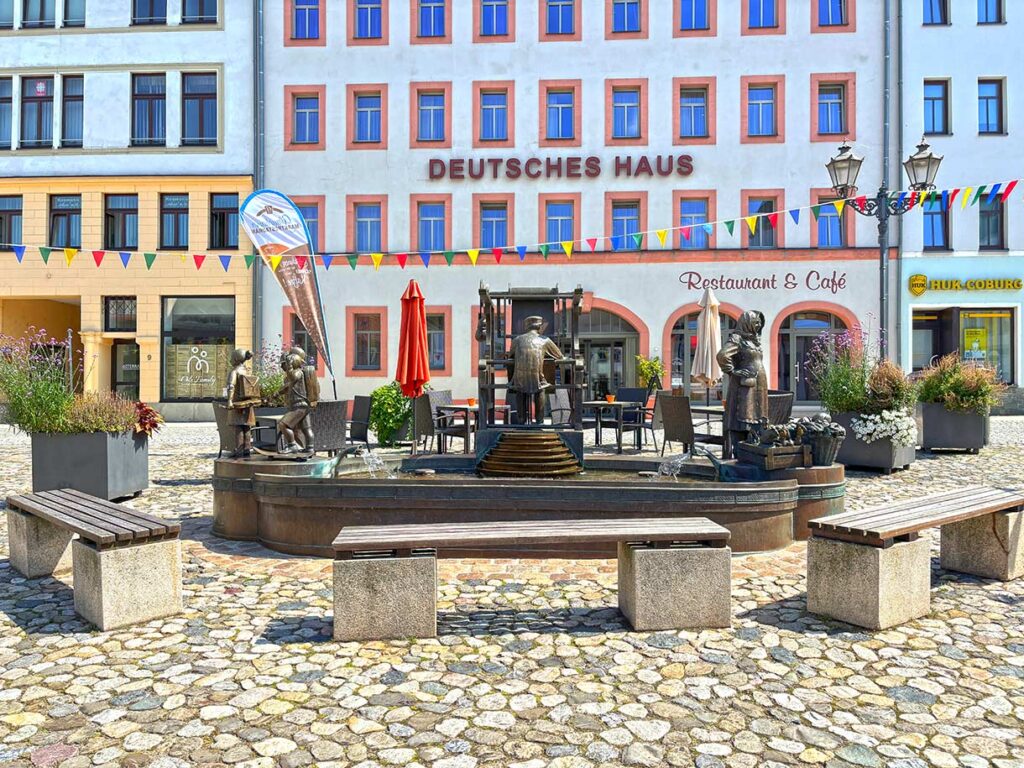
Glauchau does have a pretty market square, which is home to weekly market on Wednesdays from 8:30 to 12:30. Expect to find bread, fruits, vegetables, cheese and honey from local producers, as well as vendors selling imported clothing and household goods.
In the middle of the market square (markt) there is a large fountain. Donated to the city in 2001, it shows people engaging in typical regional activities, like weaving fabric on a loom and selling goods in the market. Of note, on the same week I visited the fountain was vandalized, with an unknown substance (likely “soap or solvent”) poured into the water.
Random History Exhibits
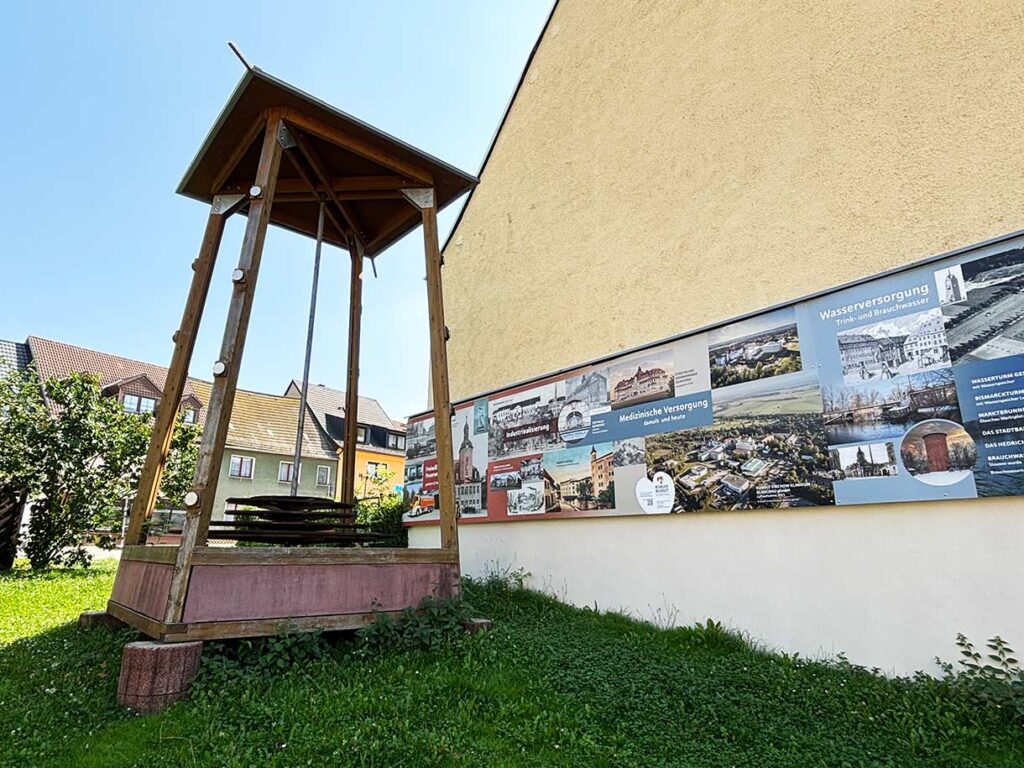
Coming from the bus station, as you cross over the Nikolaibrucke bridge towards the market square you’ll see a small park on your left. Along the wall there is a display about the history of Glauchau (focused on its various industries and natural resources) and a model of a historical well. History buffs might want to stop for a minute or two.
The Bismark Tower / Bismarckturm
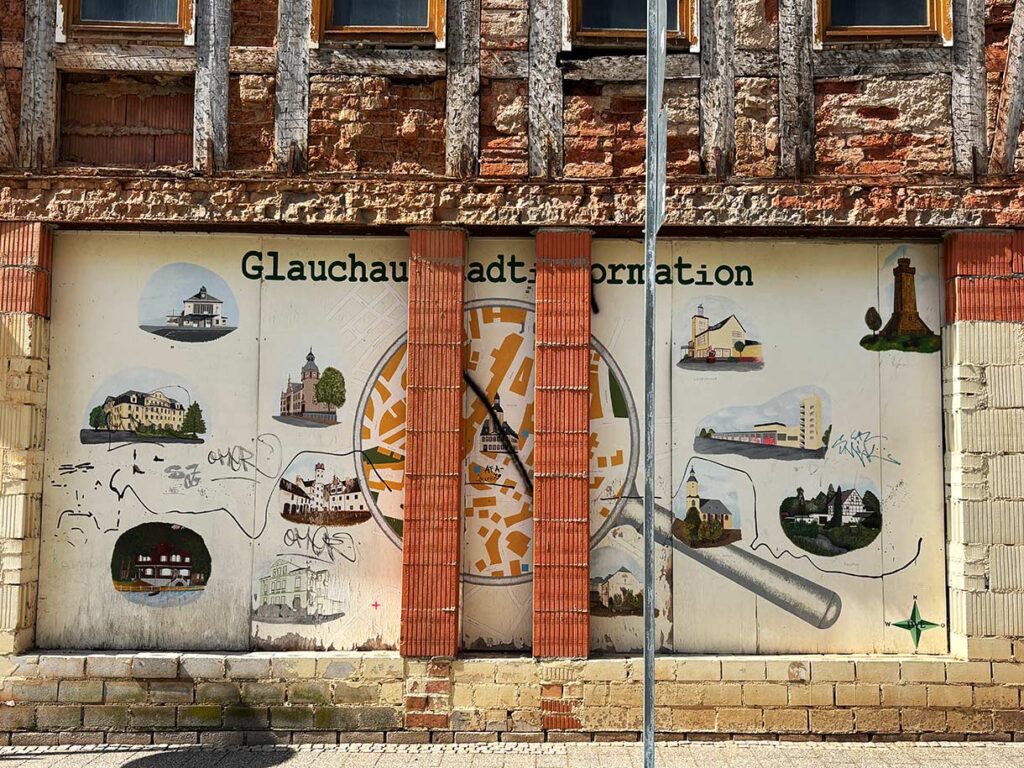
I didn’t visit the Bismark Tower as it was a 35-minute walk from the castle in the opposite direction of the train station. However, this 45-meter sandstone tower from 1910 is the tallest remaining sandstone tower in Germany. It is depicted in the top right of this mural I saw in the historic center.
While I was exploring I saw a sign advertising that visitors could ascend the Bismark Tower on Saturdays, but I have no idea if that is still true. If you have a car you could drive over on a Saturday to see, otherwise I’d skip it.
Obermühle St. Peter “Lab-Ora-Torium”
Another attraction that I didn’t visit in Glauchau is the historic lumber mill and granary museum. Besides the fact that it would have been an hour on foot from the castle (again, away from the train station), it’s also only open on the last Saturday of the month, from 7:00 am to 4:00 pm, as well as on the annual German Mill Day. I believe it is the half-timbered building on the far right of the sign above.
The Villa District
Just a few blocks from the castle, Glauchau’s villa district is home to about 25 architecturally significant mansions. Art Nouveau, Renaissance and Classicist facades are showcased on the shady streets in this upscale part of town. You’ll find them on the streets around La Villa Restaurant, near where Clementinenstraße meets Martinistraße.
The Glauchau Tourist Information Office
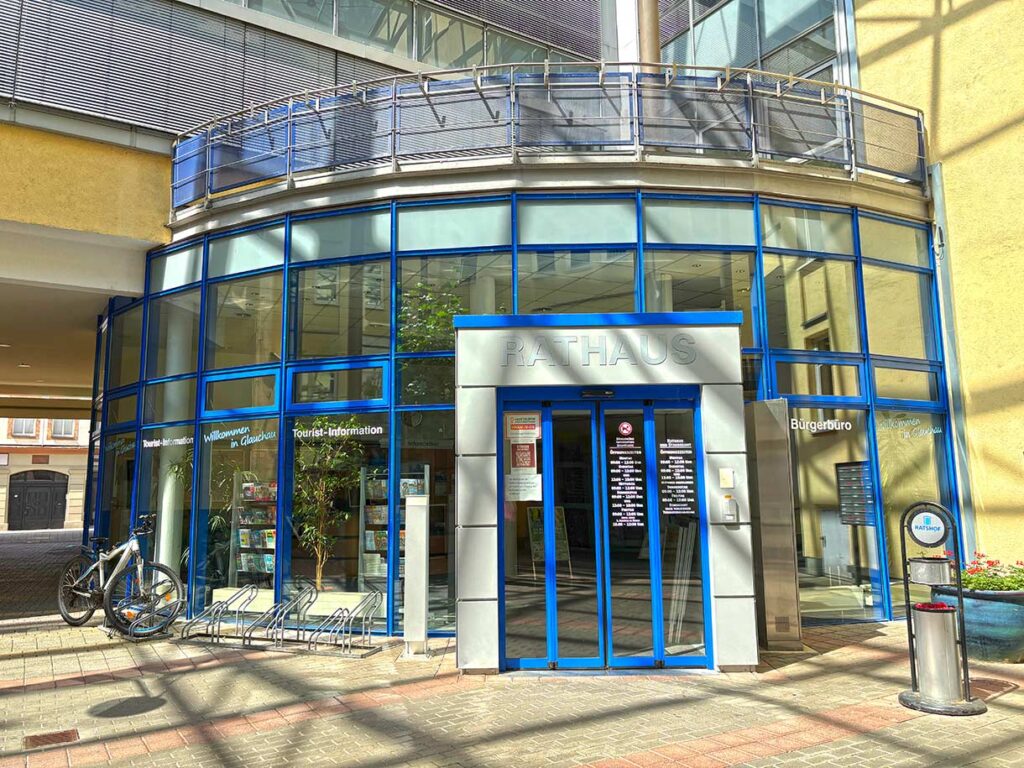
After I visited the castle I went looking for a place to have a cold drink, and in the process I discovered the a tourist information office inside the town hall. From what I could gather, the office was reliably open Monday to Friday, from 9:00 am to noon. Based on my experiences elsewhere in town I’d be surprised if English was spoken, but you never know.
From looking through the locked glass doors at the brochure racks it looked like the Glauchau tourist information office had a lot of information about hiking trails, biking routes and other activities that take place in nature, outside the actual city limits.
The ice cream shop inside the town hall courtyard (Italienisches Eiscafe “Im Ratshof” on Google Maps) was the only restaurant or café that I saw that appeared both to be open and to have customers on the Wednesday in August when I visited.
A Note About Visiting Glauchau as a Foreign Tourist
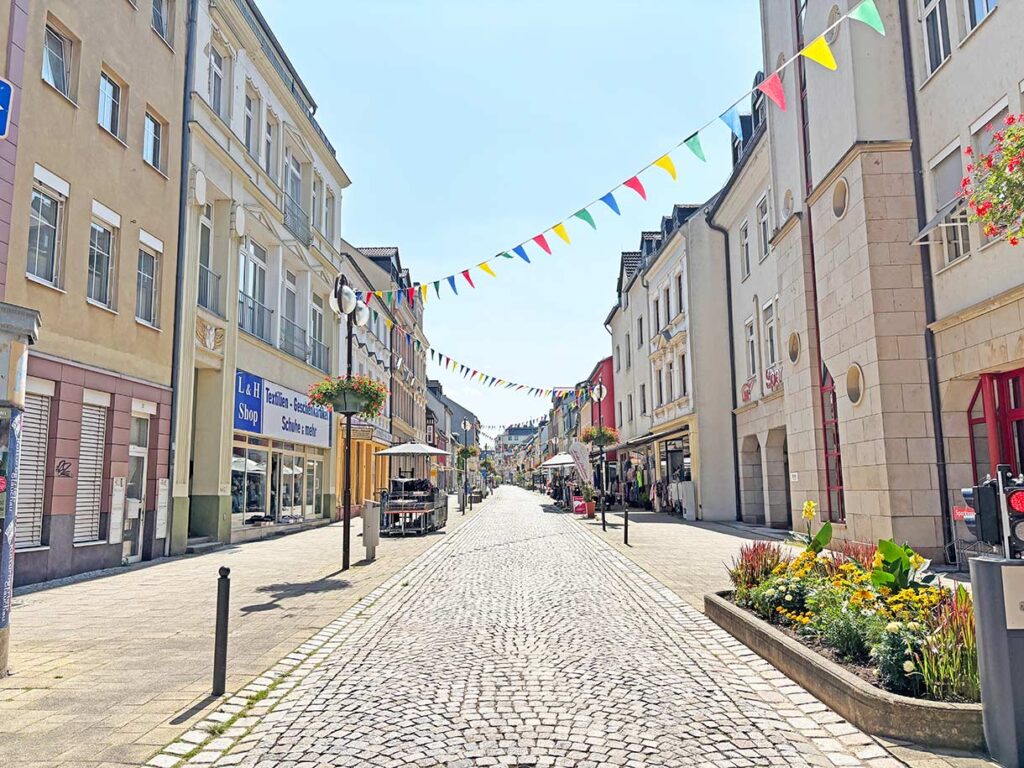
While I think the Schloss Glauchau Castle is worth visiting if you’re traveling by car and find yourself near Glauchau with a bit of time to kill, I can’t recommend visiting the town by train or bus, or even spending much time exploring beyond the castle.
My negative experiences started at the train station, when two bus drivers lied and told me their buses didn’t go to the castle (yes, I asked in German). As a result of these drivers lying I ended up waiting at the bus stop for almost 40 minutes, just steps away from a number of teenagers openly inhaling household chemicals and making a point of harassing the people nearby.
One friendly local person (who was very surprised to meet a foreigner in his town) was extremely angry when I told him the bus numbers that had declined me, as they were apparently the ones that went to the castle. Immediately I understood the town’s hostility towards foreigners, and when I left I looked up the town and discovered it is something of a hotbed of right-wing extremism. If I felt this uneasy as a middle-aged white woman from Canada I can only imagine how uncomfortable a visible minority would feel.
As I walked through the mostly-empty town I could feel people staring at me and I could see signs promoting Germany’s far-right political party (and related viewpoints). I then had another negative interaction with the bus driver on my return back to the train station (he wouldn’t move the bus until I scanned my Deutschlandticket, but he deliberately positioned the scanner so that my phone couldn’t fit in front of the reader) and with the man working in the transportation office the train station.
It’s hard to describe a “feeling” that you get somewhere, but I would say that aside from inside the castle, everywhere else in Glauchau just felt slightly unsafe. This is unfortunate because the castle staff themselves really were among the kindest people I met in Saxony.
Glauchau is not my top recommendation for your time in Saxony (in case that wasn’t clear). I would recommend any of these destinations and experiences instead:
🎨 The Secret Art Passage in Dresden
🏰 Delitzsch, Germany: A Cute Day Trip from Leipzig
🚂 How to Ride the Historic Steam Train from Zittau to Oybin Castle
💫 12 Things to Do in Zittau, Saxony
🥂 A Guide to Visiting The Chemnitz Wine Festival
💎 Terra Mineralia: Europe’s Best Gemstone Museum
🪨 10 Things to Do in Freiberg, Saxony
Planning a trip to Saxony? Pin this post for later!
 |
 |