
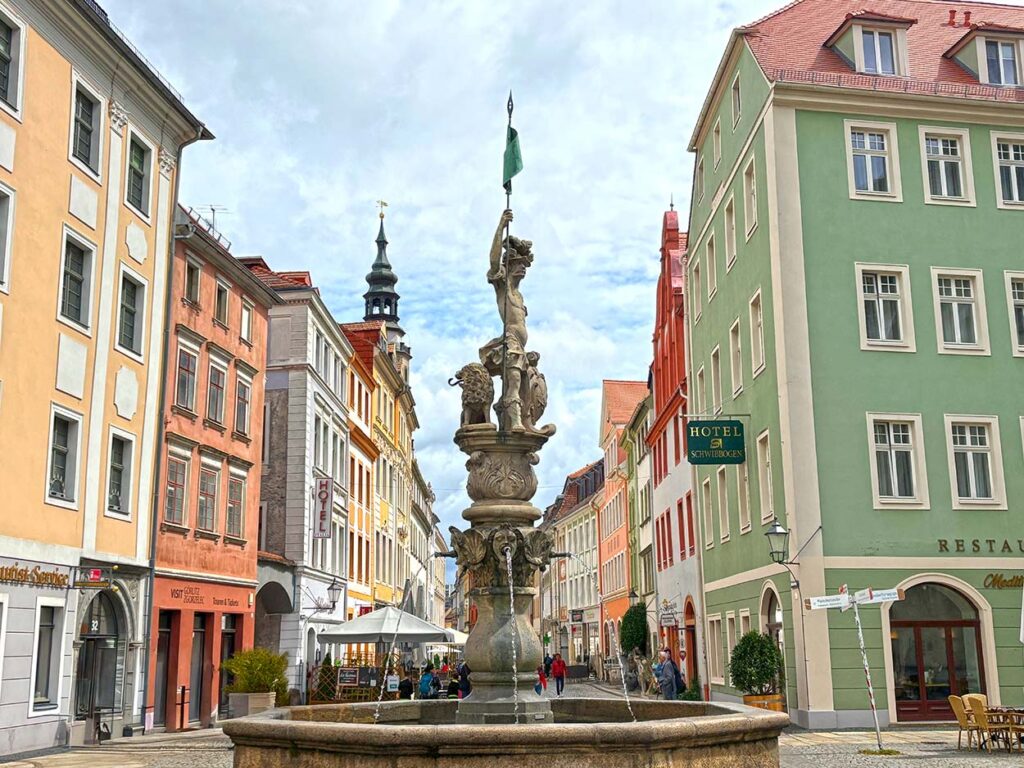
On my most recent trip to Germany I spent more than a month in Saxony. I visited the main cities and many different small towns. Of all the places I visited, Görlitz stands out as being one of the prettiest and most interesting. This city is located on the German-Polish border and shares its unique blend of cultures and histories with visitors, whose numbers increase every year (in other words, go now before it gets too busy!).
When I started writing this guide it was going to be called “ten things to do in Gorlitz”, but I just couldn’t narrow down my list. Then it grew to “fifteen things to do in Gorlitz”, but even then I felt like I was skipping a few must-sees. I finally added a plus sign behind the fifteen and felt like that would safely cover all of the Gorlitz attractions and sights I wanted to include. Compared to other cities of a similar size, Gorlitz really does offer visitors an impressive variety of things to do.
In this guide I’ll give a quick overview of a few places to stay in Gorlitz that give you easy access to the city’s best sights, then I’ll share all the things to do in Gorlitz that I think are worth your time, and finally I’ll end with a few restaurant recommendations based on my time in the town.
Note: Gorlitz should be written as Görlitz, with an umlaut over the o. However, my Canadian keyboard doesn’t make that easy, so I will usually be omitting the umlaut throughout this article. The umlaut really does change the sound of the word, so ask at your accommodation about how they pronounce “Görlitz”!

Where to Stay in Gorlitz
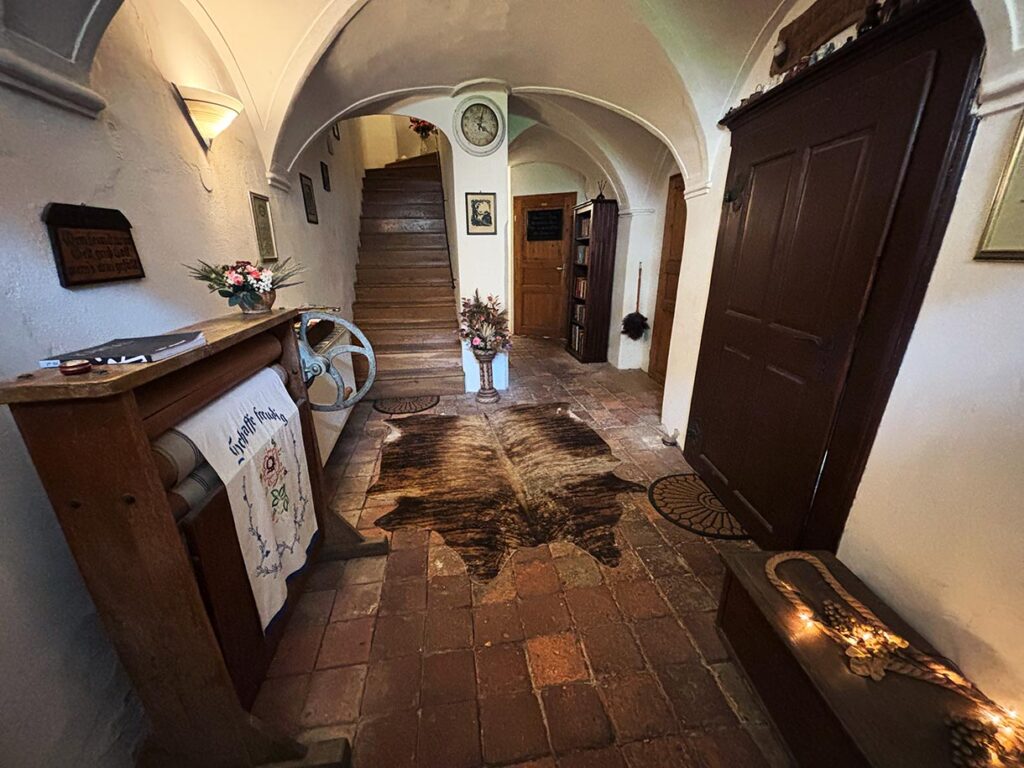
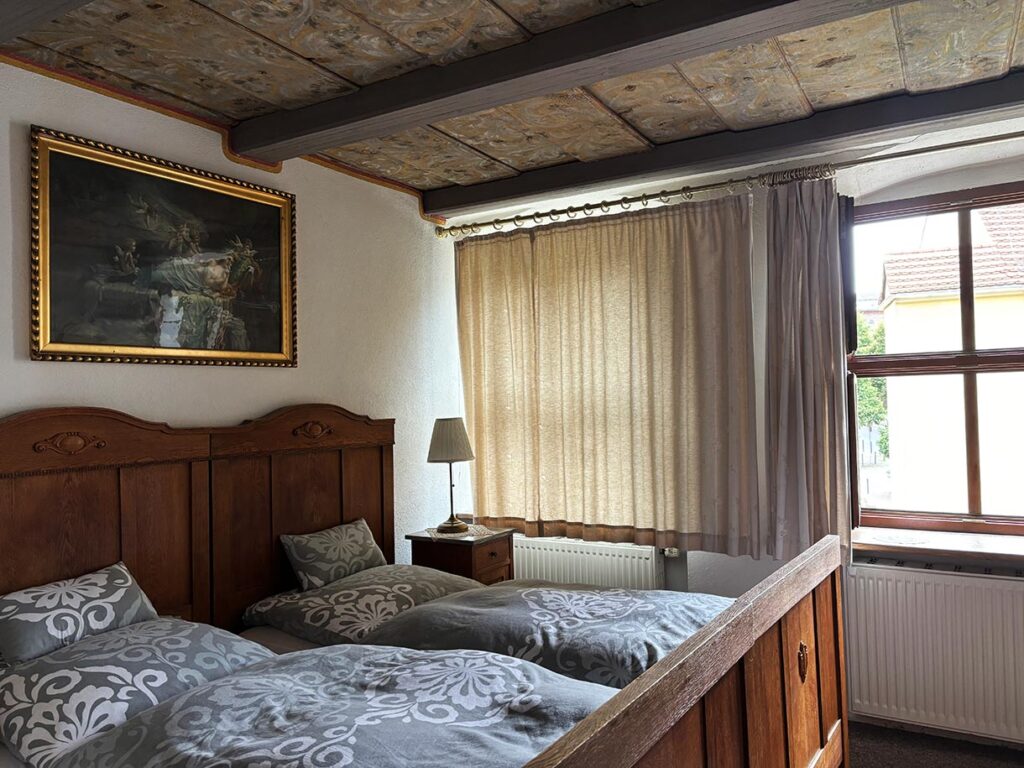
I stayed in Altstadtdomizil Morgenröte in Görlitz, and I can happily recommend this small guesthouse located within easy walking distance of all the city’s attractions. It’s been two months since I checked out and I still think about the insanely fluffy and soft bedding here – seriously, it was better than anything I’ve ever slept on in a luxury hotel.
That’s not the only reason I liked this guesthouse, though! When I checked in the owner gave me a thorough introduction to the city, including its history, its role in cinema and what I couldn’t miss during my visit. He also showed me the historic building’s ancient cellar and outdoor garden terrace before taking me up to my room, which had antique frescoes painting on the ceiling. This was probably the most comfortable and cozy room of my entire trip to Saxony, and I would stay here again in a heartbeat if I was returning to Gorlitz.
Note: Like always, I paid in full for my stay at Altstadtdomizil Morgenröte and didn’t disclose that I was a blogger.
If Altstadtdomizil Morgenröte is fully booked, some other properties to consider include:
- Gorlitz Apartment In Der Butt – I’m not joking, that’s the real name of this highly-rated vacation rental. I haven’t been inside but I can vouch for the location as it’s directly next door to Altstadtdomizil Morgenröte.
- Emmerich Hotel – Opened in 2014, this hotel’s striking transformation from abandoned medieval mansion to modern boutique hotel was featured in Architectural Digest.
- Pension Wielsch – If you’re visiting Gorlitz with kids, this pension has family rooms with kitchenettes that can accommodate groups of four.
- Akzent Hotel Am Goldenen Strauss – If you’re just coming to Gorlitz for a department store tour (more on that below!), this hotel is located on the same square.
All of the hotels, guesthouses and apartments listed here are well-located, either within the historic center or just steps away.
The Best Things to Do in Gorlitz
There are so many things to do in Gorlitz that you’ll want to spend at least one night in the town (if not two or three). Even without exploring much of the Polish side, there are still countless sights and attractions on the German side of town that you’ll want to allocate ample time to visiting.
#1 – The Upper Lusatian Library of Sciences in the Baroque House
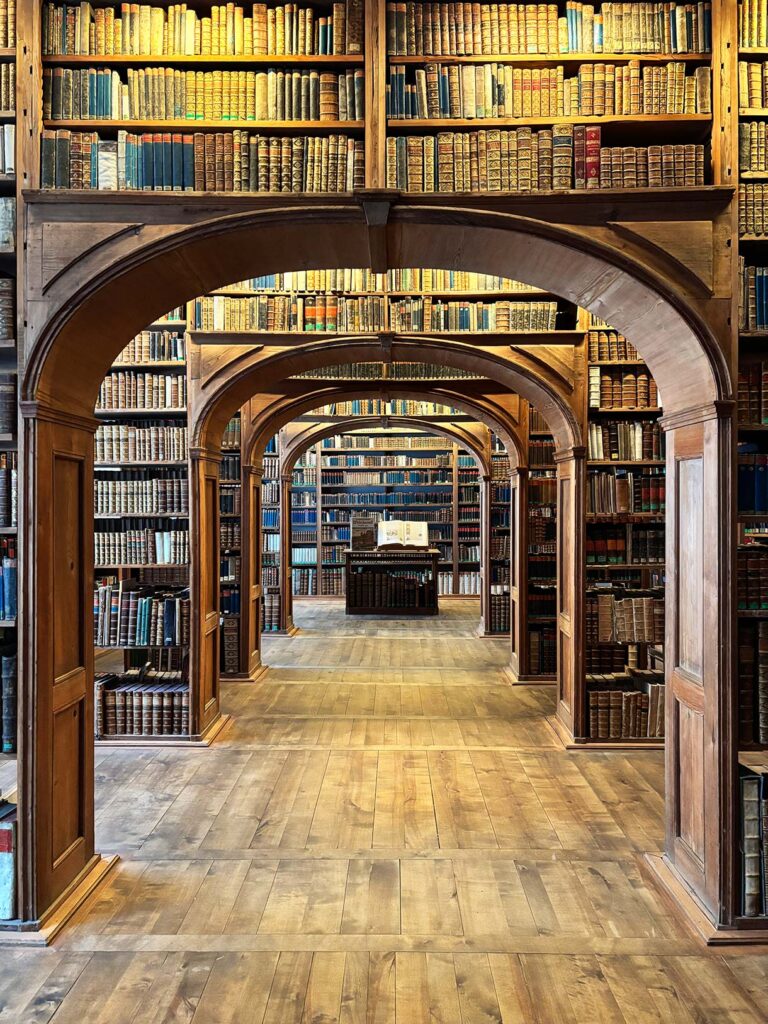
I’m a sucker for visiting a pretty library, and if I have the chance to visit one without any crowds I will jump at the opportunity!
Located inside the Baroque House (Barockhaus), the Upper Lusatian Library of Sciences has a collection of about 150,000 books, with nearly half being from the 1800s or earlier. As the collection grew, successive arched shelves, modeled after Baroque theatres, were added.
When I visited the Upper Lusatian Library of Sciences I had it mostly to myself, with only one other family visiting. There are some areas where you can’t enter (like the archways shown above) but other book-lined corridors are free to walk down (although the books are locked up behind a fine mesh grate).
Opening hours and times should be listed on the official site here, but I do note that they say the library is closed on Sunday but I definitely visited on a Sunday. If visiting is a priority, consider a Tuesday or Thursday trip.
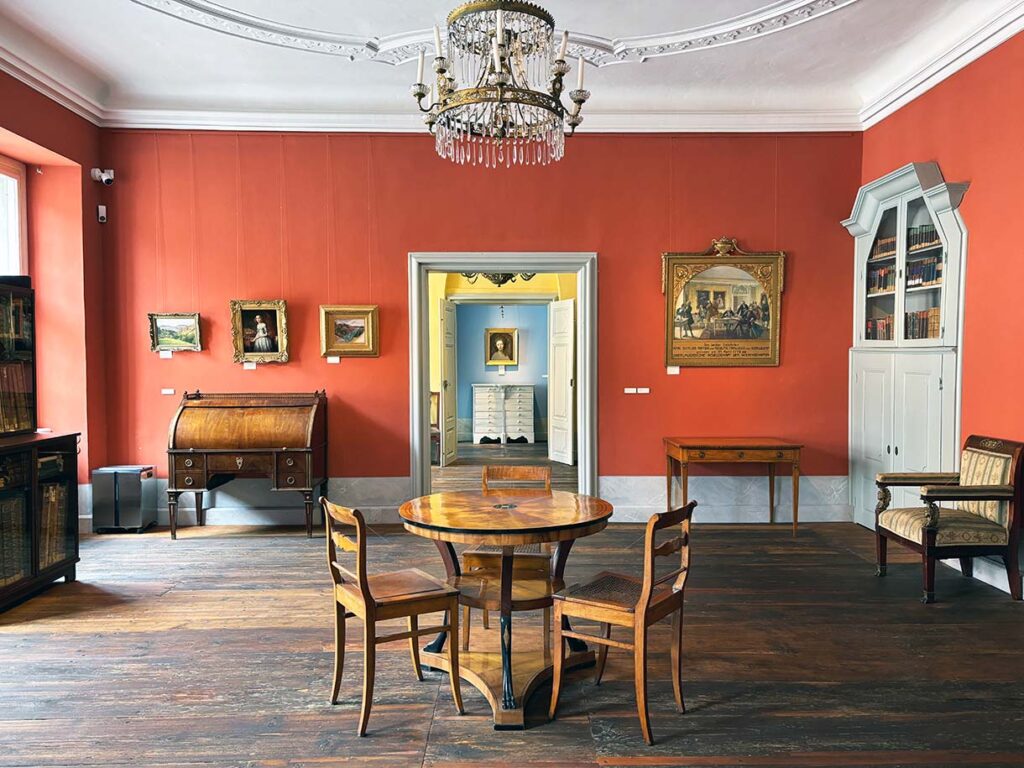
The Baroque House holds more than just The Upper Lusatian Library of Sciences. You’ll also find a traditional house museum, showing how the merchant Johann Christian Ameiss and others in the Saxon bourgeois lived during the 1700s. As well, the second floor of the museum is dedicated to the arts and sciences of the 1800s, with a wide range of quirky-looking machines and artifacts from the era of experimentation.
#2 – Walk to Zgorzelec, Poland
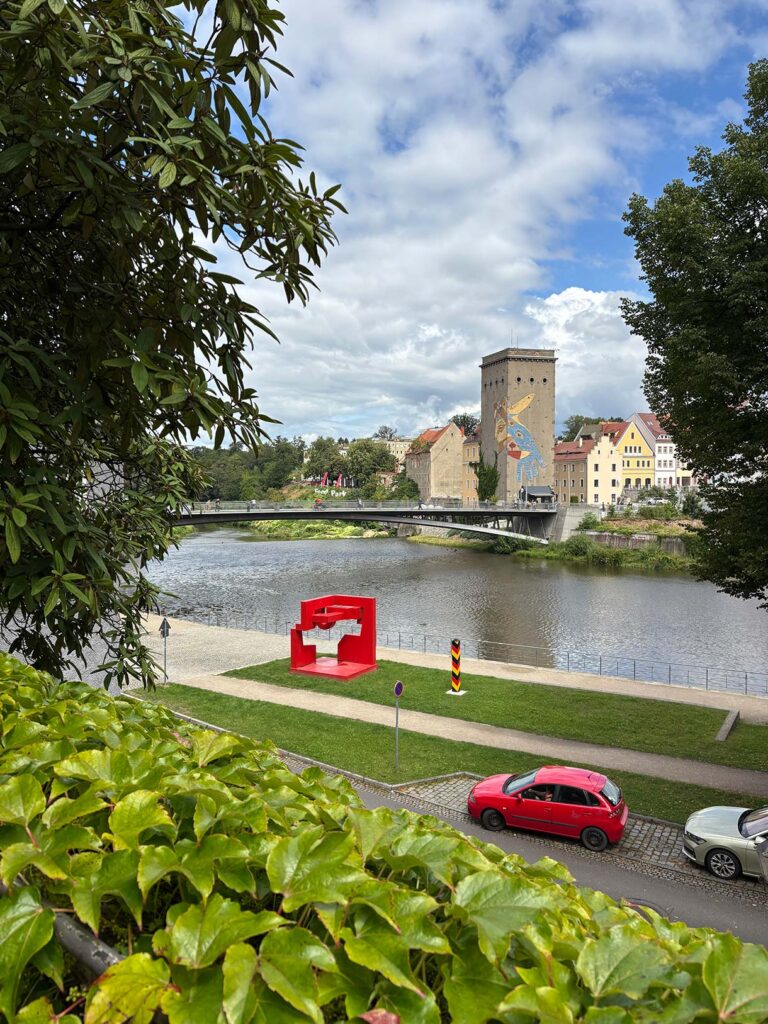
I live in the middle of Canada, where it’s a half-day drive to the nearest international border. That means I’m always excited when I’m in a place where I can walk to another country, and lucky for me (and you!) that is one of the things that Gorlitz is famous for!
Gorlitz is located on the Lusatian Neisse (or Western Neisse) River, which (generally speaking) forms the German-Polish border. Across the river from Görlitz you’ll find Zgorzelec, the city’s Polish counterpart. The Altstadtbrucke, or “Old Town Bridge”, allows pedestrians to travel between the cities on foot without any formal border controls.
I cross the bridge several times during my visit to Görlitz. The first time I was a little bit nervous, as I wasn’t carrying my passport (or any other ID, actually!). However, neither the German or Polish police at the bridge gave me a second glance, and when I asked if I needed a passport they laughed. The next day I brought my passport with me as I went out exploring, but once again nobody gave me a second look in Görlitz or in Zgorzelec.
There are a few landmarks and a museum on the Polish side, as well as cheaper prices on everything from bottled water to alcohol. Businesses in Zgorzelec do accept euros for payment, and while you won’t get the market exchange rate you’ll get a perfectly fair price.
#3 – The Holy Sepulchre Replica
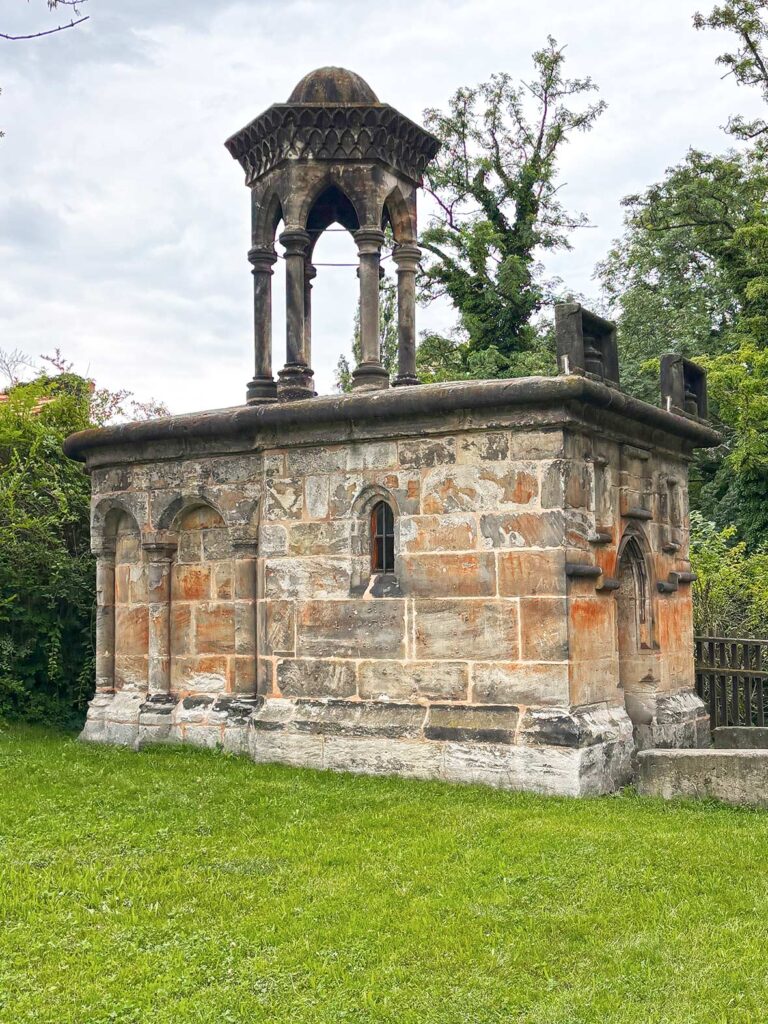
This is definitely not something I expected to ever visit on my travels, but here we are! The Holy Sepulchre is the church in Jerusalem where, according to the Bible, Jesus was crucified, buried and resurrected.
The Holy Sepulchre in Gorlitz is a small-scale recreation of the same church. The story behind it is that in the 1400s a local man was sent on a pilgrimage to Jerusalem, and the Holy Sepulchre there left such a great impression that upon his return to Gorlitz he demanded a replica be constructed in his hometown.
There are a couple of different buildings on the property – the actual Holy Sepulchre is the one shown in my photo above. There is also a two-story Chapel of the Cross and a smaller anointing chapel with a 15th-century depiction of Mary and Jesus.
Access to the Holy Sepulchre site costs €3. Although it looks accessible from the Ölberggarten you can only enter through the church office building (with the white, rectangular “arch”) at 79 Heilige-Grab-Straße.
#4 – The Görlitz Department Store (From the Grand Budapest Hotel)
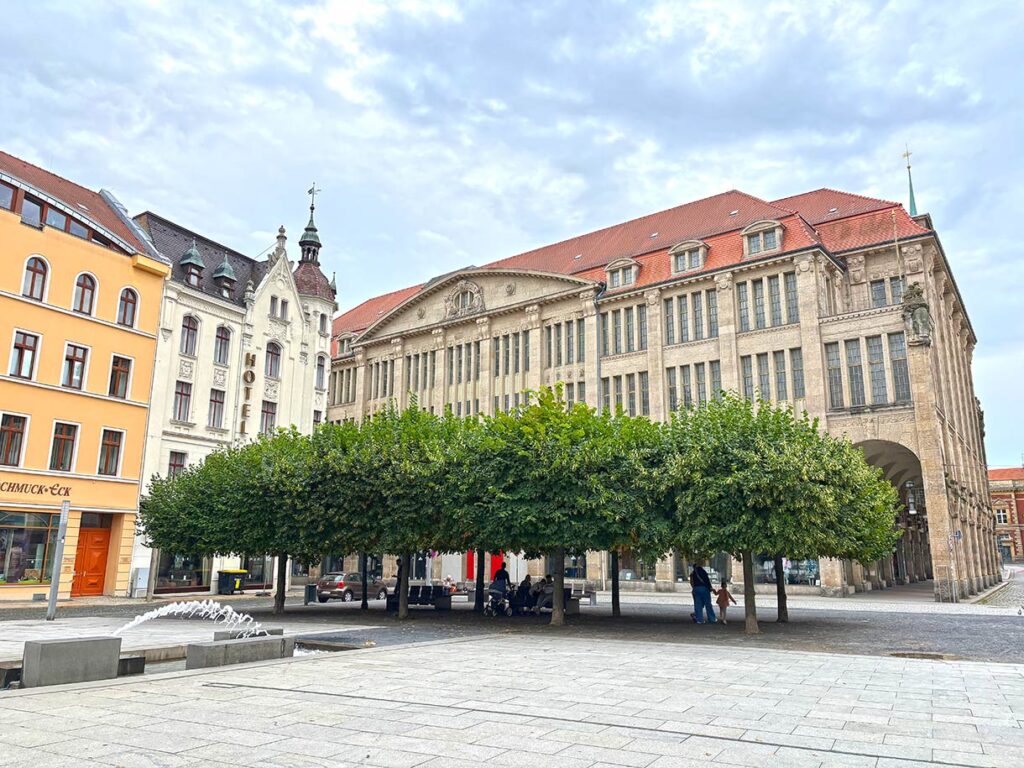
The nickname for Görlitz is Görliwood, thanks to the many movies that have been filmed in the city. A brief list of movies shot in part or in full in Görlitz include:
- The Grand Budapest Hotel
- Inglourious Bastards
- The Reader
- The Book Thief
- Around the World in 80 Days
- plus many German movies and TV shows
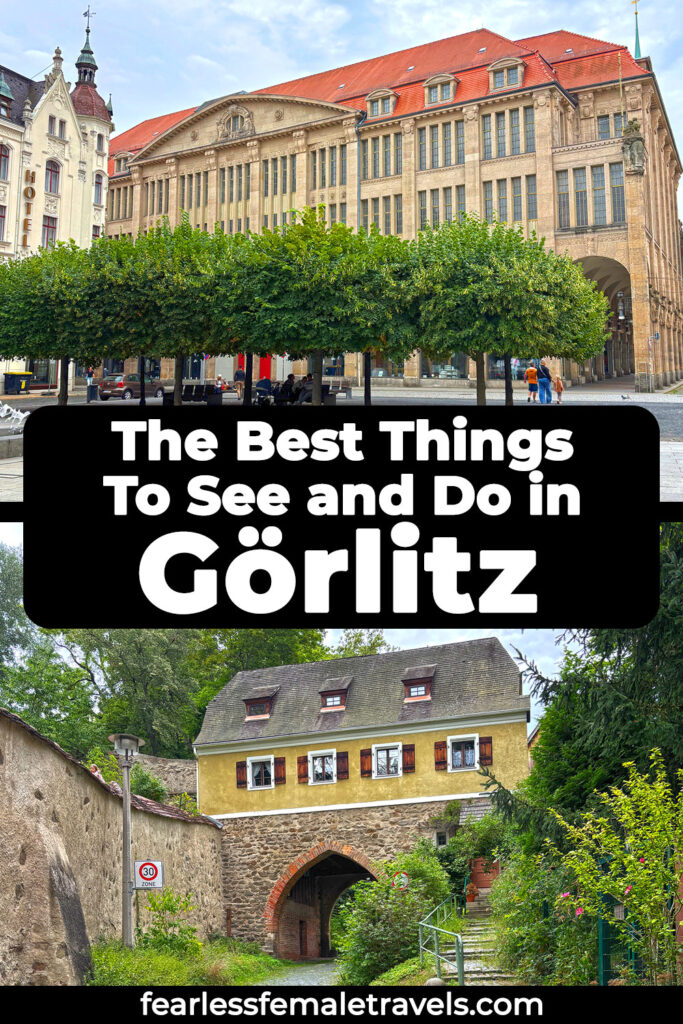
However, it was The Grand Budapest Hotel that really put Görlitz on the radar of international movie buffs and design lovers. The Görlitz Department store became the film’s namesake location, with set designers turning the store’s Art Nouveau atrium into a hotel lobby and re-envisioning the sales floors as corridors leading to hotel rooms.
Although the department store closed in 2009 after more than 80 years of buisness, there have been ongoing efforts to restore and reopen it. In the meantime, the building is occasionally open for guided tours.
At the time of my visit there were five monthly tours, always on Mondays or Fridays. To book the tour you needed to phone 0172 15 88 131 from Monday to Friday, between 8:00 and 14:00. I’d be surprised if the person who answered that number spoke English, so consider asking your accommodation to call on your behalf (when you make your reservation) to find out if there are any tour during your visit, and to book you in.
#5 – Görlitz City History Museum (Inside the Kaisertrutz)
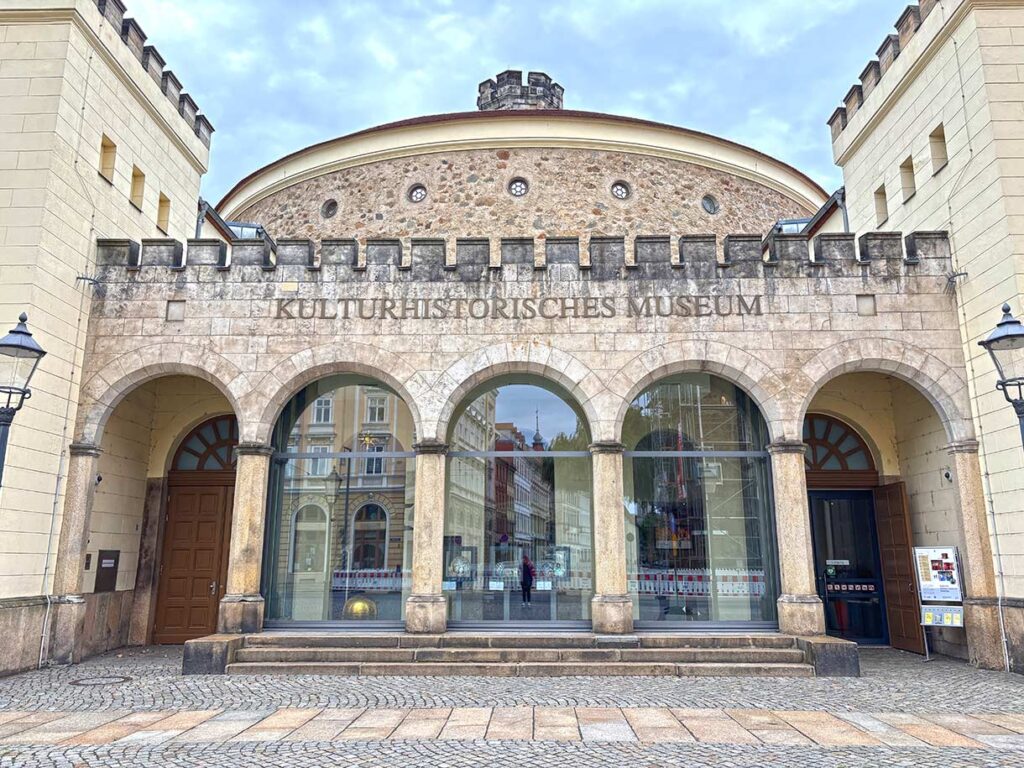
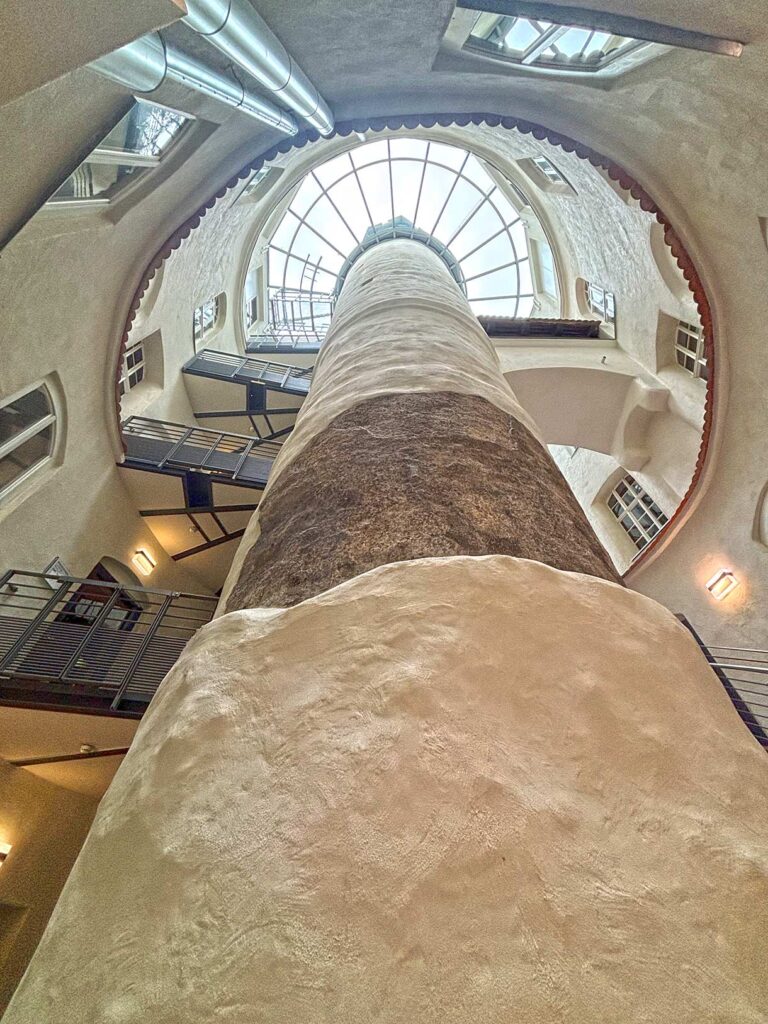
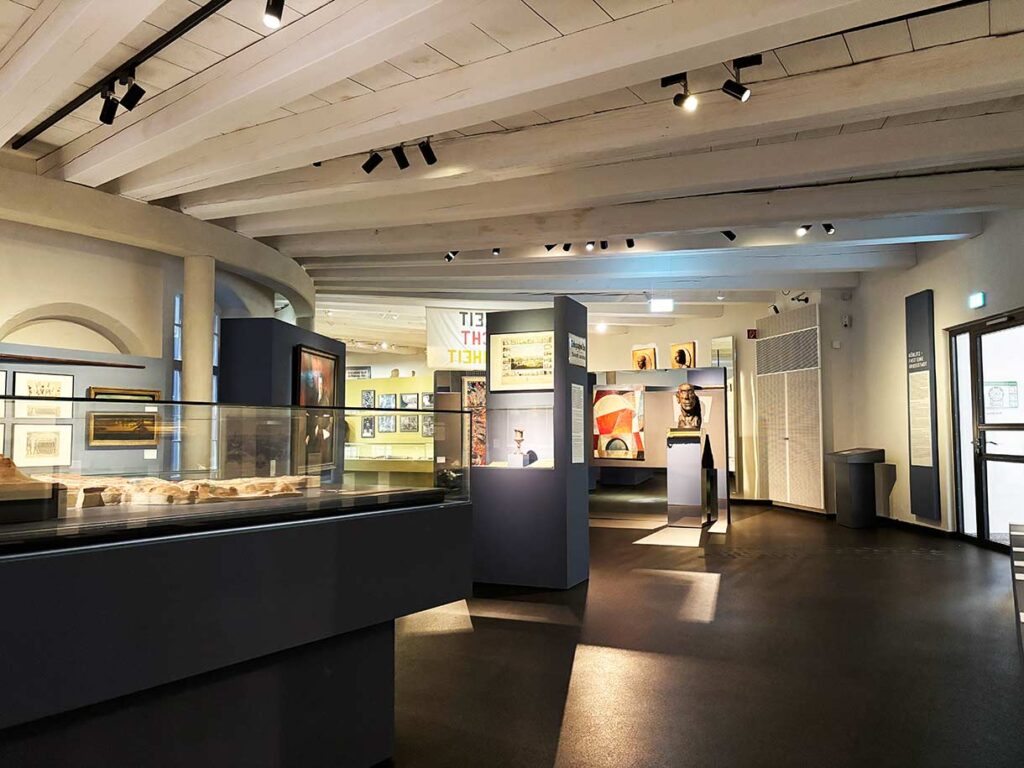
I really enjoyed my visit to the Gorlitz City History Museum inside the Kaisertrutz, and I definitely recommend that you consider visiting while you’re in the city!
The building itself is one of the four original defensive bastions that still stand (out of 32). This was the tallest of all the defensive towers, while the arched gates underneath it were used to grant access to traders traveling along the Via Regia trade route.
The best way to visit the collections here is to start in the basement and work your way up:
- Basement Level – From the Ice Age to Early Görlitz
- Ground Floor – The Middle Ages to German Confederation
- First Floor – Industrialization to 1990
- Third Floor – The Modern Era (After the Berlin Wall)
Each floor contains artifacts, digital displays and some interactive stations for children. Admission to the four floors of permanent galleries is €6, and there is an additional €3 fee to visit any temporary exhibits on display on the second floor. The museum is accessible, with both an elevator and stairs between levels.
#6 – The Church of Saint Peter and Paul
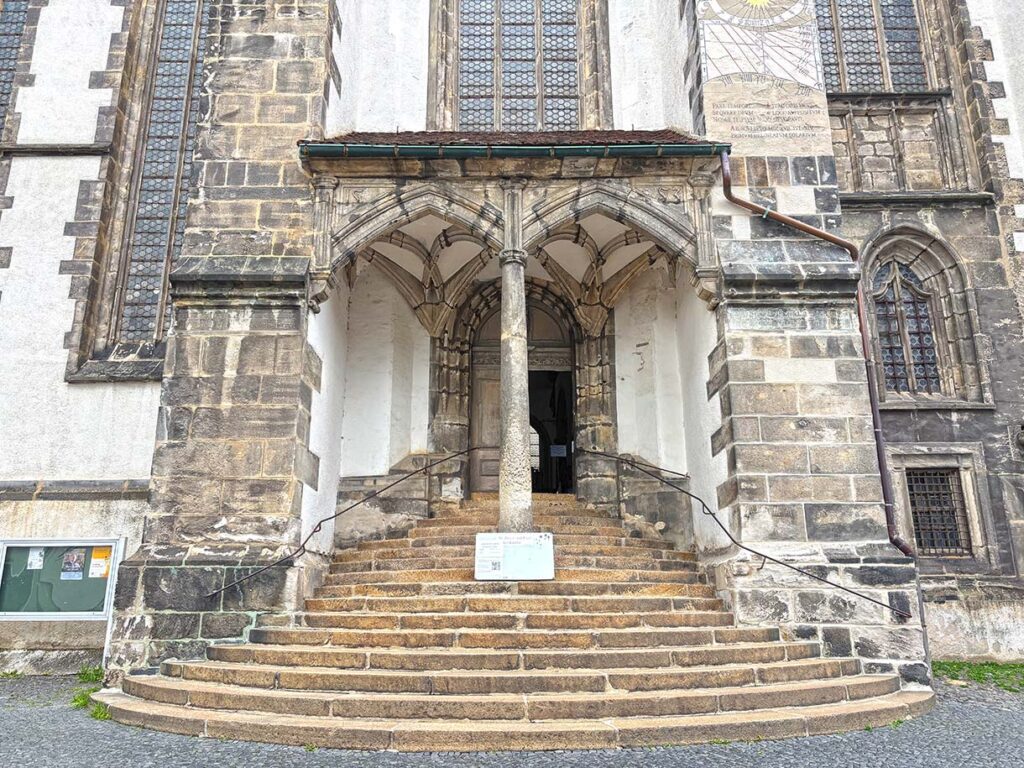
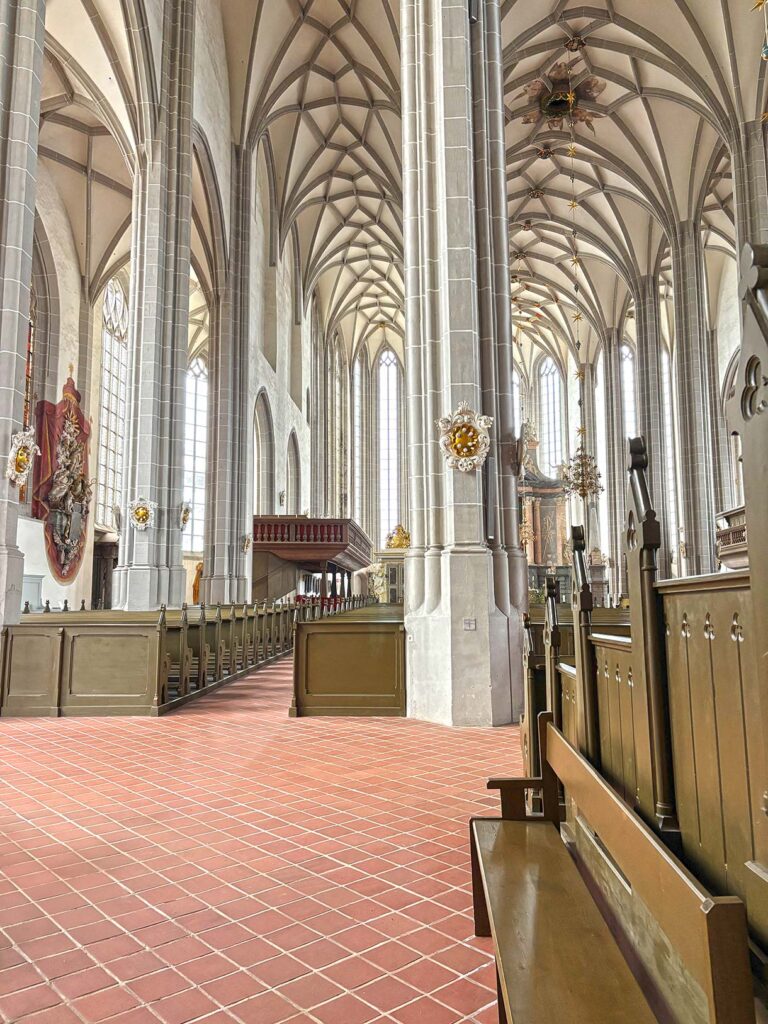
It’s hard to miss the Church of Saint Peter and Paul, towering over the river embankment where the Altstadtbrucke connects Germany and Poland.
While a church has been on this spot since the eleventh century, the Gothic building you see today was mostly constructed in the 1400s, incorporating bits and pieces of the various churches that were already here. A fire destroyed the original roof and towers in the 1600s, so they represent 18th-century design additions. I read that you can occasionally ascend a tower between the two church spires, but this was not open during my visit.
Today, the church is best known for its Sun Organ, which is a modern replica of the original 1703 organ that used to be in the church. Several times per week there are free organ concerts at noon; check the white sign in front of the building (shown in my first photo) for current schedules.
#7 – Ochsenbastei (The Oxen Fortress)
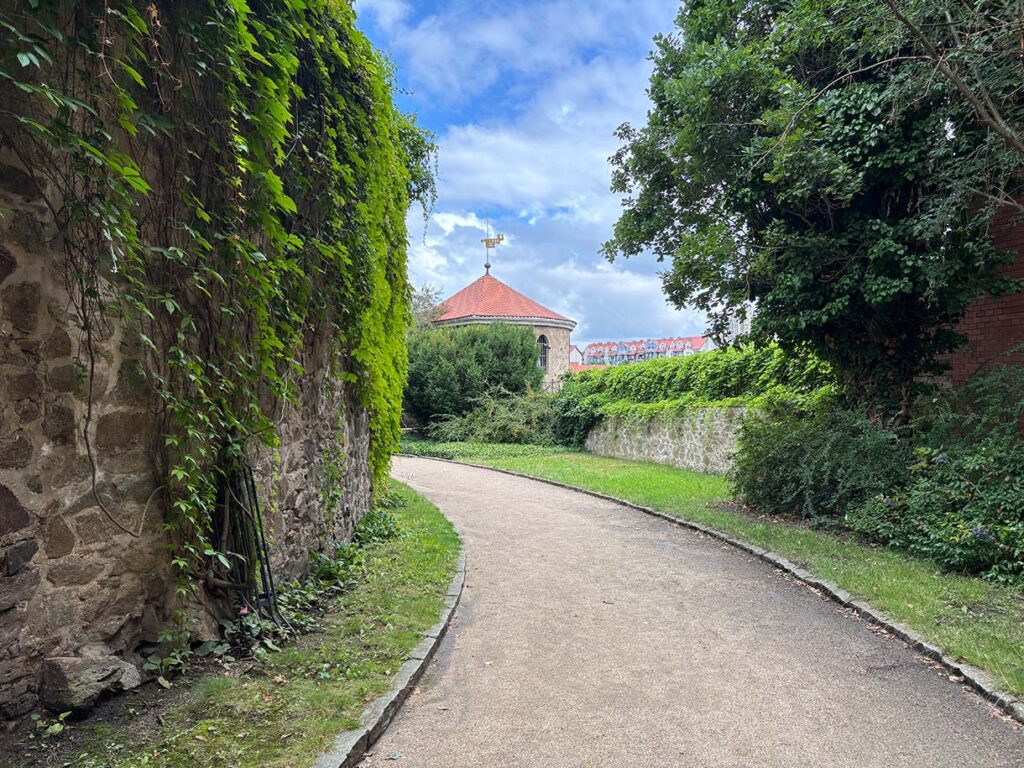
Gorlitz has done an excellent job of converting its former fortifications into public spaces. Here, at the Ochsenbastei, or Oxen Bastion, you can follow a scenic pedestrian pathway from the Old Lutz Cemetery (see below) down to the riverfront (near the Altstadtbrucke).
The bastion itself is the round building you can see above, but the area today also includes the walking trail. The trail was originally for oxen to travel from the town to the nearby pastures for grazing, but after World War 2 it was redeveloped into a public garden space, complete with flowers and fountains.
#8 – Nikolaikirche (Church of Saint Nicholas)
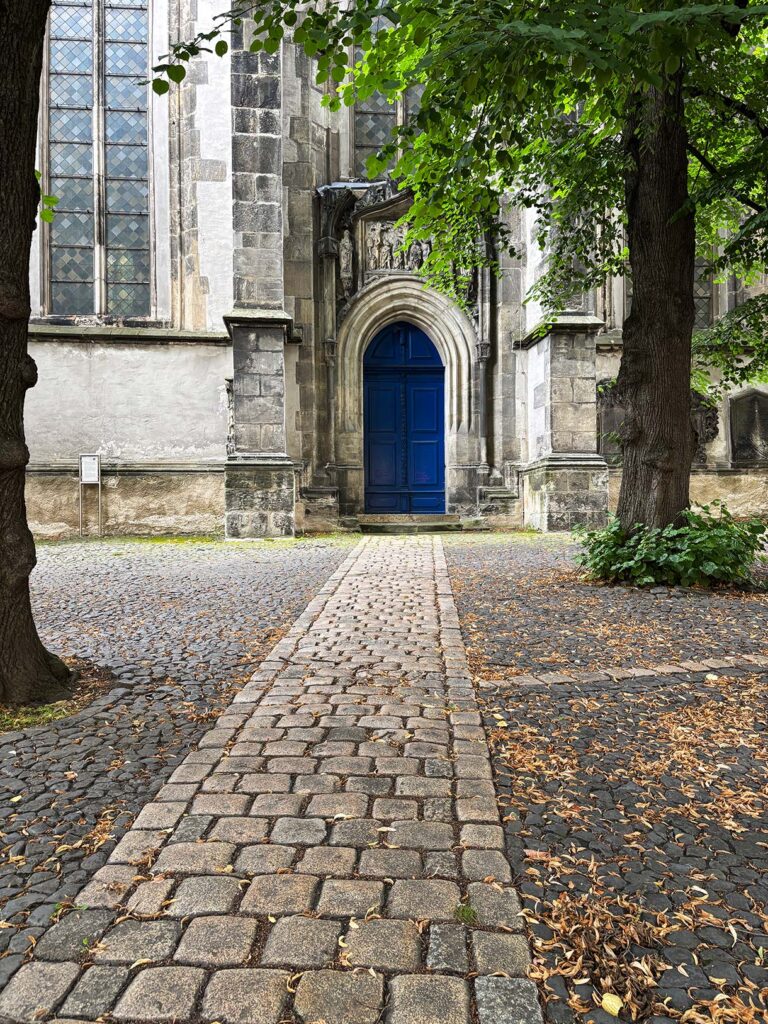
Another Gothic church in Gorlitz, the Nikolaikirche (Church of Saint Nicholas) dates back to the early 1500s. Following World War 1, the church was redesigned and re-envisioned as a memorial to those who died in the Great War.
At the time of my visit to Gorlitz the interior of the church was closed. However, the Nikolaifriedhof Cemetery was open and free to visit. This is the oldest cemetery in Gorlitz and features more than 600 Baroque and Renaissance tombstones. Of note is the grave of Jakob Böhme, a Reformation-era philosopher who was born in a village about twenty kilometers outside of Gorlitz.
The cemetery connects with the Ölberggarten park (see below) with access to the Holy Sepulchre, and to the modern cemetery.
#9 – The Nikolaizwinger
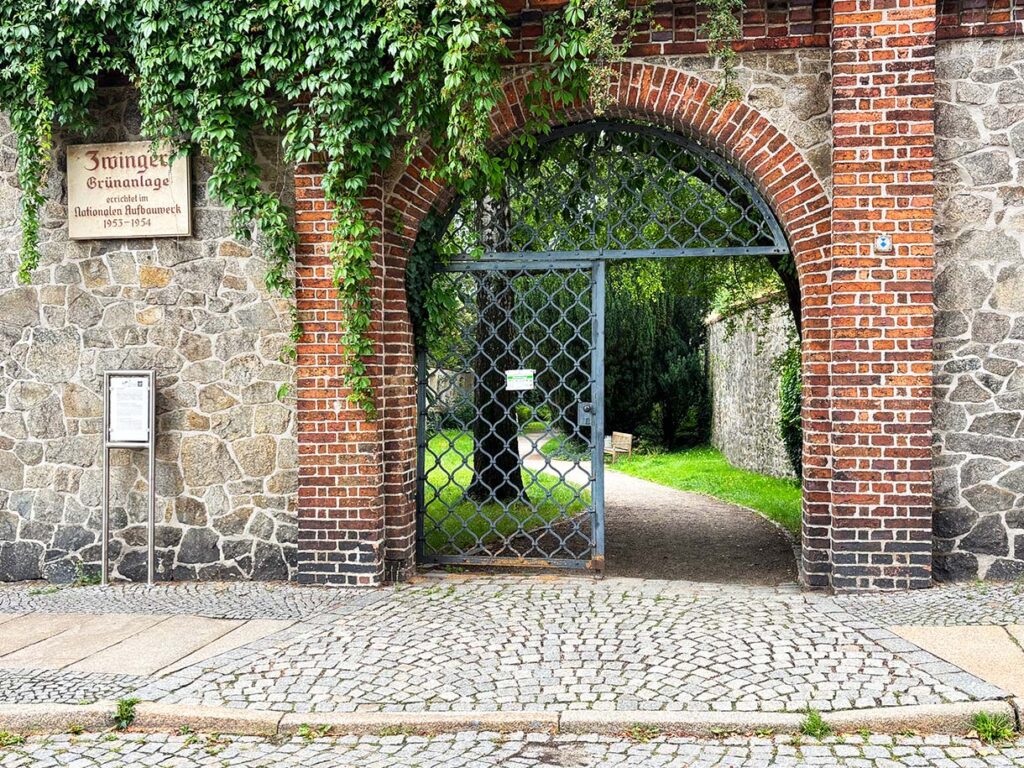
In German, the word zwinger can have multiple meanings, including a dog kennel, a prison, or the narrow space between two defensive walls. Of course Google Translate only showed me the first definition, so for the longest time I thought that Gorlitz had the world’s prettiest dog kennel.
Of course, now I know that the Nikolaizwinger is actually the area between the two defensive walls that are closest to Nikolaikirche. You can still see the holes in the wall where cannons would have shot at any suspected invaders.
Like the Ochsenbastei, this area was converted into a pretty park following World War 2. The gardens form a horsehoe-shaped trail connecting the back of Saint Peter and Paul Church to the Nikolaiturm Tower (see below).
#10 – The Executioner’s House & The Finstertor
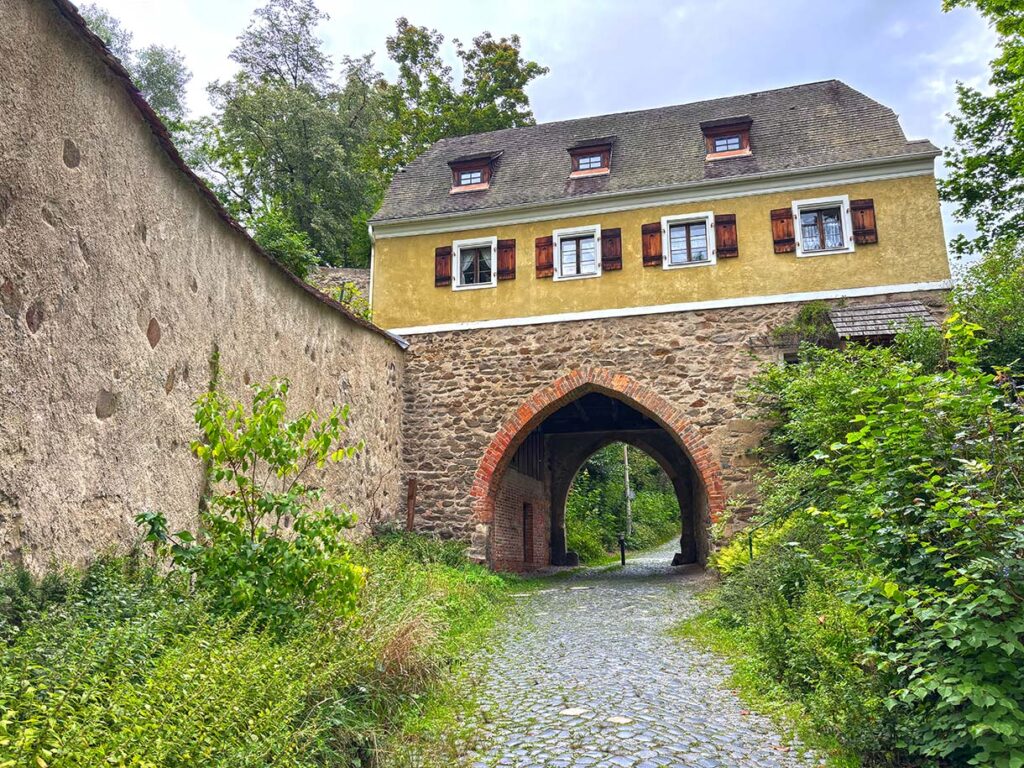
While you’re near the Nikolaikirche, it’s worth taking a quick five-minute detour to go see the former Executioner’s House. It is the only original half-timbered building still left in Gorlitz, and it dates back to 1666. No longer a home for executioners, today it houses an organization of young people who are committed to preserving the town’s heritage monuments.
Beside the Executioner’s House there is the Finstertor, or “Dark Gate”. This is the gate through which criminals would pass on their way to being executed, although today it has a cheery yellow exterior that hides its dark past.
#11 – Take a Guided Walking Tour
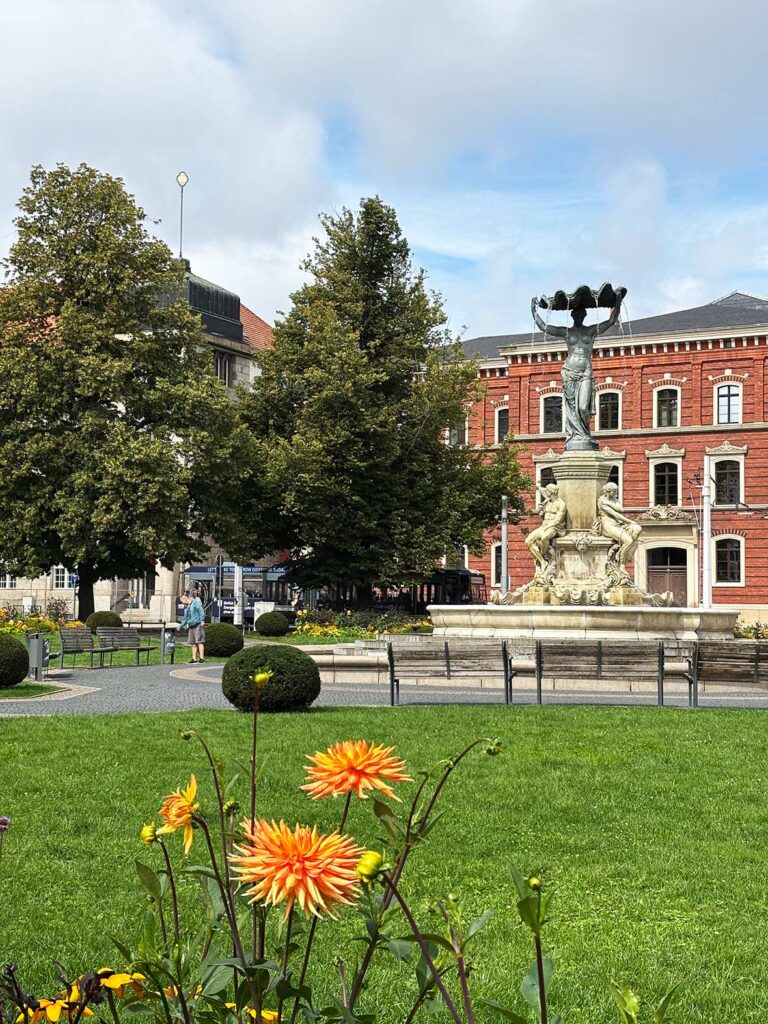
Gorlitz is relatively small and most of it can be covered on foot over a day or two. However, to really understand the history of the town (and for insider information on many of the movies and TV shows that were filmed here) you might want to consider taking a guided walking tour.
The tourist information office runs very affordable daily walking tours, but they are usually only available in German.
If you do happen to speak German, the interactive creepy city tour by night might also be of interest!
If you want a guided walking tour of Gorlitz in English, your best bet would be to book a private tour. Your guide can customize the sites you visit based on your interests.
Travelers with limited mobility might also want to ask at the tourist information office about the small sightseeing bus that (supposedly) departs four times a day from the Obermarkt, taking travelers around the historic center and all the way out to Berzdorfer Lake. I don’t know if the on-board audioguide is available in English, but it will help you see the sights with limited walking.
#12 – Ölberggarten Park
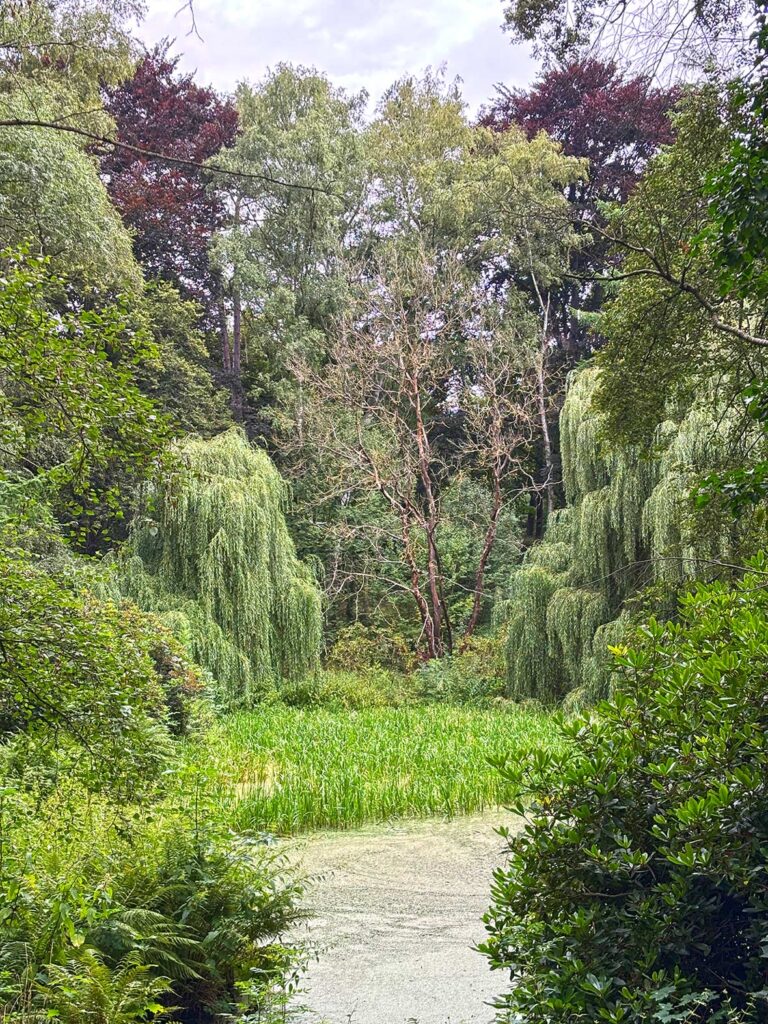
The Ölberggarten is a park between the Nikoliakirche cemetery and the Holy Sepulchre. Its name translates to “Olive Garden”, presumably inspired by the biblical Mount of Olives and its proximity to Gorlitz’s Holy Sepulchre.
There are two distinct areas of the park. One is a more manicured garden, with well-maintained grass, heirloom fruit trees and lots of benches for relaxing. As you descend lower into the park the trees become more dense and a small pond is fed by a narrow canal.
This would be a great place for a picnic lunch, or to take your kids to kick around a soccer ball while you’re staying in Gorlitz.
#13 – The Towers of Görlitz
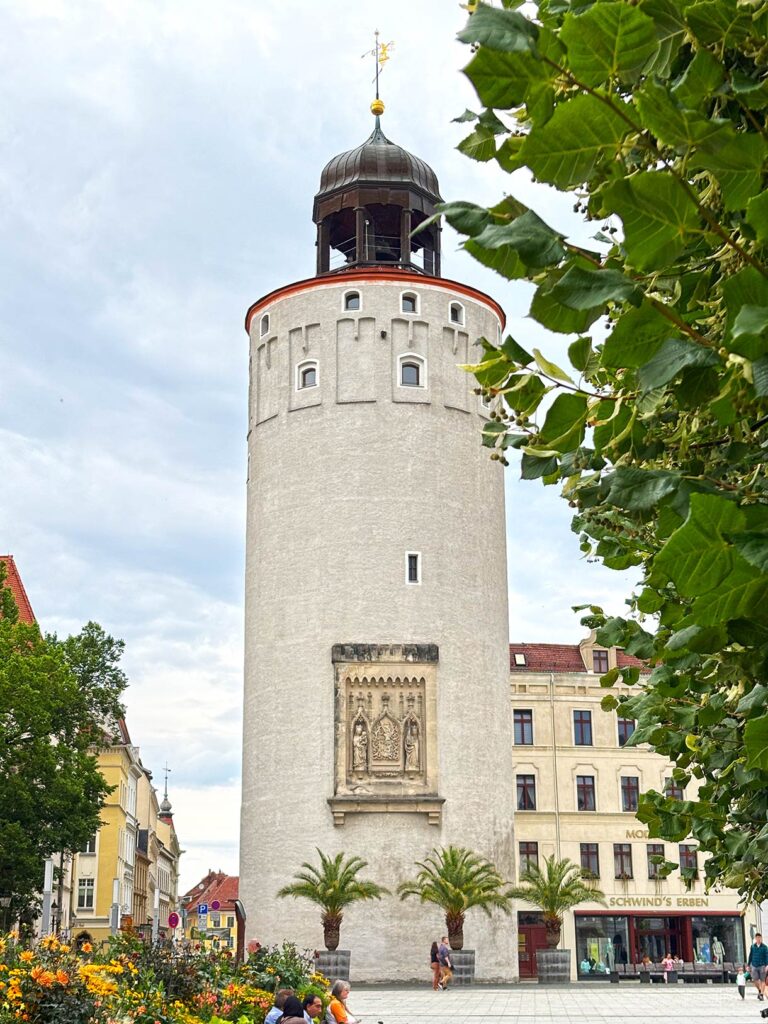
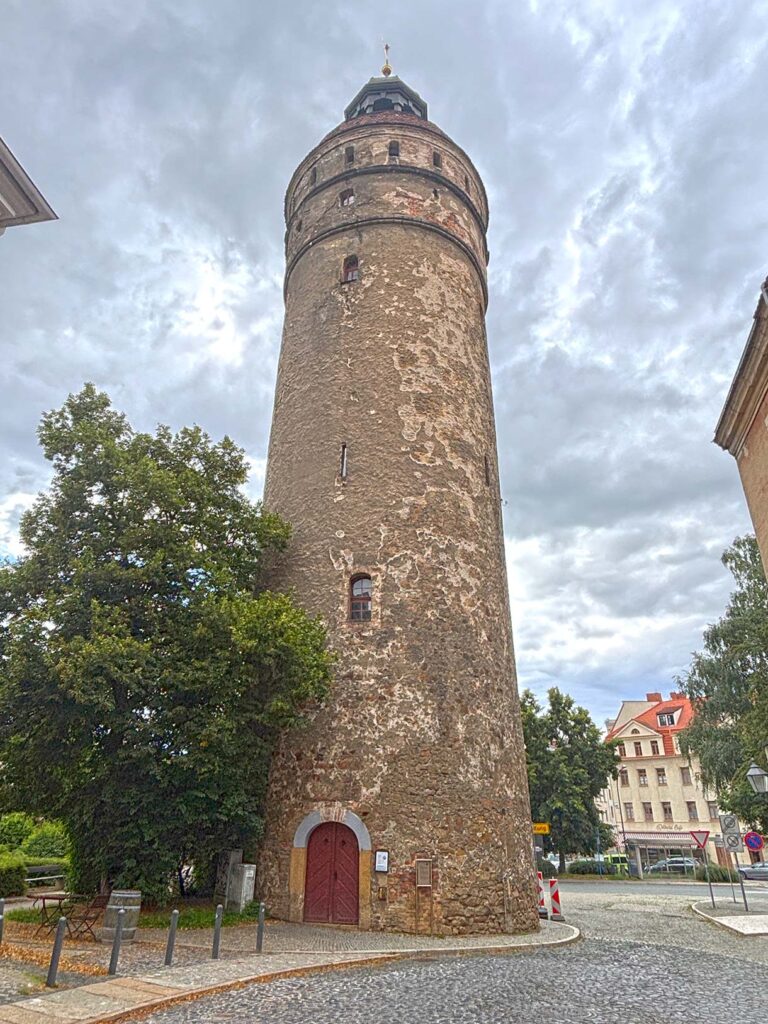
I’ve already mentioned a few notable towers, but if you give yourself time to stroll through Görlitz you can expect to find many more.
The white tower in my first photo is called both the Frauenterm (Woman Tower) and the Dicke Turm (Thick Tower). Its name makes sense when you learn at that the bottom, the stone walls are a whopping 5.4 meters (17 feet) thick! You can also spot a sandstone relief of the city’s former coat of arms, featuring the saints Maria and Barbara (which might be where its other name comes from).
From approximately mid-March until mid-December the tower is open for visitors to ascend. Usually it’s open Thursday to Sunday, from about noon until 17:00, with tours departing on the hour. As with many things in Gorlitz, opening days and times are very much subject to change so check the sign at the base of tower.
The second photo shows the Nikolaiturm, or Nicolas Tower. As you can probably guess, this is located near the Nikolaikirche and Nikolaizwinger. Historically, this marked the northern entrance to the city and was attached to the fortified walls.
If you’re lucky, you can also climb the stairs of the Nikolaiturm in Görlitz. According to a sign on the tower, it’s open for visitors on the second Saturday of the month from April to December, with guided ascents at 2:00, 3:00 and 4:00 pm. If that works with your schedule you can email turmtour@fvks.eu to reserve your spot.
#14 – Untermarkt Square
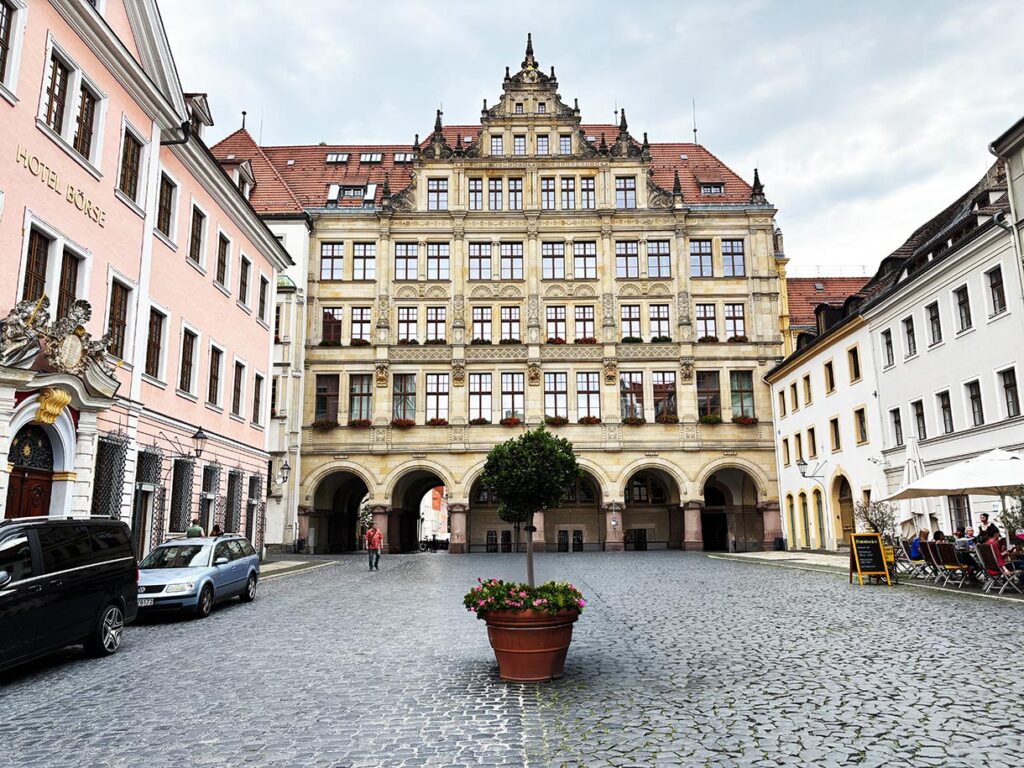
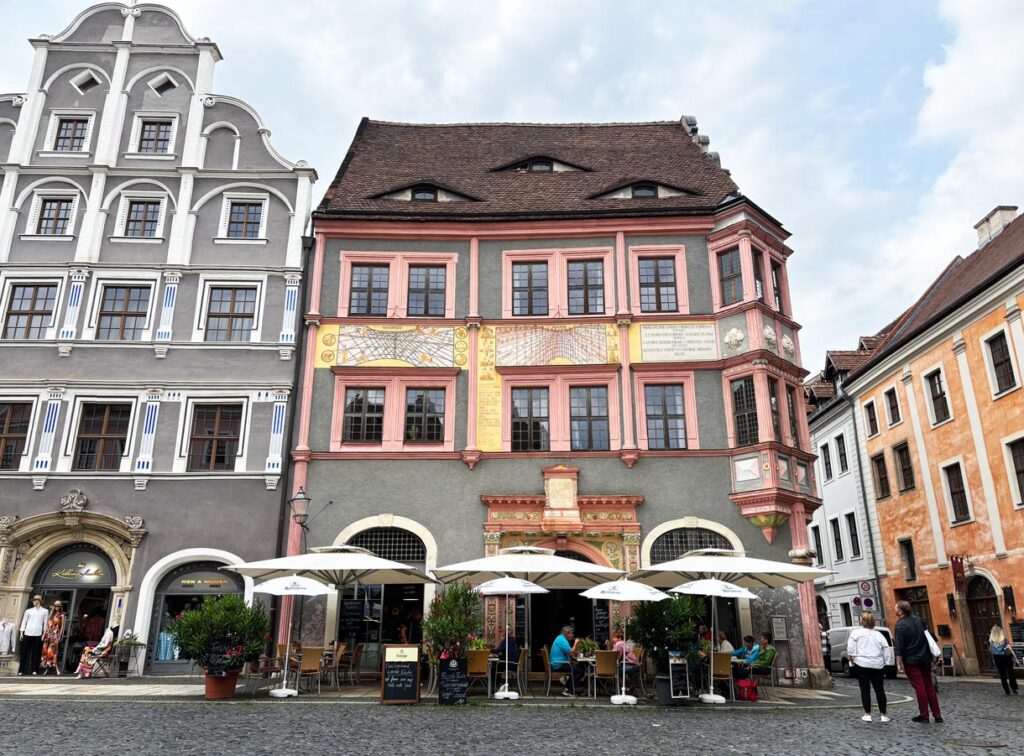
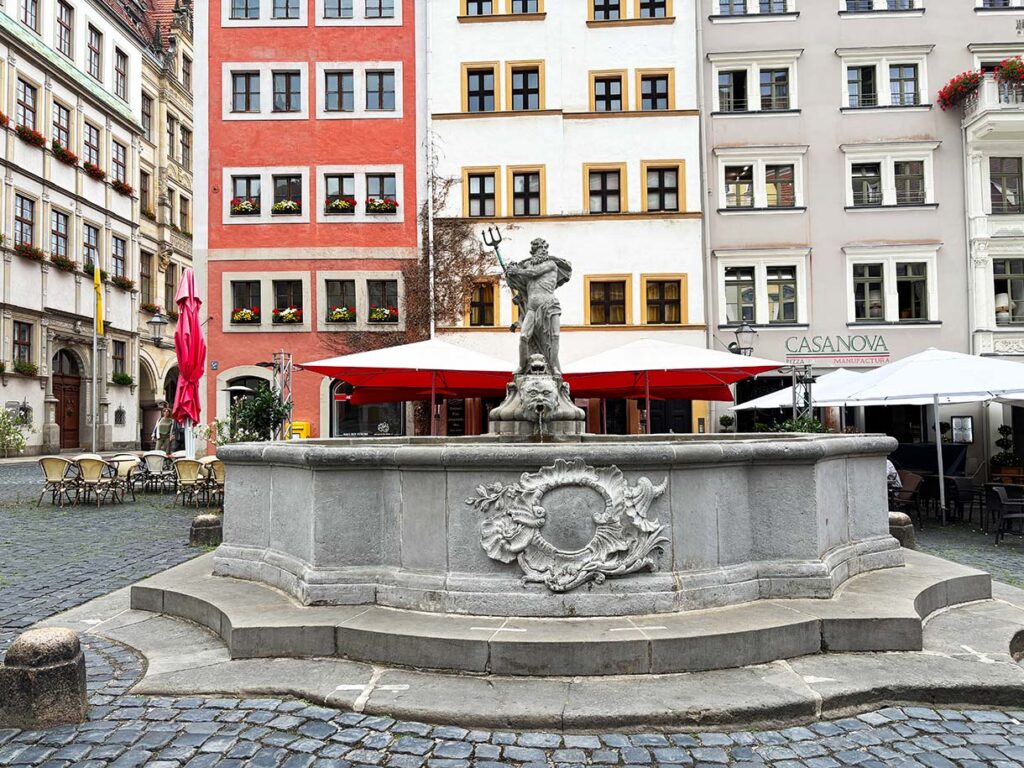
The Untermarkt, or Lower Market, is the first of two pretty market squares in Gorlitz that I’ll be talking about in this guide.
The use of this square as a market dates back to the early 1300s. At that time, a row of market buildings (known as the Zeile) were constructed. Back then, vendors sold their wares on the north side of the square, while craftspeople worked on the south side.
Today, at #22 you’ll find the Flüsterbogen, or whispering arch. You can stand on one side of the arch and whisper towards the wall, and your words will be heard on the opposite side due to the unique acoustics.
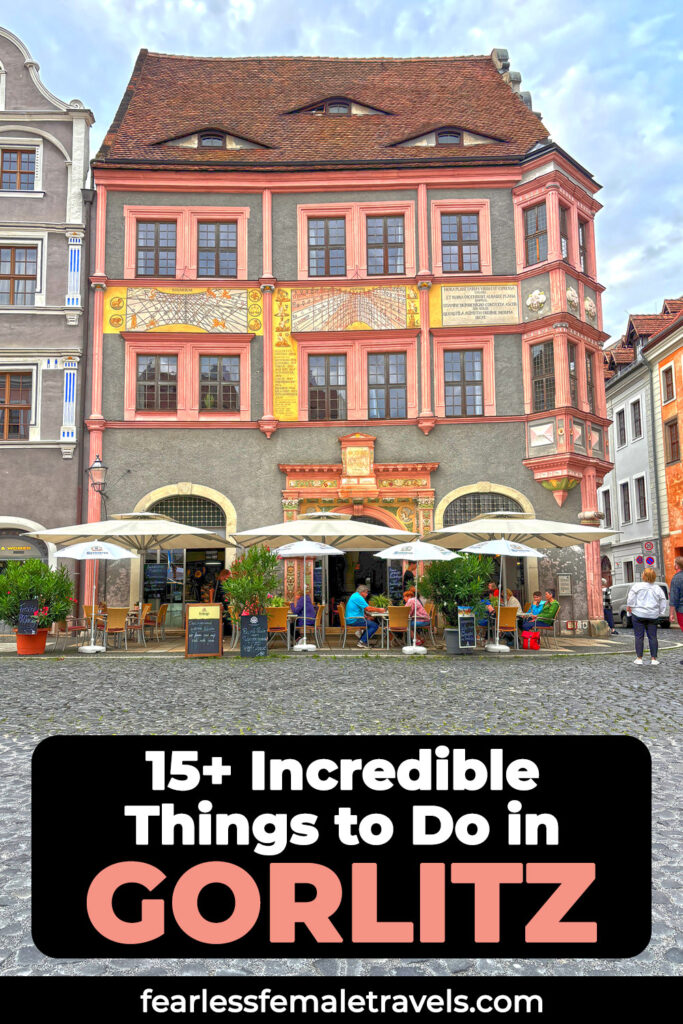
One of the most noteworthy buildings on the Untermarkt is the Ratsapotheke (the town apothecary, which is on the corner and painted pink and grey. It has a beautiful Renaissance portal over its main entrance and it has two types of Renaissance sundials painted on its facade. The left sundial, called the Solarium, measures time in bourgeois, Italian and Babylonian hours (don’t ask me). The right sundial, called the Arachne, measures the planetary hours (again, don’t ask me).
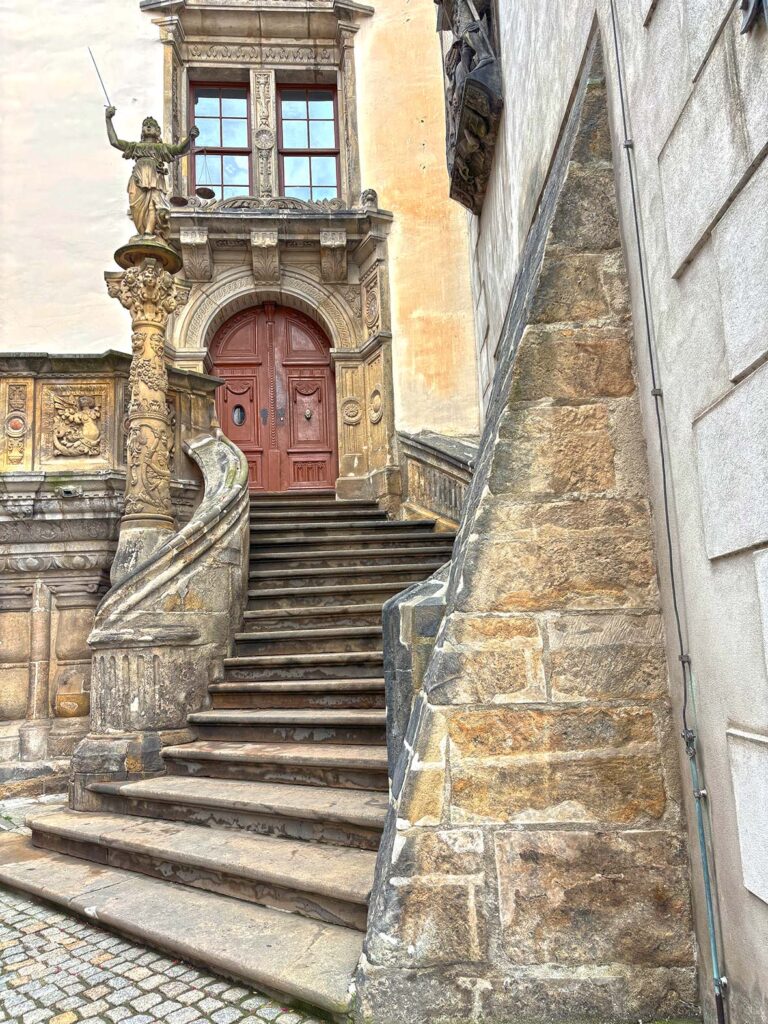
During normal business hours you can also enter the courtyard of the Town Hall (access via Brüderstraße). If it’s closed, you can still see the pretty Town Hall steps, just behind the Neptune Fountain. These were built in the late 1500s and include a statue of Justitia placed atop a pillar, along with the town’s coat of arms.
#15 – Obermarkt Square
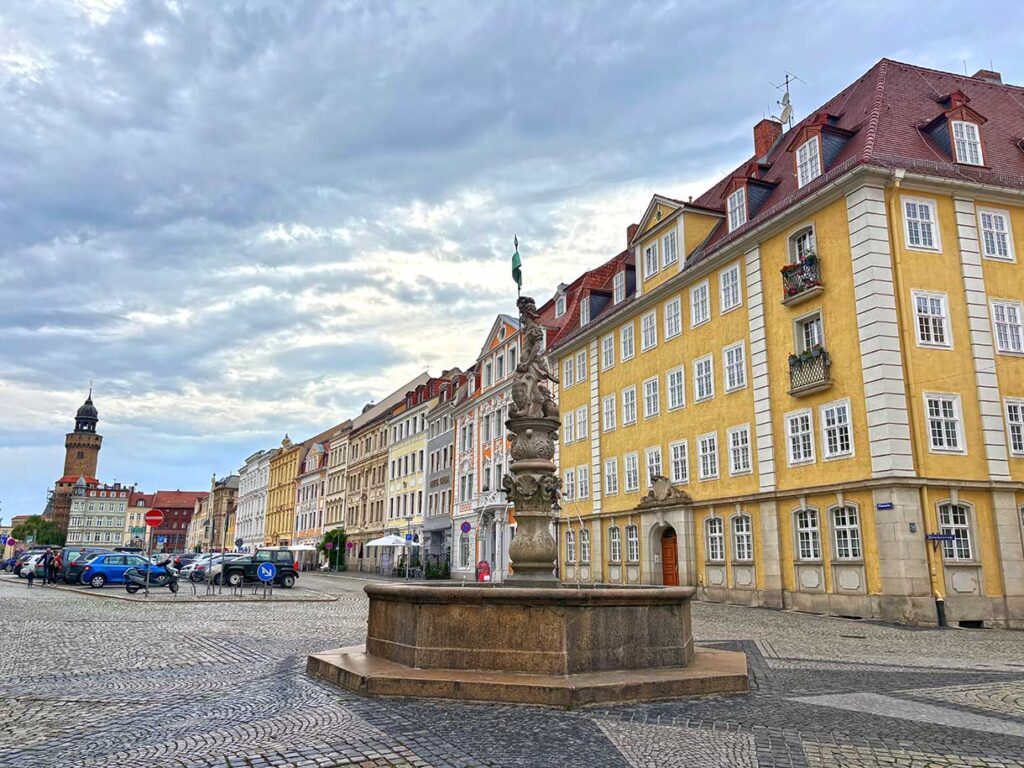
The other important market square in Gorlitz is the Obermarkt, or Upper Market. This square features a unique combination of architectural styles, with buildings that were constructed or renovated during the Gothic, Renaissance and 19th century eras. The Fountain of St. George marks the passage from the wide-open square to the narrower streets of the historic town center.
The oldest building on the square here is the Holy Trinity Church. It’s free to enter but there is a €1.50 photography fee (hence my lack of photos). Inside you’ll find Baroque and Gothic altars, including a famed “Golden Mary” winged altar.
In the warmer months the middle of the Obermarkt square is used as public parking, but if you’re visiting Gorlitz in winter you may find that it has been filled with ice and is now a (slightly bumpy) skating rink.
#16 – The Old Lutz Cementary
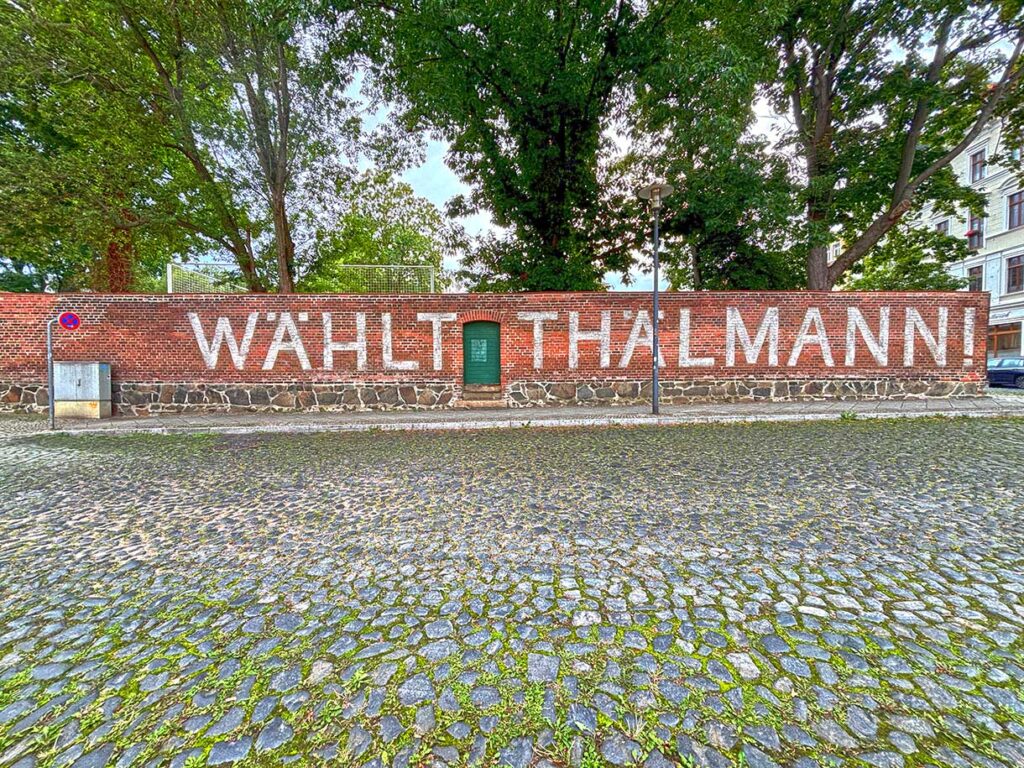
The opening scene of The Grand Budapest Hotel takes place here, at this wall on Bergstraße in Görlitz. Although the background was superimposed (the view behind the wall is of trees, not of a quaint, snow-capped town) the wall itself is unmistakable.
This wall was actually part of a film set even before The Grand Budapest Hotel. In 1985 it was featured in a two-part TV series about Ernst Thälmann, who led the German Communist Party from 1925 to 1933. For the series they painted the words “VOTE THALMANN” on the wall, and those words were later painted over to read “OLD LUTZ CEMETERY” for the Grand Budapest Hotel. When filming of the Wes Anderson movie was over, town residents petitioned to have the previous text replaced.
To find the wall, look for Villa Josefina on Google Maps. This pretty private home is also worth a look, although I couldn’t find much information about its history.
#17 – The Görlitz Train Station
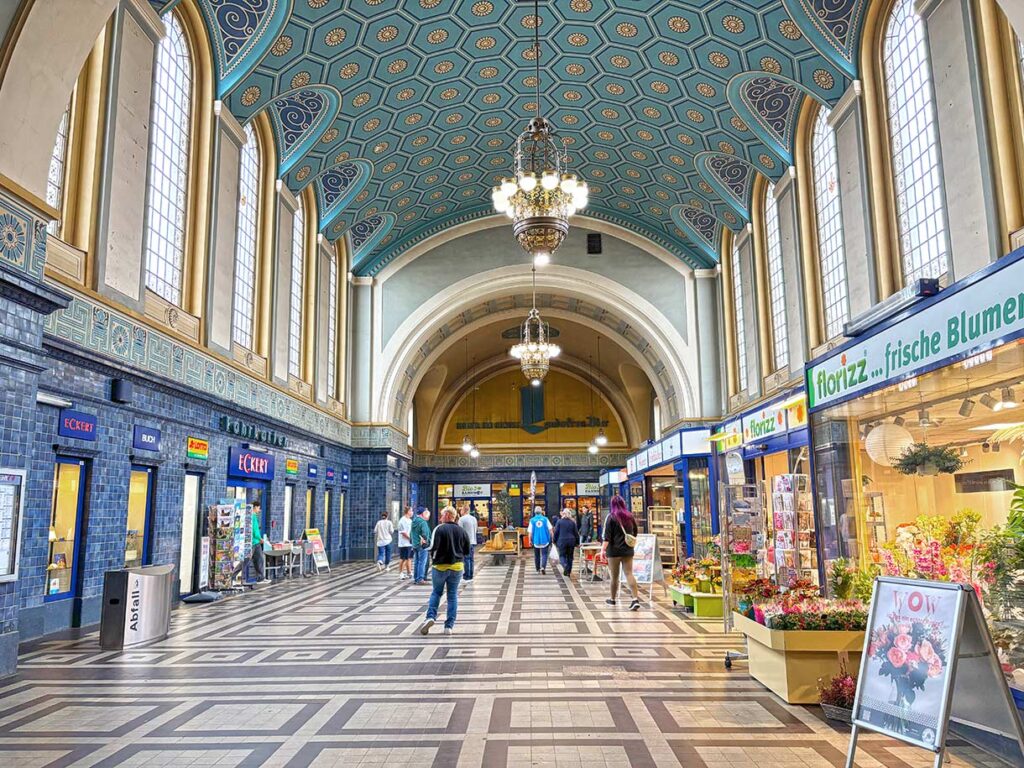
I traveled all around Saxony without a car, so I had the chance to visit many different train stations, and I have to say that the Görlitz Bahnhof (Train Station) is probably the prettiest one I saw! It has a high, vaulted ceiling and Art Nouveau details in the chandeliers, tiled ceiling and colorful windows.
The train station isn’t too far from the historic center, but if you’re traveling with luggage you’ll probably want to hop on board one of the trams that depart from in front of the station and reach the historic center in 5-10 minutes (note that they are vintage trams and require a large step up to board, so you have to be able to lift your suitcase through a narrow door).
A Few Recommended Restaurants in Gorlitz
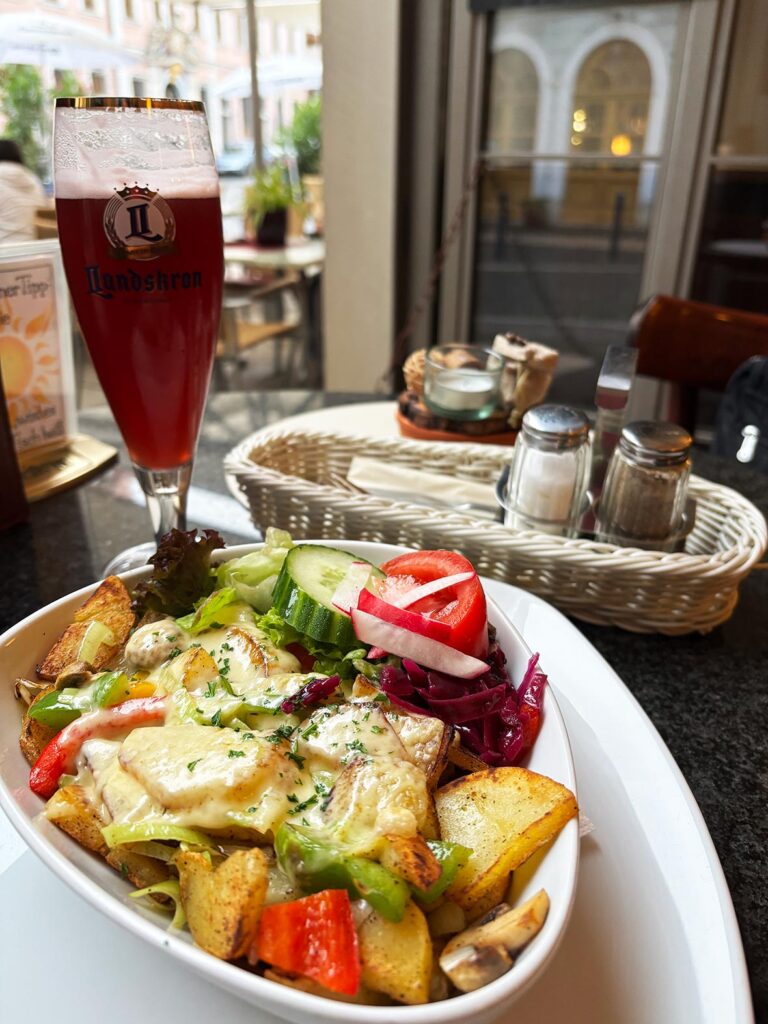
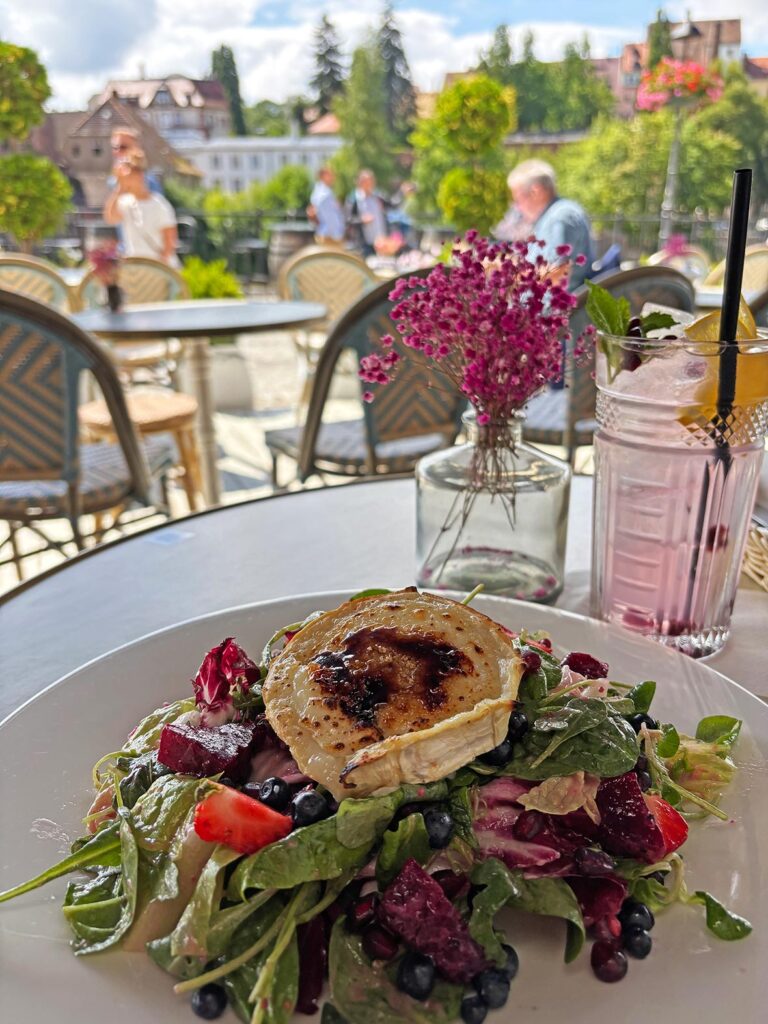
Generally speaking I found the food in small Saxon towns like Görlitz and Zittau to be quite good! Meat-eaters will find sausages and roasts around every corner, but from a vegetarian perspective these are some of the restaurants that I can recommend:
- Ratzcafe Görlitz – Located in probably the most beautiful building in town, this restaurant serves traditional Saxon cuisine. My server was very friendly and the vegetarian dish (fried potatoes with vegetables) was good, if not as memorable as the location.
- Miodmaliny Restaurant (Zgorzelec) – This riverfront restaurant is on the Polish side, and I get the impression it might be the fanciest restaurant in town. They are vegetarian friendly (I had a goat cheese salad and I also saw a cauliflower steak on the menu) but also have typical, meaty Polish fare. The terrace is lovely but make sure to go inside as the interior is something to behold!
- Görlitzer Kartoffelhaus – This place gets packed, so consider making a reservation or coming very early for dinner. If you want a big serving of meat and potatoes this is the place for you, while if you’re a vegetarian you can also find fried potatoes with vegetables (are you sensing a trend?).
- Caféhaus Lucullus – Apparently this little coffee shop is quite well-known for their poppyseed cake, so I had to give it a try (with a coffee too, of course!). It was definitely good, and the shady garden terrace was a nice place to sit for an hour on a hot summer afternoon.
- Bäckerei und Konditorei Wittig – The owner of my guesthouse recommended this bakery and cafe on the Obermarkt for breakfast. I only ended up passing through for a coffee and cake, but both were good!
Most tourists who visit Gorlitz are from Germany or Poland, so the availability of English menus and English-speaking staff will be limited. Have your Google Translate ready (especially if you have allergies or dietary restrictions) and treat the staff with kindness.
If Saxony is on your Germany trip itinerary you’ll also want to read about these fun experiences in the nearby region!
🗺️ How to Spend Two Days in Dresden, Germany
🎨 The Secret Art Passage in Dresden
🏰 Delitzsch, Germany: A Cute Day Trip from Leipzig
🚂 How to Ride the Historic Steam Train from Zittau to Oybin Castle
🥂 A Guide to Visiting The Chemnitz Wine Festival
💎 10 Things to Do in Freiberg, Saxony
Planning a trip to Germany? Pin this post for later!
 |
 |