

Ostuni is Italy’s “White City”, rising out of the surrounding fields and olive groves like a cloud frozen mid-drift. Its towering ivory walls protect thousands of years of history, from the earliest human societies to Neoclassical masterpieces to contemporary innovation.
I recently traveled across Italy from north to south, spending the majority of my trip in Puglia. Ostuni was one of many memorable stops along my route. In this Ostuni travel guide I will start with some of my favorite things to do in Ostuni, then I’ll highlight some restaurants I enjoyed, accommodation options and transportation tips. At the end I do have to share a special warning about traveling to Ostuni, though, so make sure you read all the way to the bottom!

How much time do you need in Ostuni?
I spent six weeks in Puglia as part of a two-month Italy trip, and there were cities where I happily stayed for an entire week (and would have stayed longer). Ostuni is not one of those places. One full day gives you ample time to explore the historic center, on foot, at a leisurely pace. Whether that means spending a night or two here or simply coming by car for the day, Ostuni is a great one-day destination in Salento.
If you want to have a beach day on the nearby coast (about five kilometers away) then you should add an extra day in Ostuni. Trying to squeeze in the town and the beach in one day will be tight, especially if you’re traveling by bus or train.
Things to Do in Ostuni
In this Ostuni travel guide I’m going to focus on the things you can see and do in the center of Ostuni, without needing a car to drive to the surrounding countryside. All of these attractions and sights are within easy walking distance of the historic town center.
Explore the Historic Centre

Ostuni’s historic center is built atop a hill, surrounded by tall defensive walls. Once you’re inside, however, all roads eventually lead to the Arco Scoppa, shown above, a landmark in front of the town’s large cathedral. The walk from the entrance of the historic centre up to the cathedral doesn’t take more than ten minutes unless you stop for some souvenir shopping along the way (see below).
If you’re not a big fan of walking uphill and downhill on old cobblestone streets, you might want to consider a tuktuk tour of Ostuni. These operate seasonally and are a fun way to move around the city center a bit more comfortably (especially if it happens to be very hot during your summer visit!).
Ostuni Cathedral
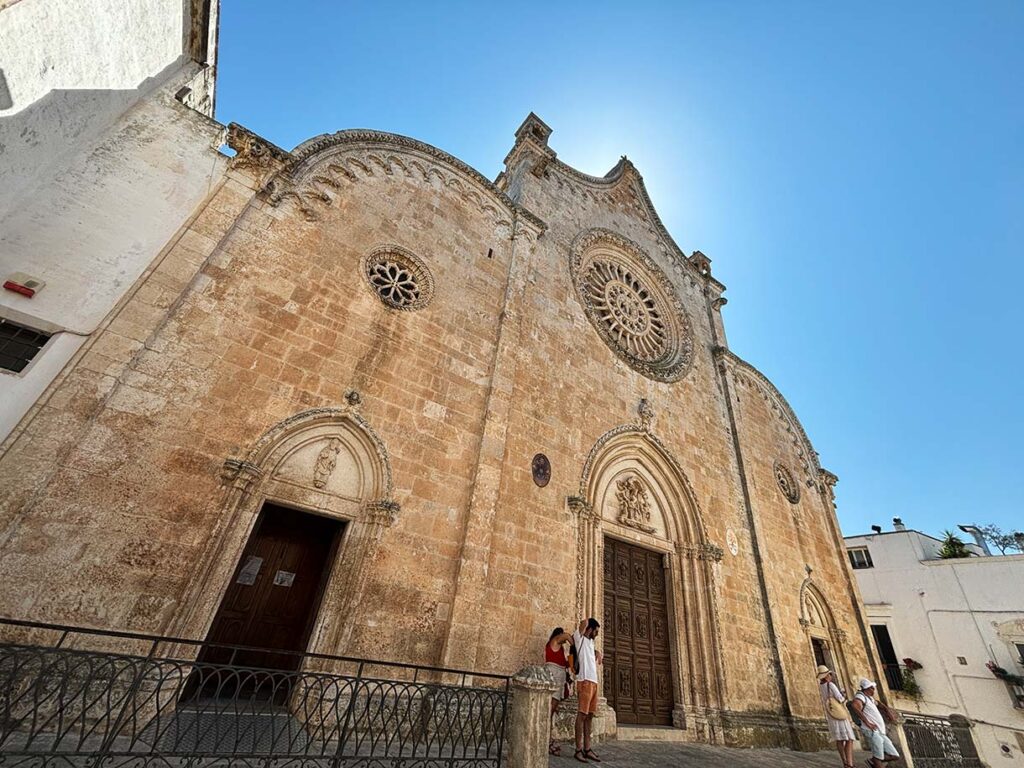
A church has stood on this site since the eleventh century, but due to the seismic activity in the region the building you see today dates back to the late 1400s. Typically closed during the mid-afternoon, you can visit for free in the morning or evening to see the ornate altars and frescoes.
I read that the rose window on the facade of the Ostuni Cathedral is one of the largest in the world, although I can’t be fully sure. What do you think?
Ostuni Archeology Museum (or, The Museum of Pre-Classical Civilizations of Murgia)
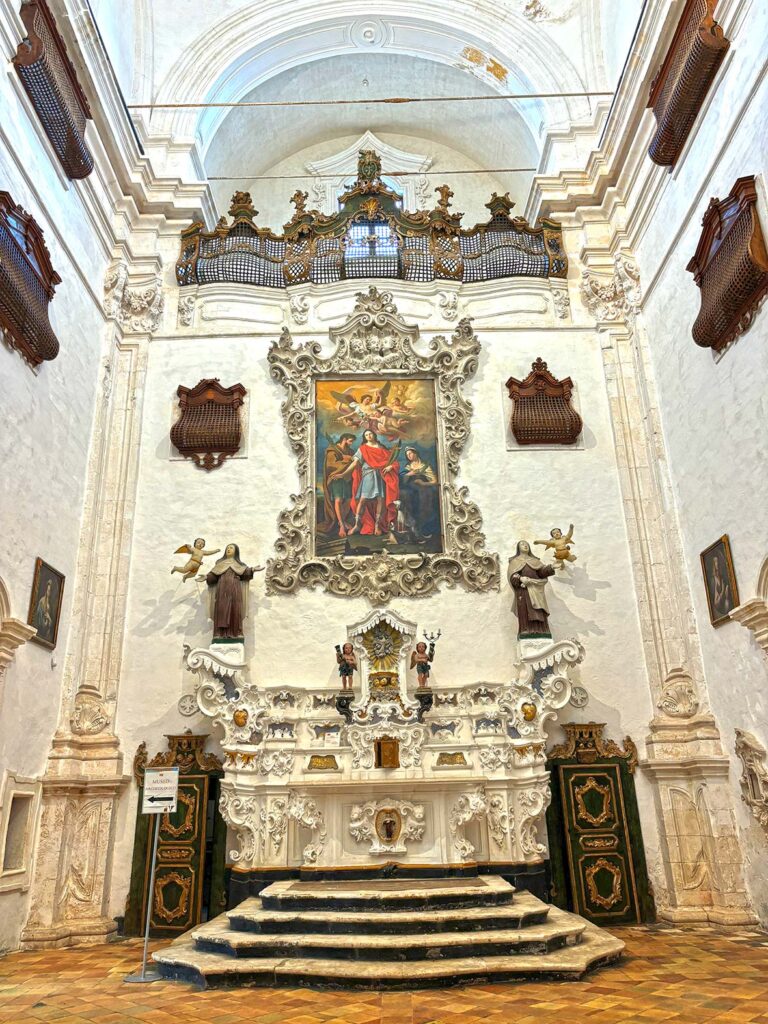
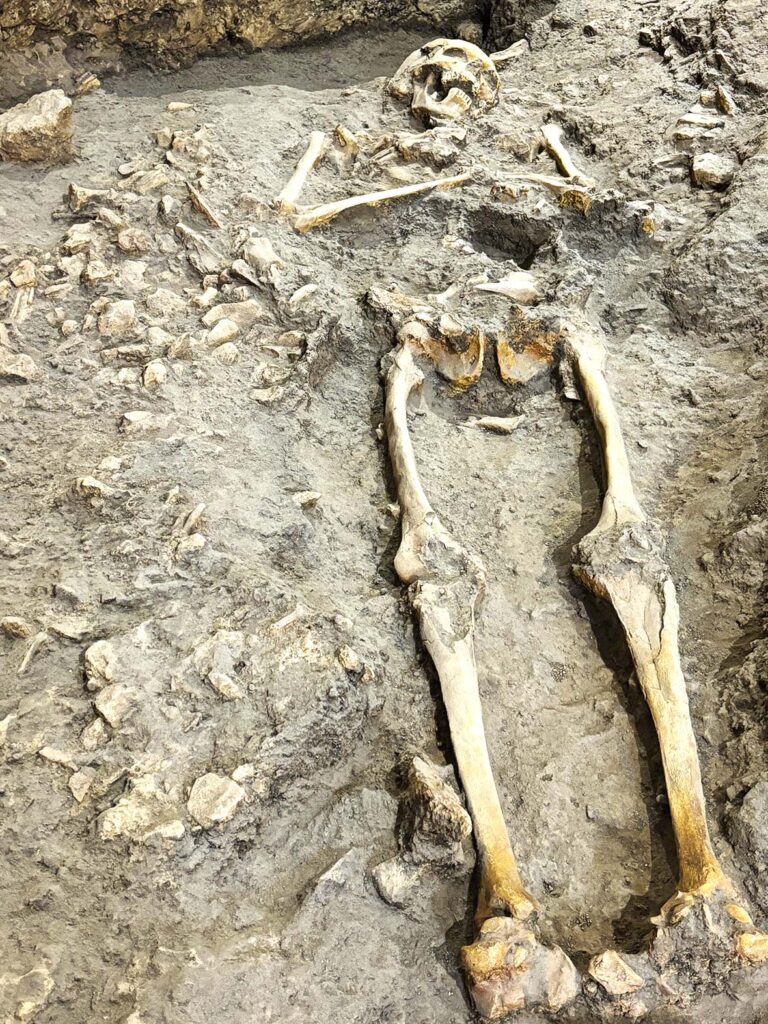
Ostuni’s most famous attraction is its archeological museum. Located inside the Church of San Vito Martire and the adjacent monastery buildings, the museum’s collection consists of archeological findings from the surrounding Murgia plateaus.
As you enter through the church building a number of glass display cases house pottery, jewelry, coins and tools dating back hundreds (if not thousands) of years. From here, you pass though a doorway into the modernized monastery building that has been retrofitted to better serve as a museum. Each room houses unique archeological findings, culminating in “The World’s Oldest Mother”, a 28,000-year-old skeleton of a pregnant woman and her fetus.
Depending on your level of interest you’ll need between 30 and 60 minutes to visit the museum, which is definitely worth the cost of admission.
Walk the City Walls
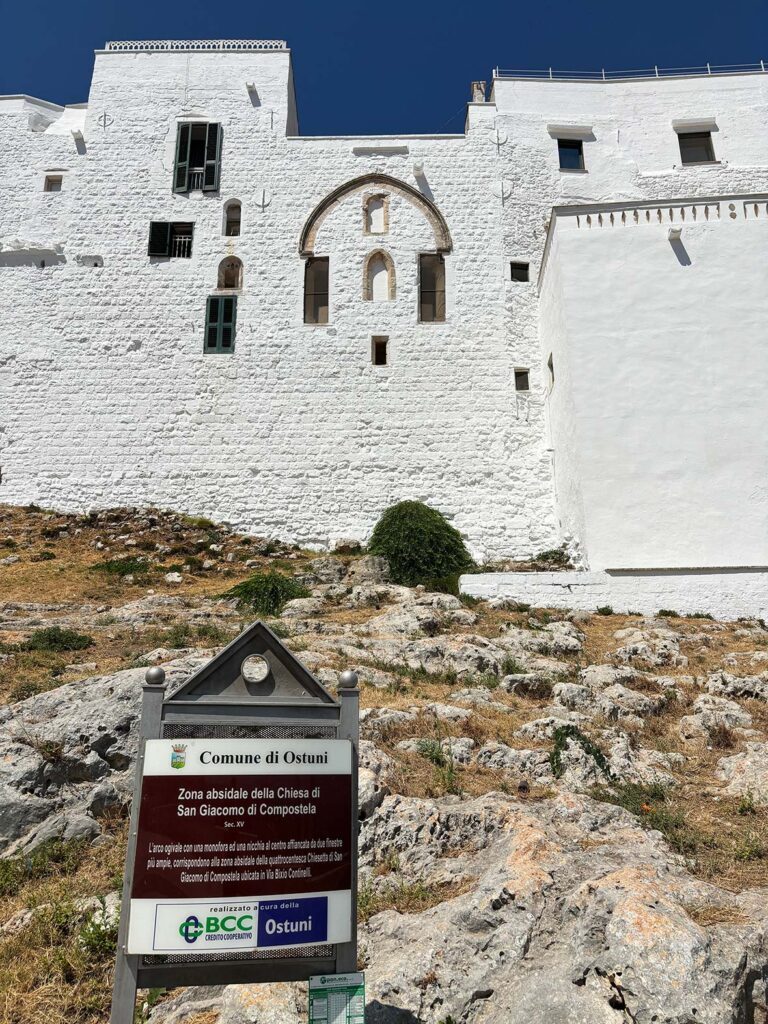
Ostuni is a walled city, with fortifications built to protect against invading forces in the early Middle Ages. Today, a walk along the promenade at the base of the city walls is a pleasant way to see the White City from a different angle, and to understand the city’s position in the wider countryside.
The easiest access point is from behind (downhill from) Borgo Antico, near the Santa Maria Della Stella church. From here you can turn left for a shorter walk back to the center, or turn right to take the longer route. Bring a bottle of water as there aren’t any shops, services or shade along the walkway.
Piazza della Liberta

Piazza della Liberta is the main square and the busiest entrance into the historic city center. The main landmark here is the obelisk in the middle of the road, on top of which Sant’Oronzo looks over the city, keeping guard.
Other buildings on the square include the Town Hall, several churches and the archeological remains of an old tower and the original city walls.
The Tourist Information Office is also located on this square. They can assist with bus tickets to the train station, luggage storage and booking local tours.
Panoramic Lookout Points
When I was actually inside Ostuni it didn’t feel more “white” than other cities I’d recently visited, like Locorotondo or Alberobello. However, when I walked along the streets outside of the historic center and looked back at where I’d been, I had to admit the city did deserve its name.
The easiest panoramic viewpoint to access by foot from historic Ostuni is located in the small piazza here, about ten minutes from Piazza della Liberta. From this spot you get the view shown above, which I took with my iPhone camera and which would have been infinitely better if I’d remembered to pack my real camera that morning!
Churches of Ostuni
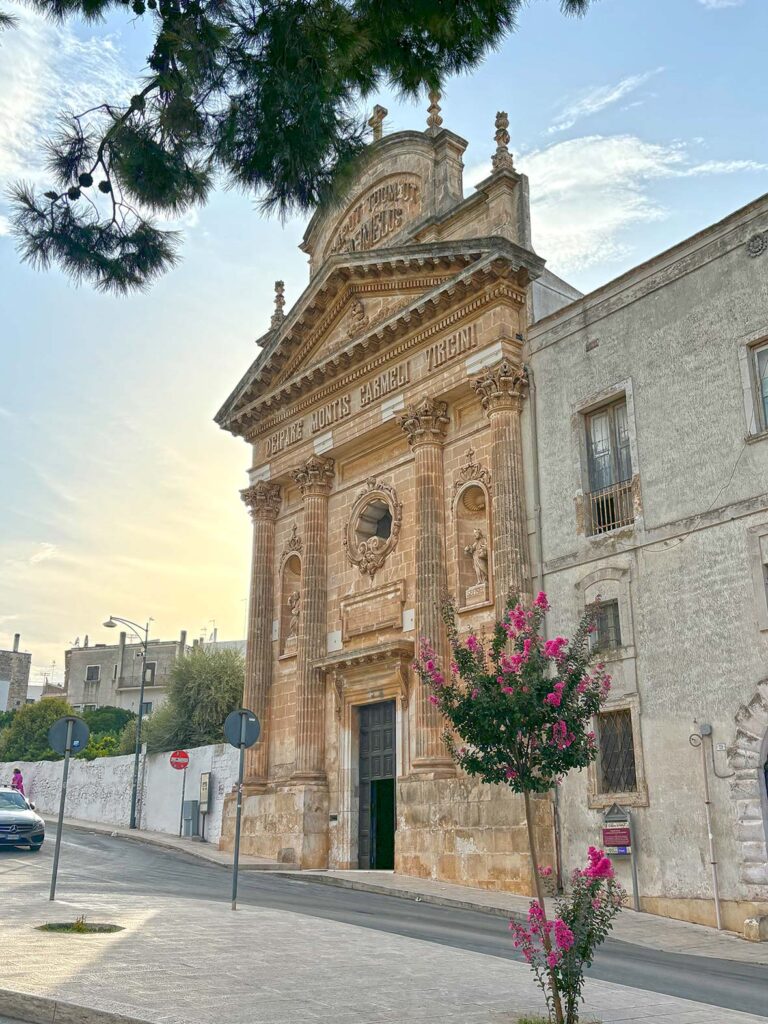
As with all the towns I visited in Puglia, Ostuni had more churches than I could count. Like the cathedral, most churches were closed in the afternoon but could be visited either in the morning or evening, or sometimes both. As well, a number of churches were hosting temporary art exhibits during my visit, so that might be something you want to look out for when you’re there.
- Church of San Francesco d’Assisi – You can’t miss this church that towers over Piazza della Liberta. Check out the bronze door, which was added in 1985 to commemorate the city’s miraculous avoidance of a plague in the 1600s.
- Madonna del Carmine Church – Just slightly downhill from Piazza della Liberta, this church was originally constructed in the 1400s but now features an updated stone facade dating back to the 1890s.
- Sanctuary della Gratta – You can see this white church on the fields just below the historic city center, and on the second Sunday in August each year thousands of locals participate in a candlelit procession from the church into the center, and then back as night begins to fall.
Drinks with a View at Borgo Antico
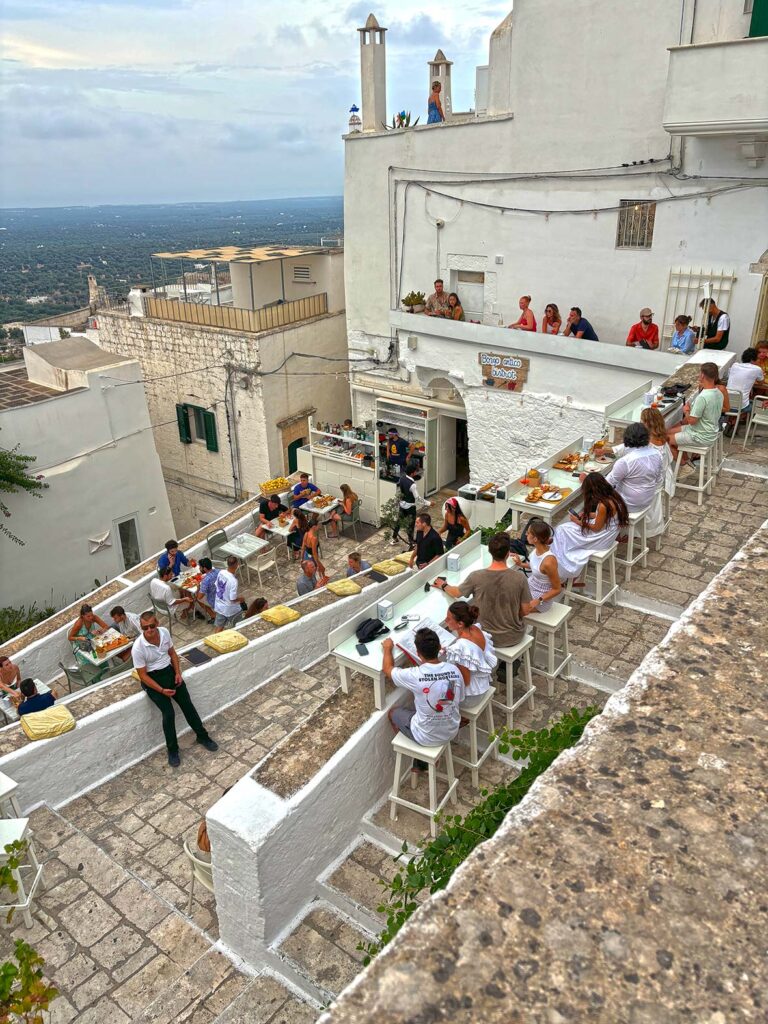
I could have put this under the restaurant section but I really felt like having a drink at the Borgo Antico Bistro is more of an activity than a meal. As you research your trip to Ostuni you’ll inevitably see this local hotspot on TikTok, Instagram and other social media platforms where influencers pose with their cocktails and cheese plates as the sun sets over the plateau behind them.
I passed by the bistro both nights I was in Ostuni and both times there was a long wait for a rickety table. Reviews suggest that even once seated the waits are long for service, which led me to decide to eat elsewhere. Still, if you can get there early enough in the evening and only have a quick drink (and take some photos) it might be a nice memory.
(If you’re also heading to Locorotondo I would propose an evening drink, or wine tasting, at the Sírose vineyard instead. The views are nicer and it’s way less crowded.)
The Famous Doors of Ostuni
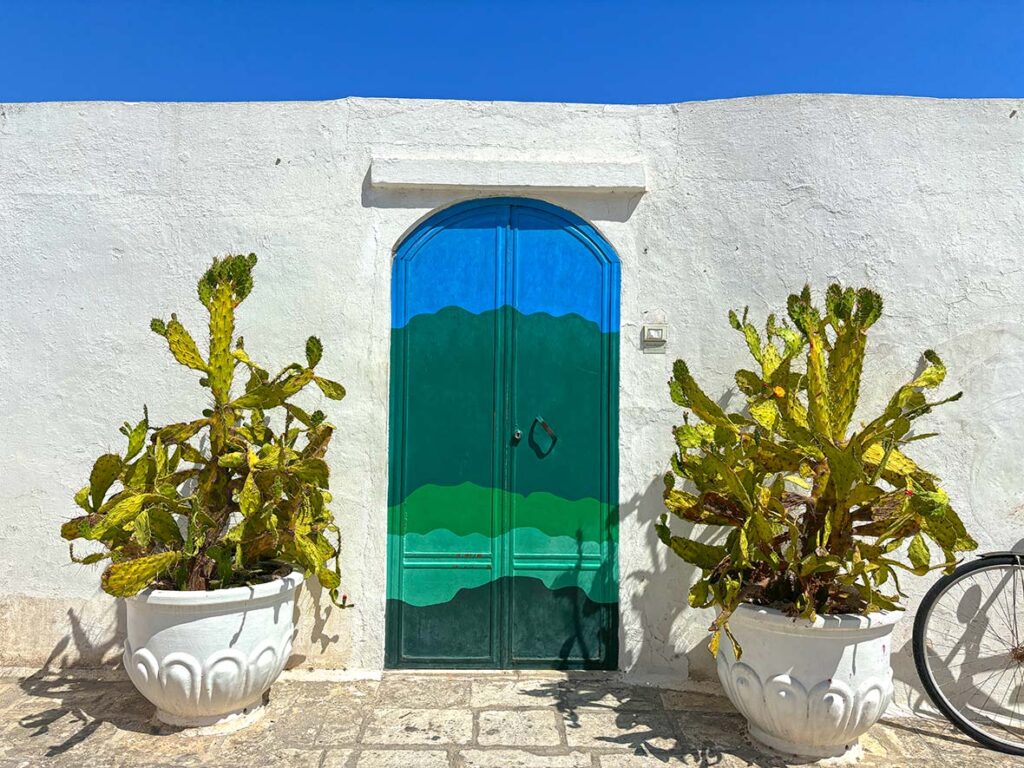
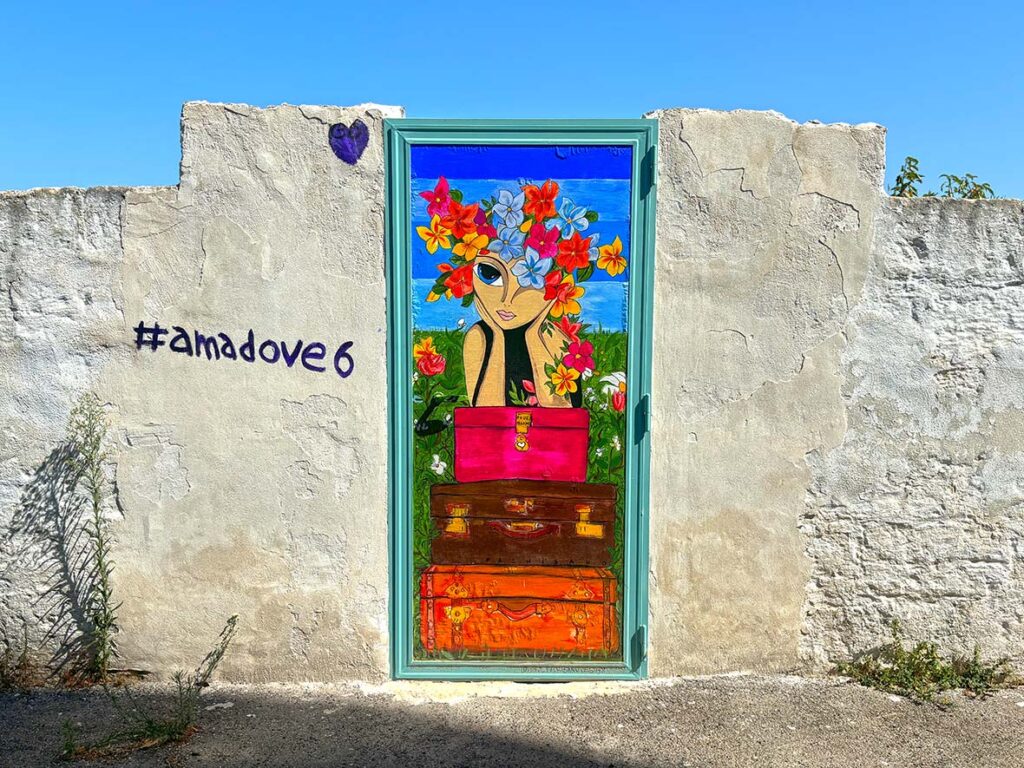
Ostuni isn’t entirely white, and you’ll find some of the city’s most inspiring bursts of color on a collection of painted doors dotted around the city.
The most famous painted door in Ostuni is undoubtedly the blue door located beside the Borgo Antico Bistrot; its rich blue and green tones represent the landscape hidden behind. This door usually has a queue of people waiting to get their photo taken with the famous landmark.
I also loved the second door shown above, which I found down a pedestrian street running parallel to the road beside the panoramic lookout point that I recommend above. I sensed there were some artist studios in the nearby buildings, and I was the only person on the walkway here so I didn’t have to queue for my shot.
If you visit Ostuni make sure to let me know which painted door was your favorite!
Restaurants in Ostuni
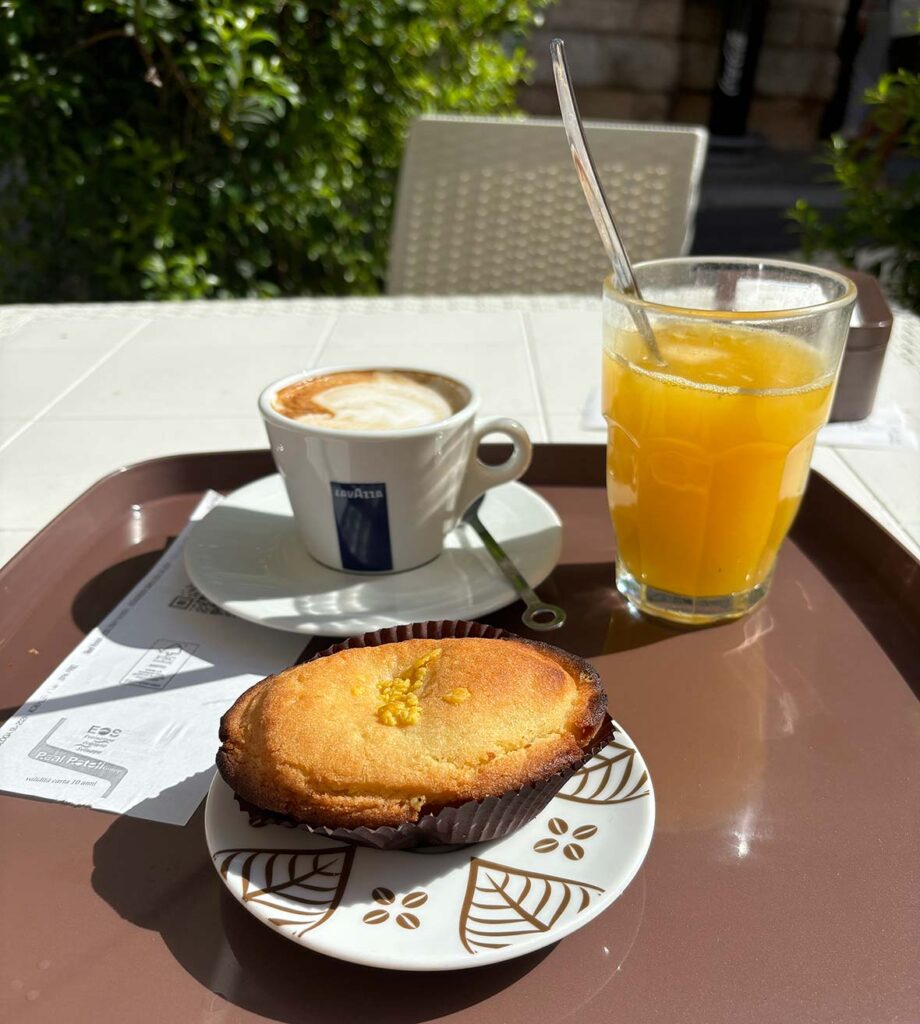
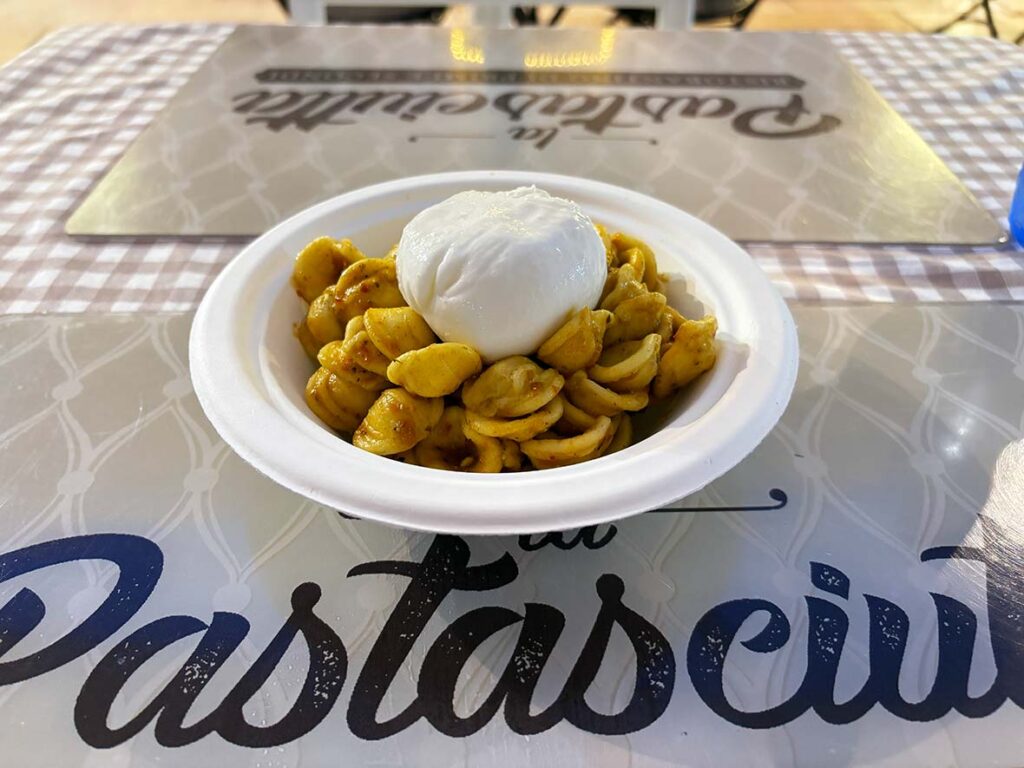
Most of the affordable restaurants in Ostuni are concentrated around Piazza della Liberta. Here are a few that are noteworthy:
- ⭐ Vulcani – Sicilian street food. I ate here twice – the first time I had an arancini and soda on their terrace, and the second time I took my food to go to eat on the train to Lecce (more on that below).
- ⭐ Bar Pasticceria da Pasquale – Locals queue every morning for this bakery, right next door to Vulcani. They are famous for their pasticciotti, which are dense, cake-like pastries stuffed with ingredients like ricotta, Nutella and/or pistachio cream. There is limited seating on the terrace across the street.
- ⭐ Pastasciutta – The piazza on Via Vito Tamborrino is beautiful in the evening, and despite appearances this fast-casual pasta restaurant is the highest-rated restaurant on the square. Order at the counter and they’ll make your pasta fresh then bring it to your table.
- Cicinedda Fruit Bistrot – My salad and mango lassi here were a nice change from typical Puglian cuisine, but my meal was ruined by heavy smokers beside me (in a health food restaurant?!)
- Drogheria Pugliese – I would have liked to eat here as well as they had a vegetarian sandwich that looked really good, but I ran out of time.
- Cremeria alla Scala – Considered to be the best gelato in the historic center, it was good but not miles above any other authentic gelateria
- Bianc’Ostuni – If you can’t get into Borgo Antico you might be tempted to go across the street instead, but the service and food quality here was not up to par. I’m flagging it so you won’t waste your euros!
If you’re looking for a fancier evening out, Osteria Piazzetta Cattedrale is a nice option in the historic center. Masseria Moroseta is an upscale farmstay just outside the town limits; their onsite restaurant also serves farm-to-table dinners by reservation.
(For more information about staying on a masseria check out my guide to Puglia farmstays!)
Shopping in Ostuni
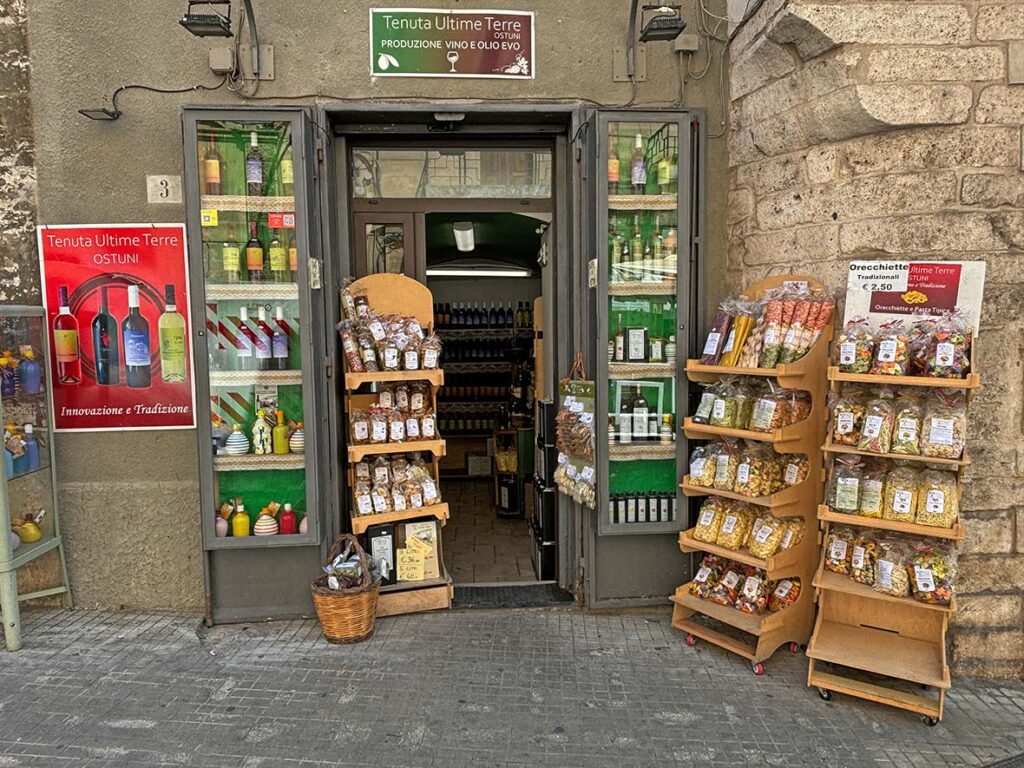
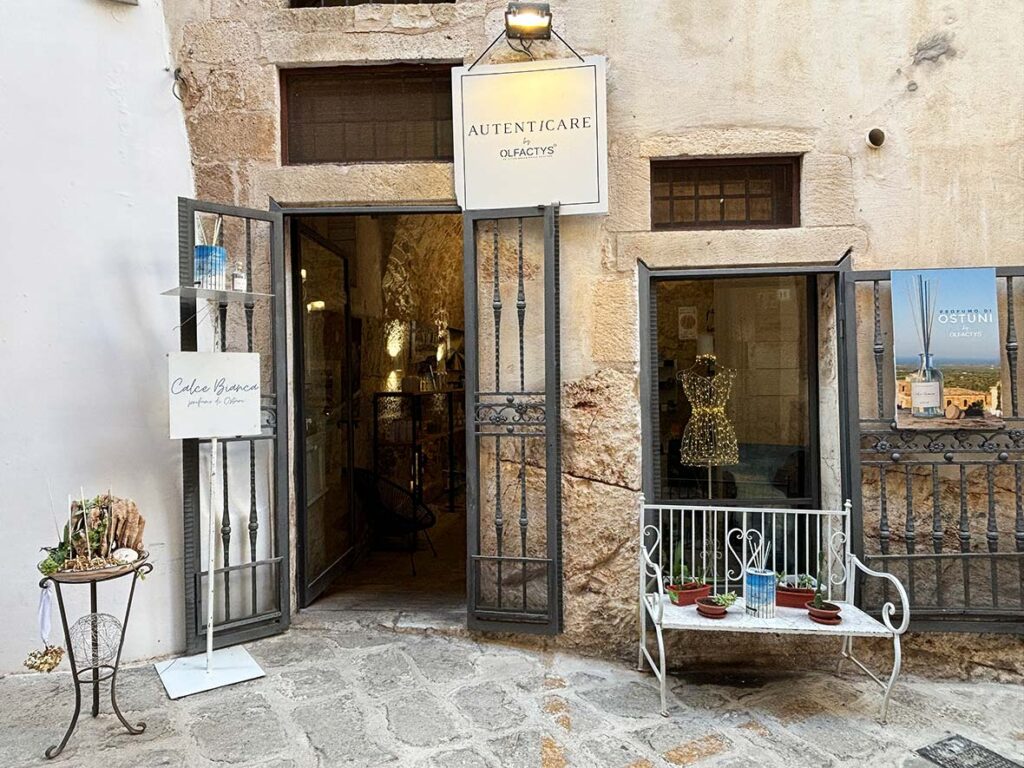
One thing that really disappointed me about Ostuni was the fact that the walled city center was completely packed with cheap tourist stores selling either cheap trinkets or overpriced local products you could get for much less elsewhere. Many of the stores offered olive oil tastings, and some, like the one shown above, also did wine tastings.
Personally I wouldn’t buy anything from these stores myself. In my guide to grocery shopping in Italy I point out that you often find the same products without the fancy packaging in local supermarkets, for a fraction of the price. If I was shopping for myself I would just hit up one of the supermarkets in Bari or Lecce. If, on the other hand, I was looking for souvenirs to bring home to friends and family then maybe I would consider a package of colorful pasta or a jar of local pistachio spread.
There is one store in Ostuni that I want to recommend, though! It’s called Autenticare by Olfactys and they sell one product: Calce Bianca. Said to be “the scent of the white city”, this fragrance was first launched as a room spray and oil diffuser, but later expanded into body mists and solid perfumes due to high demand. This is a light, fresh clean scent with top notes of basil and citrus, middle notes of coffee, pomegranate and sweet almond, and base notes of vetiver, sandalwood and musk. I bought the solid perfume and it’s perfect for days when I was a very light, intimate scent.
Where to Stay in Ostuni
I stayed in the cheapest vacation rental I could find in Ostuni and I unfortunately can’t recommend it. I couldn’t believe when I checked in – not mentioned in the listing was the spiral staircase carved into the floor, leading underground into a windowless cavern that had been set up as an additional (insanely spooky!) bedroom. On top of the creepy cellar, the shower ceiling was only about five feet high, so even I had to duck when I was washing my hair.
If I was going back to Ostuni, I would look into staying at one of the following properties:
- Pietra d’Ostuni – This one-bedroom apartment is close to the one where I stayed, and I have to admit that I really liked the quiet local neighborhood. From here it’s less than five minutes by foot to the historic center.
- Hotel La Terra – A reasonably priced option right in the walled Old Town of Ostuni.
- Grotta Carlotta – Puglia has some unique accommodations, like the trullos you’ll find in and around Alberobello. If you’re not going all the way to Matera, you could have an accommodation adventure in Ostuni by staying in this highly-rated bed and breakfast… in a cave!
- Alma Apuliae – This affordable one-bedroom apartment with a little kitchenette is an easy walk from the bus stop to the train station and the city center, so it’s great if you don’t want to drag your bags up and down too many hills!
How to Get to Ostuni
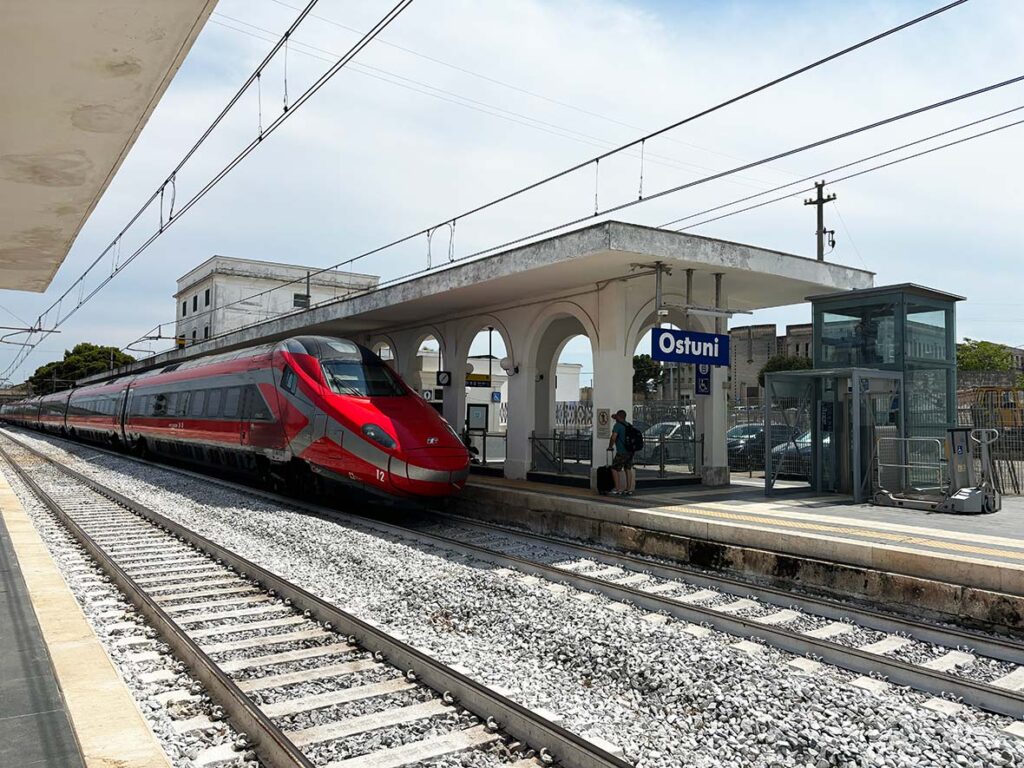
I arrived in Ostuni by bus and departed by train, so I know a bit about getting around!
Ostuni Train Station
The Ostuni train station is about three kilometers north of the historic center. There is no sidewalk along the road so it’s not safe to make the trip on foot (especially if you have luggage). There are plans to build a sidewalk in the future, so let me know if you happen to see one while you’re in the city!
The easiest way to get to and from the Ostuni train station is by public bus. It departs and arrives from here, which is a very easy walk from Piazza della Liberta. Tickets cost less than €2 and can be purchased with cash on board the bus or at the tourist information office in Piazza della Liberta. The trip takes less than ten minutes, and departures are at least hourly in both directions (and more like every thirty minutes in the summer).
The train station has a very small cafe (I believe there were four tables inside and a few more outside) and clean bathrooms. I recommend that you confirm whether or not your train is on time before heading out to the station; I was stuck waiting around for an extra 90 minutes because I didn’t check before getting on the bus!
Ostuni Buses
I took the bus from Alberobello to Ostuni. Although the bus company advertises two stops on arrival there really was only one, in Piazza Italia. From here it takes about ten to fifteen minutes to walk into the historic center.
Departing from Ostuni, most buses leave from the bus exchange here. From this spot it’s about a thirty-minute hilly walk into the historic center, or you can take a local bus like the #587 that connects the bus exchange, the historic center and then the train station.
In the summer, buses travel from Ostuni’s historic center to the the beaches at Marina di Ostuni. They depart from the same stop as the buses for the train station, linked in the section above.
Accessibility in Ostuni
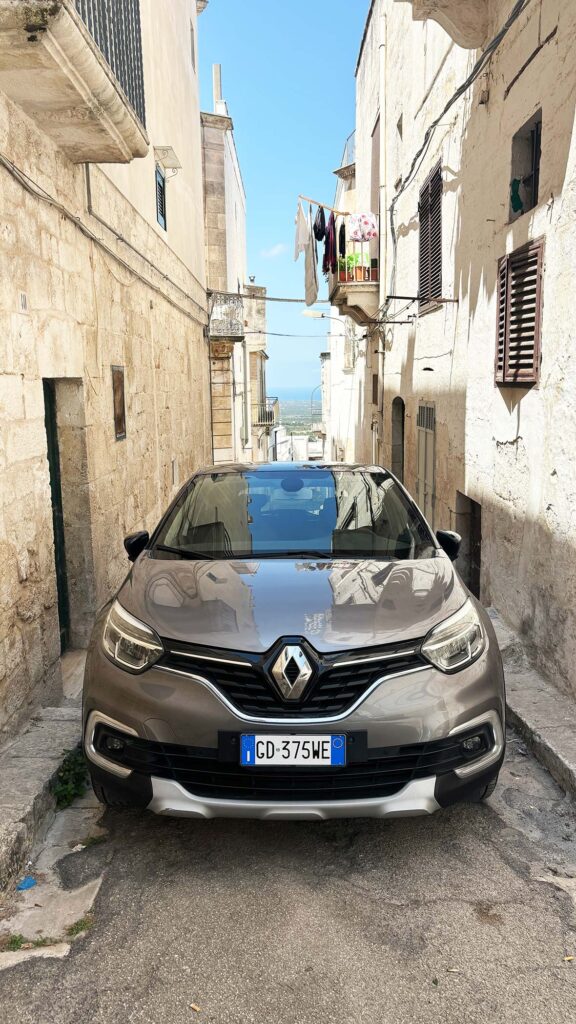
I would remiss in not mentioning the fact that Ostuni was one of the least accessible places I have ever visited. I don’t understand the physics of this, but it was an uphill walk from my apartment into the historic center and it was also an uphill walk back. No matter which way I was walking, it was always uphill.
It wasn’t just the hills, though. My accommodation was on the edge of the historic center in an area that was quite old (but not medieval). The roads were extremely narrow and vehicles like the one I photographed above remained in the same spots for days, making it nearly impossible to pass. If you were in a wheelchair, using a walker or using a stroller you’d be stuck.
You’ll also find a lot of stairs in Ostuni, including many that are not marked on Google Maps. The streets are paved with old stones that have become slippery over time and without good walking shoes you’re at risk of breaking an ankle. Individual attractions (particularly some churches) may be wheelchair accessible, but reaching the entrance of each site will be challenging.
I don’t normally recommend using a travel agent, but if you have any kind of mobility restriction and want to visit Ostuni I would recommend that you work with a local travel agent who knows the city very well and who can recommend accessible accommodation, dining and attractions in Ostuni.
While you’re in Puglia make sure to also visit the famous trulli of Alberobello, the beautiful beaches of Monpoli and the amazing architecture of Lecce!
Planning a trip to Puglia? Pin this post for later!
 |
 |