

There are certain travel mistakes that experienced travelers never make.
Why not?
Because they learned from personal experience back when they were novice travelers!
I’ve traveled to more than 70 countries as a solo female traveler. Along the way, I made some common travel mistakes, but I also managed to avoid making others.
Now, as thousands of first-time travelers are finally getting ready to board their plane, train, boat or automobile, I’m here to share fifteen common travel mistakes to avoid at all costs. I’m going to explain how careful travel planning can help you avoid these pitfalls so that your trip can go smoothly from start to finish.
If someone in your life is about to set off on their first domestic, international or solo trip, make sure to share this article with them before they go. I’d also love to hear from you in the comments – have you ever made one (or more!) of these common travel mistakes? How did you resolve the problem and save your trip?

1. Booking a flight with a connection on two separate tickets (aka a “self-transfer”)
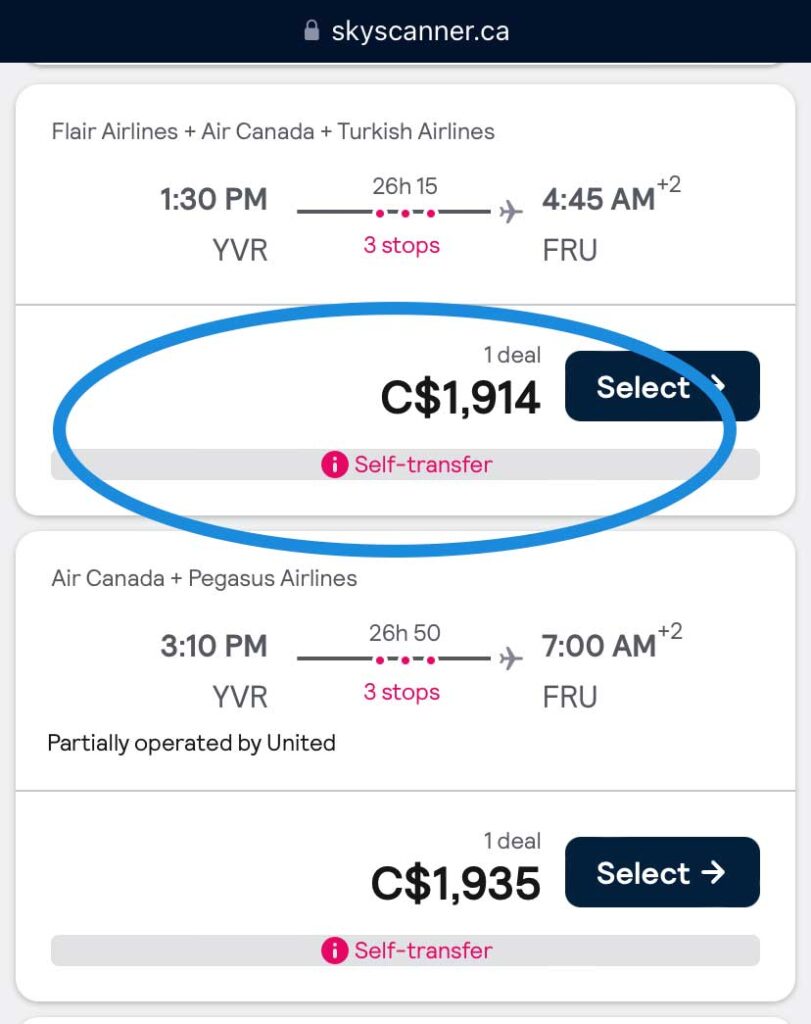
In travel, a connection is when you are flying from City A to City C, but you have to change planes in City B to get there.
A self-transfer is when your flight from City A to City B is on a completely separate ticket than your flight from City B to City C. So, you’re really only making one trip, but you’re using two tickets.
As an experienced solo female traveler who has been to more than 70 countries and taken hundreds of international flights, I never book self-transfers. I consider self-transfers to be one of the riskiest travel mistakes of all. Why?
In the example above, the first airline is only responsible for getting you from City A to City B. They have no obligation to get you to City C (your final destination). So, if your first flight is delayed, cancelled or oversold, you are likely going to miss your second flight from City B to City C… and there’s nothing either airline has to do about it. You won’t get a refund for your missed flight, and you’ll also have to buy a new, expensive, last-minute ticket for the next available flight!

Another reason I avoid self-transfers is that you are responsible for getting your luggage from Flight #1 to Flight #2. This means you have to wait at the baggage claim to pick up your bags, leave the secure area, go to arrivals, find your second airline, drop off your bags with them, go back through security and find your second flight.
Just reading that stresses me out, as there are so many opportunities for things to go wrong. There could be a delay at the baggage claim, or a long queue at the check-in counter, or a problem at security… and suddenly you’ve missed your second flight!
I avoid making this travel mistake by booking my flights directly with reputable airlines, and ensuring that all legs of the trip are connected on one itinerary. I never book on third-party sites like the ones shown above, partly to avoid self-transfers but also to ensure that if there is an issue during my trip, I can work directly with the airline to resolve it without having to involve a third-party website.
What if it’s not possible to buy a connected ticket?
If it’s completely impossible to buy a connected ticket (this does happen to me occasionally, since I visit some pretty obscure destinations!) then I still avoid self-transfers!
Instead, I will adjust my itinerary to include an overnight or multi-day layover in the city where I have to change planes. This gives me a change to explore a new destination and gives me a buffer in case my first flight is delayed. And yes, I will still book both flights directly with the airlines!
2. Forgetting to check in online
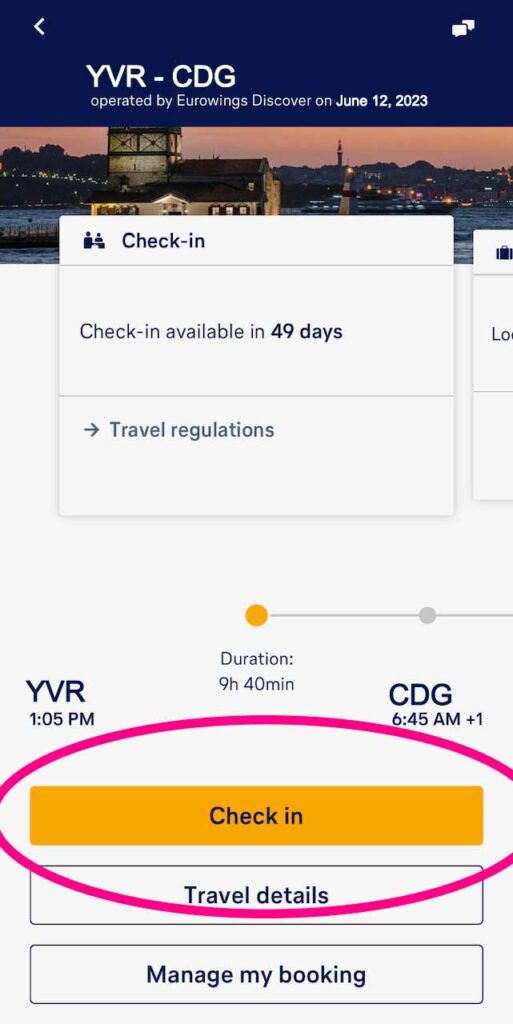
I was inspired to write this post today after reading a comment from someone who was traveling with their friend. They booked their tickets separately, and while the commenter remembered to check-in online for their flight, their friend made a common travel mistake: she didn’t check in online.
You know where this is going! The flight was oversold, and because the friend hadn’t checked in online, they were bumped to a much later flight. Suddenly, a friends trip turned into two solo trips!
You should always check in online for your flights. Personally, I like to download the airline’s app and check in as soon as check-in opens on the app. I have a few international flights coming up and I’ve already downloaded all the relevant airline apps and loaded in my reservation (using the code I received at booking), so when check-in opens 24 or 48 hours before departure, I will be ready!
Recently, many airports have also started to allow travelers to “check in” for a security screening in advance. It’s free to book a “window” of time to pass through security screening, and as long as you arrive at your scheduled time you can skip the regular security line and head straight to a priority line for those with reservations. Check the airport website to see if you can take advantage of this free service, and make the reservation at the same time as you complete your online check-in.
3. Flying home from the same airport

This isn’t always a travel mistake, but it’s one that I see often enough that I thought it was worth including.
If I am traveling for more than a week or two, I almost never fly in and out of the same city. Instead, I look for a multi-city itinerary (also called “open jaw”) that allows me to fly into one city and home from another.
For example, last summer I flew into Paris and flew home from Marseille. This summer, I will be flying into Istanbul and flying home from Lisbon. Another epic multi-city trip that I took saw me fly into Corfu and out of Tallinn, crossing Eastern Europe from south to north.
This doesn’t only apply to Europe: I’ve also flown into Buenos Aires and out of Bogota, and into Singapore and out of Bangkok.
So what are the benefits of a multi-city ticket? Well, the main benefit of a multi-city plane ticket is that you don’t have to backtrack from the last place you visit all the way to the place where you arrived. This can save you tons of time and money, giving you more of both to enjoy your trip.
How can you book a multi-city plane ticket? I usually start by browsing Google Flights to see which airline offers the best combination of outbound and return flights, then I go to the airline’s website and look for the “multi-city”, “open jaw” or “advanced” search to replicate the same itinerary and book directly with the airline.
4. Showing up at the wrong airport

I’m so embarrassed to have made this common travel mistake! To be fair, though, it was in my very early years of travel, during the dawn of the internet era (I had to go to an internet cafe to get online!). I learned my lesson back in the mid-2000s, but I’ve heard that other travelers are still making this embarrassing travel mistake today, in 2023!
Some cities have more than one airport, and it’s important that you show up for your flight at the right one! I made this travel mistake in Milan, which has three airports: Malpensa, Linate and Bergamo. I had actually booked the flight by phone and just written down the dates, times and confirmation numbers. It didn’t occur to me that my flight from “Milan” would be from anything other than the big international airport… but it wasn’t.
Approximately twenty-five cities around the world have three or more passenger airports (New York City tops the list at seven airports!), and many more have two. Learn from my travel mistake and make sure you know which airport your flight will depart from, plus how you’ll get there.
The Dreaded Self-Transfer Plus Change of Airport Ticket
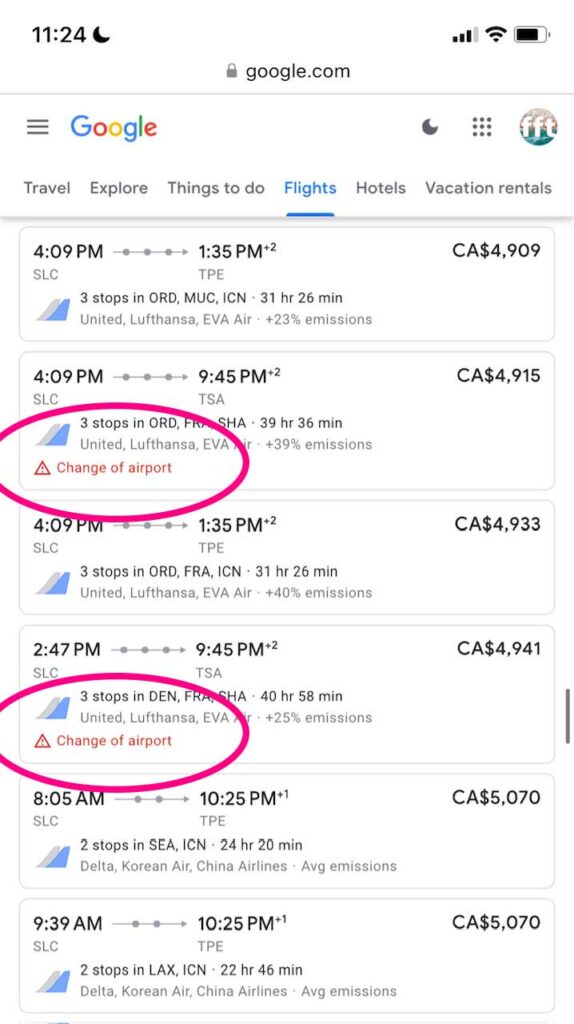
Remember how I told you to avoid self-transfer tickets? I forgot to mention there’s something that’s even worse: a self-transfer ticket that requires you to change airports during your connection! This is common in cities like Tokyo, where long-haul international flights are likely to arrive at Narita International Airport, and then shorter-haul flights around Asia may leave from Haneda International Airport.
Can you imagine juggling jet lag (more on that below!), a completely foreign language, the Japanese subway system, the possible need for a travel visa, all your luggage and two separate plane tickets in a desperate race against the clock to make your connecting flight? 🤯 I don’t even want to think about it.
I usually screen out these flights during the planning stage, where they’re clearly marked on Google Flights and on the airlines’ websites. You have to be careful if you’re risking booking on a third-party site, however, as they might not make it clear that your route requires this ridiculous transfer.
Looking for more solo travel tips?
Follow Fearless Female Travels on Facebook for actually-useful tips on traveling solo, adventurous female travel, and more! (No annoying emails – I promise!)
5. Ignoring the rules about passport expiration dates
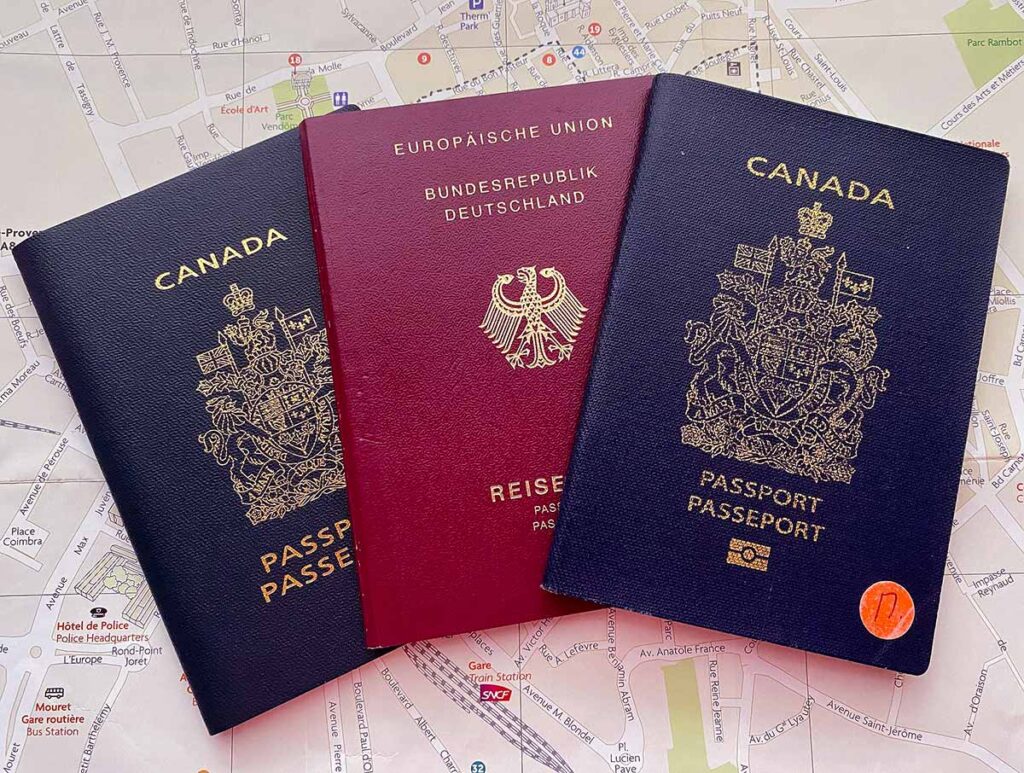
Most people know that to travel internationally, you need to have a valid passport. What most first-time international travelers don’t know, however, is that your passport usually has to be valid for several months after your planned return date.
A general guideline is that most countries require your passport to be valid for at least six months after you plan to depart. So, if your trip ends on August 30th, 2023, your passport should be valid through March 1, 2024.
Of course, each country has their own unique rules and regulations, so it’s best to check with their official Ministry of Foreign Affairs and/or your country’s embassy abroad as you’re organizing your documents. Some airline websites also have search engines that connect with government databases. You enter your nationality and your travel information, and it will you what documents (the airline thinks) you need to bring. I like this simple search tool from SkyTeam, but I would always cross-reference what it says with the official government websites.
If your passport isn’t valid for the required post-trip duration, you will be denied boarding at the airport or turned back at the border if you’re arriving by land. You’ll then have to apply to renew your passport, which can be a lengthy and expensive process.
My top tip? When you see there are only nine months of validity left on your passport, apply to renew it right away.
What is the reason for the “six month passport rule”?
Essentially, the country that you’re visiting wants to make sure that you’ll be able to leave even if you stay past your intended return date.
Why might you stay longer than planned?
For some travelers, it’s a simple change of itinerary. Maybe you made a new friend while you were traveling, or decided to stick around and learn the local language.
For other travelers, the reason isn’t so positive. They might be receiving medical care in a local hospital, or awaiting a trial if they are accused of breaking the law. Having an extra six months of passport validity ensures that you can still get home safely in these situations.
6. Expecting your phone to work on arrival

So let’s say you followed my tips above, successfully booked the right flights and arrived in your destination. You’re standing in the airport arrivals hall and you’re trying to connect to the airport WiFi to send a WhatsApp message to your driver, letting him know you’re ready for pick-up, but no matter what you try you can’t connect.
Expecting your phone to work immediately upon arrival is a huge travel mistake to avoid. Whether you’re relying on WiFi, a local SIM card, or the data plan from your regular phone provider back home, you should expect the unexpected when it comes to using your phone abroad.
If you’re planning to use airport WiFi on arrival, you may struggle to receive a phone call or text message with an access code (or risk paying expensive international roaming fees). Even if you can receive the access code, airport WiFi is notoriously unreliable, as it’s often down or the network is overloaded.
If you were planning to buy a local SIM card on arrival at the airport, be aware that many airports don’t have shops selling SIM cards. When airport shops do sell prepaid SIM cards they’re often overpriced compared to buying the same SIM card in town.
And if your plan was to use the international roaming feature from your home country’s plan, it could get expensive fast. Once, I was changing planes in Germany and needed to call my Canadian voicemail to hear an emergency message left by my employer. The cost ended up being more than $10 USD just to hear that message.
So how should you prepare to arrive in a new destination where your phone might not work?
- Download Google Maps for your destination, so even when you’re offline you’ll always know exactly where you are relative to your hotel, the train station or the bus stop
- Write down the address of your hotel and two different ways you can get there (for example, have a record of a fair taxi price and the route you’d take if you went by bus or subway).
- If you’re planning to meet a driver or guide, ask them to send you directions to the meeting spot and a photo of the meeting point a few days before your flight.
7. Forgetting about jet lag

One of the most common travel mistakes that I see when novice travelers are sharing their travel plans is that they expect to do way too much on the first day of their trip.
Studies have found that if your flight crosses three or more time zones, it’s likely to result in some jet lag. Jet lag manifests through symptoms like fatigue, anxiety, irritability, difficulty sleeping or waking up, stomach problems and just generally not feeling like yourself.
In my experience, jet lag usually clears up after a day or two on local time. However, that means that for the first day or two of a big international trip, I’m not always operating at 100%.
With jet lag in mind, I never plan too much for the first day of an overseas trip. If I’m arriving in the morning, I like to arrange an early check-in at my hotel, have a quick shower, and then explore the surrounding area by foot. If I’m arriving in the evening, I’ll check in, go for dinner near the hotel, and then head to bed early (even if I’m not tired).
If you are really counting on seeing or doing something special during your trip, I recommend waiting until at least the third day. You really don’t want to climb the Eiffel Tower, snorkel with whale sharks or explore Chernobyl when you’re half asleep.
8. Expecting to buy popular attraction tickets when you arrive…
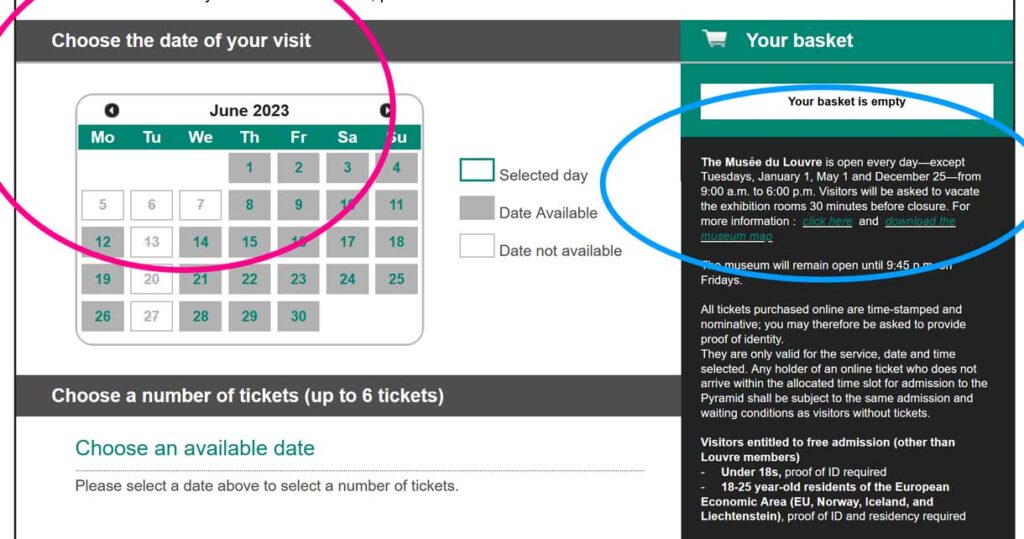
I’m writing this on May 25th. I checked out online tickets for The Louvre, and the next day when tickets are available is June 1st. They are already sold out for the rest of May, as well as for two days in early June. If someone was traveling to Paris and hadn’t booked their Louvre tickets in advance, they might miss out on the world’s most famous museum. Heartbreaking!
For curiosity’s sake I checked out some other attractions:
- In Rome, the Vatican Museums still have some availability for tomorrow, but only at 7:00 or 8:00 pm.
- In Barcelona, Parc Guell is already sold out for the next three days.
- In San Francisco, the ferry to Alcatraz is already sold out for this weekend.
If there’s something that you absolutely can’t miss, make sure to book your tickets well in advance. In the months leading up to your trip, check out the attraction’s online booking platform to see when tickets go on sale. As soon as bookings open for your preferred date, buy those tickets!
As long as you’re only reserving a handful of essential activities in advance, you’ll still have lots of flexibility around how you spend the rest of your time at your destination.
9. … but also over-planning every minute of your trip
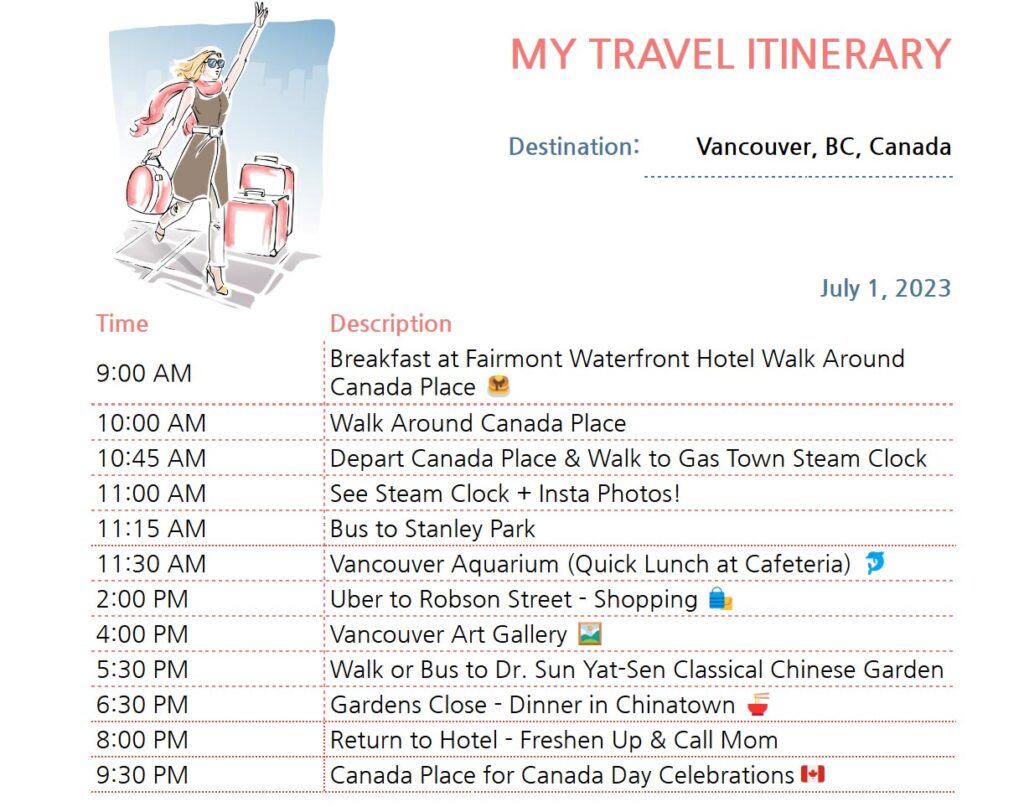
While you want to book your key attractions in advance, you don’t want to make the novice travel mistake of pre-planning every single minute of your trip.
Look at the itinerary above. I copied it from a popular travel website but I got tired midway and didn’t even include everything they suggested that a traveler do with one day in Vancouver.
Where is the time for a random adventure?
Where is the time for the unexpected?
Where is the time to experience the city like a local?
Trying to plan every day of your trip in advance is a common travel mistake that new travelers make. You think you want to see everything, so you make an impossible plan that will leave you worn out, exhausted, tired, dehydrated and feeling like you never got off the tourist track.
I spend a lot of time talking to inexperienced travelers, and whenever I talk to someone who has just returned from one of their first trips they always say that their favorite memory of their trip was the leisurely lunch they spent at a seaside cafe, chatting with local fishermen, or the antique bookstore they discovered when they detoured off the main street down a little cobblestone alleyway. People like the popular tourist attractions, but they love the things they stumble across that feel like their own little secret.
When you’re planning a big trip, I recommend identifying one or two main things you want to see each day, and then leaving the rest of your schedule open. A good guidebook will help you find lesser-known spots near your must-visit sights, and you can also get insider tips from the locals that you interact with throughout your visit.
10. Confusing mm/dd/yy with dd/mm/yy
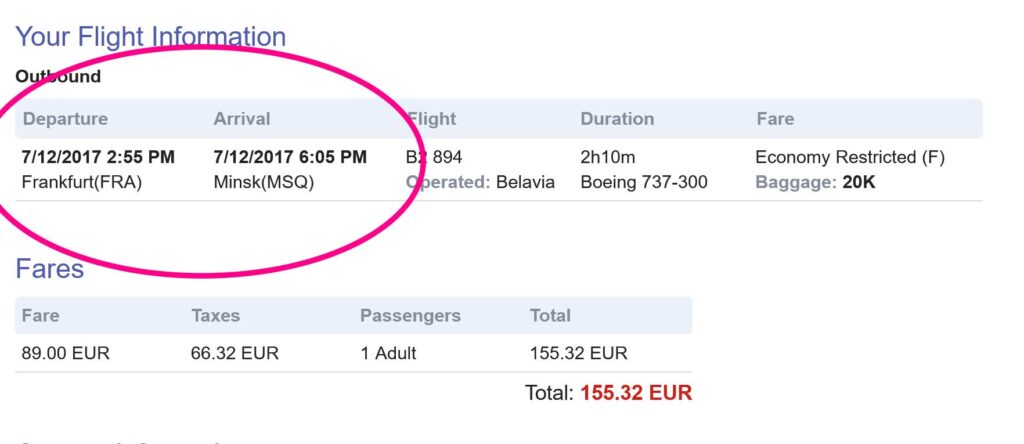
Looping back to the topic of dates, there’s another common travel mistake that first-time international travelers make: confusing international date formats.
Look at the photo above. Back in 2017, did I fly from Frankfurt to Minsk in the summer or winter?
In Europe, the standard date format is dd/mm/yy. So, if you were flying on September 2, 2023, your ticket would show 02/09/23.
However, in the USA, the standard date format is mm/dd/yy. So, if you were flying on September 2, 2023 (the same day!), your ticket would show 09/02/23.
And in my home country, Canada? We alternate between the date formats randomly! The ticket above was booked on the North American version of the airline’s website, so my actual travel date was July 12, 2017.
Variations in date formats have led to countless mix-ups with hotel reservations, bus tickets, train tickets and even, sometimes, flights.
Here are some tips for avoiding this common travel mistake:
- Try to decipher if the website you’re booking on is based in North America or Europe
- Be aware that even switching between “British English” and “American English” in the website’s language settings could affect how the date is written
- When possible, book using a calendar tool that displays the full month visually (carefully note if the week starts on Sunday or Monday!)
- Re-read all the details before you click “Reserve”
- When you receive your booking confirmation email, double-check that everything is in order and immediately reach out to the site you booked from if something doesn’t seem right
11. Blindly trusting Google Maps
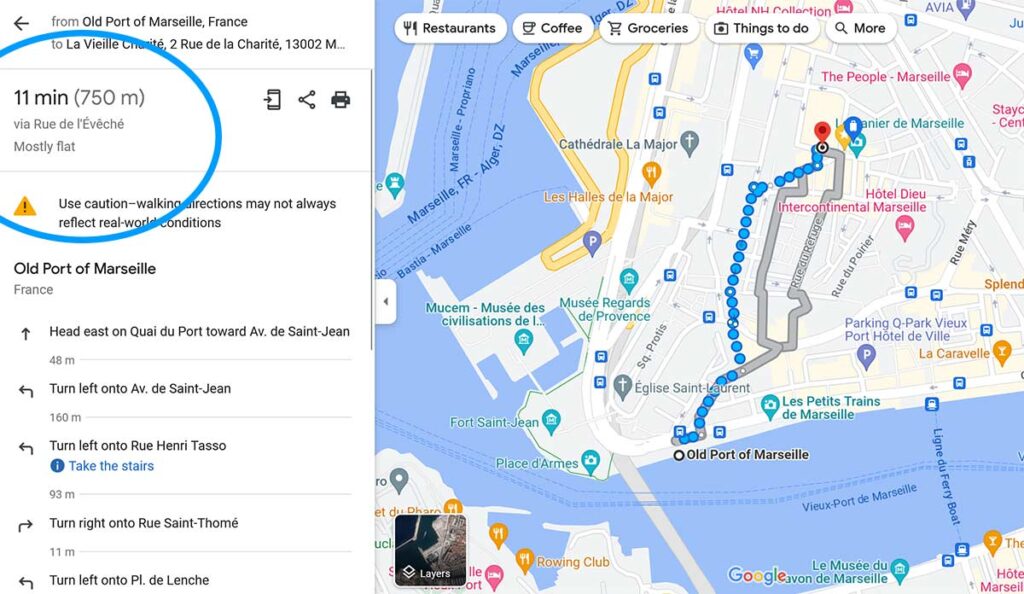
I’m proud to say that I started my solo female travel adventures in the pre-smartphone era. Back then I used to cut out maps from my guidebooks, highlight the route I would need to follow, and pray that I would be able to find my destination.
Today, I still like to snap a photo of the map from my guidebook so that I can refer back to it as I go about my day. However, when it comes to navigation, I rely almost entirely on the Google Maps app on my phone. I use it, and I recommend that you use it too, but I don’t recommend that you blindly trust it.
Google Maps can’t tell you if the route you’re taking passes through a dangerous area, or uses an unpaved path, or requires a steep uphill ascent.
In the photo shown above, I’ve mapped out a walking route from the Old Port in Marseille to the heart of the hilltop Le Panier district. It’s uphill the whole way, but Google describes it as “relatively flat”. For me, a surprisingly steep ascent is not a problem, but I understand my privilege. A traveler with a mobility limitation would definitely struggle with this uphill walk.
When I took a year off work to travel around the world, I spent a week on Gili Air, an island near Bali. Google Maps told me that it would be easy to walk from the port to my hotel on the opposite side of the island. In reality, the roads that Google had overlaid onto the map didn’t exist, so I was trekking across farmers’ fields and along dusty paths with my huge backpack, in 35° heat.
How can you avoid Google Maps mistakes? Try to triangulate information about your route by checking multiple sources. In Google Maps, switch the layers to the satellite view and/or try street view to get a more accurate idea of what your route looks like. You can also try using other apps, like Apple Maps or maps.me, to see if they suggest alternate routes.
The best source of accurate, up-to-date route information? Local residents. Don’t be afraid to ask for directions, for the fastest route, for the best route, for the most picturesque route… 99.9% of the time they’re happy to help a foreigner get from Point A to Point B.
If you do find an error in Google Maps, you can follow these instructions to report it. After you’ve submitted the report, pat yourself on the back because you’ve helped out future travelers!
12. Packing the wrong stuff

Yes, that is an actual shot of my real backpack when I was testing its capacity before my big around-the-world trip a few years ago. When I actually departed for that trip, I organized everything into packing cubes so that they were easier to find in my bag.
Having lived out of that backpack for eight months, I learned a lot about packing. I made a few mistakes when I was packing, and I also learned a lot from talking to other travelers who were dealing with their own packing problems.
I’ve written a few different packing guides to help other travelers pack the right stuff:
- Amazon Products I Always Take to Europe – I’m not joking – I take these on every trip to Europe and inevitably someone asks to borrow them!
- My Essential Hostel Packing List – I’ve spent hundreds of nights in hostels (both dorm rooms and private rooms) and couldn’t live without these must-haves.
- Packing List for Female Travelers in India – Traveling in India is an adventure, and you can’t expect to find the goods and services you’d find back home. Packing these India travel essentials will make your trip a lot more comfortable.
- What to Pack for a School Trip to Europe – School trips are fast-paced and highly structured, with little time for shopping or even stopping. If you follow my packing guide here you’ll have everything you need. (This list also works well for organized group tours, like Contiki, G Adventures or EF Tours.)
- The Best Sun Protection Clothing for Female Travelers – Since I usually travel all summer, I have to be careful about sun protection. These are the styles of clothing that I wear to keep the sun off my skin as much as possible.
In general, my packing philosophy is that I like to have versatile clothing that I can wear day and night, and that I can easily pair with comfortable walking shoes like Birkenstocks or cute trainers.
In terms of toiletries and personal care items, I love collecting sample sizes and travel sizes throughout the year and then bringing them all with me on big trips. As I use them up I throw them out, making my bag lighter and freeing up space to buy local products as well.
For electronics, I keep it pretty simple. I only travel with a laptop because I’m a blogger; otherwise I would just travel with my iPhone. I take most of my photos on my phone, but I also bring a back-up camera in case I’m doing something like a safari that requires a more powerful zoom lens.
If you have any specific questions about packing, leave them below in the comments and I will respond ASAP!
13. Falling for common scams
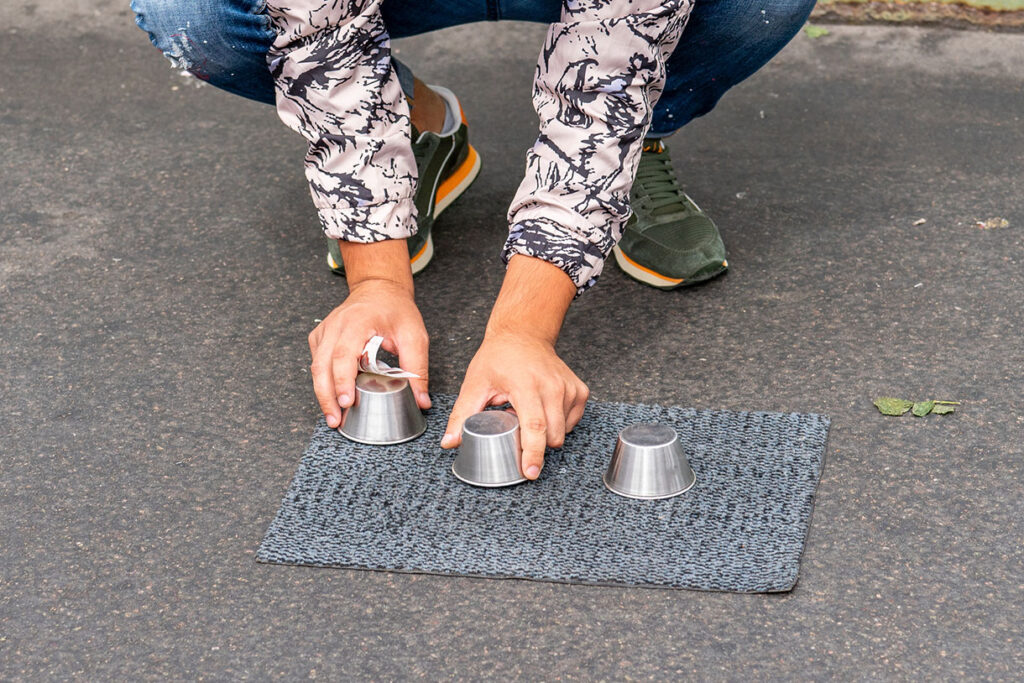
There’s no shame in falling for a new scam that nobody has heard of until now.
There is a little bit of shame in falling for a common scam that has been around for years and widely publicized around the world.
I mean, if I told you that I was a Canadian princess and I needed your help to transfer one billion dollars out of my deceased parrot’s bank account, you would laugh and click over to the Wordle.
Your chances of getting a billion dollars from my parrot are better than your chances of coming out ahead from any of these common tourist scams:
- The Shell Game – Shown above, a ball is hidden under one of three cups. As a spectator, you can usually guess where the ball is, even though the guy playing can’t. That’s because he’s an accomplice of the dealer, and his job is to make you feel confident enough to place a bet. When you do, they’ll use deception to remove the entirely, making it impossible for you to find it (and win any money).
- The Teahouse Scam – This scam is common in some parts of Asia. You’ll be out sightseeing when you’re approached by an attractive young person who asks if you would join them for tea so they can practice their English. They will recommend a nearby teahouse, and when you go to pay the bill you’ll find it grossly inflated. Pay up or the owners will threaten to call the police.
- The Bracelet Scam – When I was in India two men tried this scam on me! Usually what happens is that someone in religious attire will come up to you and offer to bless you for free and to give you a small bracelet as well. Once the bracelet is tied on your wrist, they will demand payment.
- The Mustard or Bird Poop Scam – This one is just a front for pickpockets. In this scam, a team of two works together, with one person distracting you while the other steals your valuables. If someone says there is bird poop on your shoulder, or “accidentally” squeezes mustard onto your shirt (seriously?) don’t accept their offer of help. Quickly move away and put your hand over your valuables (ideally they’re in an anti-theft bag) so that their accomplice doesn’t have the chance to rob you as you clean up.
- The Money Exchange Scam – There are a few different ways that “unofficial” (black market) money changers will rip you off. A common scam involves moving the decimal one point in the direction that favors them. Another common money changing scam involves hiding some expired or foreign currency among the real currency. Avoid this scam by changing money at the bank or a real currency exchange office, or by taking cash out of an official bank ATM.
If you want to learn more about common tourist scams, I highly recommend binge-watching some of the videos on the Honest Guide YouTube channel. These guys film and confront the scammers operating in their hometown, Prague, and explain how you can protect yourself from scammers when you’re traveling.
14. Planning to exchange currency when you get home

What’s in the photo? Well, that is almost $100 USD worth of Ukrainian currency that I thought I’d be able to exchange when I left Ukraine, either when I was passing through the EU or back home in Canada.
That was several years ago, and I’ve still been unable to change the currency unless I’m willing to sacrifice more than half its value.
In economics, a “hard currency” is one that isn’t likely to depreciate suddenly or fluctuate in value unexpectedly. For most international travelers, the main hard currencies are the US dollar, the British pound, the EU euro and the Japanese yen. If you pick up these currencies while you’re traveling, you can expect to get a relatively fair exchange rate for any leftover money when you get home.
Other currencies don’t hold their value as well, and the banks and exchange offices in your home country aren’t likely to give you a good rate for them. It kind of makes sense – what would a currency exchange office in Delaware need $1000 USD worth of Mongolian Tugrik for?
If you’re approaching the end of your trip and you realize you have a surplus of local currency, try to exchange it for a hard currency before you depart.
If that’s not possible, you may be able to trade it with other travelers who are just arriving (ask around at a hostel bar!), leave it as a generous tip for hotel staff or your taxi driver, or bring it home as a souvenir.
15. Breaking the law

I’m ending this list with the most important travel mistake to avoid: accidentally (or purposely!) breaking the law.
When you travel to another country, it’s your responsibility to educate yourself about the local laws. You can’t expect that they’ll be the same as they are in your home country.
I’m from Canada, where marijuana is legal. However, cannabis continues to be illegal in most of the world. In Iceland, you may be arrested and then fined for carrying a small amount of cannabis. In Saudi Arabia, jail sentences for those caught with a small, personal quantity of cannabis start at six months.
Similarly, Canada repealed its blasphemy laws in 2016. However, other countries still criminalize speech or actions that may be interpreted to disrespect a religion or a ruler. In Thailand, getting a tattoo of Buddha can result in imprisonment or a fine. In the Philippines, interrupting a religious ceremony is punishable by imprisonment for at least four months. In Iran, promoting atheism is punishable by death.
Some laws are not intuitive to travelers coming from North America or Western Europe. That’s why it’s important to research the destinations that you plan to visit.
Because I’m Canadian, I like to look at the “Laws & Culture” section of my government’s website for foreign travelers.
I also either buy or borrow the Lonely Planet guidebook for destinations that I plan to visit, as they usually have nuanced information about local laws and customs.
I can’t stress how important it is to educate yourself about the local laws before you travel to a new country. If you’re ever in doubt, err on the side of caution and don’t do anything that may be (or may be perceived as) illegal. I’ve been traveling for almost 20 years, and I promise you that you can still have an amazing trip without breaking the law.
Looking for a little bit more travel inspiration? Before you go, check out:
My Guide to Traveling Around Sicily Without Renting a Car
50 Things to See & Do in Paris
The Cheapest Countries to Visit as a Solo Traveler
Planning a trip? Pin this post for later!
 |
 |